Ludovico Einaudi is an Italian composer and pianist whose minimalist aesthetic has made classical music accessible to audiences far beyond the concert hall. His work draws from repetitive structures, gradual harmonic shifts, and emotional directness rather than structural complexity. Einaudi's music appears regularly in film and television, yet it remains substantive enough to reward serious study and performance.
Why we love this
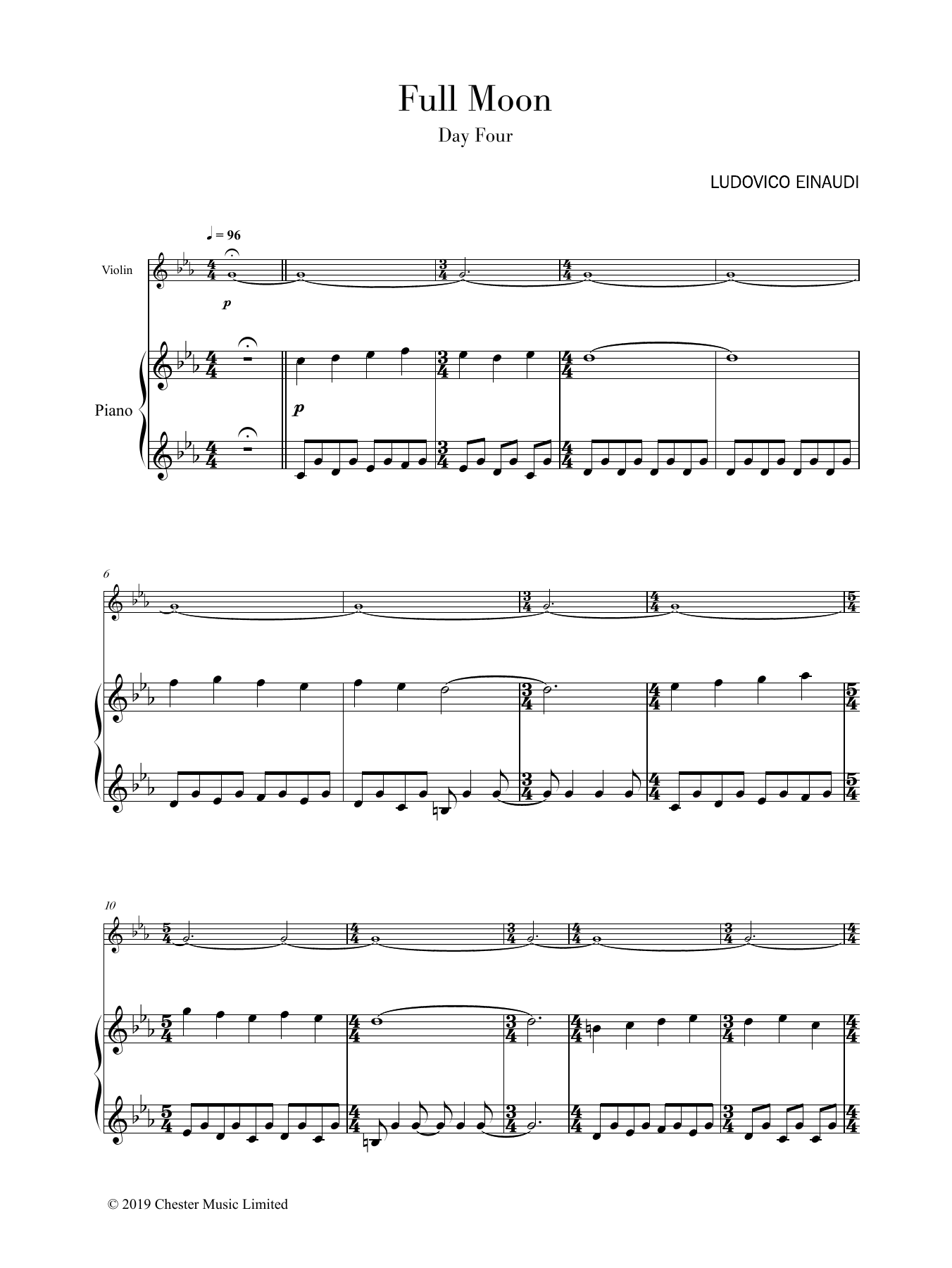
Einaudi's writing for violin and piano feels inevitable, never forced. The piece unfolds with the quiet inevitability of an idea developing naturally across the keyboard, while the violin line carries both introspection and quiet intensity. It's the kind of work that teaches students how expressive power comes from restraint rather than virtuosic display.
What to expect
The piece embodies contemplation under moonlight; gentle yet pervasive, with an underlying emotional weight that grows as patterns accumulate. The violin inhabits a space between meditation and yearning, supported by a piano part that feels both intimate and infinite.
Who it's for
Advanced young violinists and intermediate to advanced pianists seeking repertoire that prioritizes musical maturity over technical pyrotechnics. This works well for students exploring contemporary classical music or preparing recital programs that value emotional coherence.
How to get the most out of it
Allow the piano to establish the harmonic foundation clearly before the violin enters; clarity of accompaniment makes the solo line sing.
Shape the violin line with subtle dynamic swells rather than dramatic shifts; Einaudi's aesthetic relies on micro-expressions within a narrower dynamic range.
Maintain evenness in the accompaniment patterns even as they repeat; any rushing or dragging will undermine the piece's hypnotic quality.
Use silence and rests as compositional tools; resist the urge to fill space or lean into emotional moments.
How to use it
This fits naturally on recital programs pairing classical standards with contemporary work, or on chamber concerts exploring minimalism across the 20th and 21st centuries. Consider it for a concert that moves between introspection and greater emotional breadth, placing it where its quietness can shape the arc of the entire program.
Skills your students will build
Sustaining musicality across repetitive harmonic structures
Dynamic control in a narrow range
Violin-piano balance and partnership
Phrasing without relying on traditional cadential markers
Precision in accompaniment patterns
You May Also Like
Scan to Complete Your Purchase
Use your phone's camera to scan the code below
You'll log in on your phone and the order will be added to your account