Full House: 3rd Trombone Sheet Music Preview

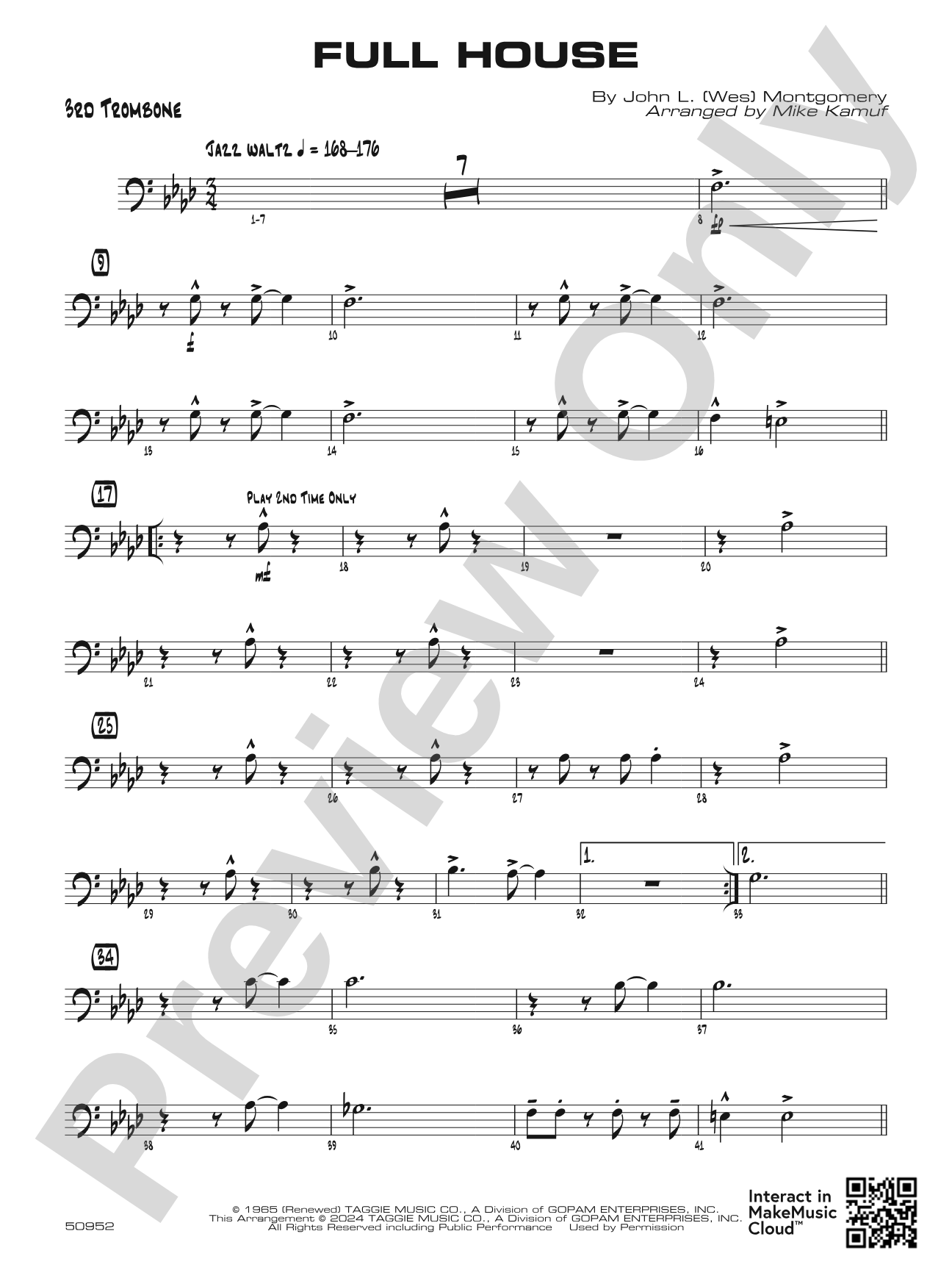
Full House: 3rd Trombone

By John L. (Wes) Montgomery / arr. Mike Kamuf

Grade: 3.5

Item: 00-PC-0019361_TN3

Digital Download
$3.00
Description
An exciting jazz waltz that swings all the way! The melody is stated by tenor and trombone moving into two solo sections: trombone 1 and trumpet 2, then alto 1 and tenor 1 followed by a drum solo. An interlude builds into the reprise of the melody. An outstanding chart! (5:00)

Don't just read it, hear it, play along with it, and watch your students grow with it. In MakeMusic Cloud, Full House: 3rd Trombone comes alive with professional accompaniment, adjustable tempo, and built-in practice tools that turn solo practice into real progress.

Sample Audio
0:00
0:00
Sample Video
Additional Details
Series: Jazz Band Series
Publisher: Alfred Music
SKU: 00-PC-0019361_TN3

More about this title

About the Composer: John L. (Wes) Montgomery

Wes Montgomery (1923-1968) was a guitarist and composer whose innovative approach to jazz improvisation fundamentally shaped the sound of soul jazz and hard bop. Self-taught on the instrument, Montgomery developed his signature octave technique and warm, singing tone while working as a session musician in Indianapolis and later in New York, recording extensively for the Riverside label. His compositions, many of which became jazz standards, balance accessibility with sophistication and remain central to the jazz repertoire across all performance levels.

Why we love this

Full House delivers the swagger of a genuine jazz standard without drowning students in complexity. The waltz time signature feels fresh compared to typical swing fare, while the structured solo sequence (trombone, trumpet, alto/tenor, drums) gives every section a moment to shine and keeps rehearsals moving forward productively. Directors appreciate charts like this one because they sit squarely in the sweet spot between accessibility and musicality: students can execute the parts cleanly while still making real artistic choices during ensemble sections.

What to expect

Elegant and sophisticated rather than hard-swinging. The waltz meter creates a gentle lilt while the solos maintain that soulful Montgomery warmth, lending the piece an almost sophisticated nightclub energy that feels more composed than loose. The interlude's build toward the final statement generates real momentum and delivers satisfying payoff.

Who it's for

Jazz ensemble directors working with intermediate high school or early college students who are ready for structured solo opportunities but still developing jazz vocabulary and confidence. The Grade 3.5 level assumes solid fundamental musicianship, clean part reading, and at least basic jazz interpretation skills.

How to get the most out of it

  • Establish the swing feel in waltz time during the first read-through by tapping quarter-note pulse in three rather than one; this prevents the ensemble from lurching into a bouncy, ungrounded feel.
  • Create clear articulation contrast between the melody statement (tenor and trombone) and the solo section entrances so listeners hear the formal turn without relying on tempo changes.
  • Work the drum solo section without click track in rehearsal so the drummer can feel the ensemble's breathing and weight; lock it back in before the interlude with intentional precision.
  • Balance the interlude's build carefully by having rhythm section and horns rehearse independently first, then layer them to find the dynamic arc that supports the melody's return.

How to use it

Schedule Full House as a festival or contest selection to showcase your ensemble's balance between section strength and solo artistry. It also works beautifully in a set of jazz standards to demonstrate stylistic range beyond straight-ahead blues and bebop, pairing effectively with uptempo swingers or darker blues changes for contrast.

Skills your students will build

  • Comping and rhythmic support in triple meter
  • Solo structure and phrasing over chord changes
  • Swing interpretation and articulation in waltz time
  • Ensemble listening and dynamic balance during solo sections
  • Sectional independence while maintaining ensemble cohesion

You May Also Like