
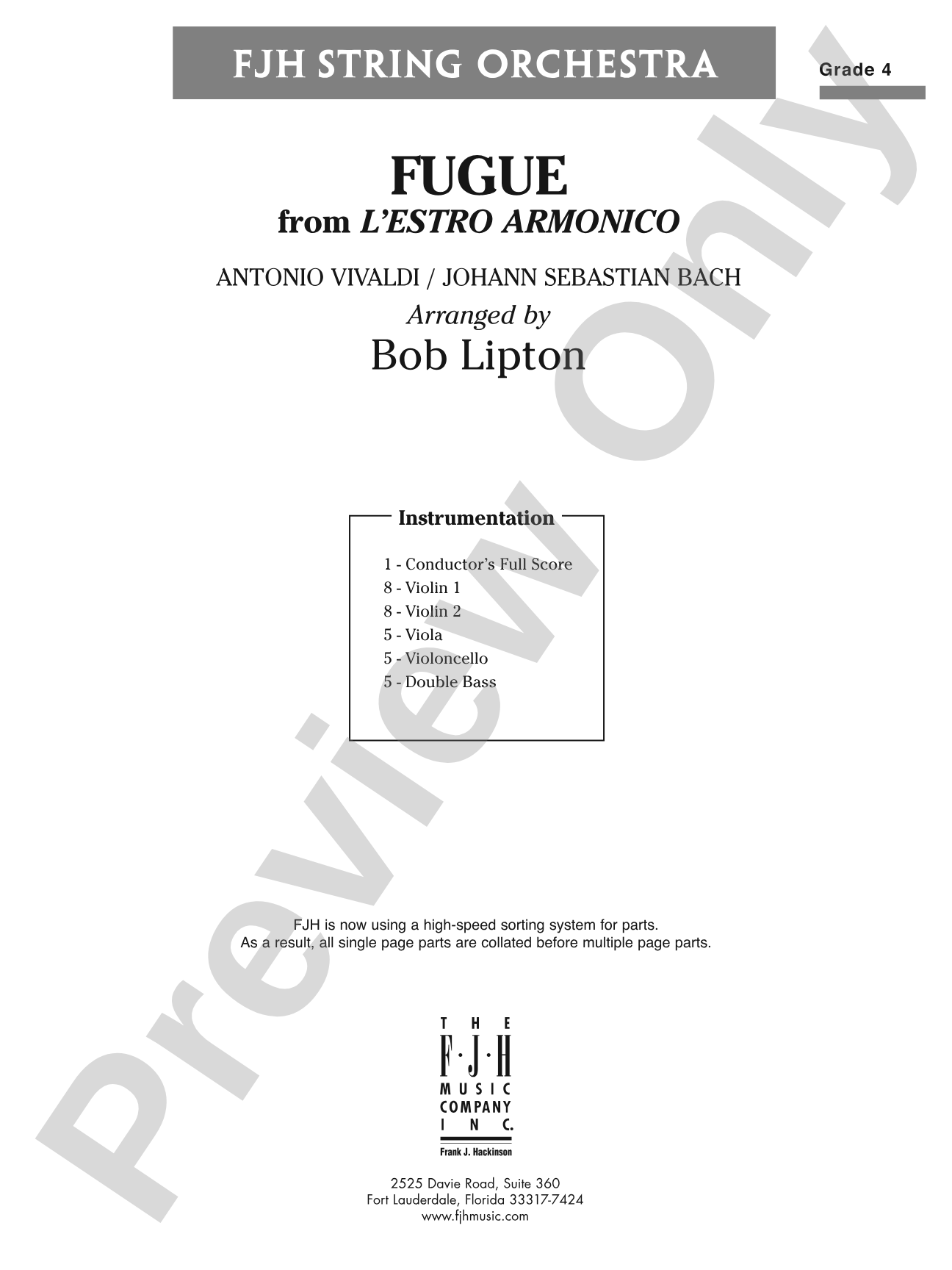
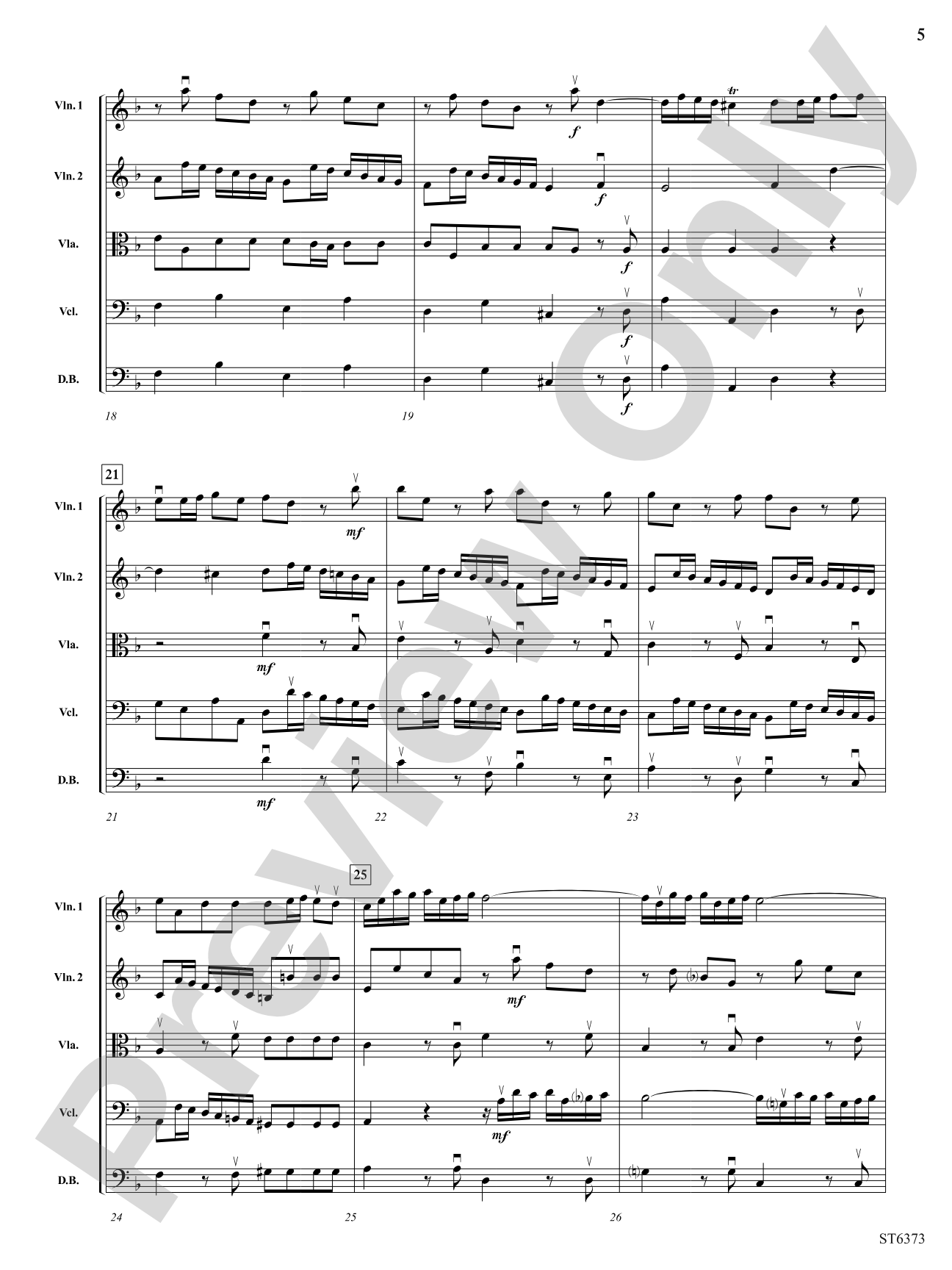
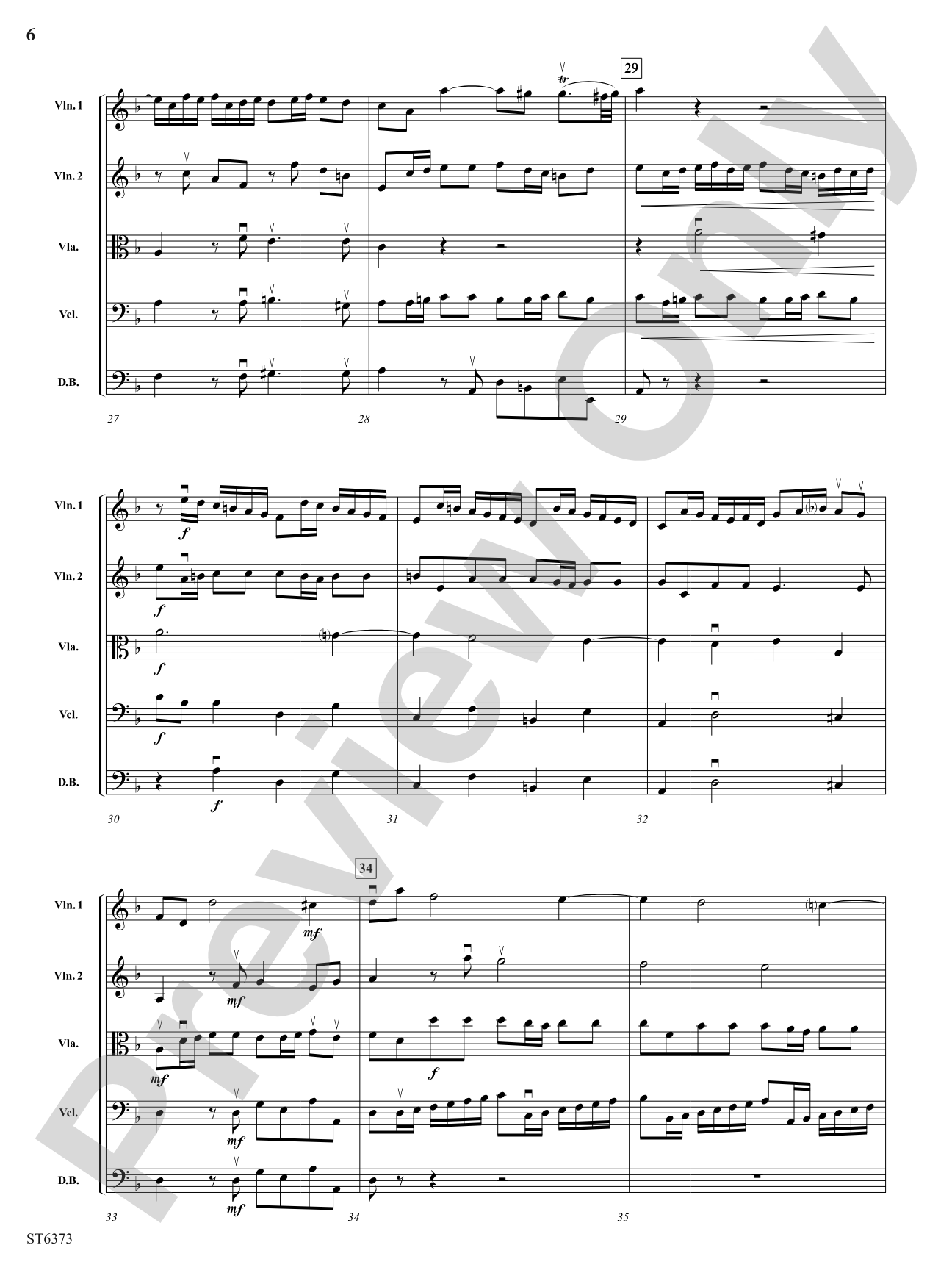
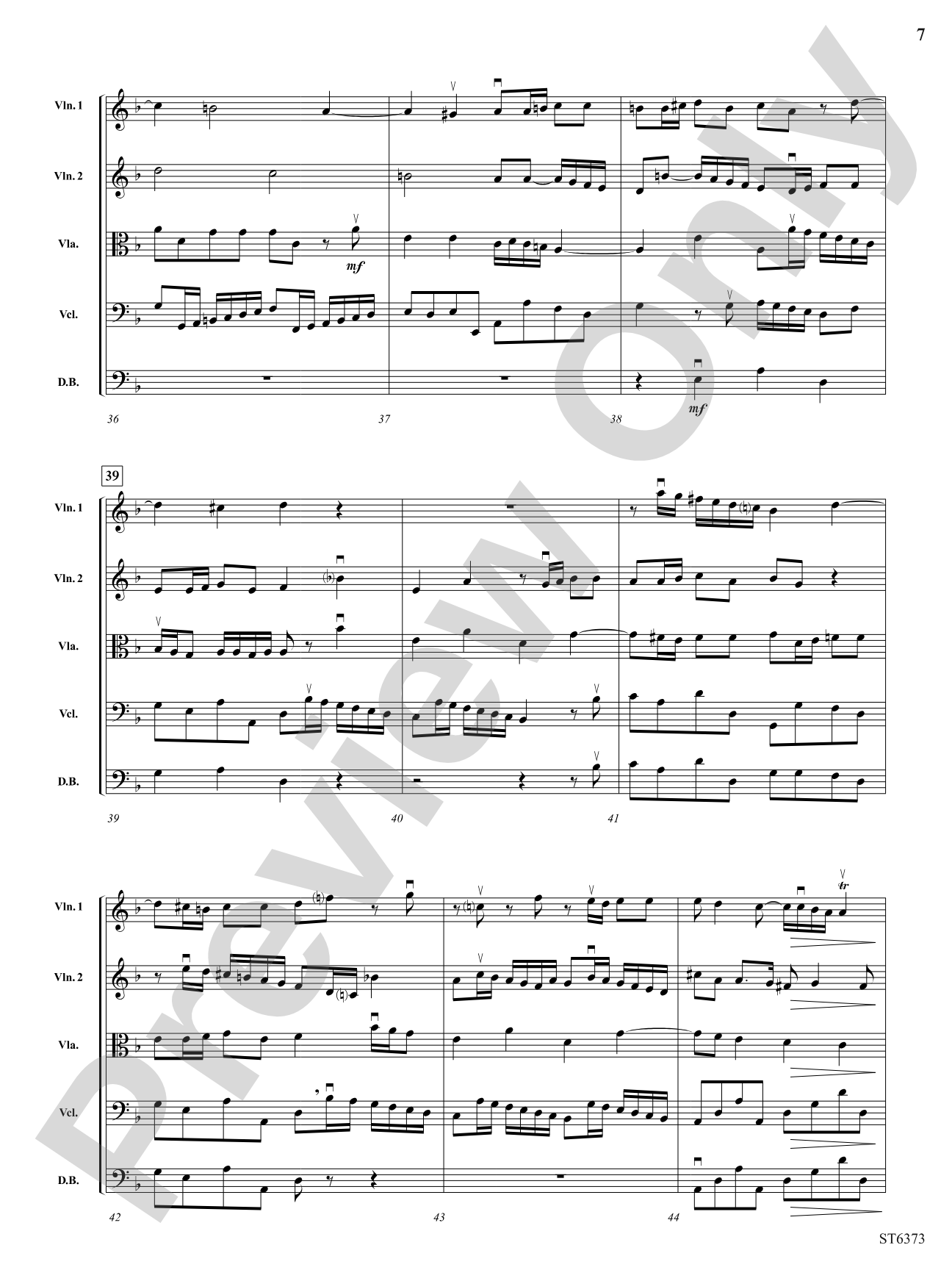
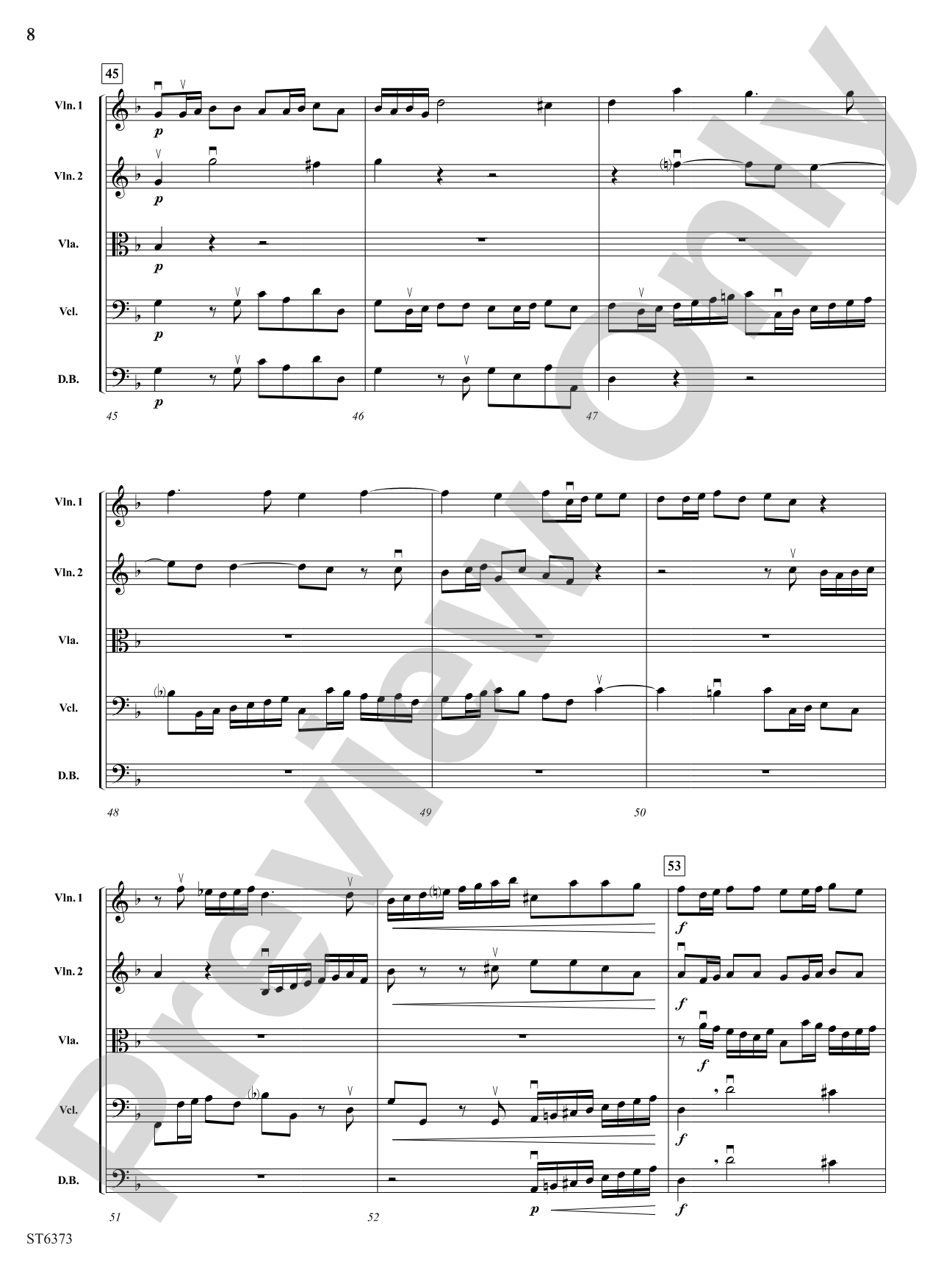

Fugue from L'estro Armonico: String Orchestra Conductor Score & Parts
By Antonio Vivaldi, J.S. Bach / arr. Bob Lipton
Grade: 4
Item: 98-DST6373
$50.00
Pickup currently not available
Buy Extra Parts (Digital PDF Download)
| Product | Price | Quantity |
|---|---|---|
| Fugue from L'estro Armonico: Score | $5.00 | |
| Fugue from L'estro Armonico: Violin 1 | $7.00 | |
| Fugue from L'estro Armonico: Violin 2 | $7.00 | |
| Fugue from L'estro Armonico: Viola | $7.00 | |
| Fugue from L'estro Armonico: Violoncello | $7.00 | |
| Fugue from L'estro Armonico: Double Bass | $7.00 |
Parts Added to Cart!
Description
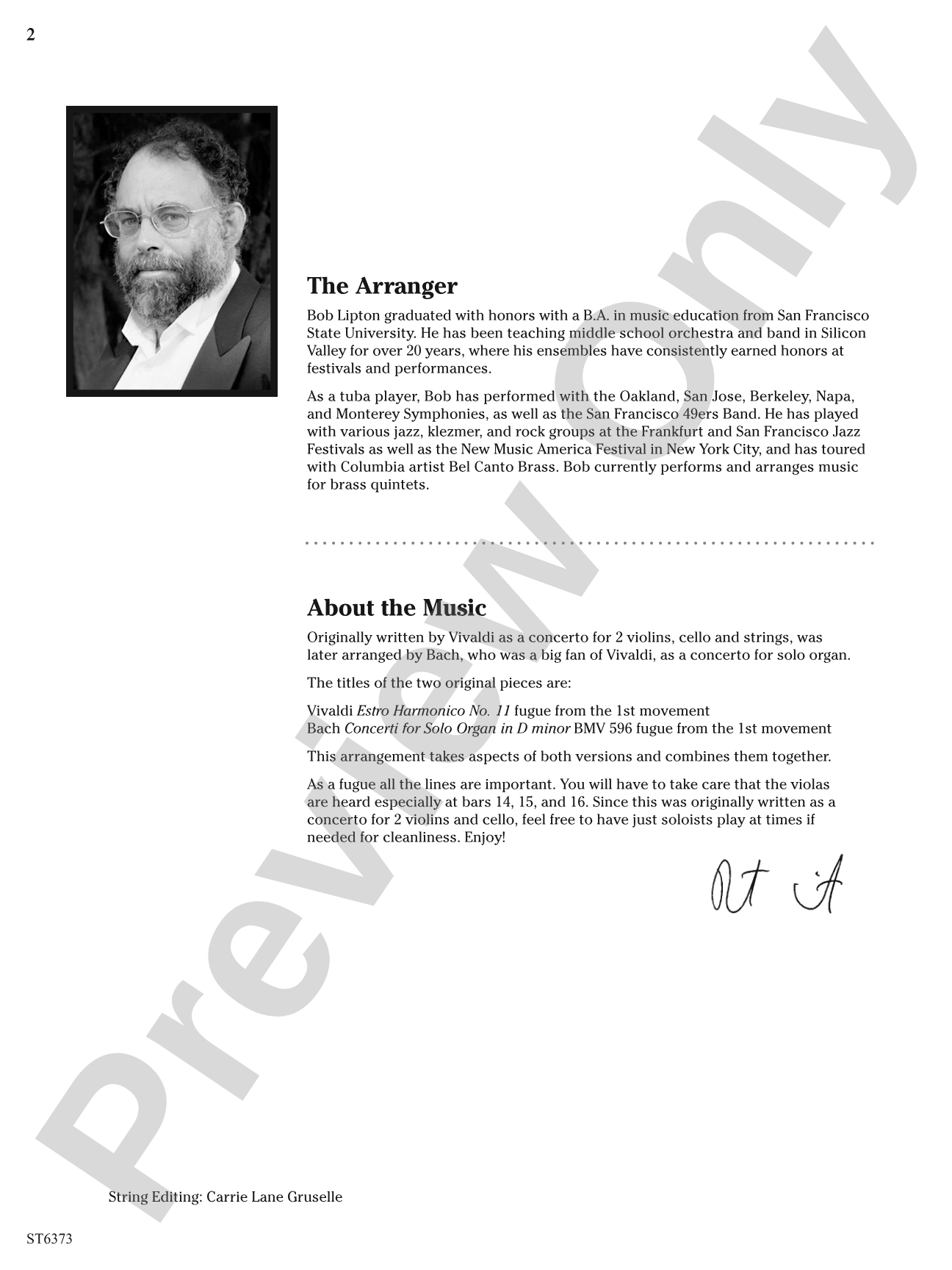
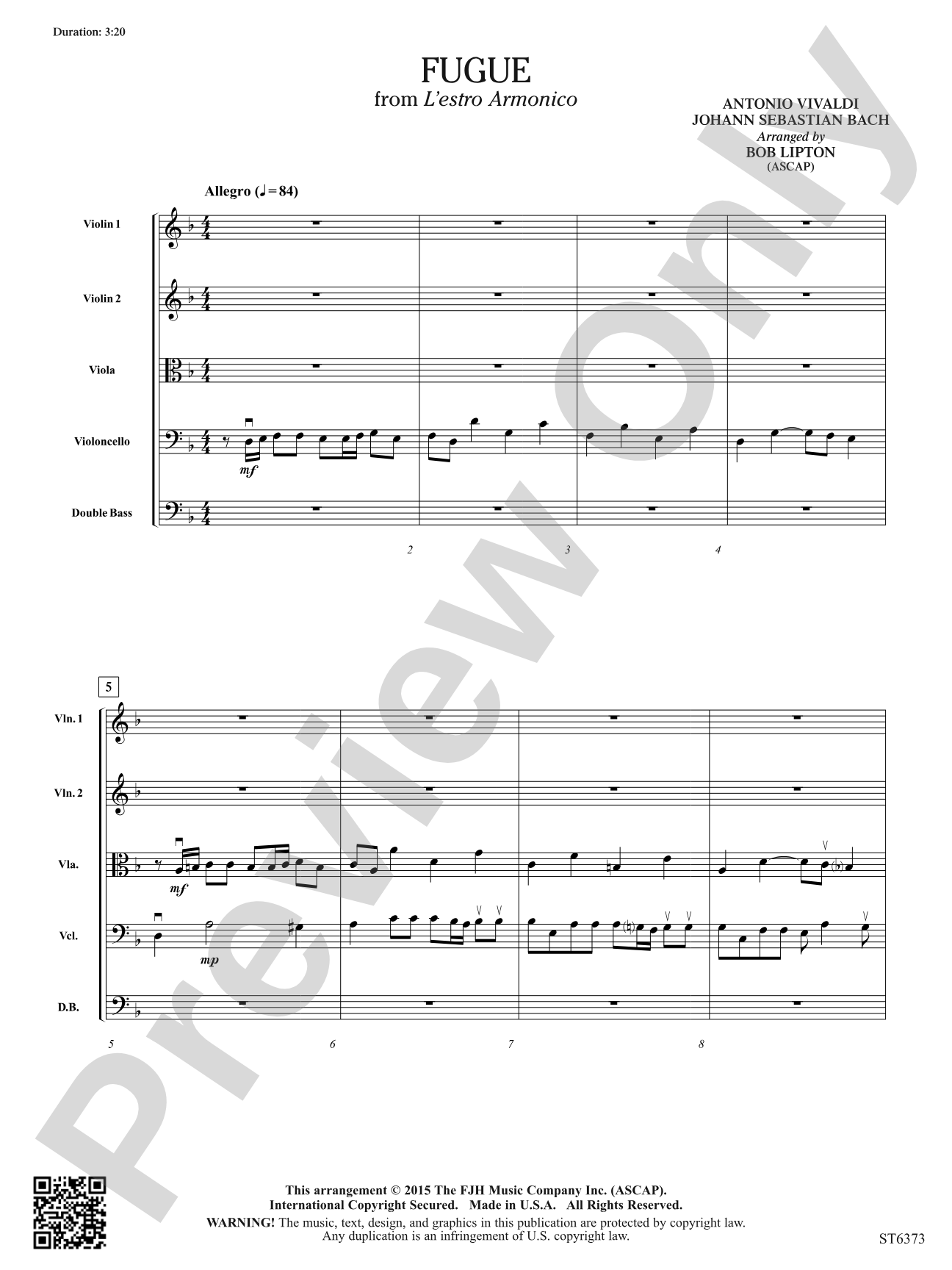
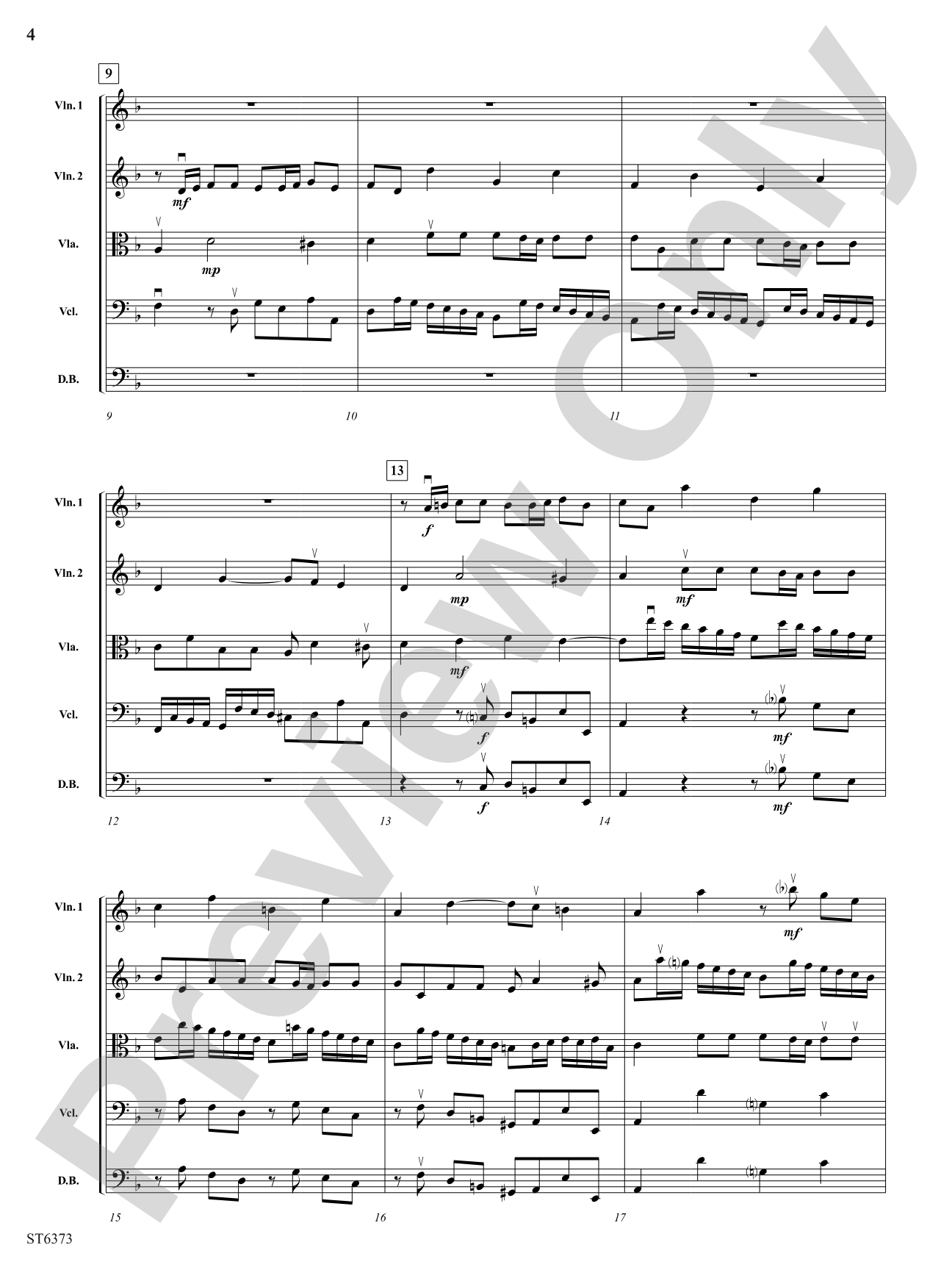
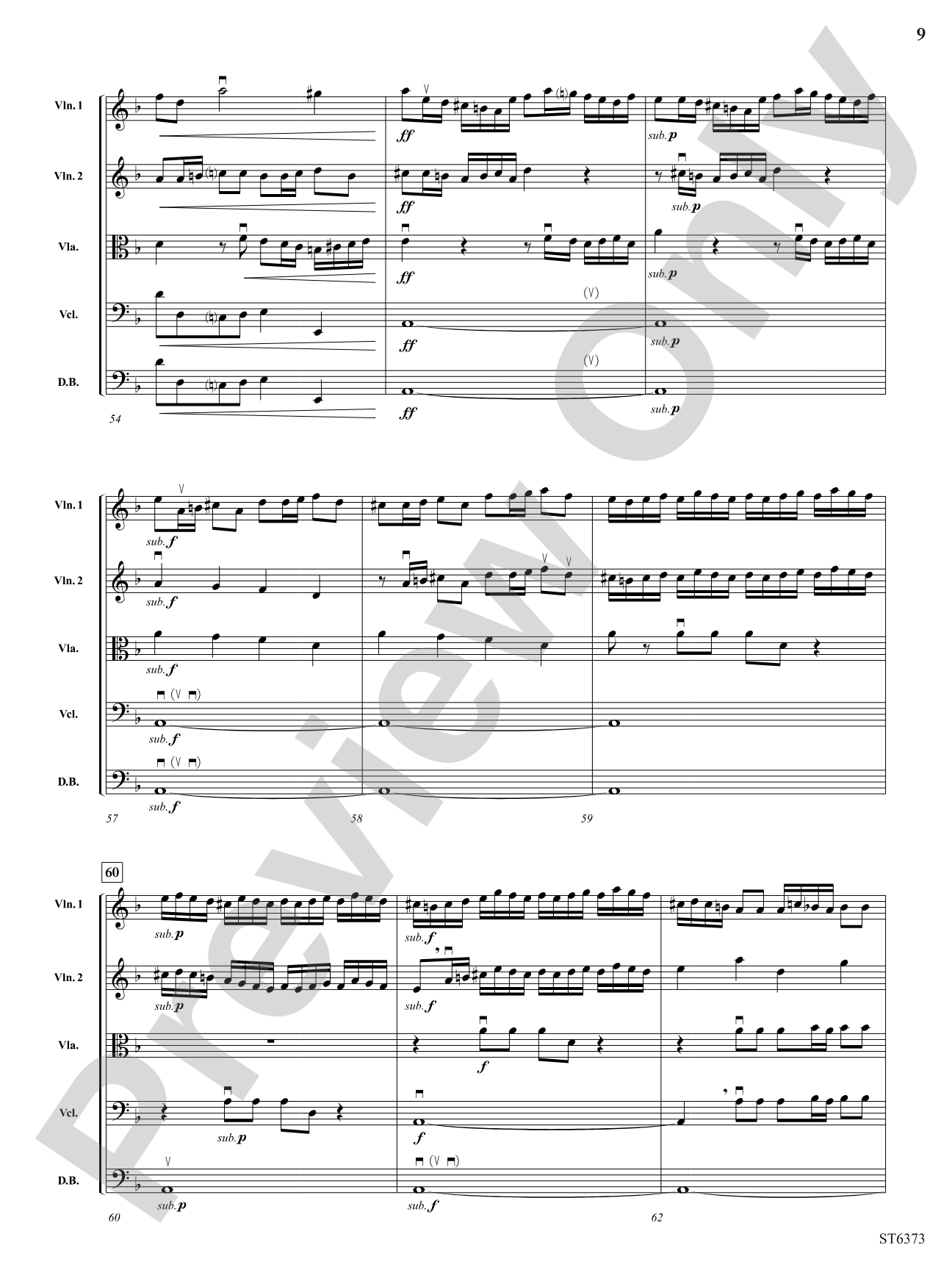
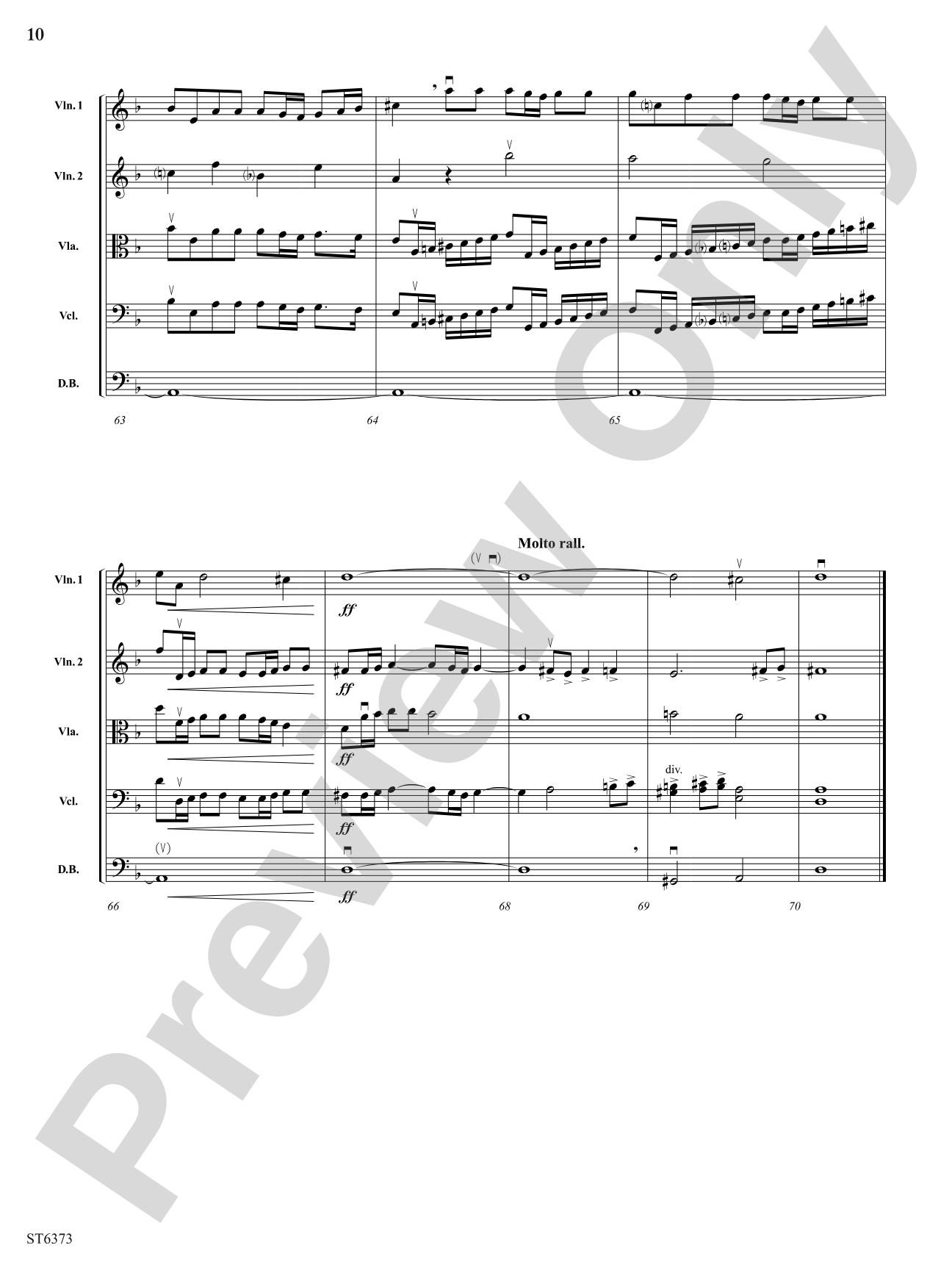
The combination of Vivaldi and Bach is true magic. The same can be said of this spectacular arrangement of the fugue from the first movement of L'estro Armonico 11, which Bach arranged for his Organ Concerto in D Minor. Combining the best of both versions, this arrangement explores some brilliant contrapuntal writing.


Fugue from L'estro Armonico: String Orchestra Conductor Score & Parts isn't in MakeMusic Cloud just yet...but it could be. Let us know you'd like to see it, and you'll help shape what comes next. In the meantime, start a free trial and dive into thousands of interactive titles your students can play along with today.
Request This Title
Tell us you want it.
Start Your Free Trial
Explore everything that's ready to play right now.
Sample Audio
1
Audio File
--:--
0:00
0:00
Sample Video
No sample videos found.
Additional Details
Series:
FJH String Orchestra
Publisher:
The FJH Music Company, Inc.
SKU:
98-DST6373
More about this title
About the Composer: Antonio Vivaldi
Antonio Vivaldi (1678-1741) was a Venetian priest and virtuoso violinist whose prolific output shaped the Baroque concerto. His L'estro Armonico (The Genius of Harmony), a collection of twelve concerti for various instruments, became foundational repertoire that influenced composers across Europe, including Bach. Vivaldi's gift for memorable melody, driving rhythms, and brilliant instrumental writing made his works instantly popular and enduringly teachable.
Why we love this
This arrangement captures the architectural brilliance of contrapuntal writing at a level your orchestra can genuinely sink its teeth into. Rather than simplifying Bach's organ version or diluting Vivaldi's original, Bob Lipton threads both together, giving Grade 4 ensembles a chance to work with real polyphonic ideas and see how two masters solved the same musical problem.
What to expect
Intellectual and energetic. The fugue unfolds like a musical conversation where each voice announces an idea, then makes room for others to do the same, building toward moments of dense, shimmering polyphony. There's both order and forward momentum, the kind of satisfaction that comes from hearing a complex musical puzzle resolve.
Who it's for
String orchestras at the Grade 4 level ready to engage serious counterpoint without drowning in complexity. This arrangement works for ensembles that have developed clean articulation, secure intonation across all four voices, and enough rehearsal time to untangle overlapping melodic lines.
How to get the most out of it
- Balance the contrapuntal lines by identifying which voice carries the fugue subject in each measure; rotate leadership among sections so no single part dominates the texture.
- Establish a steady harmonic pulse with your lower strings, then layer the subject entries above it; this prevents the fugue from becoming muddy or rhythmically scattered.
- Mark phrase endings clearly at cadential moments, even when the subject continues in another voice; this helps players hear the larger form beneath the intricate counterpoint.
- Bring out the moment when multiple voices state the subject simultaneously; that convergence is the payoff of fugal architecture and deserves clarity and precision.
How to use it
Open a concert with this to signal serious musicianship, or place it between lighter works to showcase your orchestra's ability to handle sophisticated texture. It pairs naturally with other Baroque or Renaissance repertoire, and it gives audiences a tangible reason to listen closely rather than passively.
Skills your students will build
- Following overlapping melodic lines in a four-voice texture
- Entering a fugal subject with confidence and rhythmic precision
- Maintaining independent part integrity while listening to other voices
- Balancing dynamic contrast in imitative writing
- Understanding Baroque compositional architecture and fugal form