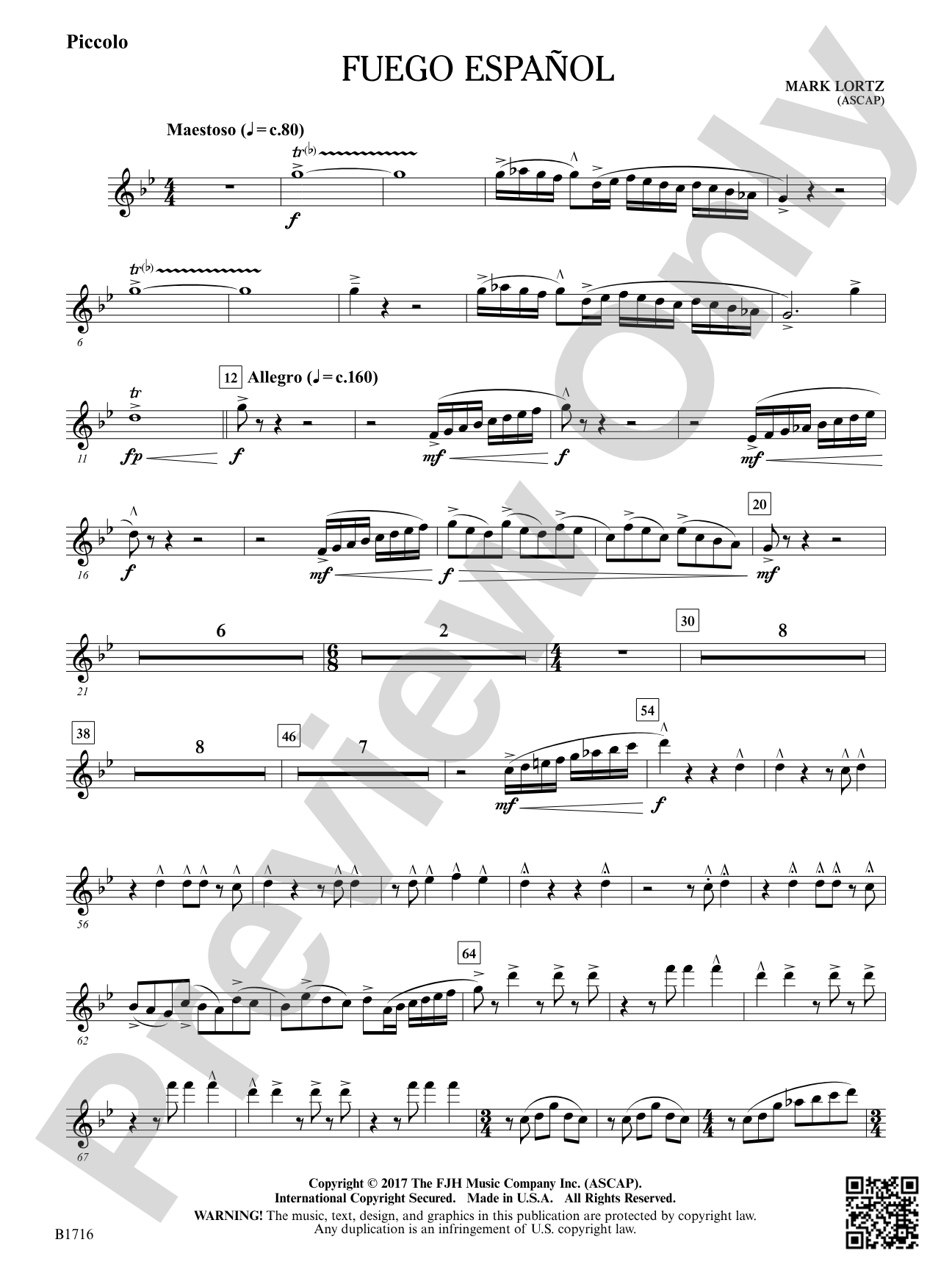
Written in a classic Latin American style, the piece opens with a sizzling fanfare before settling in to a classic and exciting groove that moves throughout the ensemble. A fiery and rousing ending completes this showstopper that is approachable by a wide range of bands!
Discover MakeMusic Cloud: thousands of interactive titles your students can play along with today.
Mark Lortz directs the music program at Stevenson University and maintains active roles as a music editor for RWS Music Company and brass arranger for the Reading Buccaneers Drum and Bugle Corps. His compositions and arrangements have earned recognition from ASCAP, appeared on Bandworld's Top 100 and J.W. Pepper's Editor's Choice, and been performed at prestigious venues including The Midwest Clinic, Bands of America, and the College Band Directors National Association.
Beyond the concert hall, Lortz has collaborated with the U.S. Army Field Band, the Naval Academy Drum and Bugle Corps, and major orchestras across the country. He holds degrees from the Peabody Institute and a Ph.D. in Music Education from Temple University, and was honored as an Outstanding Educator by the Maryland Music Educators' Association in 2024. As a clinician and adjudicator, he works with honor bands and community ensembles throughout North America and Europe.
Why we love this
Lortz crafts this piece with the understanding of what concert bands actually need: immediate energy that hooks audiences, rhythmic vitality that keeps young players engaged, and accessibility across ability levels. The opening fanfare announces the work's intent, but the groove that follows is where the ensemble really locks in, making this an exceptionally rewarding piece to rehearse and perform.
What to expect
The piece ignites with a sizzling brass fanfare that immediately signals excitement and energy. Once the initial flourish settles, a propulsive Latin groove takes hold, driving the music forward with rhythmic vitality and color that carries through the entire ensemble until a rousing, fiery conclusion brings the work to a triumphant close.
Who it's for
Concert bands at the Grade 4 level will find this piece approachable in terms of technical demands while remaining musically sophisticated. Directors seeking repertoire that energizes both students and audiences benefit from Lortz's gift for writing idiomatic passages that feel stylistically authentic without requiring specialized expertise.
How to get the most out of it
Establish the opening fanfare with sharp articulation across the brass section; precision here sets the tone for the excitement that follows.
Let the rhythm section anchor the groove once the opening settles. Lock the bass line and drum parts together before bringing in the full ensemble.
Balance the Latin percussion colors against the harmonic foundation; these elements should enhance rather than compete with each other.
Build momentum toward the fiery ending by gradually increasing the ensemble's intensity across the final phrase, without rushing the tempo.
How to use it
Program this as a mid-concert showstopper that shifts the energy after a quieter selection, or use it to open a second half and set a vivid, rhythmically engaging tone. Its multicultural flavor pairs well in diverse programming contexts and serves as an excellent vehicle for highlighting rhythm section precision and brass ensemble cohesion.
Skills your students will build
Latin American rhythmic figures and groove-based ensemble playing
Brass section articulation and blend in fanfare writing
Coordination between melodic lines and rhythmic accompaniment
Dynamic contrast and momentum building toward climactic endings
Style-specific interpretation and cultural awareness in performance
You May Also Like
Scan to Complete Your Purchase
Use your phone's camera to scan the code below
You'll log in on your phone and the order will be added to your account