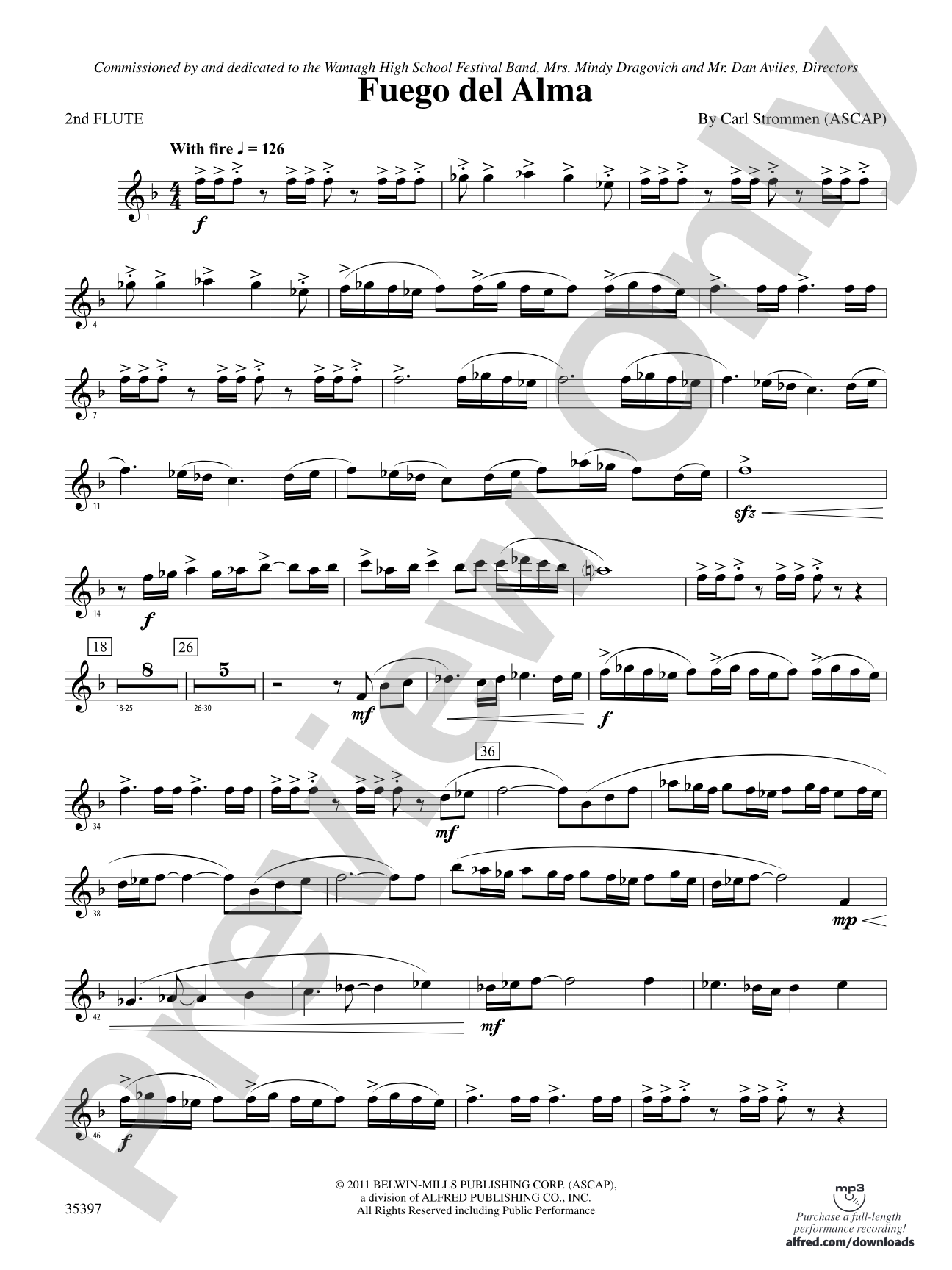
Fuego del Alma: 2nd Flute Sheet Music Preview

Fuego del Alma: 2nd Flute

By Carl Strommen

Grade: 3.5 (Medium Easy to Medium)

Item: 00-PC-0014942_F2

Digital Download
$3.00
Description
Roughly translated as "fire of the soul," Fuego del Alma embraces both pasodoble and flamenco styles using traditional Spanish harmonies, authentic rhythms, characteristic contrasting hand claps, and Spanish-style percussion. Carl Strommen's original work is energetically charged y con mucho fuego! This title is available in MakeMusic Cloud.

Don't just read it, hear it, play along with it, and watch your students grow with it. In MakeMusic Cloud, Fuego del Alma: 2nd Flute comes alive with professional accompaniment, adjustable tempo, and built-in practice tools that turn solo practice into real progress.

Sample Audio
0:00
0:00
Sample Video
Additional Details
Series: Belwin Concert Band
Publisher: Alfred Music
Page Count: 240
SKU: 00-PC-0014942_F2

More about this title

About the Composer: Carl Strommen

Carl Strommen

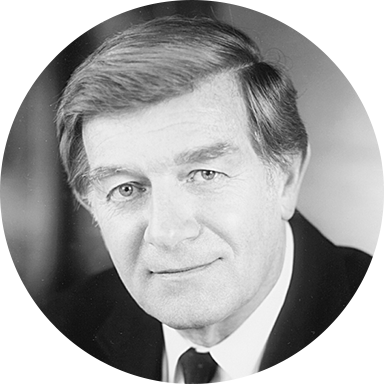
Carl Strommen's music appears regularly in concert halls, on television, and in films across North America and internationally. His prolific catalog spans band, orchestra, jazz ensemble, and vocal music, establishing him as one of the most frequently performed composer/arrangers working today. He has received the ASCAP Standard Writers Award annually throughout his career and maintains an active schedule as both a clinician and commission composer.

Strommen holds a degree from City College of New York and currently serves as an adjunct professor of orchestration and composition at C.W. Post Campus of Long Island University in Brookville, New York. He divides his time between Long Island and the Rocky Mountain region, where he maintains close ties with family in Denver and Boulder, Colorado.

Why we love this

Strommen captures the authentic spirit of Spanish music without relying on tired clichés. The interplay between pasodoble drive and flamenco color, combined with hand claps and Spanish-style percussion, gives your band genuine rhythmic and textural variety that engages both players and audiences. At Grade 3.5, it sits in a sweet spot where the writing remains accessible yet demands real musicianship.

What to expect

From the first moments, Fuego del Alma radiates passion and drive. The music pulses with the urgency of Spanish tradition, contrasting rhythmic vitality with moments of flamenco lyricism, all built on the harmonic language that gives Spanish music its distinctive voice. It feels like watching dancers in full command of their craft, every gesture intentional and alive.

Who it's for

Directors programming a concert or festival performance need authentic Spanish idiom that excites their band without excessive technical demands. This work appeals equally to ensembles wanting to explore multicultural repertoire and those seeking a concert opener or closer with genuine theatrical energy.

How to get the most out of it

  • Shape the pasodoble sections with clear forward motion and precision in the rhythmic figures; treat hand claps as part of the orchestration rather than afterthoughts.
  • Balance the Spanish percussion colors (especially characteristic elements like castanets or güiro if included) so they enhance rather than overwhelm the ensemble.
  • Allow the flamenco passages room to breathe with slight rhythmic flexibility while maintaining the underlying pulse that keeps the band locked together.

How to use it

Program this as a concert opener to establish energy and cultural interest from the first notes, or as a standalone feature that demonstrates your band's ability to command authentic style. It pairs well alongside other Latin or multicultural works, or it can stand alone as the distinctive centerpiece of a diverse program.

Skills your students will build

  • Rhythmic precision in pasodoble and flamenco idioms
  • Balance and blend in ensembles with added percussion layers
  • Stylistic interpretation of Spanish musical traditions
  • Reading and executing hand clap parts in coordination with instrumental lines
  • Dynamic control and phrasing in contrasting sections

You May Also Like