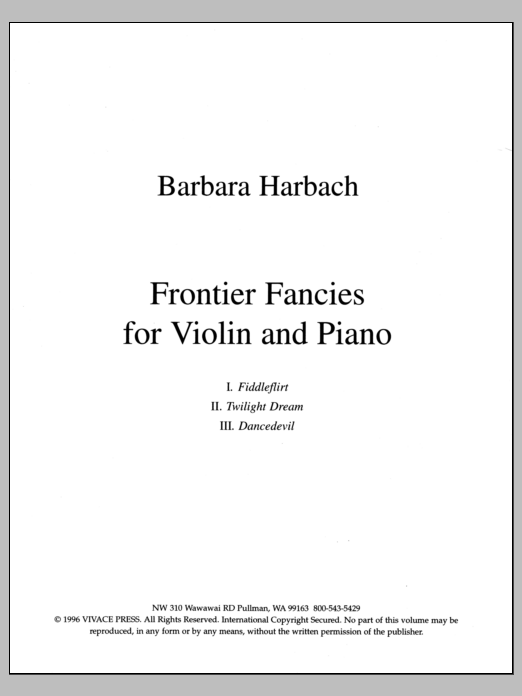
Frontier Fancies is in three movements. This exuberant set showcases the interaction between the violin and the piano. In Fiddleflirt, the two instruments are protagonists in a duel of speed and energy. Twilight Dream is an evocative aria and lush respite before the wild tarantella of Dancedevil. Duration: 12:00
Discover MakeMusic Cloud: thousands of interactive titles your students can play along with today.
Barbara Harbach is a composer whose works span classical forms with accessible energy. Her catalog demonstrates a gift for writing idiomatic parts that challenge players while remaining performable at intermediate to advanced levels, making her compositions frequent choices in studio lessons and recital programs.
Why we love this
The three-movement arc gives you a complete narrative arc in one piece, moving from virtuosic fun to genuine musical depth and back to joyful abandon. Harbach's writing for the violin-piano duo avoids the showpiece trap by making both instruments true partners, so neither accompanist nor soloist gets bored.
What to expect
You move from the playful scrappiness of a frontier fiddle duel into a tender, almost orchestral ballad, then whirl into uninhibited dance energy. The whole work breathes American optimism without resorting to obvious folk pastiche.
Who it's for
Violinists at the late intermediate to early advanced level who are ready for three-movement suite writing and want a rewarding collaboration with an engaged pianist. This works equally well in lessons, studio recitals, or as a concert encore sequence.
How to get the most out of it
Shape the tarantella's rhythmic drive with the pianist; the tempo should propel forward without rushing, letting the violin's decorative figures dance on top rather than fight the pulse.
In Fiddleflirt, clarify the dialogue by using articulation contrast between the two instruments. If one phrase is smooth, make the response crisp, and vice versa.
Twilight Dream calls for a singer's approach to phrasing in the violin part. Breathe with the melody, not against it, even when the piano offers no silence.
How to use it
Pair this as an alternative to traditional three-movement sonatas if you want your advanced students to experience suite form and character-piece writing. It also serves as a substantial recital closer when you need something engaging but not austere.
Skills your students will build
Quick passagework and articulation clarity across the violin's upper positions
Maintaining rhythmic independence from the piano while remaining harmonically connected
Sustained tone production and vibrato control in the slow movement
Stylistic navigation between virtuosic, lyrical, and dance-focused musical languages
Collaborative listening and communication with a pianist during rapid dialogue passages
You May Also Like
Scan to Complete Your Purchase
Use your phone's camera to scan the code below
You'll log in on your phone and the order will be added to your account