
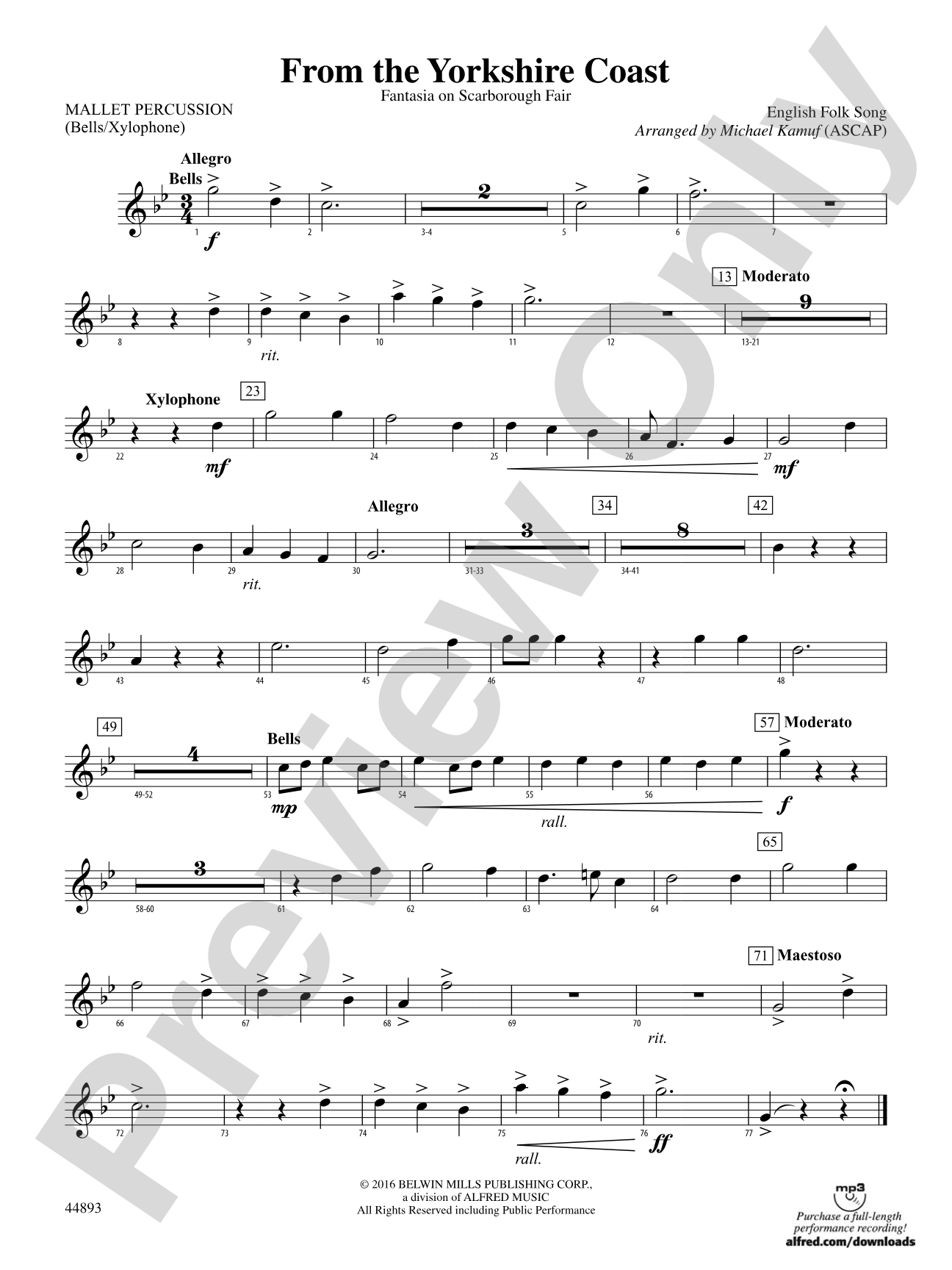

From the Yorkshire Coast: Mallets
Fantasia on Scarborough Fair
English Folk Song / arr. Michael Kamuf
Grade: 1.5 (Very Easy to Easy)
Item: 00-PC-0017389_M1
$3.00
Pickup currently not available
Description
Here's a fantasia for beginning band based on the English folk song "Scarborough Fair." This beautiful melody is passed around to all instruments in this contemporary and expressive setting that is certain to be a favorite for students and audiences. A musical adventure. (2:15)


Don't just read it, hear it, play along with it, and watch your students grow with it. In MakeMusic Cloud, From the Yorkshire Coast: Mallets comes alive with professional accompaniment, adjustable tempo, and built-in practice tools that turn solo practice into real progress.
Open in the Player
Jump straight in and assign it today.
Start Your Free Trial
Open this title and explore the full library in minutes.
Sample Audio
1
Audio File
--:--
0:00
0:00
Sample Video
Additional Details
Series:
Belwin Beginning Band
Publisher:
Alfred Music
Page Count:
142
SKU:
00-PC-0017389_M1
More about this title
About the Arranger: Michael Kamuf

Michael Kamuf earned degrees in Jazz Performance and Music Education from Youngstown State University's Dana School of Music, followed by a Master of Arts in Instrumental Conducting from George Mason University. His compositions and arrangements have been recorded by the Woody Herman and Glenn Miller Orchestras, the USAF Airmen of Note, the US Navy Commodores, and distinguished soloists including James Moody, Eddie Daniels, and Sean Jones. He has performed as a member of the Woody Herman Orchestra and served as assistant principal trumpet with the Youngstown Symphony Orchestra.
Kamuf spent thirty years in the classroom, including twenty-seven years as Director of Bands and Orchestras at John T. Baker Middle School in Damascus, Maryland, where he built ensembles known for consistent festival recognition and commissioned works for young bands. An exclusive writer for Alfred Music's Belwin Division, he has over 100 publications in print across jazz, orchestra, and concert band catalogs. His jazz ensemble arrangements are now standard literature for young ensembles. He currently leads the Mike Kamuf Little Big Band, comprised of accomplished musicians from the Baltimore and Washington, DC region.
Why we love this
Kamuf takes one of the most recognizable English folk melodies and frames it as a genuine musical journey rather than a straight transcription. The orchestration ensures every section gets time with the tune, building investment across your entire ensemble while keeping technical demands low enough that students can focus on phrasing and musicality.
What to expect
The familiar, wistful quality of 'Scarborough Fair' comes through with clarity and gentleness. Kamuf's setting adds contemporary texture while respecting the song's emotional restraint, creating a contemplative piece that invites the listener into a peaceful narrative rather than demanding attention through bombast.
Who it's for
This arrangement suits beginning concert bands ready for something beyond drill-like etude writing. It works equally well for younger students encountering folk melody arrangement for the first time and for intermediate ensembles seeking accessible programming that still teaches musicianship.
How to get the most out of it
- Let the melody breathe. This is a lyrical piece, so avoid rushing through phrases; find the natural shape of 'Scarborough Fair' even as it moves between instruments.
- Balance your dynamics carefully as the melody passes around the band. A player carrying the tune should sing through their part while accompanying voices stay supportive and transparent.
- Use the 2:15 duration as a rehearsal anchor. If your run-through feels rushed or dragging, reference the timing to help students internalize appropriate tempo and pacing.
- Secure your fundamental articulation early. With Grade 1.5 difficulty, clean, unified tonguing on the opening statements sets the tone for the entire performance.
How to use it
Open a concert with this to establish an introspective mood, or use it as a transition between more energetic works. Its modest technical requirements and emotional accessibility make it ideal for community engagement concerts where audiences include non-musicians; the folk tune connection invites recognition and warmth.
Skills your students will build
- Sustained melodic playing across phrase lengths
- Dynamic control and balance when passing melody between sections
- Articulation clarity and uniformity across the ensemble
- Listening and ensemble blend in a lyrical context
- Recognition and performance of folk song melody and its variations