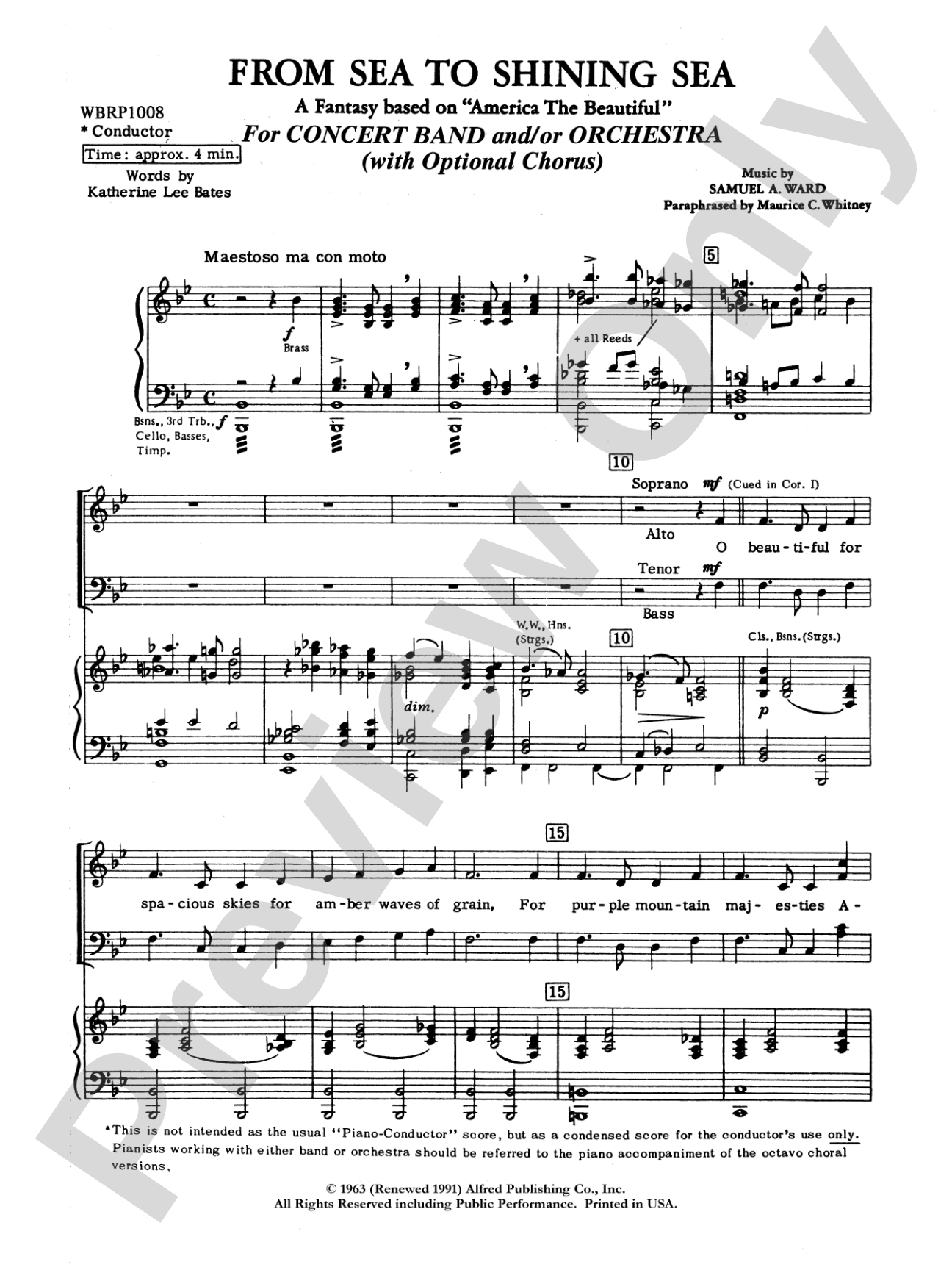
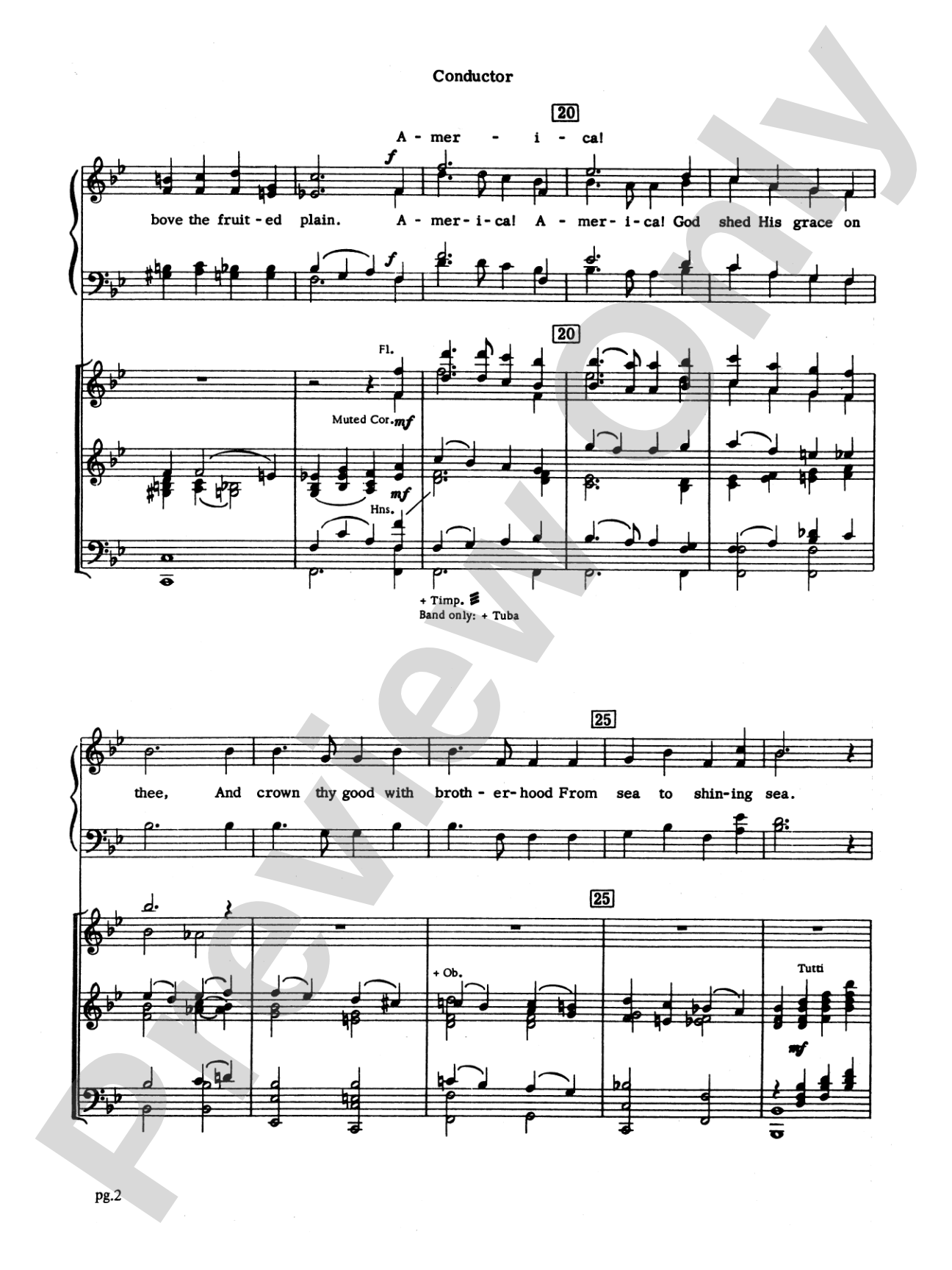
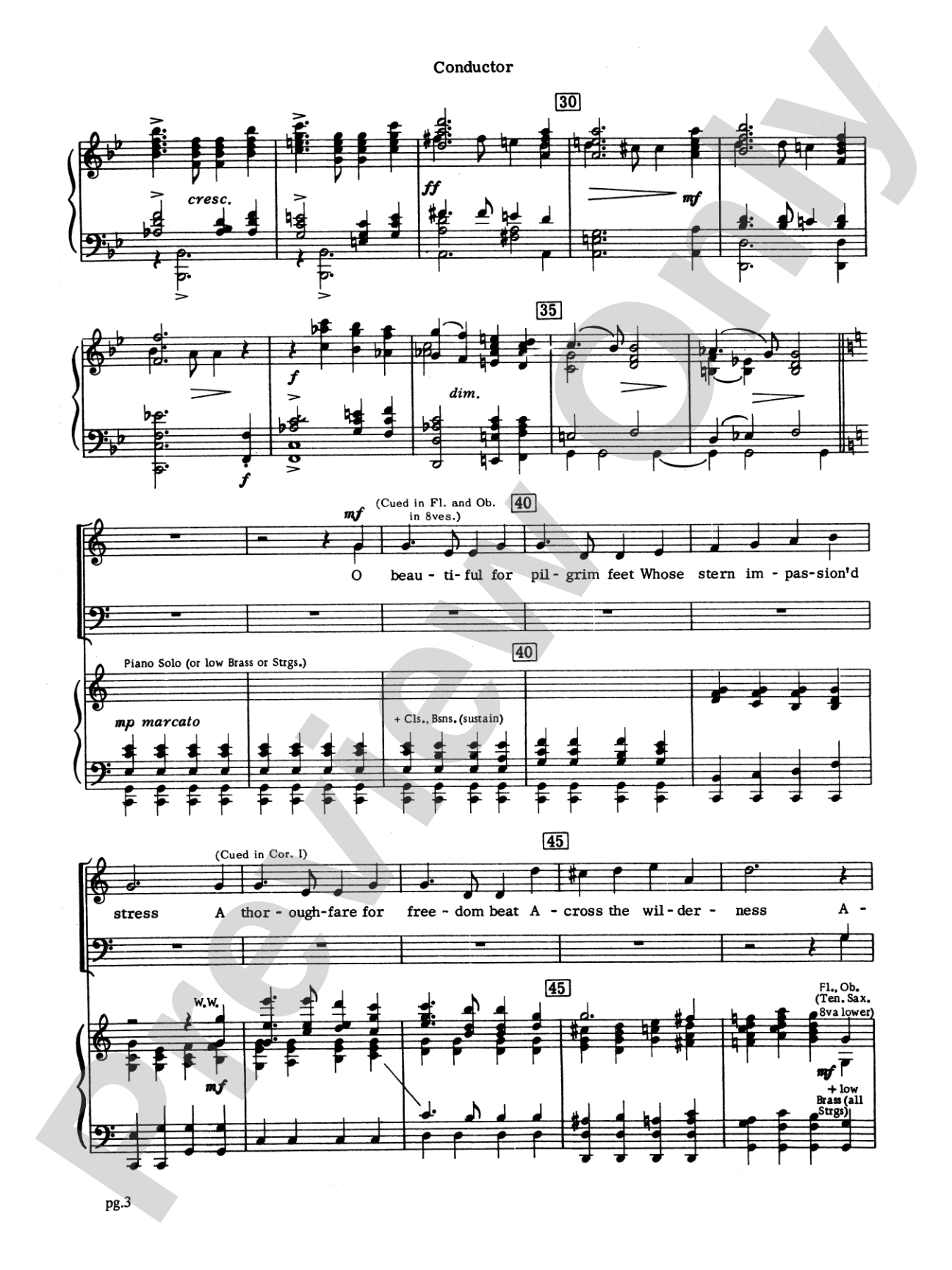
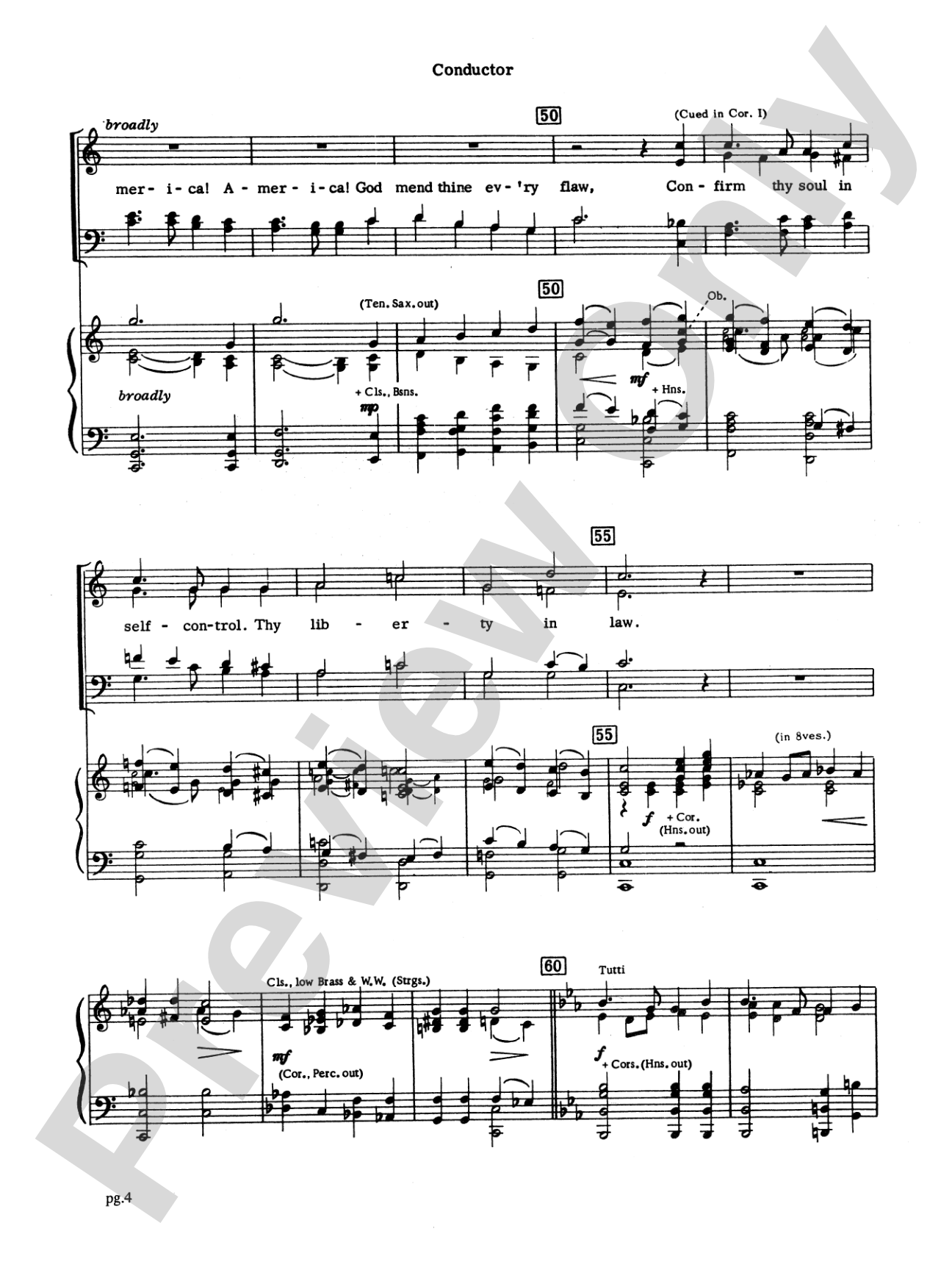
From Sea to Shining Sea (A Fantasy Based on "America the Beautiful") Sheet Music Preview

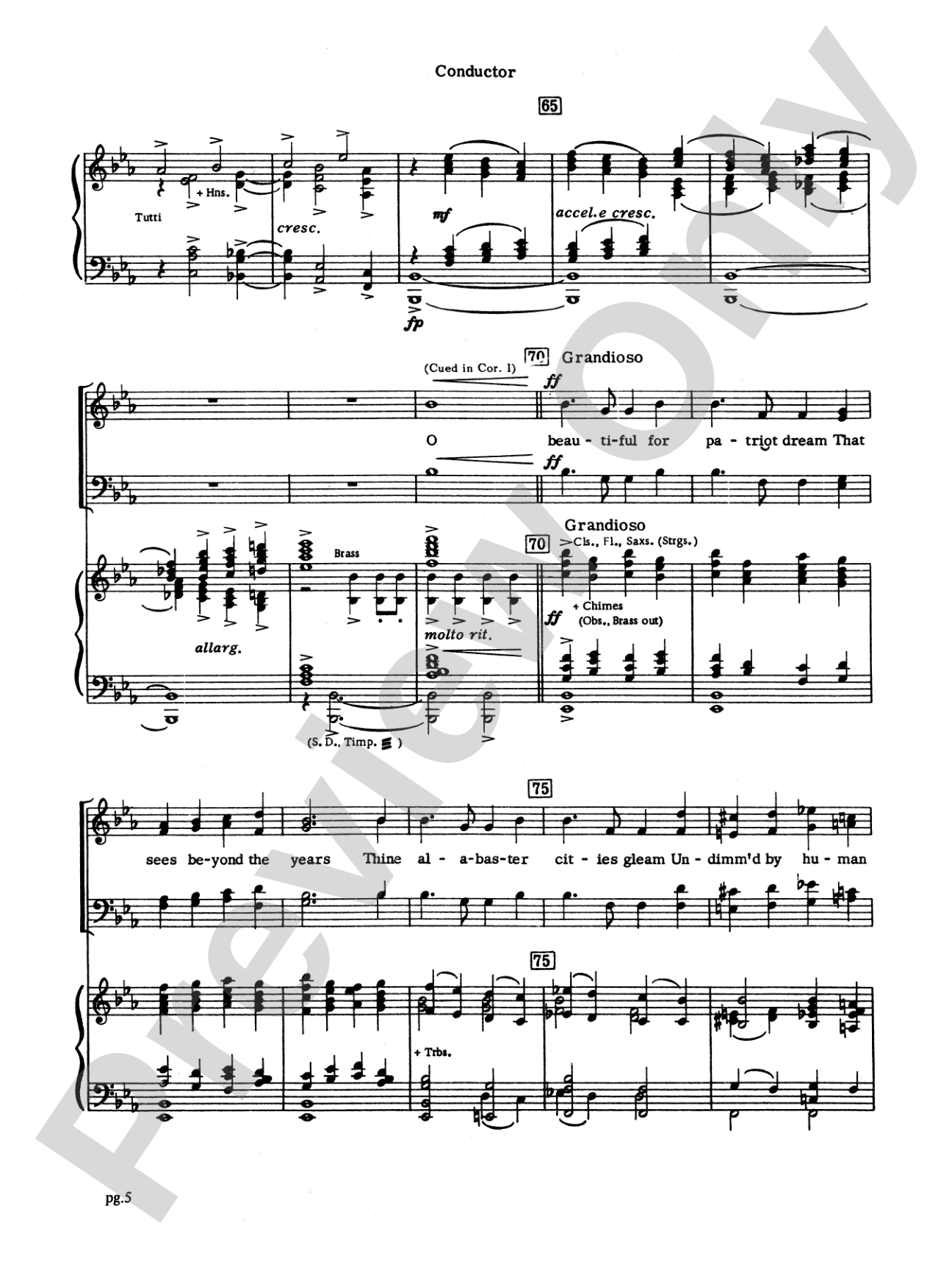
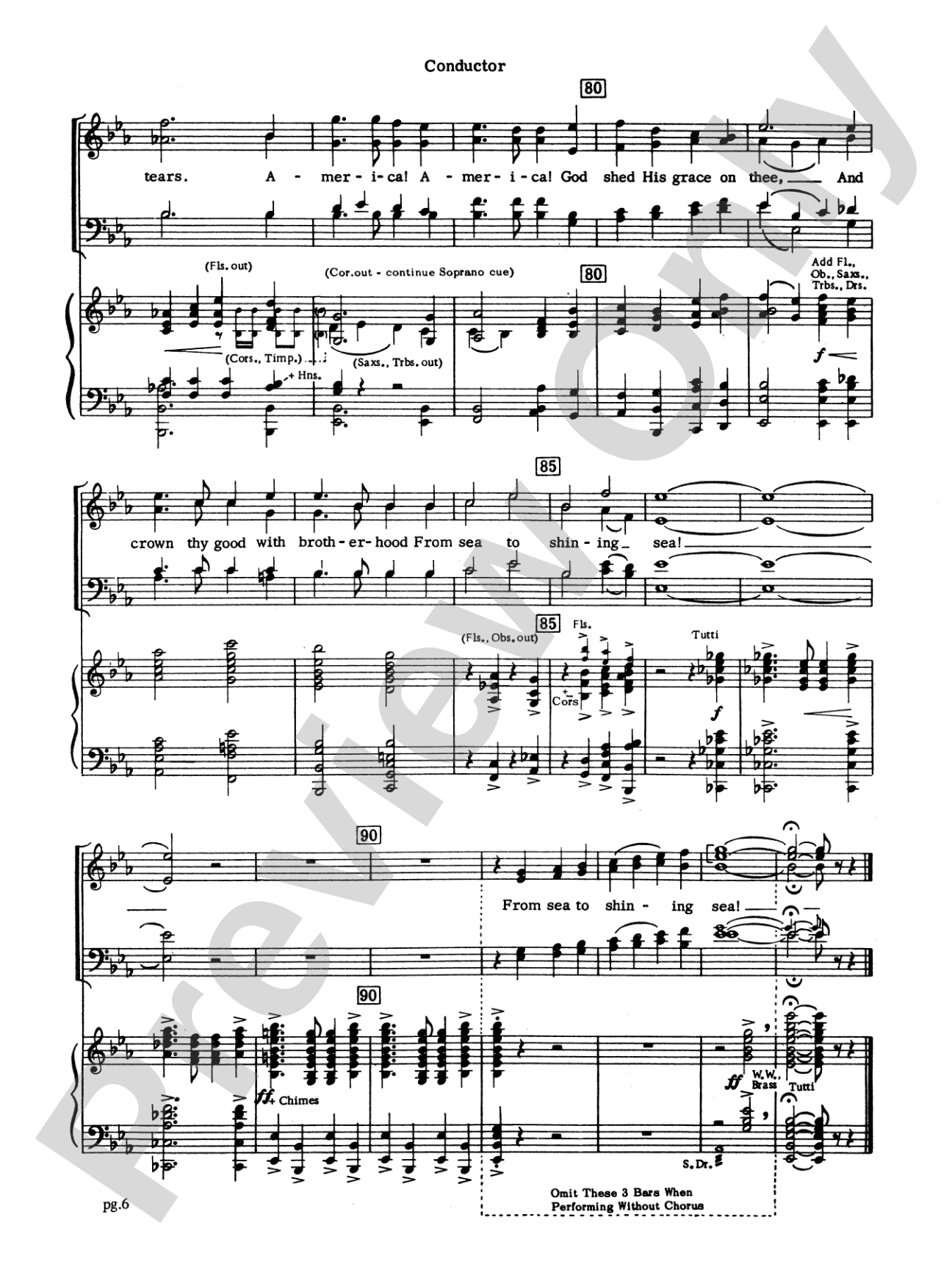
From Sea to Shining Sea (A Fantasy Based on "America the Beautiful"): String Orchestra Conductor Score

A Fantasy Based on "America the Beautiful"

Music by Samuel A. Ward, words by Katherine Lee Bates / paraphrased by Maurice C. Whitney

Grade: 2.5

Item: 00-PK-0002673

Digital Download
makemusic Cloud badge
$49.00

One moment…

Description
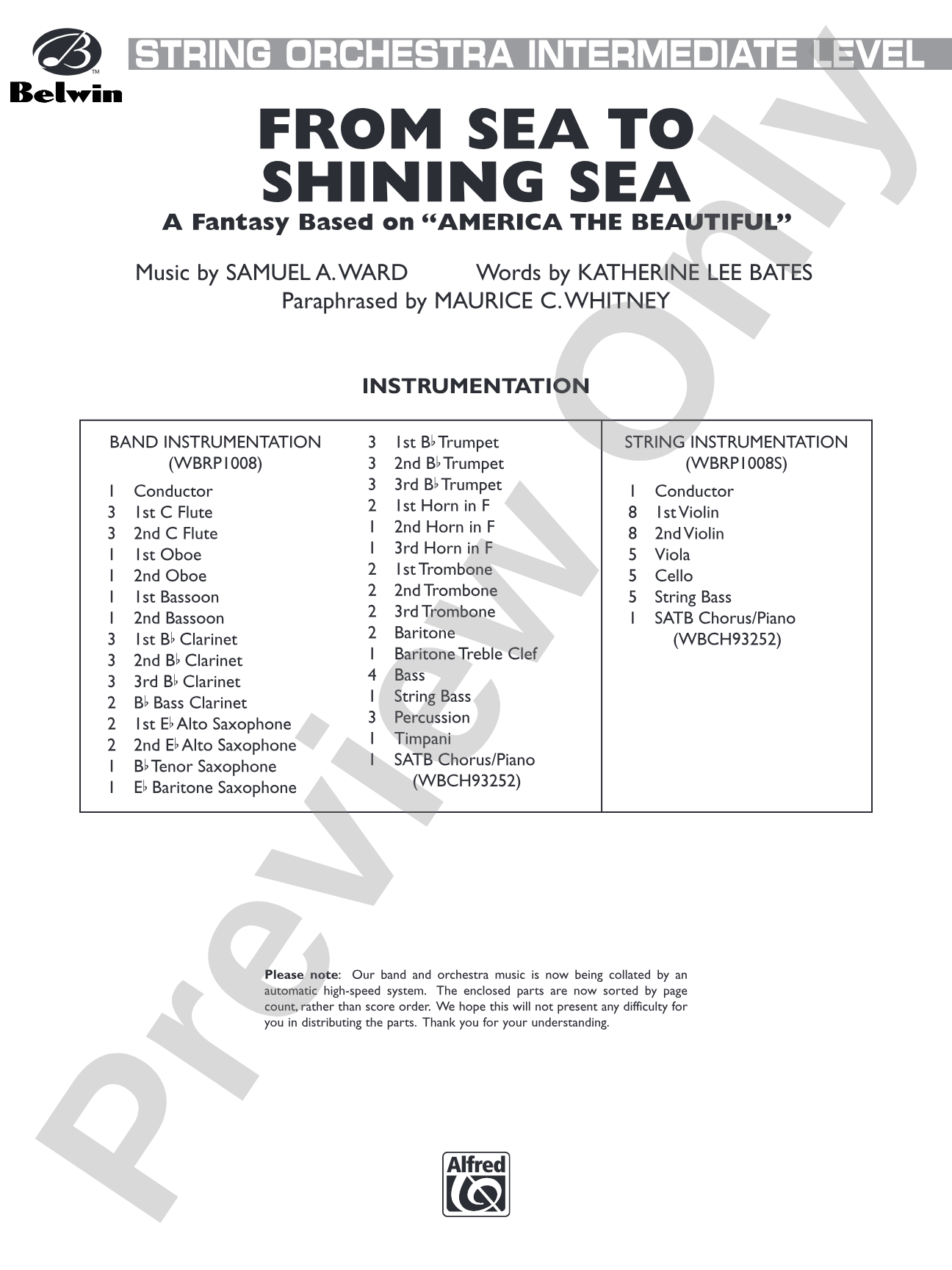
This is an arrangement of "America the Beautiful" which may be performed with band alone, chorus alone, or band with chorus (octavos are available separately). There are also supplementary string parts available to be played along with the band, or band and chorus. The string parts are available separately (WBRP1008S: 8-8-5-5-5).

Don't just read it, hear it, play along with it, and watch your students grow with it. In MakeMusic Cloud, From Sea to Shining Sea (A Fantasy Based on "America the Beautiful"): String Orchestra Conductor Score comes alive with professional accompaniment, adjustable tempo, and built-in practice tools that turn solo practice into real progress.

Sample Audio
No sample audio found.
Sample Video
Additional Details
Series: Belwin Intermediate String Orchestra
Publisher: Alfred Music
Page Count: 104
SKU: 00-PK-0002673

More about this title

About the Composer: Katherine Lee Bates

Katherine Lee Bates (1859-1929) was an American poet, educator, and author whose words have become synonymous with American patriotism. She wrote the poem that became "America the Beautiful" in 1893, inspired by the view from Pike's Peak in Colorado. Her contribution to American culture extends far beyond this single work; she was a professor of English literature, a prolific writer of poetry and children's literature, and an advocate for women's education during her lifetime.

Why we love this

This arrangement gives orchestral directors an accessible entry point to a beloved American anthem without requiring extensive rehearsal time or a massive ensemble. Whitney's scoring for Grade 2.5 strings keeps the texture clear and manageable while honoring the melody's dignity, and the flexibility to perform with band alone, chorus alone, or both gives you genuine programming options throughout the year.

What to expect

Stately and expansive, with the familiar melody unfolding across spacious harmonic progressions that feel genuinely orchestral despite the Grade 2.5 accessibility. The arrangement captures the landscape-gazing contemplation of the original poem, inviting players into a moment of reflection rather than bombast.

Who it's for

String orchestra conductors at the intermediate level who need flexible patriotic programming for 4th of July concerts, school assemblies, or community performances. This works equally well as a standalone piece for strings or as an enhanced arrangement when combined with band and choral octavos.

How to get the most out of it

  • Balance the melody across your violin sections so the tune projects clearly; resist the urge to over-double it with violas and cellos in the supporting passages.
  • If performing with band and chorus, establish the tempo with the conductor's prep and lock in early to prevent the added instrumental and vocal layers from pushing or dragging.
  • Shape the long phrases with gentle dynamic swells rather than sudden changes; this patriotic melody rewards a sustained, singing approach even from young string players.
  • Use the full 104-page score to map out transitions between standalone string sections and moments where band or chorus enters, marking cue points clearly in rehearsal.

How to use it

Program this as a closing piece for a patriotic concert or summer pops night, where its flexibility lets you adapt on the fly depending on who's available to perform. It's also ideal for school assemblies or community events where strings need to carry a recognizable tune without instrumental complexity getting in the way.

Skills your students will build

  • Sustaining long melodic phrases across multiple measures without loss of tone quality
  • Balancing within a section to support rather than bury the principal melody
  • Reading and executing dynamic shapes in a Grade 2.5 orchestral texture
  • Ensemble coordination across divisi passages and multiple string parts

You May Also Like