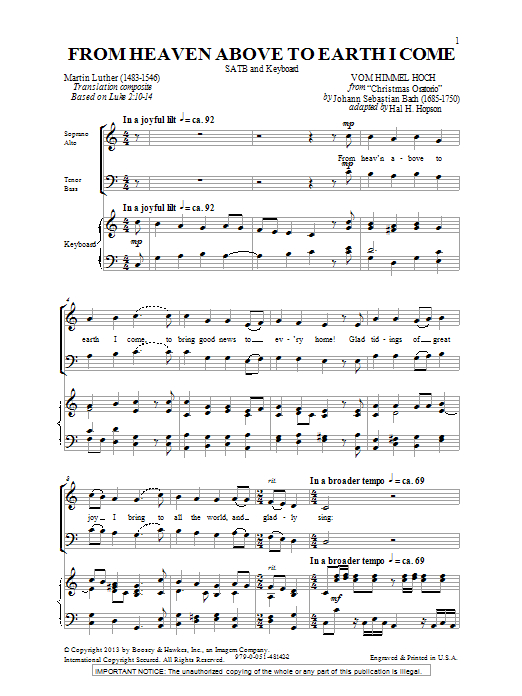
Johann Sebastian Bach (1685-1750) spent much of his career as cantor at St. Thomas Church in Leipzig, where he composed sacred music for the church calendar and trained choristers in the performance of both his own works and those of earlier masters. His output across all genres remains foundational to music education, and his choral works in particular demonstrate how sophisticated counterpoint and harmonic language serve the text rather than overshadow it.
Bach's approach to composition reveals a mind equally comfortable with intricate fugal writing and direct emotional expression. For educators, his music offers students a masterclass in how melody, harmony, and rhythm work together to create meaning, and his sacred texts speak across centuries with remarkable clarity.