
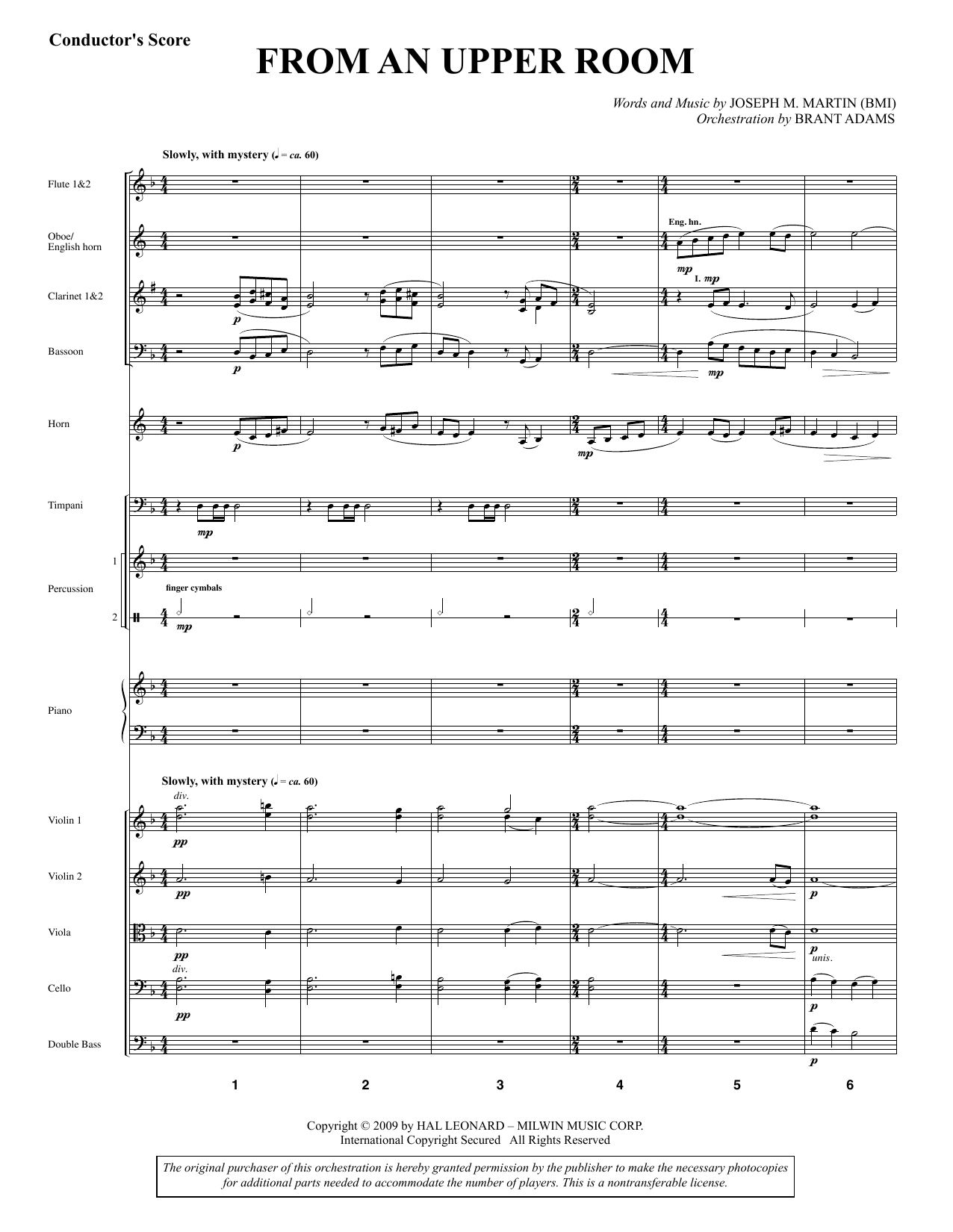

From An Upper Room (from Lenten Sketches): Choral Instrumental Pak
By Joseph M. Martin
Item: 35-PK00318558
$60.00
Pickup currently not available
Buy Extra Parts (Digital PDF Download)
Parts Added to Cart!
Description
Uses: Communion, Maundy Thursday
Scripture: Matthew 26:26-29; Mark 14:22-25
A musical tableau of the last supper paints the scene of this important moment from scripture. An undercurrent of rushing triplets in the accompaniment creates a harmonic foundation on which the memorable tune is laid. Rich harmonies carry the words of Christ as He delivers His blessing and speaks the words of the new covenant. Profound!


From An Upper Room (from Lenten Sketches): Choral Instrumental Pak isn't in MakeMusic Cloud just yet...but it could be. Let us know you'd like to see it, and you'll help shape what comes next. In the meantime, start a free trial and dive into thousands of interactive titles your students can play along with today.
Request This Title
Tell us you want it.
Start Your Free Trial
Explore everything that's ready to play right now.
Sample Audio
No sample audio found.
Sample Video
No sample videos found.
Additional Details
Publisher:
Hal Leonard
SKU:
35-PK00318558
More about this title
About the Composer: Joseph M. Martin

Joseph M. Martin studied piano performance at Furman University and later earned a master's degree from the University of Texas at Austin, where he also taught in the Piano Pedagogy Department for five years. His performance career has taken him across the United States and Mexico, including a featured appearance with the Guadalajara Symphony Orchestra following his win in the Nina Plant Wideman Competition, and his solo recital was broadcast nationally from Ex-convento del Carman.
Today Martin divides his creative energy between concert performances and his primary passion: writing music for churches and conferences of church musicians. His compositions and arrangements have been heard in venues ranging from Carnegie Hall to hundreds of worship spaces across North America, reflecting his deep commitment to serving the church musician community. He lives in Austin, Texas with his family.
Why we love this
Martin captures the weight of this scriptural moment without resorting to bombast. The rushing triplet accompaniment creates genuine forward momentum while the vocal line soars with accessibility, allowing congregational singers or choirs of modest ability to carry the profound text without strain. This is sacred writing that respects both the liturgical occasion and the musicians performing it.
What to expect
A moment of sacred stillness interrupted by gentle motion. The harmonic language feels both contemporary and reverent, painting the intimacy of Christ's final meal with His disciples while the accompaniment's rhythmic undercurrent reminds us of time's passage and the weight of covenant.
Who it's for
This work suits both established church choirs looking for meaningful Maundy Thursday music and volunteer ensembles seeking material with real theological substance. The scoring accommodates various ability levels while honoring the solemnity of the Last Supper narrative.
How to get the most out of it
- Ensure the accompaniment triplets maintain steady propulsion beneath the vocal line; rushing or dragging here destabilizes the harmonic foundation Martin has built.
- Balance the rich harmonies against clarity of the text; these words from Matthew and Mark demand audibility even within lush voicing.
- Let the undercurrent of motion in the accompaniment breathe slightly during the moments of repose in the melody, creating natural phrasing without losing momentum.
How to use it
Place this during a Maundy Thursday evening liturgy or as the centerpiece of a Holy Week service focused on communion theology. It works equally well as a meditative moment within a longer Lenten service or paired with other Joseph M. Martin pieces to create a cohesive season of worship music.
Skills your students will build
- Singing sustained lines over rhythmically active accompaniment patterns
- Interpreting rich harmonic language and understanding voice leading within four-part writing
- Connecting musical expression to liturgical context and scriptural meaning
- Ensemble balance when melody and accompaniment have contrasting rhythmic profiles