
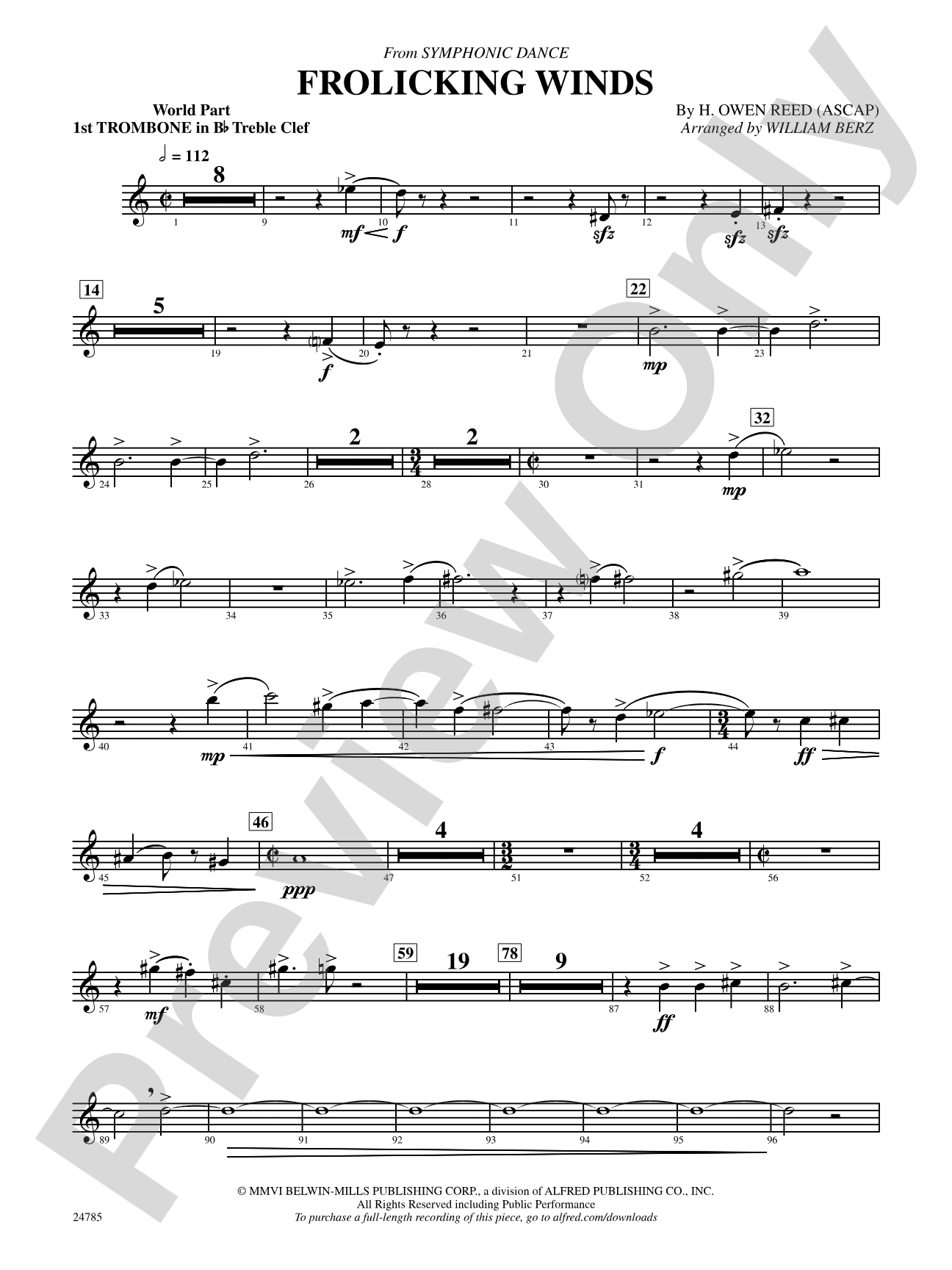
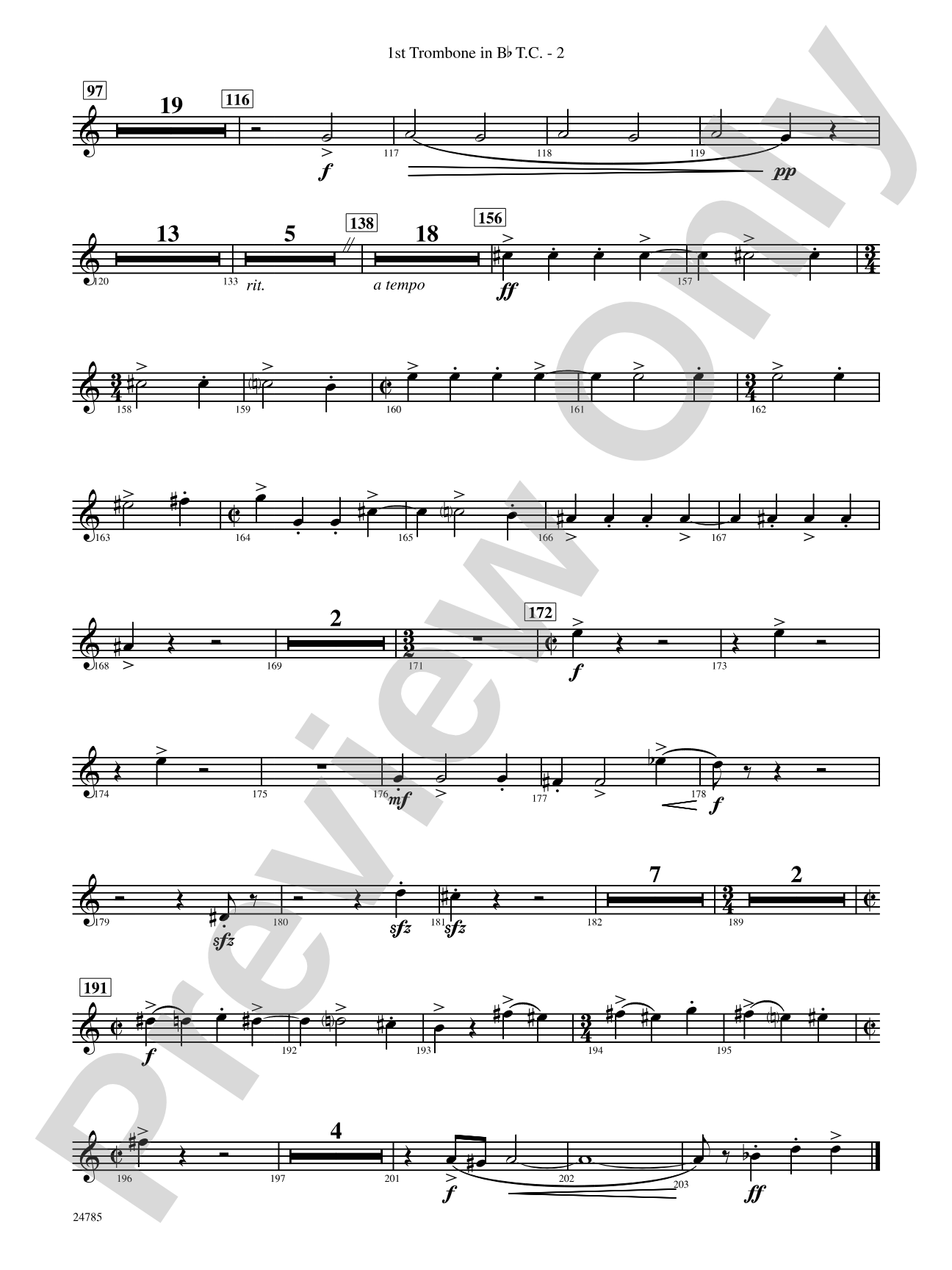

Frolicking Winds (from Symphonic Dance): (wp) 1st B-flat Trombone T.C.
By H. Owen Reed / arr. William Berz
Grade: 4.5 (Medium to Medium Advanced)
Item: 00-PC-0000919_wpTN1TC
$3.00
Pickup currently not available
Description
"Frolicking Winds" is an adaptation of H. Owen Reed's "Symphonic Dance." Working closely with this revered composer, William Berz has scored this dynamic work for concert band. Ternary in form, the first and last sections are characterized with quick syncopated rhythms while the more sustained middle sections demonstrate vivid instrumental colors. A brilliant addition to the Belwin Symphonic Band Series certain to draw critical acclaim.


Don't just read it, hear it, play along with it, and watch your students grow with it. In MakeMusic Cloud, Frolicking Winds (from Symphonic Dance): (wp) 1st B-flat Trombone T.C. comes alive with professional accompaniment, adjustable tempo, and built-in practice tools that turn solo practice into real progress.
Open in the Player
Jump straight in and assign it today.
Start Your Free Trial
Open this title and explore the full library in minutes.
Sample Audio
1
Audio File
--:--
0:00
0:00
Sample Video
No sample videos found.
Additional Details
Series:
Belwin Symphonic Band
Publisher:
Alfred Music
Page Count:
254
SKU:
00-PC-0000919_wpTN1TC
More about this title
About the Composer: H. Owen Reed
H. Owen Reed (1910-2014) was a prolific American composer whose catalog spans orchestral, band, and chamber works. His compositional voice balanced accessibility with genuine musical substance, making him a staple of wind band and orchestral repertoire in American schools and concert halls. Reed's gift for orchestration and his understanding of instrumental color shaped generations of band programs.
Why we love this
Berz's arrangement captures everything that makes Reed's orchestral writing sing, but optimizes it for the concert band palette without sacrificing the composer's lyrical instincts. The ternary structure gives you a clean, satisfying arc that works equally well in a concert setting or festival competition. Directors consistently find this piece generates real enthusiasm from students because the writing is both technically engaging and genuinely fun to play.
What to expect
The piece opens with bouncy, syncopated figures that sparkle with playfulness, giving it an almost cheeky personality in the outer sections. The middle acts as a genuine contrast, offering moments of warmth and orchestral lushness where individual voices can shine before the energy snaps back into focus.
Who it's for
This score and parts set is built for directors programming a Grade 4.5 band that's ready to tackle both rhythmic precision and sustained lyrical playing. It works equally well for concert performance or competition, and the medium-to-advanced difficulty level challenges solid programs without overstepping their reach.
How to get the most out of it
- Lock the syncopation in the outer sections by having the rhythm section rehearse independently first; once that groove sits firmly, the rest of the band locks in immediately.
- Shape the sustained middle section with long-line phrasing rather than letting it fall into a static, legato dirge. Think of it as singing through the color changes.
- Balance the inner voices during the transition passages. Reed and Berz layer the harmonies thickly here, so isolated sectional work on part independence prevents the middle section from turning muddy.
- Bring out the syncopated figures in the first section by asking brass and woodwinds to match their articulation language. Consistency there makes the rhythmic drive pop.
How to use it
This is an ideal anchor piece for a balanced concert program, substantial enough to hold a first half or close a show without demanding the interpretive weight of a serious contemporary work. It also thrives in a festival setting where judges respect clean technique and confident execution. Program it alongside lighter opening numbers or more introspective selections to showcase your band's range.
Skills your students will build
- Syncopated rhythm reading and execution across multiple parts simultaneously
- Sustained legato playing and phrase shaping over longer passages
- Instrumental balance and blend during thick harmonic textures
- Style consistency between articulated and flowing sections
- Listening to inner voices and harmonic independence within ensemble sound