
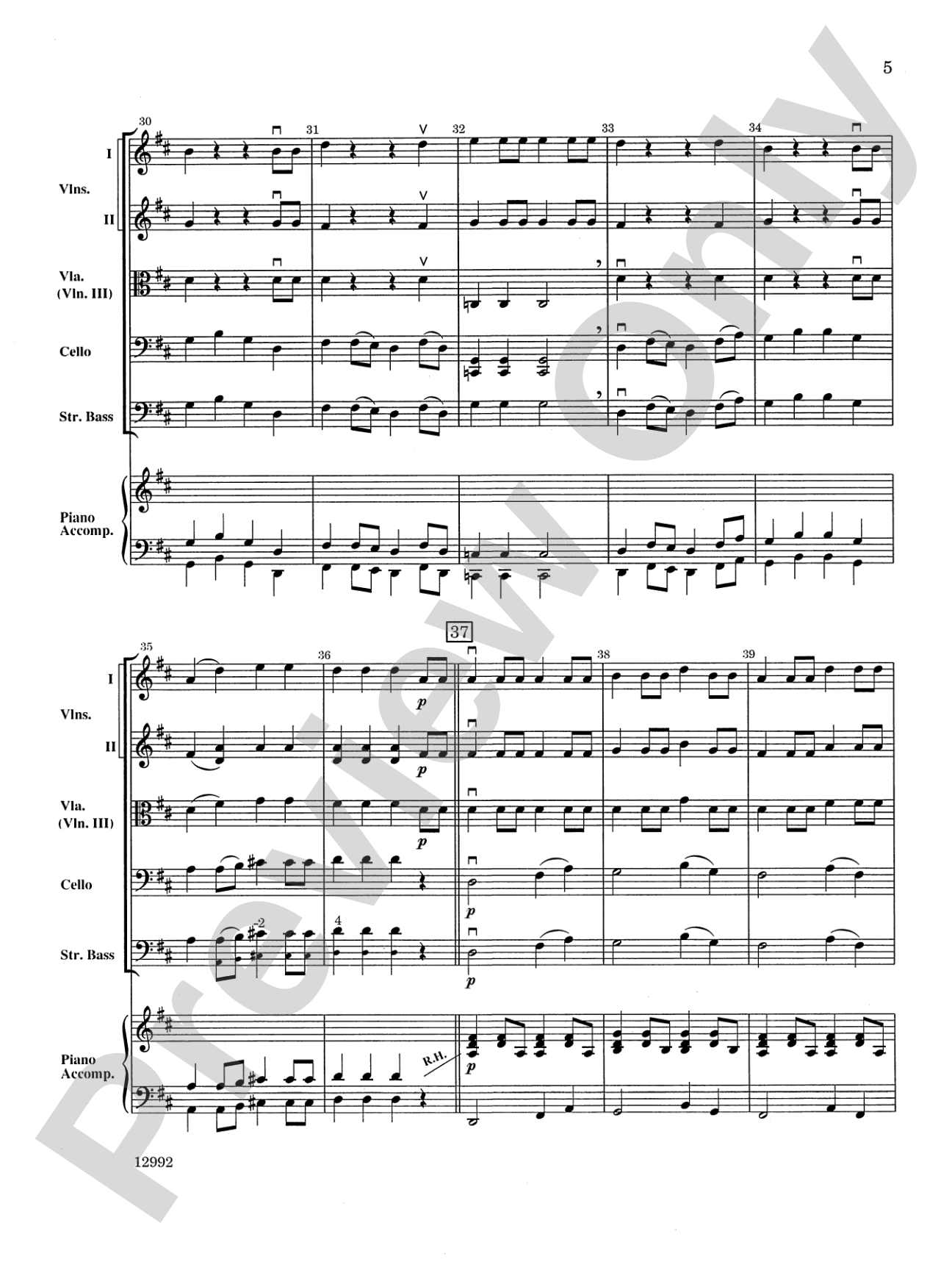
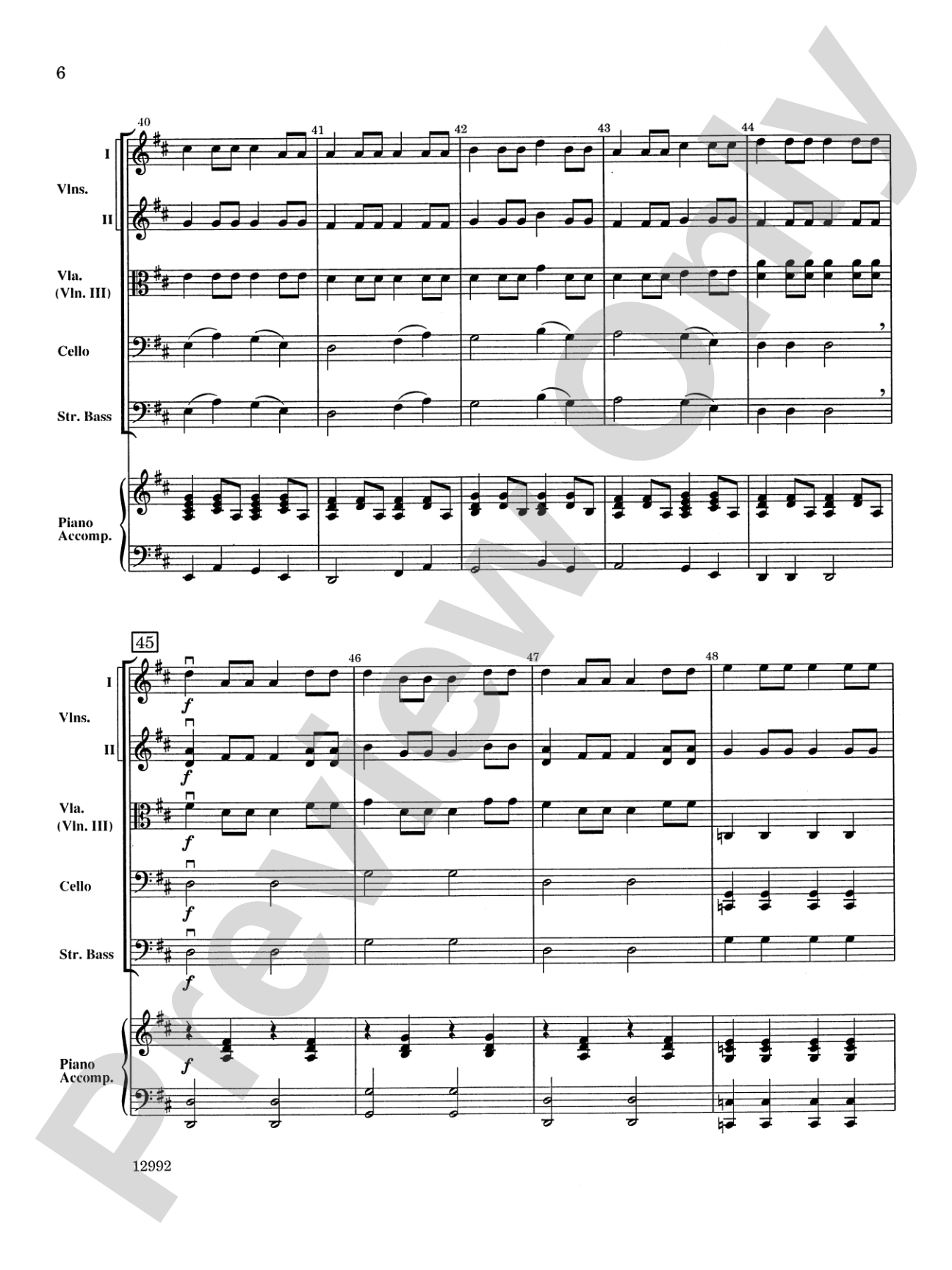
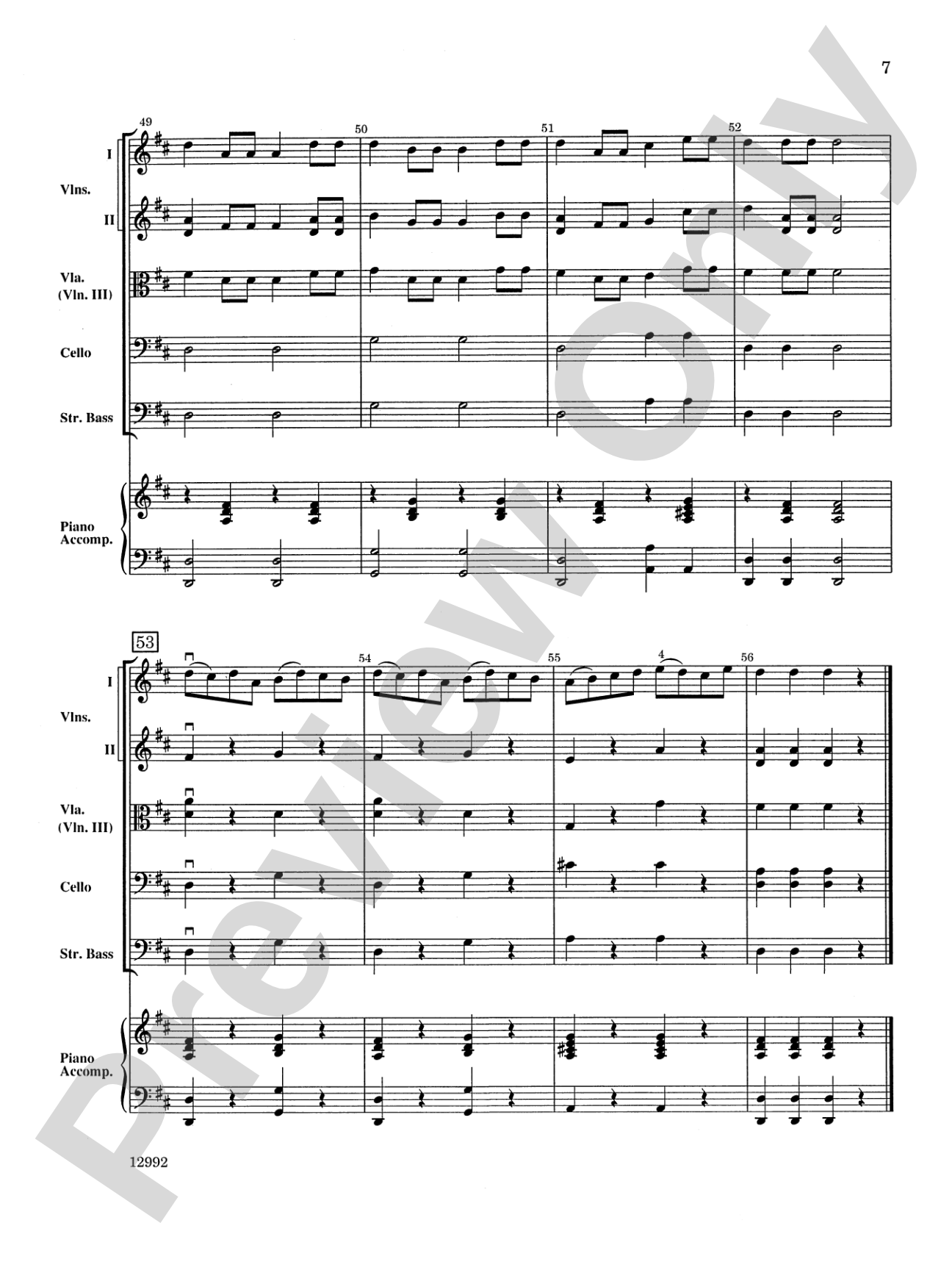


Frog in a Tree: Score
By Edmund J. Siennicki
Grade: 1
Item: 00-PR-0000139
$8.00
Pickup currently not available
Description
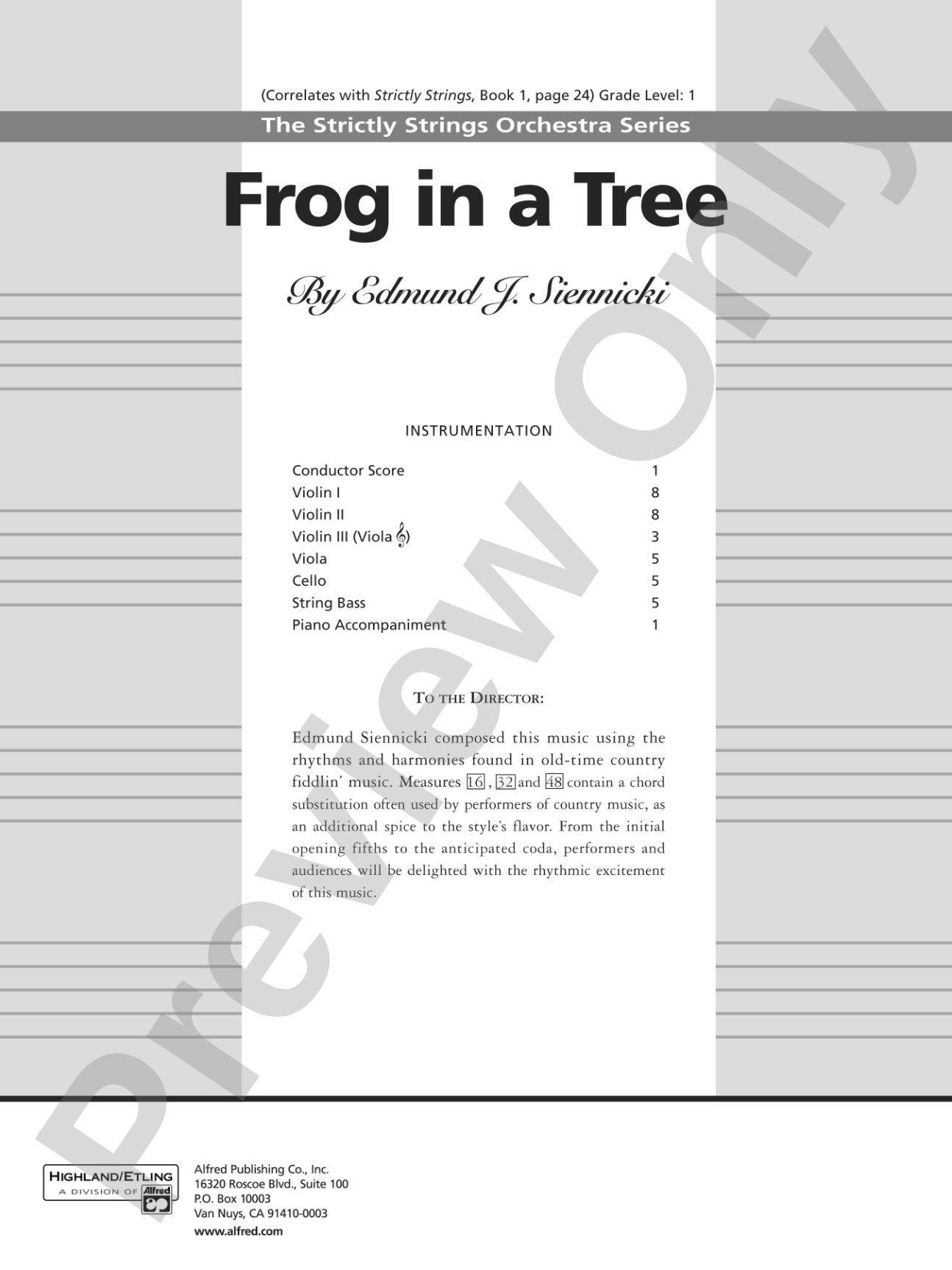
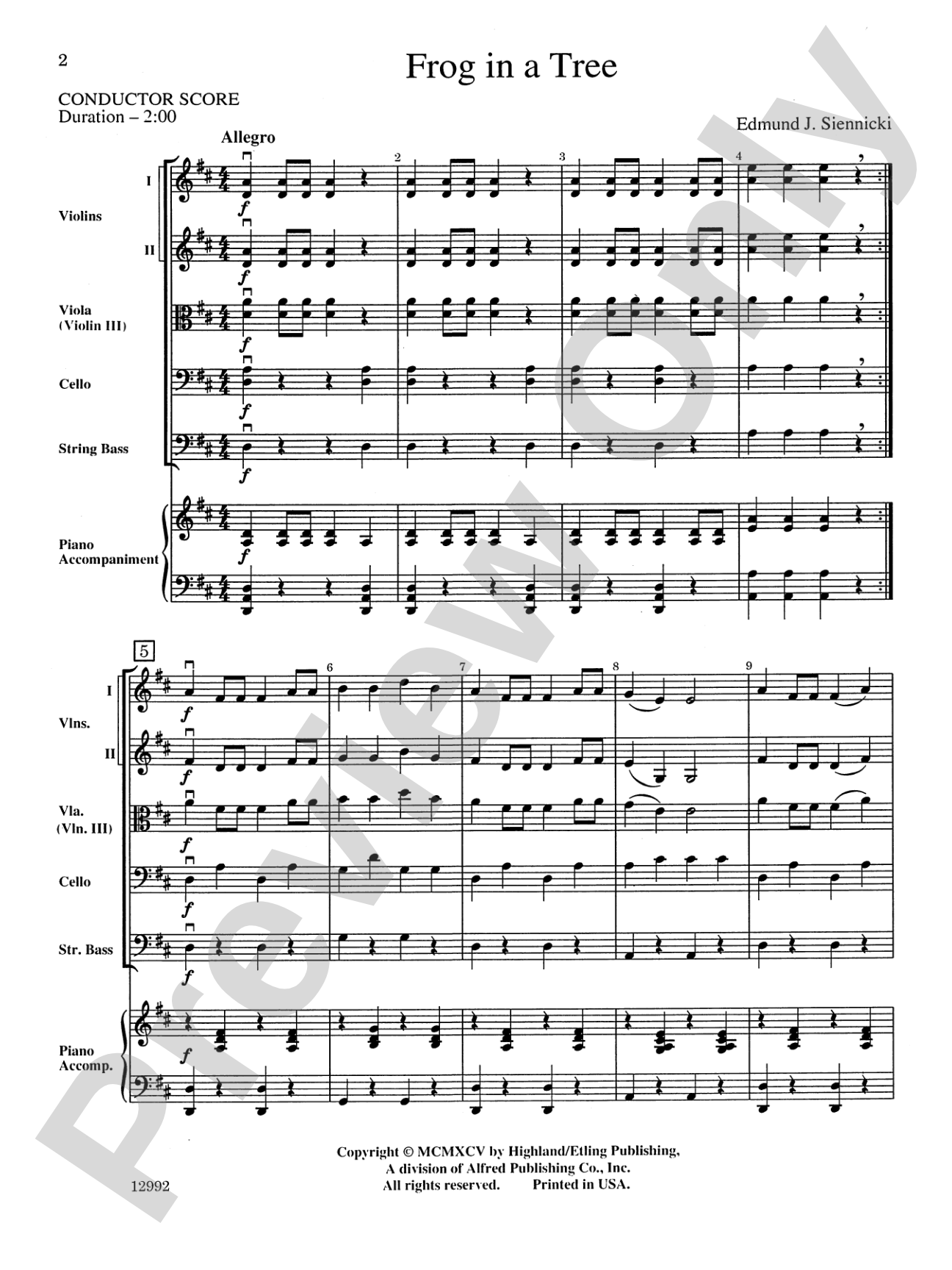
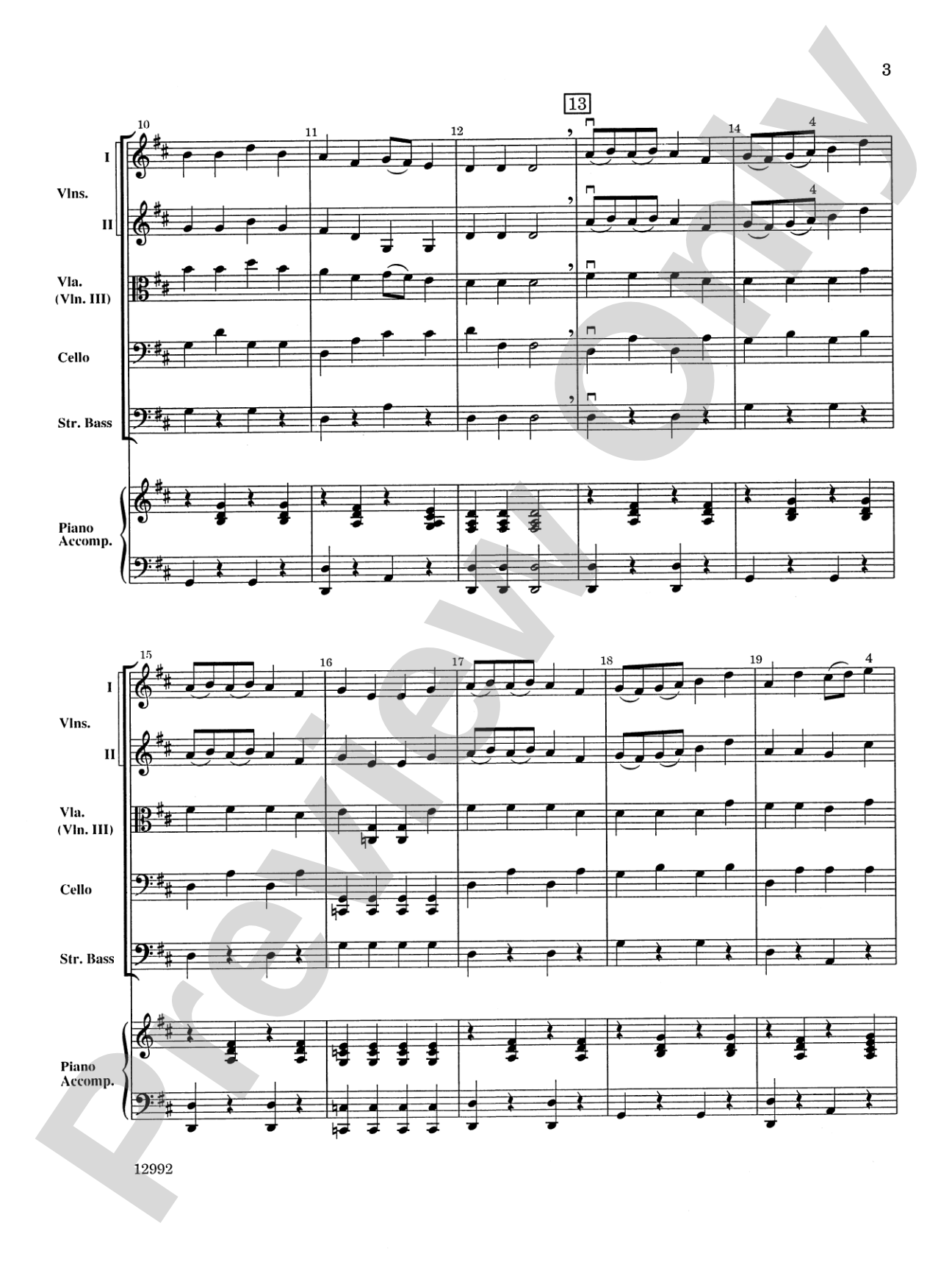
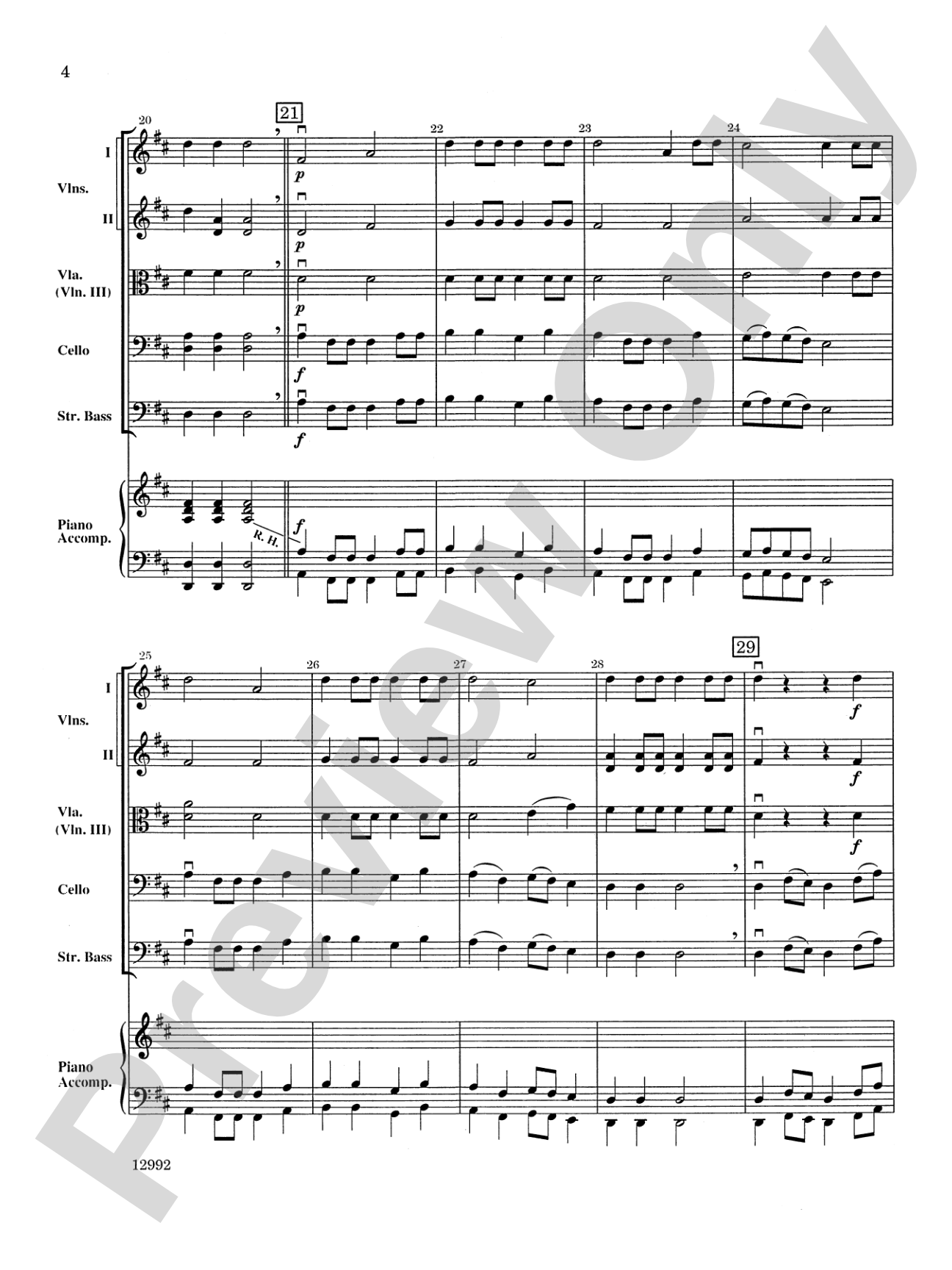
This lively original fiddle tune by Ed Siennicki is sure to be a winner with students and audiences alike. Lots of eighth notes and open double-stops contribute excitement and sonority for a great motivational experience for young string players. (Grade 1 - Correlates with Strictly Strings Book 1, page 24) This title is available in MakeMusic Cloud.


Don't just read it, hear it, play along with it, and watch your students grow with it. In MakeMusic Cloud, Frog in a Tree: Score comes alive with professional accompaniment, adjustable tempo, and built-in practice tools that turn solo practice into real progress.
Open in the Player
Jump straight in and assign it today.
Start Your Free Trial
Open this title and explore the full library in minutes.
Sample Audio
1
Audio File
--:--
0:00
0:00
Sample Video
No sample videos found.
Additional Details
Series:
Highland/Etling Strictly Strings
Publisher:
Alfred Music
Page Count:
72
SKU:
00-PR-0000139
More about this title
About the Composer: Edmund J. Siennicki
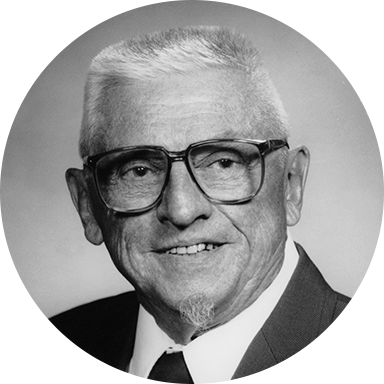
Edmund J. Siennicki was born in Cleveland, Ohio in 1920 and showed musical promise early. A formative encounter with pianist Ignacy Jan Paderewski at age 12 left a lasting mark on his artistic direction. He earned his Bachelor's degree from Kent State University, where he composed the school's fight song, still performed at football games today. His graduate studies at Teachers College, Columbia University included composition study with Herbert Elwell, electronic music with Sergio Barroso, and consultation with Vincent Persichetti.
Throughout his career, Siennicki worked as a professional bassoonist and pianist while teaching in Cleveland's junior high schools and later at Michigan State University and Kent State. His compositions have earned recognition in National School Orchestra contests, and he served as composer in residence at the MacDowell Colony twice. With roughly 200 works published and two decades of ASCAP awards to his name, he remains an active composer who continues to visit schools and lead clinics.
Why we love this
This original tune captures everything that makes early string orchestra repertoire engaging: infectious rhythm, open double-stops that let young players experience real sonority, and a folk melody that students instinctively want to play musically. Siennicki's understanding of beginning string technique shines through every note, making this a piece that motivates rather than frustrates.
What to expect
A spirited fiddle tune that bounces with energy and transparency. The abundance of open double-stops creates a bright, resonant sound that feels satisfying to play even at the earliest levels of string training.
Who it's for
Beginning string orchestras working at Grade 1 level, particularly those using Strictly Strings Book 1 curriculum. This piece works beautifully as a motivational concert selection or festival entry for young players who want a genuine folk tune rather than a simplified exercise arrangement.
How to get the most out of it
- Keep the eighth-note passages clean and uniform across the section. Drill the rhythmic drive separately so all parts feel the forward momentum together.
- Shape the double-stops with a gentle bow pressure that lets both strings ring freely. Students often press too hard here; lighter contact produces better tone.
- Lock in with a clear pulse and let the fiddle tune's natural groove carry the excitement. Avoid rushing the faster sections despite their energy.
- Balance the melody across your ensemble so the tune stays clear even when the harmonic parts are active. A solo first violin or highlighted section can help establish the line.
How to use it
Program this alongside other folk or programmatic selections to build a concert that feels playful and audience-friendly. Its Grade 1 level and contest/festival designation make it ideal for a spring performance or youth orchestra festival where you want to showcase what young players can accomplish with engaging repertoire.
Skills your students will build
- Reading and executing open double-stops
- Sustaining rhythmic accuracy in eighth-note passages
- Playing with clear tone and projection in ensemble context
- Balancing melody and harmony parts
- Understanding and performing folk idioms on stringed instruments