
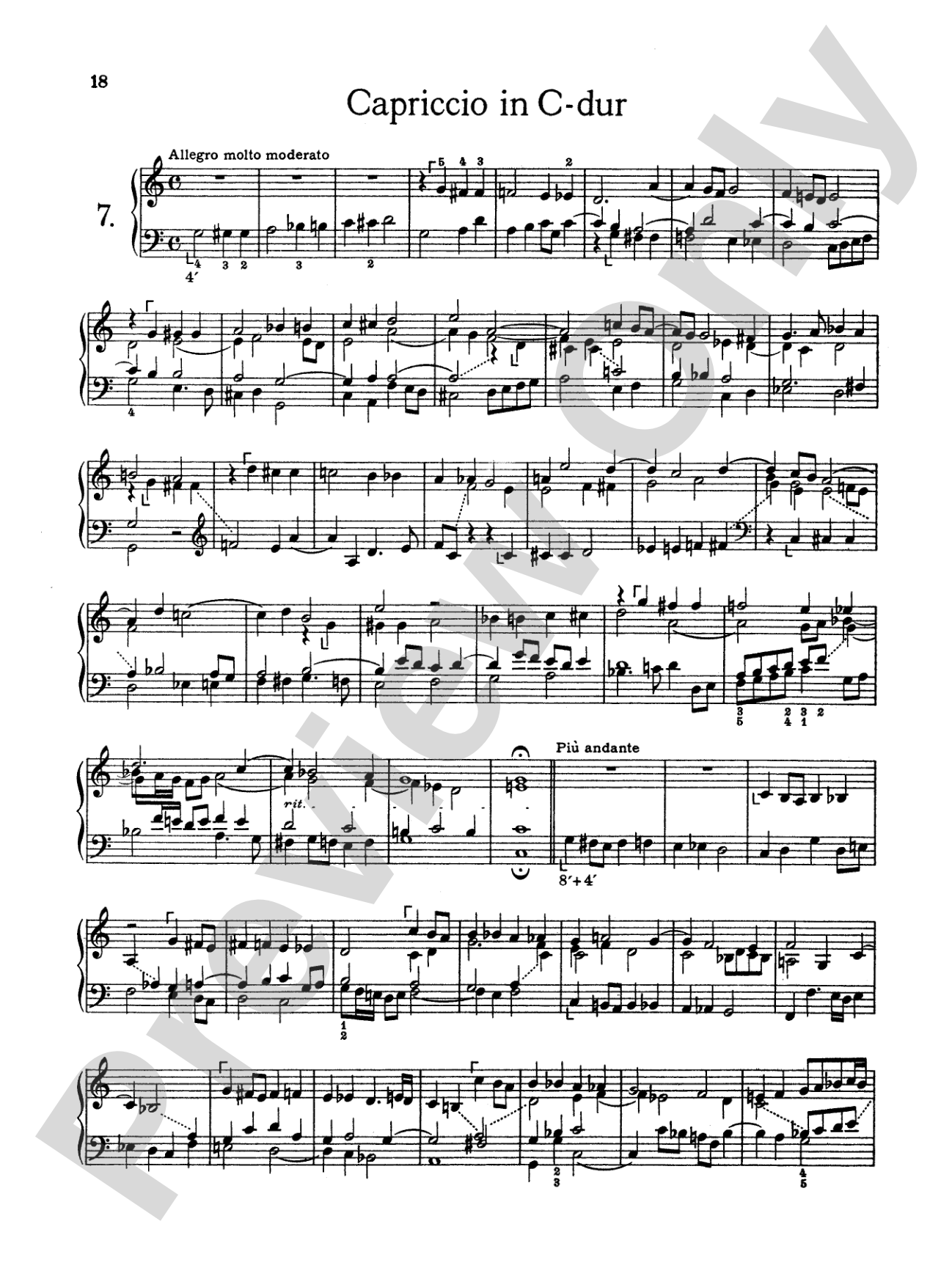

Froberger: Selected Works for Cembalo
By Johann Jacob Froberger
Level: Intermediate / Advanced
Item: 00-PC-0007219
$0.99
Pickup currently not available
Description


Don't just read it, hear it, play along with it, and watch your students grow with it. In MakeMusic Cloud, Froberger: Selected Works for Cembalo comes alive with professional accompaniment, adjustable tempo, and built-in practice tools that turn solo practice into real progress.
Open in the Player
Jump straight in and assign it today.
Start Your Free Trial
Open this title and explore the full library in minutes.
Sample Audio
No sample audio found.
Sample Video
No sample videos found.
Additional Details
Series:
Kalmus Edition
Publisher:
Alfred Music
Page Count:
24
SKU:
00-PC-0007219
More about this title
About the Composer: Johann Jacob Froberger
Johann Jacob Froberger (1616-1667) stands as one of the most important keyboard composers of the seventeenth century. He studied with Girolamo Frescobaldi in Rome and traveled extensively across Europe, bringing Italian keyboard idioms northward to the German-speaking lands. His output of keyboard works, particularly his ricercari, fantasias, and toccatas, established new standards for both technical display and emotional depth at the harpsichord and organ.
Froberger's music bridges the Renaissance and Baroque eras, blending intricate counterpoint with the emerging basso continuo language. His works remain essential study for intermediate and advanced pianists seeking to understand keyboard music's evolution during a transformative period.
Why we love this
Froberger's keyboard writing sits at a crucial historical inflection point where Renaissance polyphony meets Baroque expression, making these pieces invaluable for students developing sensitivity to harmonic color and structural clarity. Each work in this selection showcases different facets of seventeenth-century keyboard craft, from rhapsodic toccata passages to rigorously organized fugal sections. Programming these pieces demonstrates that intermediate-advanced pianists can inhabit the baroque keyboard idiom with authenticity and musicality.
What to expect
These pieces inhabit a contemplative, intellectual space where technical virtuosity serves emotional and structural clarity rather than mere display. You encounter moments of austere polyphonic writing alongside passages of ornamental elaboration, creating a sense of both restraint and baroque exuberance. The harmonic language feels exploratory, even adventurous for its era, with unexpected resolutions and voice leading that rewards close listening.
Who it's for
Intermediate to advanced pianists ready to explore early keyboard literature beyond the standard Baroque canon of Bach and Handel. Students preparing for competitions or recitals that value historical breadth will find carefully chosen examples that demonstrate both technical command and stylistic understanding. Teachers seeking repertoire that bridges Renaissance counterpoint and Baroque keyboard idioms will appreciate the pedagogical value of studying Froberger's distinctive voice.
How to get the most out of it
- Shape phrases through graduated dynamic shaping rather than sudden terracing; the keyboard literature of this period rewards subtle inflection within the dance-like or rhetorical sections.
- Treat ornamental passages as structural elements that clarify rather than obscure the underlying voice leading, allowing listeners to hear the harmonic progression beneath flourishes.
- Experiment with articulation between legato and light detachment in fugal sections to delineate individual voices without excessive pedal dampening the counterpoint.
- Allow rubato and rhythmic flexibility in the opening gestures of ricercari and fantasias, returning to strict metric control once the harmonic language stabilizes.
How to use it
Feature a Froberger selection on a recital devoted to keyboard music's historical development, pairing it with earlier Renaissance keyboard works and later Bach compositions to show stylistic evolution. Alternatively, program one piece alongside contemporary vocal or instrumental works from the mid-seventeenth century to demonstrate how keyboard composers of the era approached similar harmonic and rhetorical challenges. Use shorter selections as opening pieces in a recital program where their introspective character prepares the audience for larger works.
Skills your students will build
- Baroque counterpoint with awareness of voice independence and harmonic progression
- Articulation and phrasing in keyboard music without the aid of wind instruments
- Interpretation of figured bass notation and its realization at the keyboard
- Stylistic ornamentation appropriate to seventeenth-century performance practice
- Navigating harmonic language that predates equal temperament tuning systems
- Technical facility in rapid scalar passages and hand positioning for Baroque keyboard writing