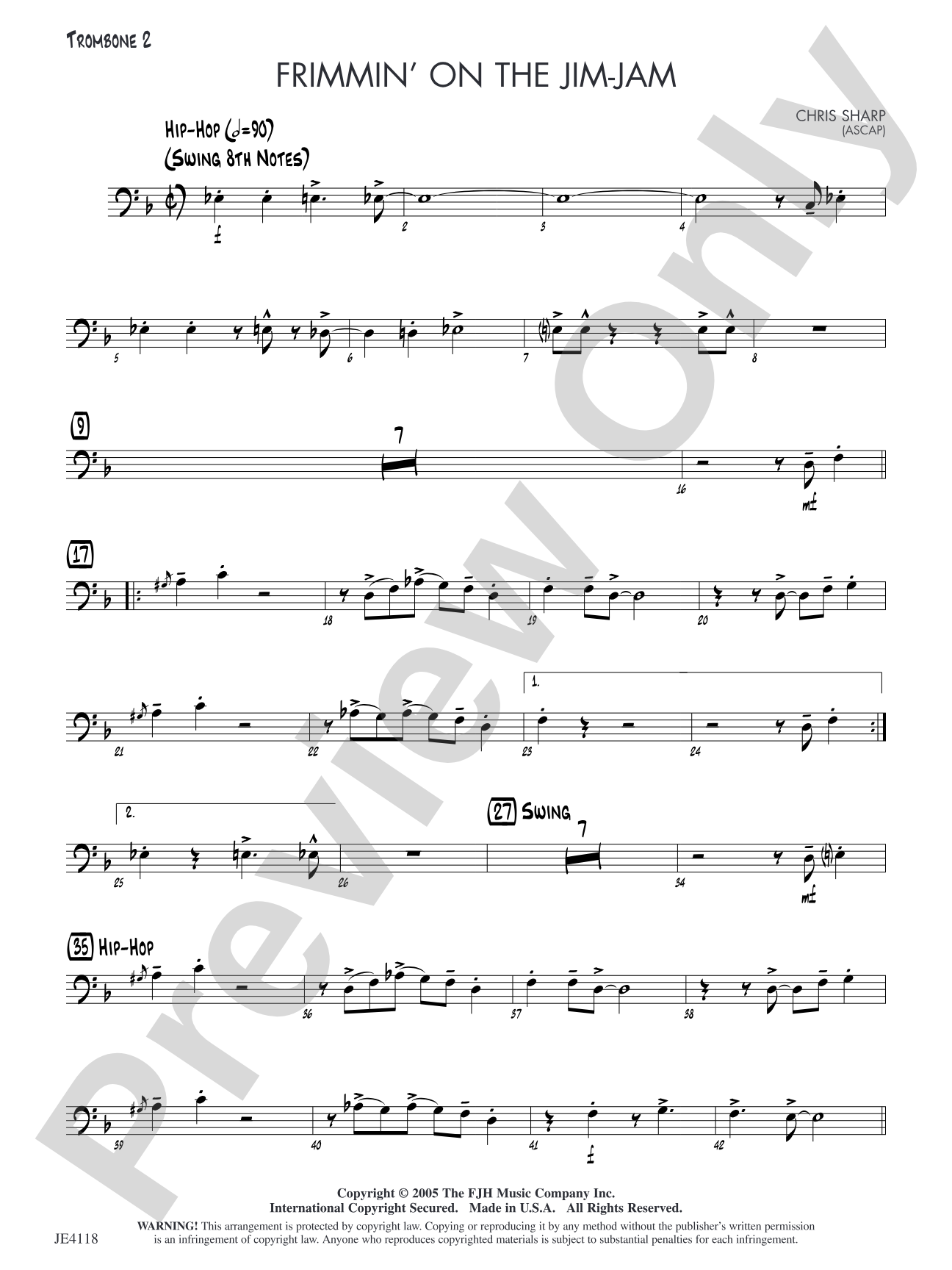
Frimmin' on the Jim-Jam: Opt. Trombone 2 Sheet Music Preview

Frimmin' on the Jim-Jam: Opt. Trombone 2

By Chris Sharp

Grade: 1.5

Item: 98-PC-DJE4118_OTN2

Digital Download
$7.00
Description
Get your hip-hop on with this new chart featuring an optional rap section (for soloist or group). Limited technical demands make this a very accessible piece for younger bands. The hip-hop groove alternates with swing passages, and there are many articulations provided to help achieve the correct style. A great piece for a refreshing change of pace, and sure to get your groove on!

Frimmin' on the Jim-Jam: Opt. Trombone 2 isn't in MakeMusic Cloud just yet...but it could be. Let us know you'd like to see it, and you'll help shape what comes next. In the meantime, start a free trial and dive into thousands of interactive titles your students can play along with today.

Sample Audio
0:00
0:00
Sample Video
Additional Details
Series: FJH Beginning Jazz Ensemble
Publisher: The FJH Music Company, Inc.
SKU: 98-PC-DJE4118_OTN2

More about this title

About the Composer: Chris Sharp

Chris Sharp

Chris Sharp holds a Ph.D. and has built a career spanning performance, composition, and education across multiple musical contexts. As a trombonist, he spent eleven years performing and leading bands at Walt Disney World, then transitioned into arranging and orchestrating for Disney parks globally since 1984, creating music for live shows, recordings, and broadcast television.

Sharp's work extends far beyond theme parks. He has composed and arranged for major ensembles including the Boston Pops, the Dallas Brass, and the USAF Airmen of Note, while also serving clients like Universal Studios and Ringling Brothers. His teaching spans middle school through college, and he currently directs bands at Polk State College while teaching theory, technology, and arranging. His work has earned multiple ASCAPlus awards and regular performances at the Midwest Clinic.

Why we love this

Sharp knows how to write for younger ensembles without sacrificing style or fun. The hip-hop groove paired with swing passages gives you a sophisticated sound without technical complexity, and the optional rap section invites genuine engagement rather than feeling like a gimmick. Your students will actually want to perform this.

What to expect

Fresh and rhythmically alive. The piece alternates between a relaxed hip-hop pocket and swinging jazz phrases, creating momentum that keeps both players and listeners engaged. The optional rap element adds personality and invitation to step into modern musical expression.

Who it's for

Beginning jazz ensembles looking to build confidence with accessible yet stylistically authentic material. This chart works for groups with limited jazz experience who still want to sound current and engaged with contemporary musical language.

How to get the most out of it

  • Lock the rhythm section into the hip-hop groove first. Once the drums and bass lock in tight, the articulations in the horn lines become easier for everyone to execute cleanly.
  • Approach the articulations as style markers, not just technical direction. The difference between staccato and legato passages drives the contrast between hip-hop and swing sections.
  • If using the rap section, give the soloist or group space to own their phrasing. The backing ensemble should sit back and support rather than rush to fill silence.
  • Punch the section hits together. Even at this level, those moment require ensemble precision to land the groove.

How to use it

Program this as a concert opener or change-of-pace piece in a mixed jazz and concert band season. It works especially well when you want to showcase your ensemble's range of styles and remind audiences that jazz is living and evolving. Also consider it for pep rallies or community events where contemporary repertoire connects with broader audiences.

Skills your students will build

  • Executing swing articulations alongside straight-eighth hip-hop feel
  • Responding to groove-based ensemble playing rather than traditional beat conduct
  • Reading and interpreting style-specific articulation markings
  • Balancing precision with relaxed, pocket-based timing

You May Also Like