Friendship Medley Sheet Music Preview

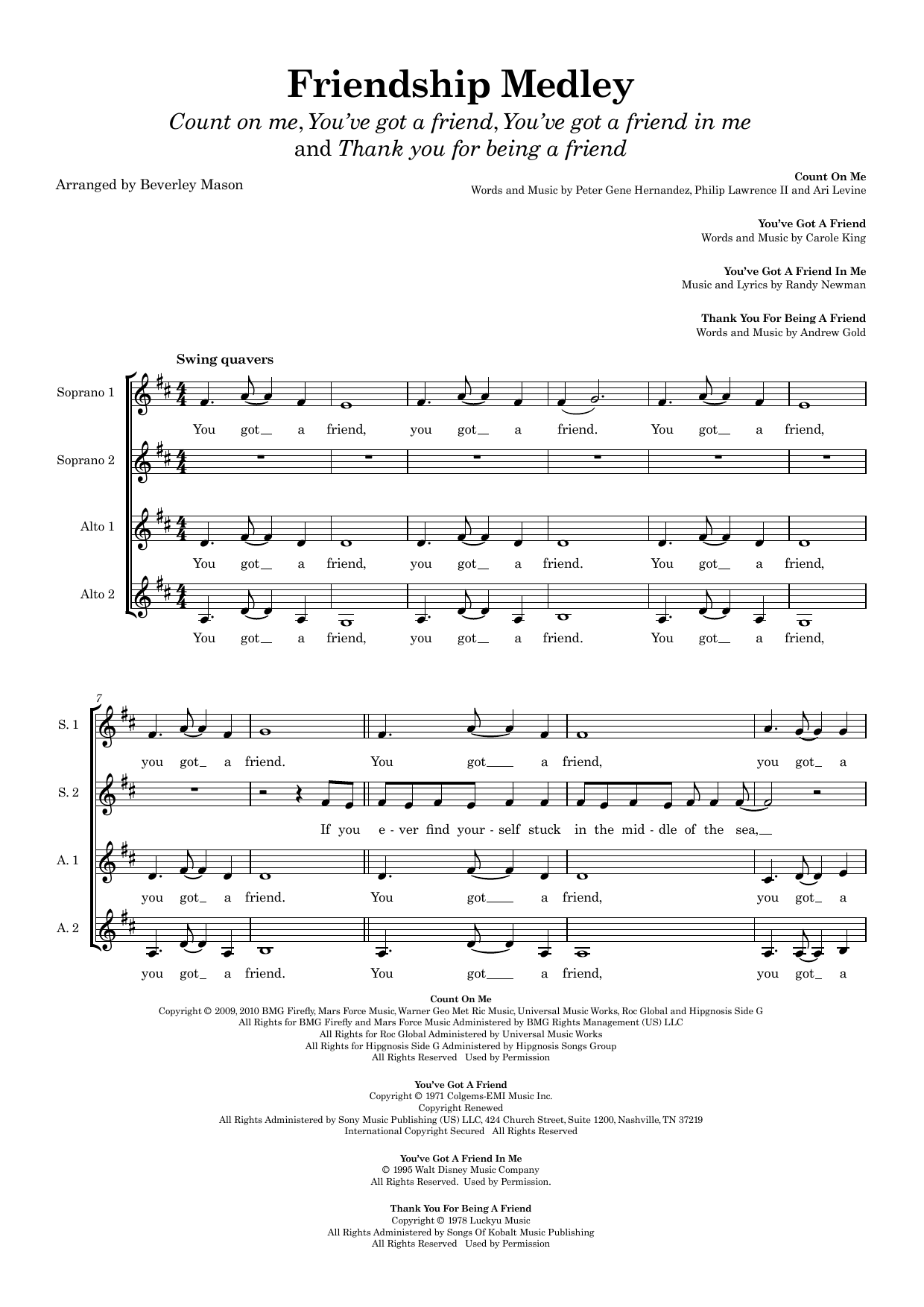
Friendship Medley: SSAA Choral Octavo

As performed by Andrew Gold / As performed by Carole King / As performed by Randy Newman / As performed by Bruno Mars / Arranged by Beverley Mason

Item: 35-DS01732658

Digital Download
$1.99
Description

Friendship Medley: SSAA Choral Octavo isn't in MakeMusic Cloud just yet...but it could be. Let us know you'd like to see it, and you'll help shape what comes next. In the meantime, start a free trial and dive into thousands of interactive titles your students can play along with today.

Sample Audio
No sample audio found.
Sample Video
Additional Details
Publisher: Hal Leonard
Page Count: 6
SKU: 35-DS01732658

More about this title

About the Artist: Andrew Gold

Andrew Gold earned his place in pop music history as a prolific session musician and songwriter during the 1970s and 1980s, contributing to albums by Linda Ronstadt, Art Garfunkel, and many others. His own recording career produced the enduring hit "Thank You for Being a Friend," which became the theme song for the television series The Golden Girls and introduced his warm, accessible songwriting to generations of listeners.

Why we love this

Beverley Mason has thoughtfully woven together four instantly recognizable songs that audiences genuinely love, making this medley feel like a celebration rather than a collection of hits. The pop idiom and accessible voicing in SSAA/SSA create a program piece that builds group morale while remaining musically substantive, and the emotional variety across the four songs keeps both singers and listeners engaged from start to finish.

What to expect

Warm, nostalgic, and buoyant. These four songs carry the optimism and craft of their original eras while the arrangement respects their melodic strengths and harmonic integrity. Singing this feels like gathering around shared memory, which is precisely why audiences respond to it so readily.

Who it's for

Choirs seeking repertoire that generates real excitement in both the ensemble and the audience will find this medley ideal. Programs looking to feature strong soprano voices while maintaining full choir engagement, or ensembles wanting a pop selection with genuine substance, should consider this arrangement.

How to get the most out of it

  • Balance the blend between the soprano lines and the alto part, which often carries harmonic foundation. A single run-through where you isolate just the altos can reveal how much they shape the overall sonority.
  • Record yourself from the audience perspective while rehearsing, then listen for moments where any melody gets buried. Pop arrangements thrive on clarity, and small dynamic adjustments often fix what blend alone cannot.
  • Lean into the stylistic differences between the four songs during rehearsal. Each one has its own rhythmic pocket and emotional temperature, so marking those shifts explicitly helps singers navigate the medley as a journey rather than a blur of similar material.

How to use it

Situate this medley as a program closer or a lighter moment between more formal concert pieces; audiences respond to the recognizability and tend to find genuine joy in familiar melodies sung well. It also works beautifully in community concerts, fundraising events, or showcase performances where connecting with listeners beyond the usual concert hall audience matters.

Skills your students will build

  • Balancing independent melodic lines with harmonic support in a three or four part texture
  • Maintaining stylistic consistency and appropriate articulation within pop idiom
  • Reading and interpreting a medley structure that requires clean transitions between distinct musical sections
  • Blending soprano voices across divisi passages while preserving individual line clarity

You May Also Like