

Friendship Canon: 2-Part Choral Octavo
Words and music by Mark Burrows
Item: 00-PO-0006287

$2.05
Minimum order quantity: 20 copies
Pickup currently not available
Description
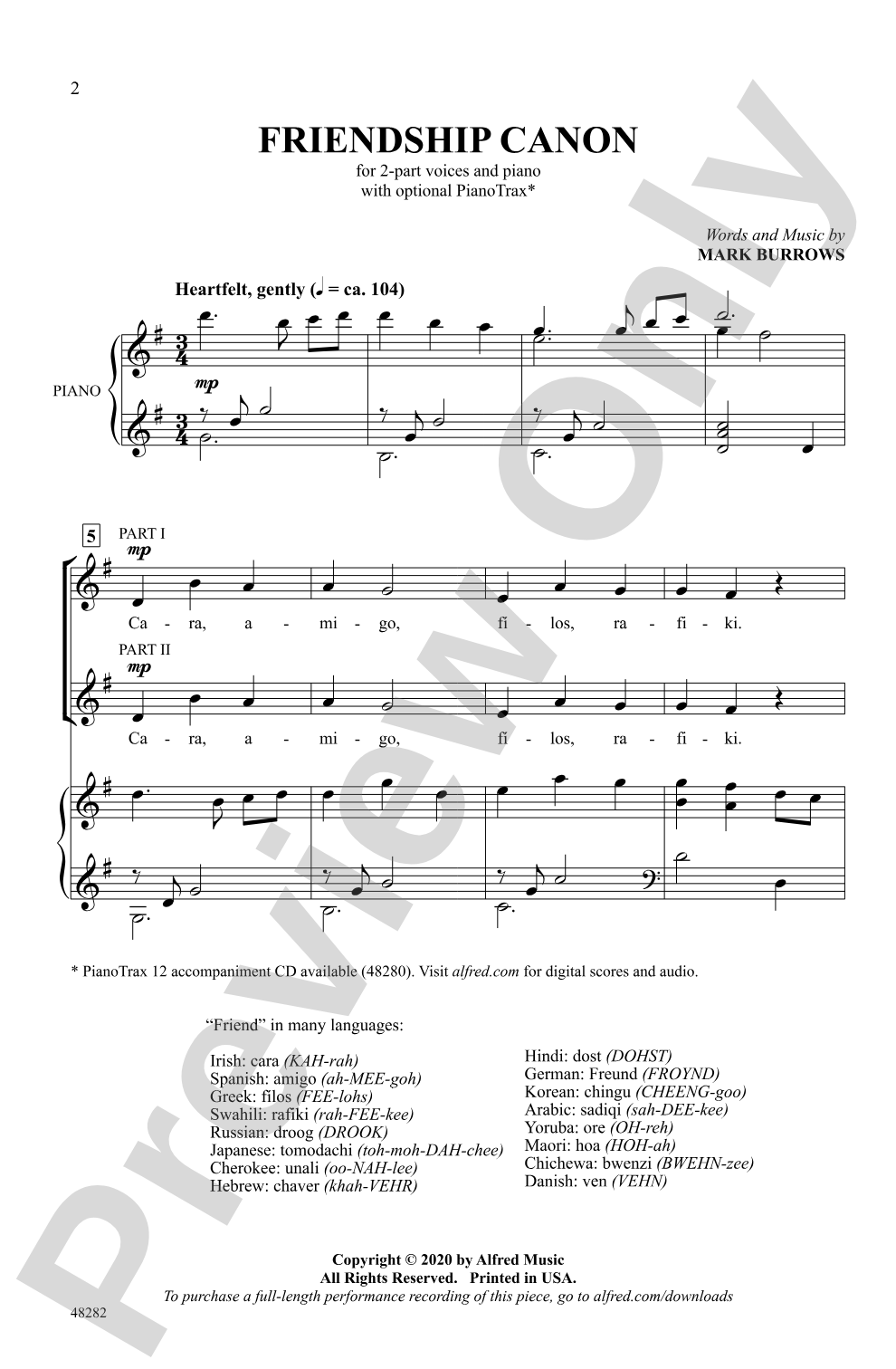
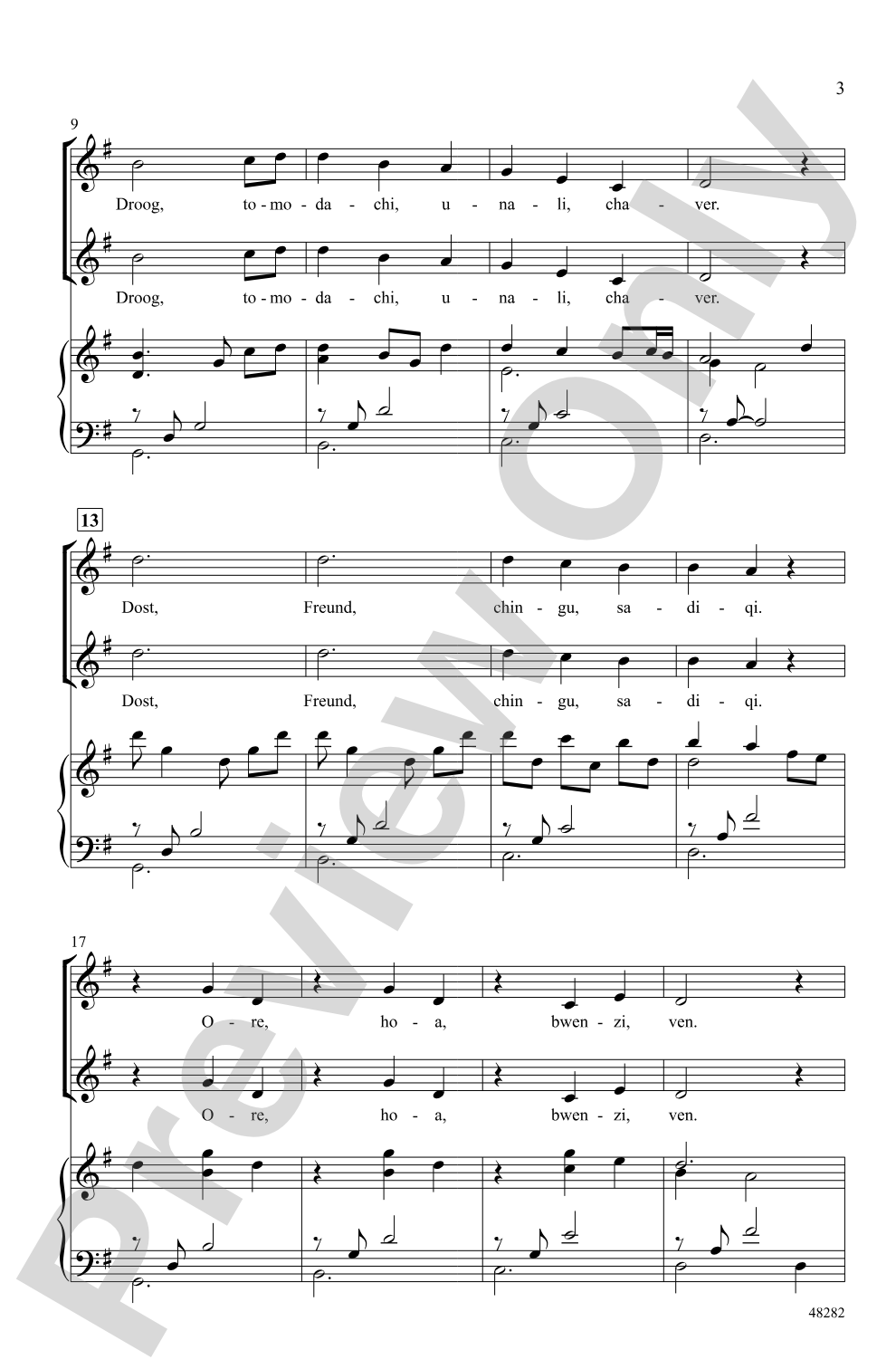
How many ways can you say "friend"? Mark weaves a sweetly singable canon out of the word "friend" in 16 different languages, spanning cultures from six continents. A flexible coda at the end offers the opportunity for additional languages, allowing you to customize the piece to reflect the unique makeup of your choir and community.


Don't just read it, hear it, play along with it, and watch your students grow with it. In MakeMusic Cloud, Friendship Canon: 2-Part Choral Octavo comes alive with professional accompaniment, adjustable tempo, and built-in practice tools that turn solo practice into real progress.
Open in the Player
Jump straight in and assign it today.
Start Your Free Trial
Open this title and explore the full library in minutes.
Sample Audio
1
Audio File
--:--
0:00
0:00
Sample Video
Additional Details
Series:
Alfred Choral Designs
Publisher:
Alfred Music
Page Count:
12
SKU:
00-PO-0006287
More about this title
About the Composer: Mark Burrows
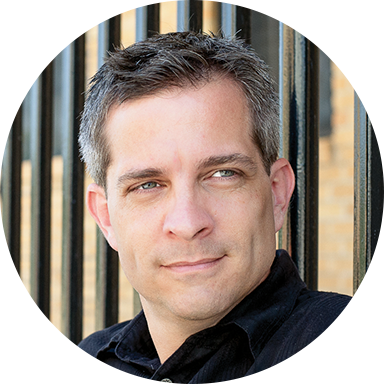
Mark Burrows composes for choirs across the full spectrum of ages and experience levels, from children's ensembles to adult singers to multigenerational festival groups. His works appear regularly on state and festival adjudication lists, and he accepts multiple commissions annually from educational and community organizations. He holds degrees in music education from Southern Methodist University and in conducting from Texas Christian University, and serves as Director of Children's Ministries at FUMC in Fort Worth, Texas.
Burrows brings both compositional craft and practical classroom wisdom to his music. His understanding of what singers actually need—accessible ranges, intuitive harmonic progressions, meaningful text—comes from deep involvement in choral education and church music ministry. He lives in Fort Worth with his family.
Why we love this
The genius here is how Burrows uses a single word repeated across languages to create something genuinely moving rather than gimmicky. The canon structure demands careful listening from singers and creates natural musicality without complicated rhythmic or harmonic demands. That customizable coda is a real gift: it transforms the piece from finished product into a collaborative project, inviting your choir to add their own voices and languages to the musical conversation.
What to expect
There's warmth and openness in this music, a celebration of connection that feels both simple and profound. The canon creates overlapping layers of voices building the same word across cultures, and the effect is surprisingly moving, creating moments of unity that resonate with both singers and listeners.
Who it's for
Two-part choirs at any level will find success with this piece. It works equally well in school choral programs, children's and youth ensembles, community choirs, and church music settings. The straightforward vocal writing means even singers with limited experience can engage meaningfully with the text and structure.
How to get the most out of it
- Rehearse each language's pronunciation separately before introducing the canon entries. Isolate the melody in Part 1, then add Part 2, allowing singers to hear how their part fits into the larger sound.
- Balance the text clarity with vocal blend. Because the piece relies on recognizing "friend" in different languages, each part must sing with clear diction without sacrificing the unified sound of a two-part ensemble.
- If you're adding languages in the coda, introduce those new words early in rehearsal and practice the pronunciation with the same attention you gave the original 16 languages.
How to use it
This piece shines in concerts exploring themes of community, inclusivity, or global connection. It pairs beautifully with other world music repertoire or works celebrating cultural diversity. Consider programming it as an opener to set a welcoming tone, or use it as a bridge between contrasting musical styles.
Skills your students will build
- Canon singing and independent part-singing in a two-part texture
- International pronunciation and awareness of how languages shape musical phrasing
- Listening and blend while maintaining clear text articulation
- Collaborative arrangement through the customizable coda