Freeze Frame Sheet Music Preview

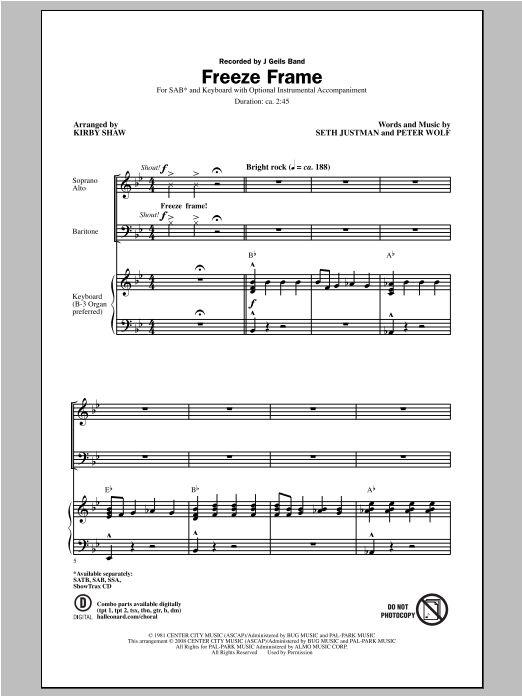
Freeze Frame: SAB Choral Octavo

As performed by J. Geils Band / Arranged by Kirby Shaw

Item: 35-DS00262981

Digital Download
$2.99
Description

Freeze Frame: SAB Choral Octavo isn't in MakeMusic Cloud just yet...but it could be. Let us know you'd like to see it, and you'll help shape what comes next. In the meantime, start a free trial and dive into thousands of interactive titles your students can play along with today.

Sample Audio
No sample audio found.
Sample Video
Additional Details
Publisher: Hal Leonard
Page Count: 11
SKU: 35-DS00262981

More about this title

About the Artist: J. Geils Band

The J. Geils Band emerged from Boston in the late 1960s with a reputation for high-energy performances that fused blues, rock, and soul. Their 1981 album "Freeze Frame" became a commercial milestone, reaching number one on the Billboard 200 and spawning the title track as a major hit single. The band's approach to songwriting emphasized groove, infectious hooks, and the kind of rhythmic precision that translates remarkably well to choral settings.

Known for their live intensity and studio polish, the J. Geils Band built a career on music that swings hard and communicates directly to listeners. Their influence on popular music extended beyond chart success into the fabric of how rock and soul songs could be structured and performed.

Why we love this

Kirby Shaw's arrangement captures the groove DNA of the original without asking your singers to sacrifice vocal balance or musicality. This is a contemporary pop song that respects choral fundamentals, offering SAB groups a chance to own material their audiences actually know and love rather than settling for an evergreen standard.

What to expect

A track with built-in forward motion. The arrangement channels the original's rhythmic confidence and snappy delivery while preserving the hook that made "Freeze Frame" stick in people's heads. Singing this feels like moving with purpose.

Who it's for

SAB choirs ready to program something current and recognizable without compromising vocal writing. Directors seeking a pop arrangement that holds up under scrutiny, not just one that trades on familiarity.

How to get the most out of it

  • Let the rhythm section lock in first. Once your bass and any accompanying instruments establish that signature groove, the three parts will fall into place more naturally than if you try to build upward from the soprano line.
  • Treat the unison sections with as much care as the divided ones. Blend and intonation matter just as much when everyone sings the same note; that's where the arrangement's foundation lives.
  • Keep articulation crisp without making it aggressive. The original recording thrives on punchy phrasing; your singers should match that energy through clean consonants rather than forced volume.

How to use it

Use this to open a concert section that bridges your classical offerings with popular repertoire, or program it as a palate cleanser between weightier pieces. It works especially well in spring pops concerts or anytime you want to remind audiences that your singers have contemporary range.

Skills your students will build

  • rhythmic precision in a syncopated groove context
  • blending three-part harmony in a rock idiom
  • maintaining ensemble cohesion while singing familiar material
  • articulation and diction clarity in a fast-moving pop arrangement

You May Also Like