
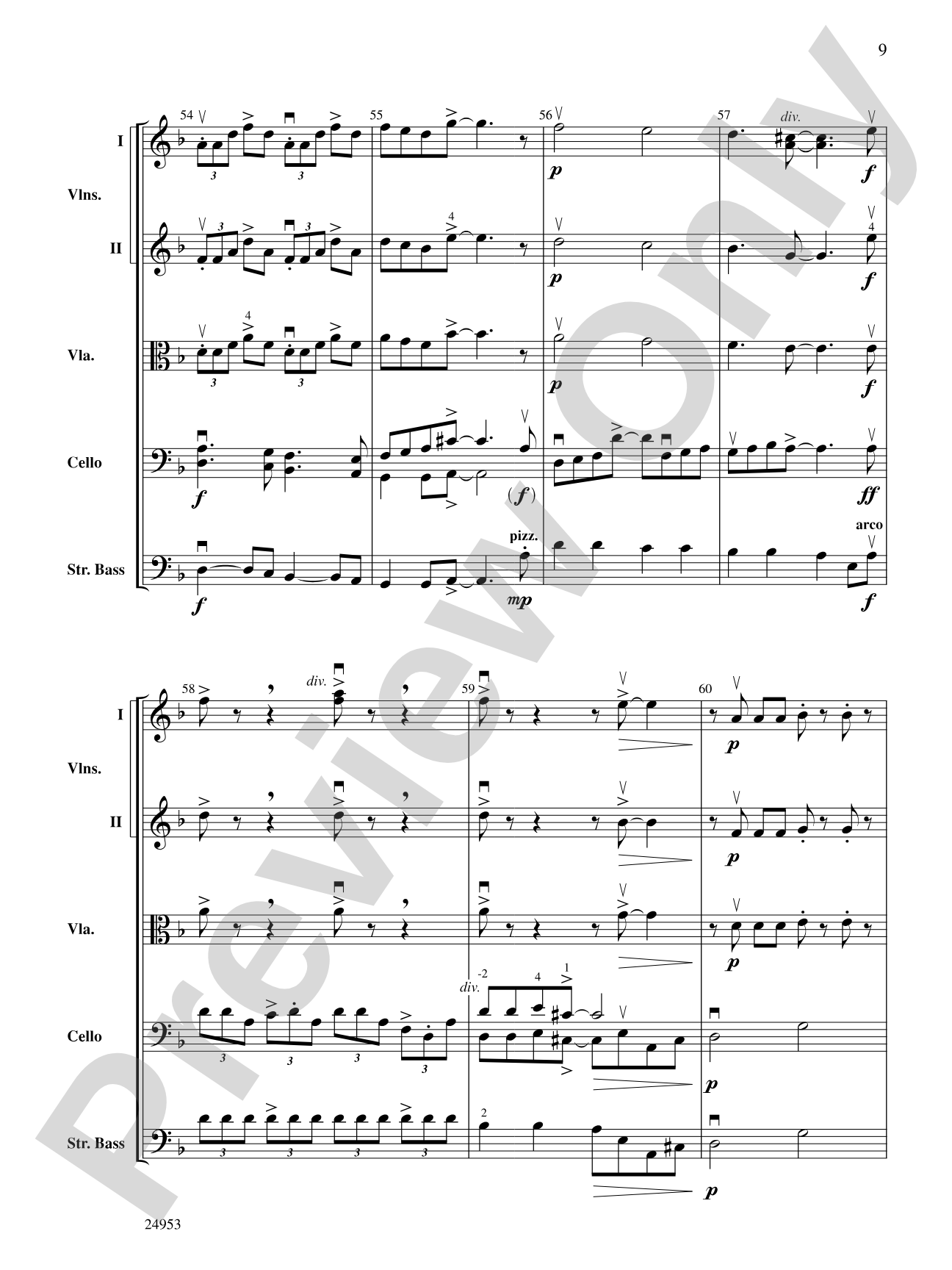
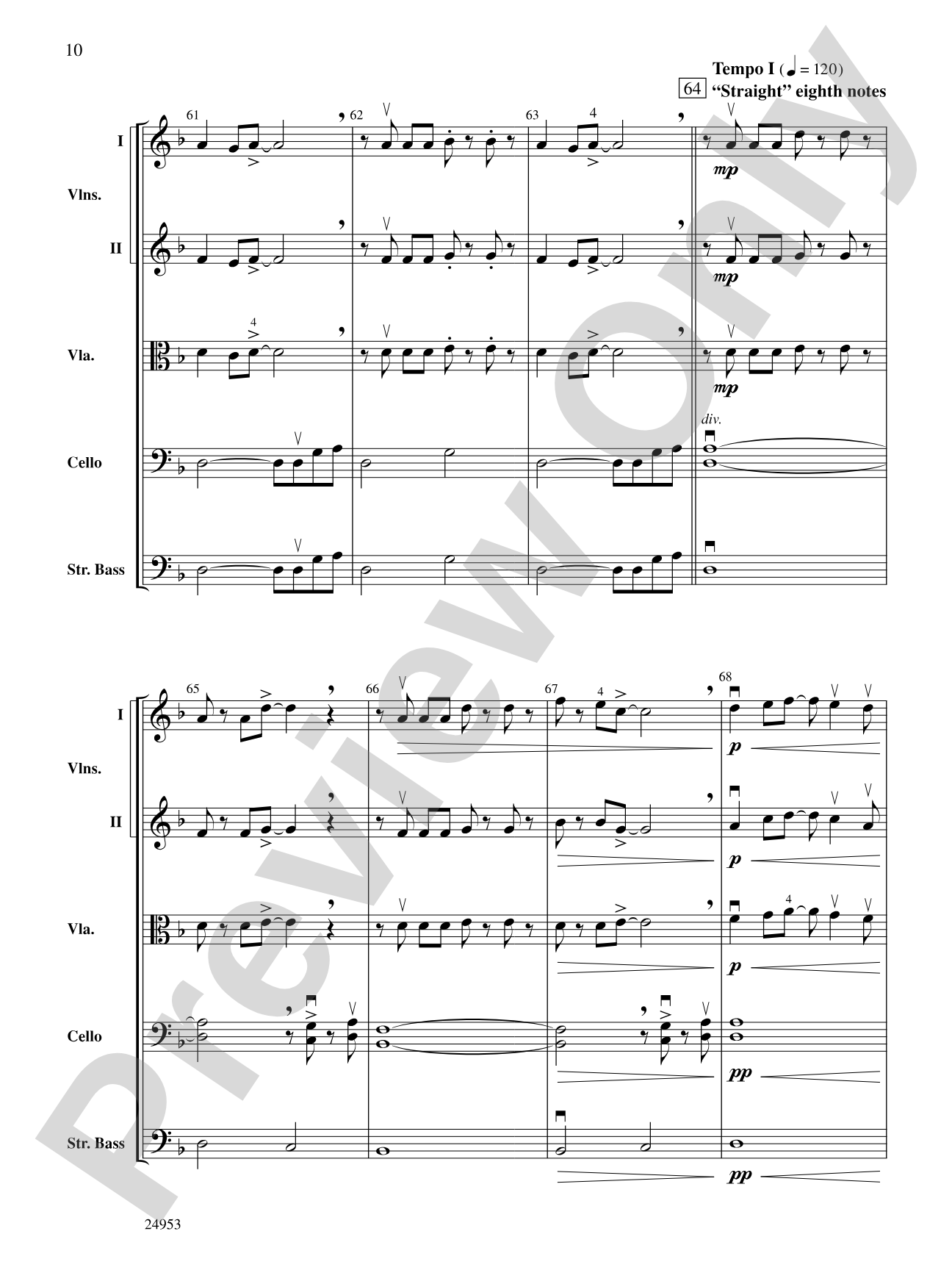
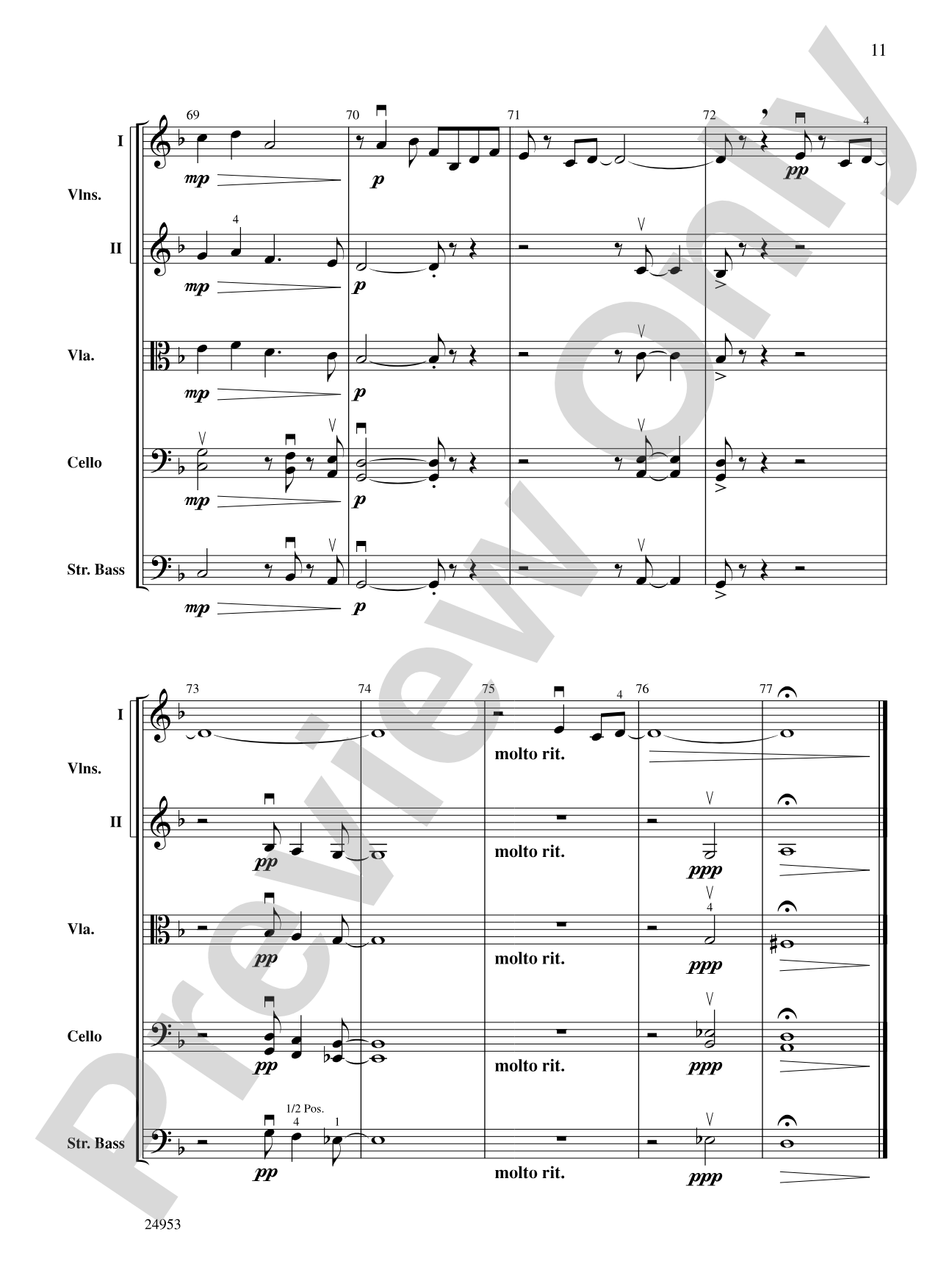


Freedom Train: String Orchestra Conductor Score & Parts
By Robert Sieving
Grade: 2.5
Item: 00-PK-0000953

$48.00
Pickup currently not available
Buy Extra Parts (Digital PDF Download)
| Product | Price | Quantity |
|---|---|---|
| Freedom Train: Score | $7.00 | |
| Freedom Train: 1st Violin | $5.99 | |
| Freedom Train: 2nd Violin | $5.99 | |
| Freedom Train: Viola | $5.99 | |
| Freedom Train: Cello | $5.99 | |
| Freedom Train: String Bass | $5.99 |
Parts Added to Cart!
Description
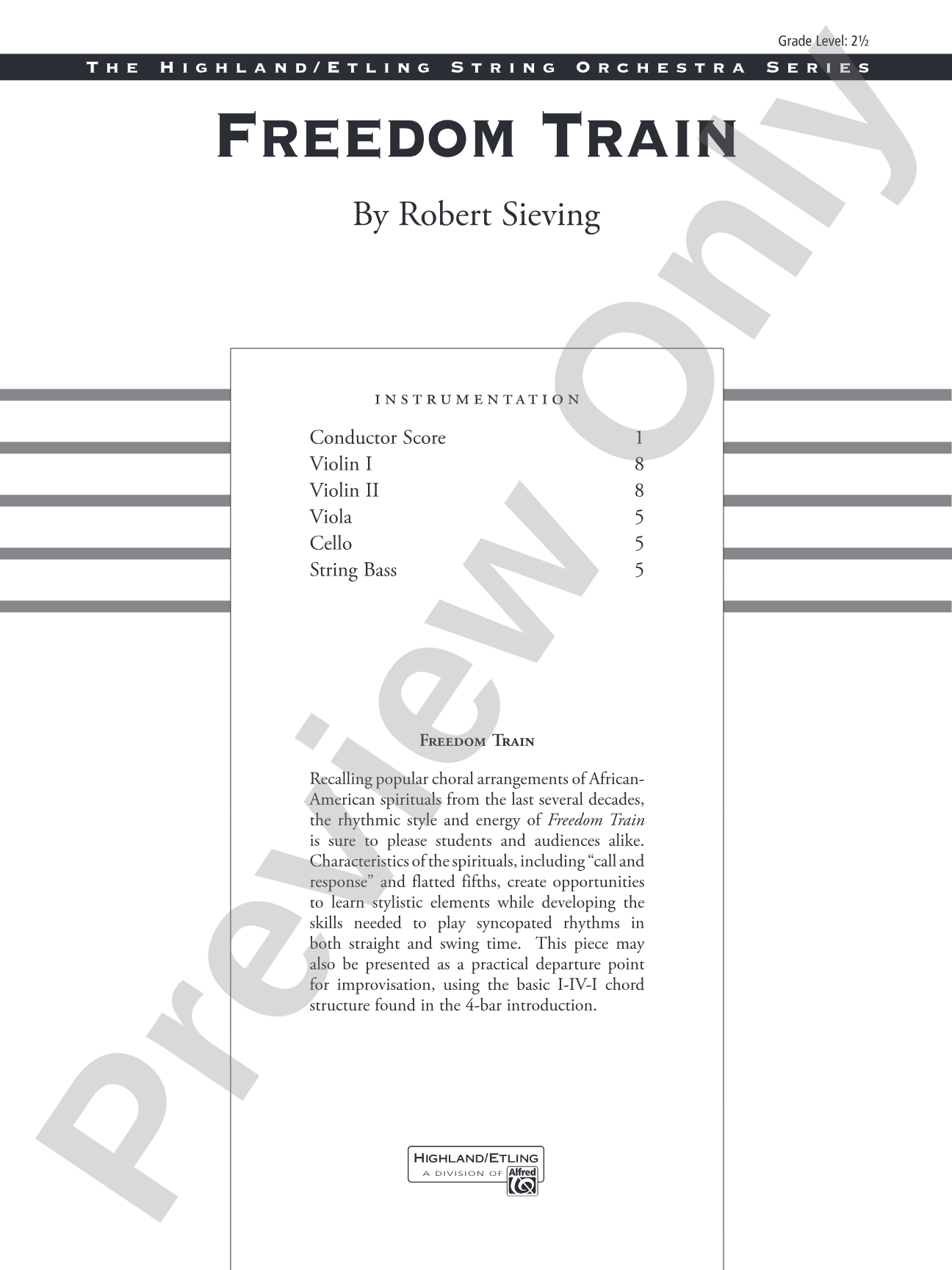
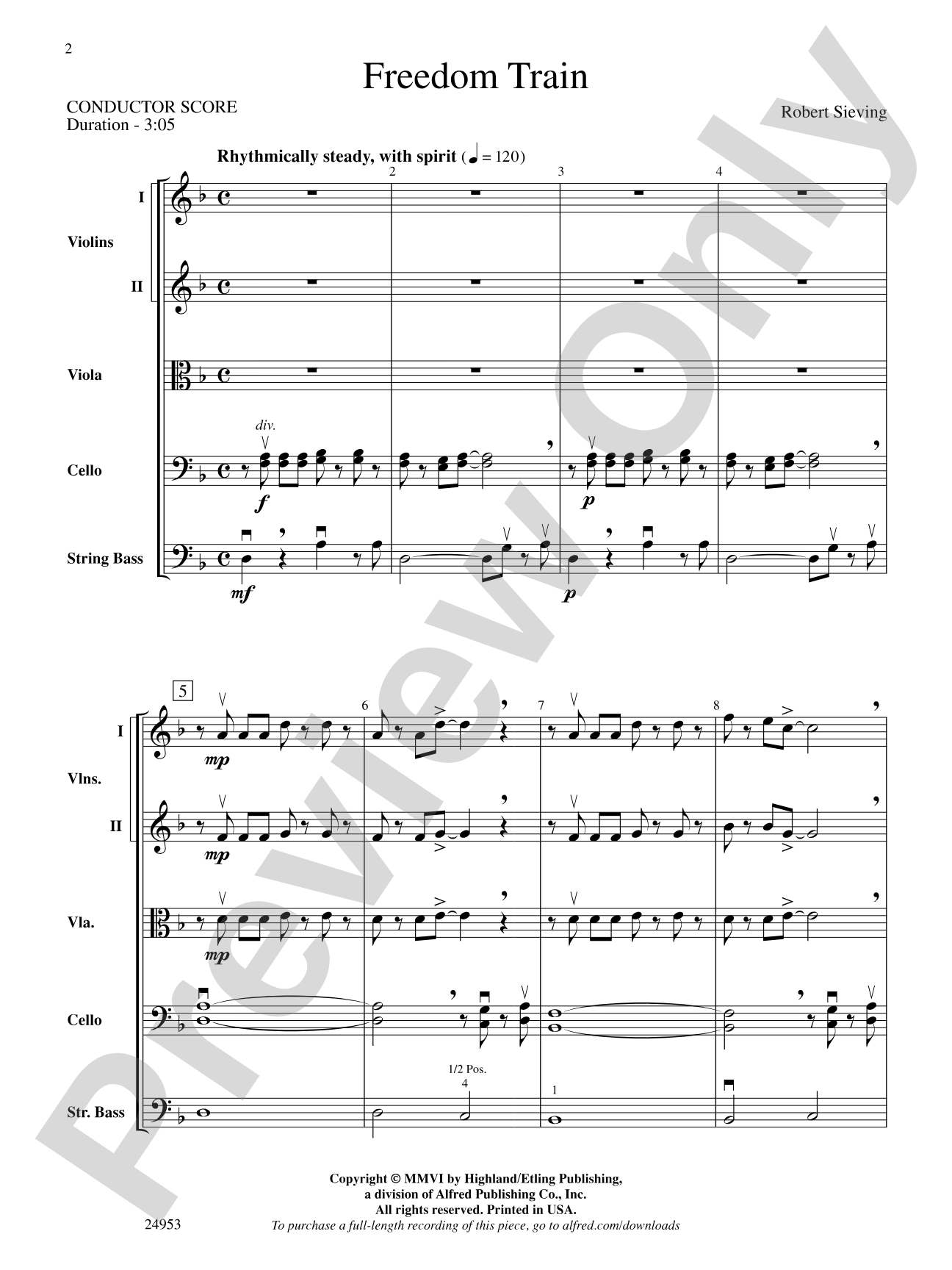
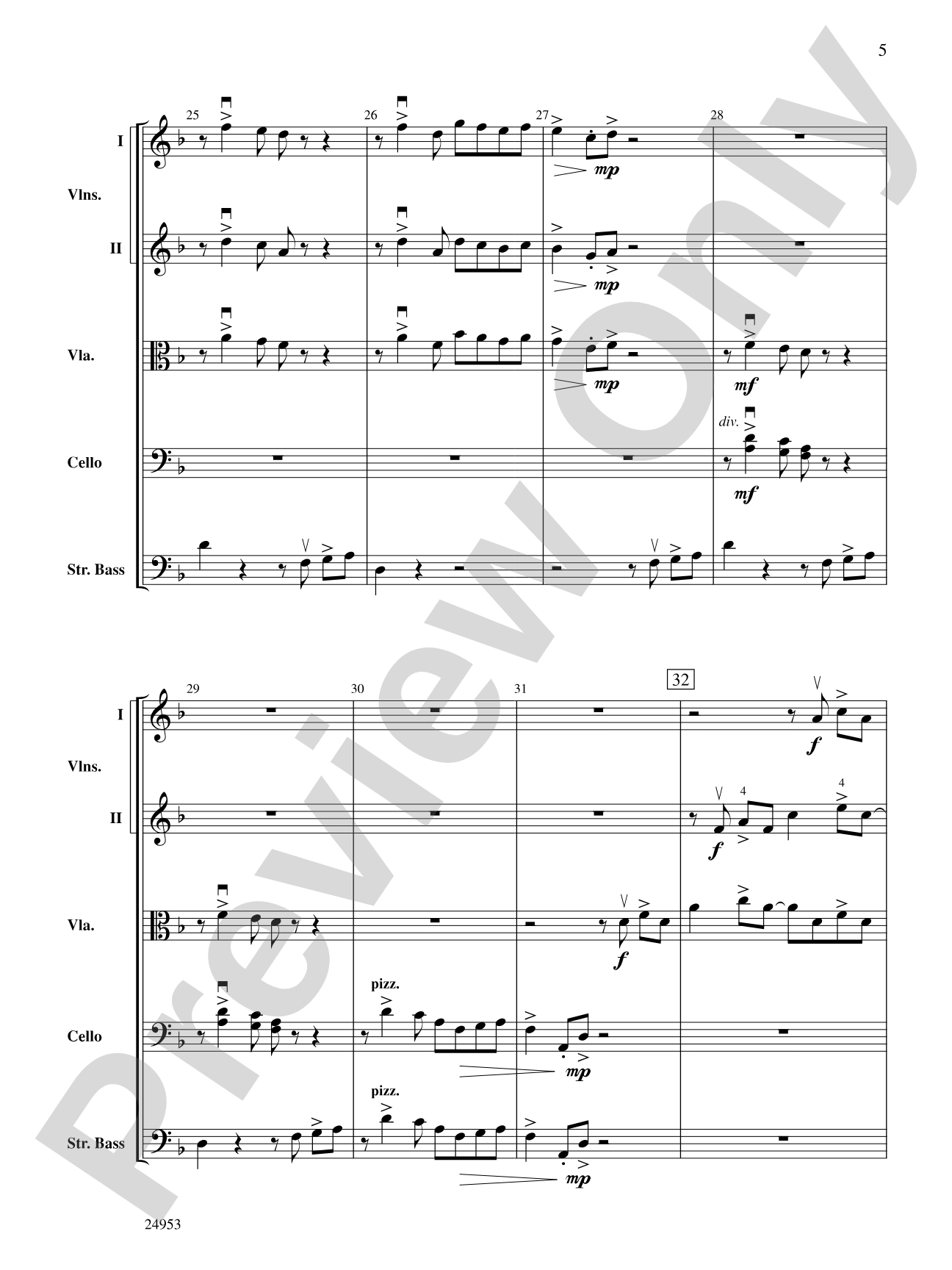
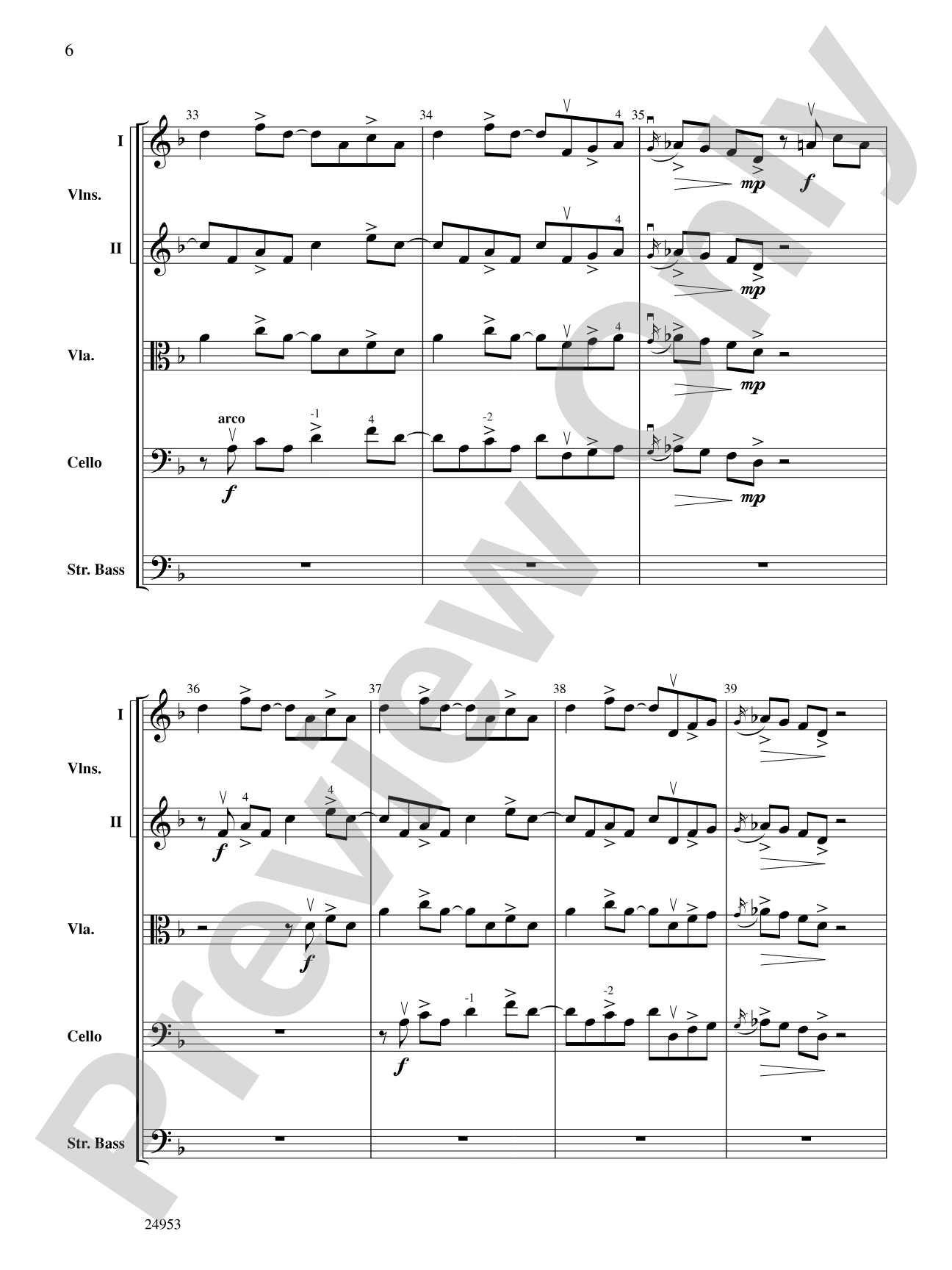
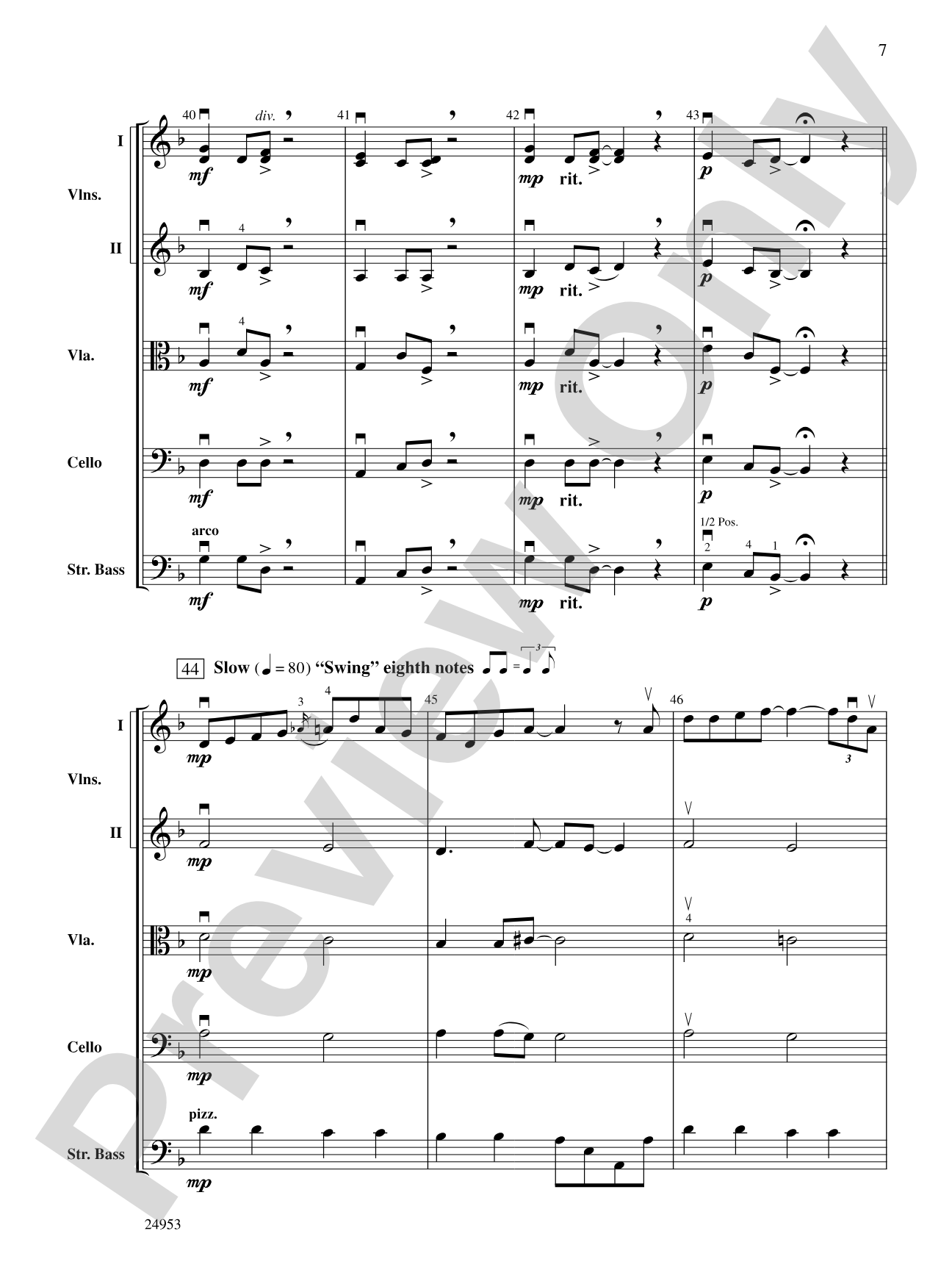
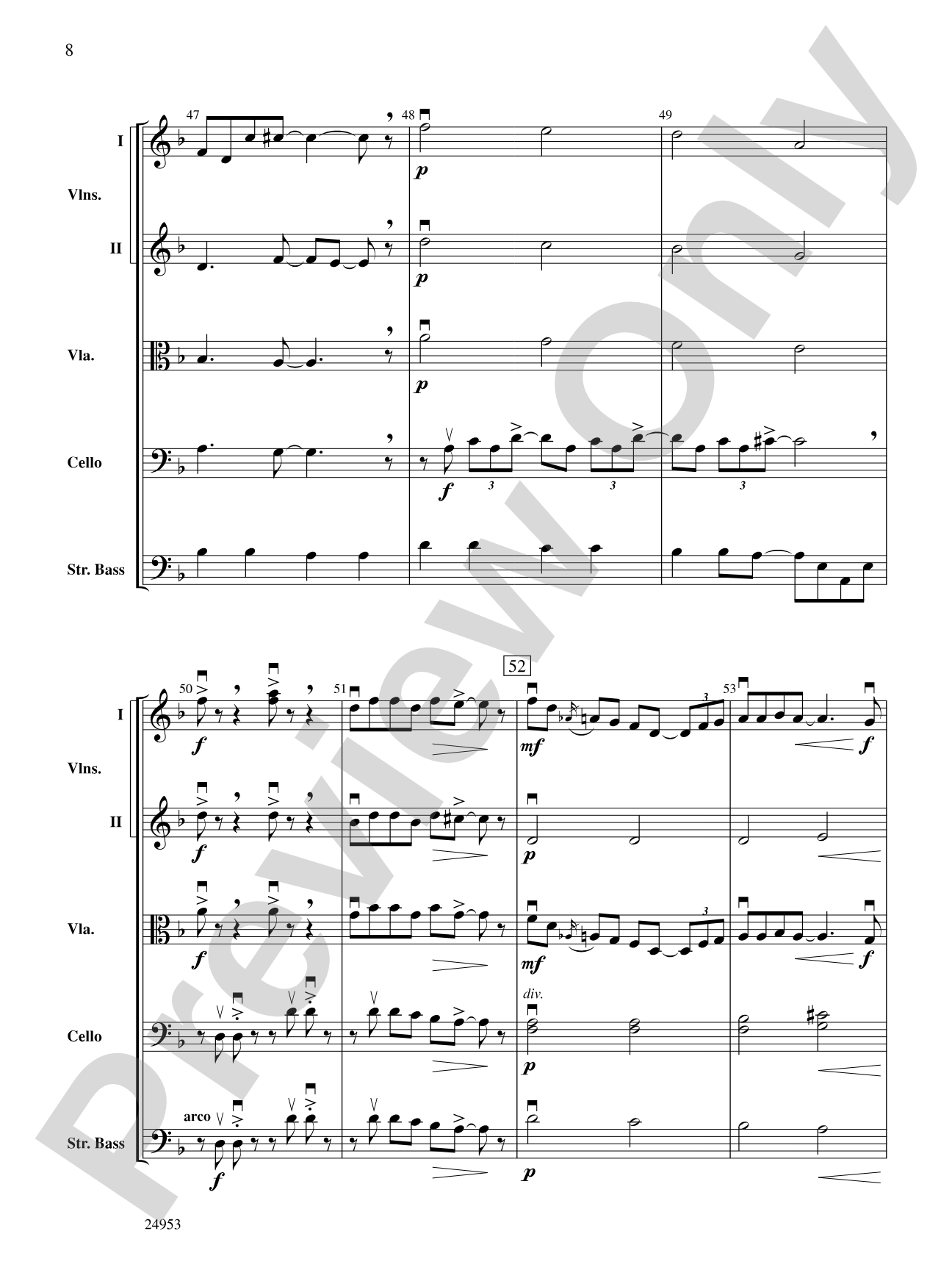
Recalling popular choral arrangements of African-American spirituals of the last several decades, the rhythmic style and energy of this piece is sure to please students and audiences alike. Characteristic examples such as "call-and-response" and flatted fifths present opportunities for the learning of stylistic elements, while players develop skills playing syncopated rhythms in both straight and swing styles. "Freedom Train" could also be used as a practical departure point for improvisation in the rehearsal or performance setting utilizing the basic I-IV-I chord structure found in the 4-bar introduction.


Don't just read it, hear it, play along with it, and watch your students grow with it. In MakeMusic Cloud, Freedom Train: String Orchestra Conductor Score & Parts comes alive with professional accompaniment, adjustable tempo, and built-in practice tools that turn solo practice into real progress.
Open in the Player
Jump straight in and assign it today.
Start Your Free Trial
Open this title and explore the full library in minutes.
Sample Audio
1
Audio File
--:--
0:00
0:00
Sample Video
No sample videos found.
Additional Details
Series:
Highland/Etling String Orchestra
Publisher:
Alfred Music
Page Count:
124
SKU:
00-PK-0000953
More about this title
About the Composer: Robert Sieving

Robert Sieving has built a prolific career writing and arranging music across multiple ensembles and genres. Born in 1942, he has created more than 100 published works for strings and choirs, representing a diverse range of sacred and secular styles suited to various performance levels. His compositions appear in catalogs from more than a dozen publishers, reflecting his versatility in meeting the needs of school and community musicians.
Why we love this
This arrangement captures the rhythmic vitality and emotional directness of spiritual music without requiring vocal training or extra singers. Sieving's orchestration builds genuine stylistic literacy by embedding call-and-response and flatted fifths naturally into the string parts, giving students the experience of authentic musical language rather than a lesson about it.
What to expect
Energetic and soulful, built on the sway and syncopation familiar to listeners of spiritual arrangements. The piece carries warmth and directness, moving between moments of call-and-response that feel conversational and sections where the full ensemble locks into a unified groove.
Who it's for
String orchestras at the intermediate level seeking repertoire that honors African-American musical traditions while building genuine stylistic and rhythmic skills. Directors can program this confidently with mixed-ability orchestras, since Grade 2.5 parts remain accessible while offering meaningful musical content.
How to get the most out of it
- Emphasize the call-and-response phrasing by giving clear attacks at the beginning of each exchange; slight breathing space between sections will let the dialogue breathe.
- Shape the syncopated rhythms with consistent articulation and rhythmic precision, especially in passages mixing straight and swing feels.
- If exploring improvisation from the introduction's I-IV-I progression, establish a steady groove first and define the harmonic stops clearly so soloists know where to land and return.
- Balance the characteristic flatted fifths so they register as intentional color rather than tuning issues; ensure intonation security in those altered sonorities during sectional rehearsals.
How to use it
This works well as a standalone concert piece that stands solidly on its own or as part of a program exploring American musical traditions. It could also anchor a thematic concert pairing instrumental and vocal spirituals, offering a bridge between those worlds.
Skills your students will build
- Syncopated rhythm reading in both straight and swing interpretations
- Call-and-response phrasing and ensemble dialogue
- Intonation security with flatted fifths and altered harmonic colors
- Stylistic awareness of African-American spiritual conventions
- Foundational improvisation within a harmonic structure (I-IV-I progression)