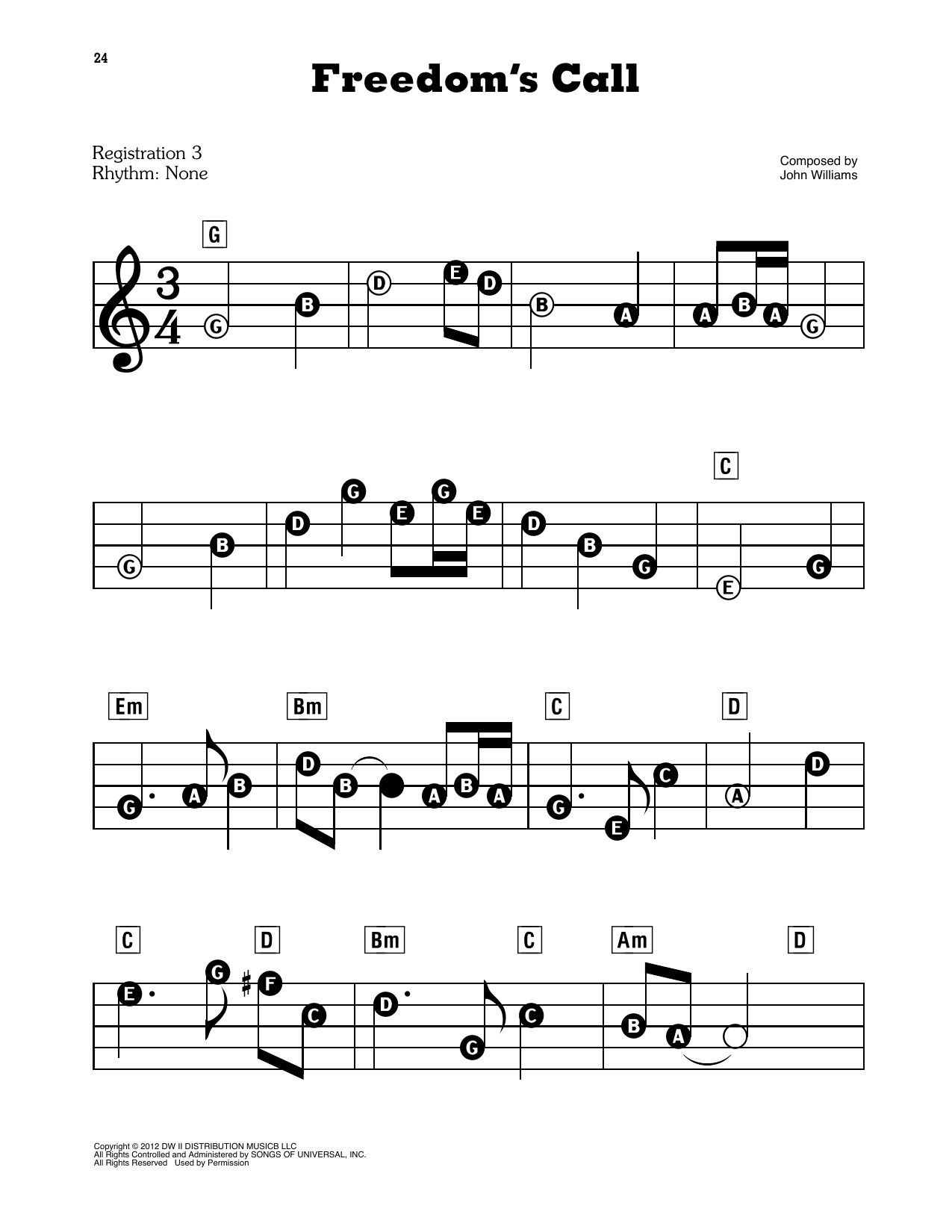
Freedom's Call (from Lincoln) Sheet Music Preview

Freedom's Call (from Lincoln): E-Z Play Today

By John Williams

Item: 35-DS01885868

Digital Download
$4.99
Description

Freedom's Call (from Lincoln): E-Z Play Today isn't in MakeMusic Cloud just yet...but it could be. Let us know you'd like to see it, and you'll help shape what comes next. In the meantime, start a free trial and dive into thousands of interactive titles your students can play along with today.

Sample Audio
No sample audio found.
Sample Video
Additional Details
Publisher: Hal Leonard
Page Count: 6
SKU: 35-DS01885868

More about this title

About the Composer: John Williams

John Williams stands as one of the most consequential film composers in cinema history. His mastery of orchestral writing and gift for memorable melodic material have shaped the soundtracks of more than a hundred films, from Star Wars and Indiana Jones to Schindler's List and Lincoln. Williams brings a classical sensibility to film scoring, drawing on his deep knowledge of symphonic structure and instrumental voice leading to create music that functions both as dramatic underscore and as concert repertoire in its own right.

Why we love this

Williams wrote music for Lincoln that honors the weight of its subject matter without sacrificing accessibility. This simplified version preserves the emotional core of the original score, giving pianists a chance to work with thematic material that feels substantial and genuinely lyrical. The six-page length makes it manageable for intermediate players while delivering real musical satisfaction.

What to expect

The music carries quiet dignity and a sense of determined resolve. There is nobility in the orchestration without bombast, and moments of vulnerability that speak to personal conviction rather than grand gesturing.

Who it's for

Pianists working at the intermediate level who want repertoire with genuine dramatic substance will find this rewarding. It also serves teachers seeking concert material that connects to American history curriculum or film music study.

How to get the most out of it

  • Shape the opening melody with a singing tone; these lines are meant to breathe like a vocalist would, so avoid driving ahead of the pulse.
  • Listen for harmonic movement beneath the surface and let those shifts guide your dynamic contour, even in passages that sit in a single register.
  • Respect the space and silence between phrases, particularly in the quieter sections, so the thematic material lands with proper weight.

How to use it

Include this on a recital program focused on film music, where it can stand alongside other Williams arrangements or contemporary cinematic scores. It also works well as a solo piece in a concert celebrating American composers or historical themes.

Skills your students will build

  • Sustaining legato melody lines across hand position shifts
  • Balancing accompaniment texture with thematic prominence
  • Interpreting dynamic nuance in lyrical writing
  • Managing rubato and phrasing in emotionally weighted material

You May Also Like