
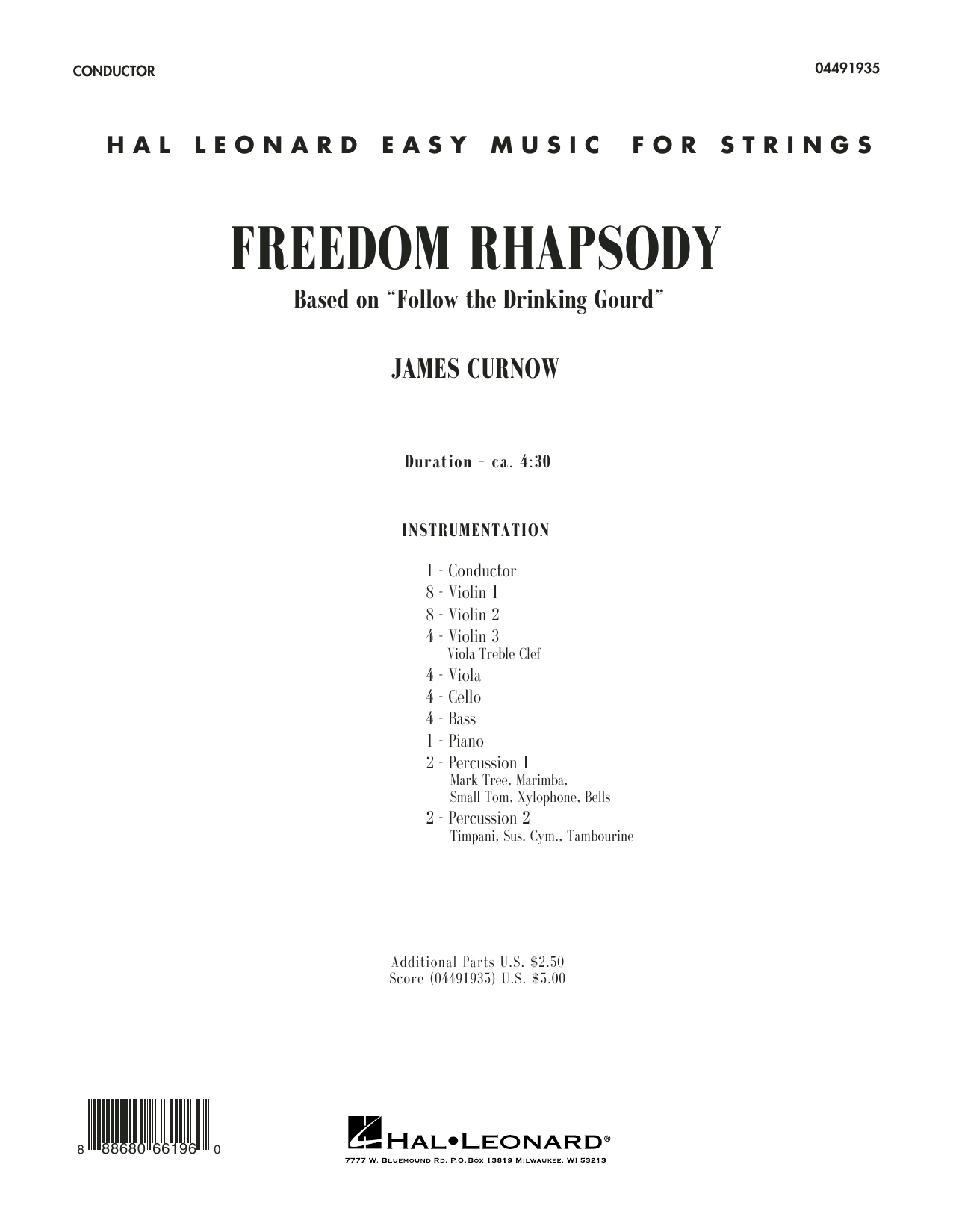

Freedom Rhapsody (based on "Follow the Drinking Gourd"): String Orchestra Conductor Score & Parts
Arranged by James Curnow
Grade: 2
Item: 35-PK00377024
$40.00
Pickup currently not available
Buy Extra Parts (Digital PDF Download)
Parts Added to Cart!
Description
"Freedom Rhapsody" is a set of brief variations, based on the spiritual "Follow the Drinking Gourd." There are four sections to the composition, marked "The yearning to be free; Anticipation; Reflection;" and "Celebration."
Dur: 4:30


Freedom Rhapsody (based on "Follow the Drinking Gourd"): String Orchestra Conductor Score & Parts isn't in MakeMusic Cloud just yet...but it could be. Let us know you'd like to see it, and you'll help shape what comes next. In the meantime, start a free trial and dive into thousands of interactive titles your students can play along with today.
Request This Title
Tell us you want it.
Start Your Free Trial
Explore everything that's ready to play right now.
Sample Audio
No sample audio found.
Sample Video
No sample videos found.
Additional Details
Publisher:
Hal Leonard
SKU:
35-PK00377024
More about this title
About the Arranger: James Curnow
James Curnow is a prolific composer and arranger whose work spans wind band, orchestral, and educational music. His arrangements consistently balance accessibility with musical substance, making them fixtures in school and community music programs across North America. Curnow's gift for preserving the emotional core of traditional material while crafting engaging, performable scores has earned him respect among music educators at all levels.
Why we love this
Curnow's four-section architecture transforms a familiar spiritual into a arc of genuine emotional progression, giving students a vehicle for exploring how arrangement and structure shape meaning. Grade 2 parts are idiomatically written for strings without sacrificing the piece's expressive weight; players at this level come away feeling they've performed something substantive rather than merely simplified.
What to expect
The piece unfolds like a conversation with history, beginning in quiet determination and moving through hope toward triumph. Curnow's harmonic language respects the melody's power while adding contemporary color; the overall effect is both rooted and expansive.
Who it's for
String orchestras in grades 2 and 3 seeking repertoire that connects traditional music to larger themes of freedom and resilience. Conductors building programs around African American spirituals or exploring how folk material can support social and emotional learning will find strong pedagogical content here.
How to get the most out of it
- Shape each section's dynamic profile distinctly. 'The yearning to be free' needs restraint and forward momentum, while 'Celebration' invites full ensemble sound without losing rhythmic clarity.
- Establish steady pulse in the lower strings from the outset. Consistency there frees the upper voices to breathe and phrase with the text's narrative arc.
- Honor the silence between sections. Brief stillness between movements allows the emotional shift to register with your audience.
- Balance melody and accompaniment carefully in 'Reflection.' This section's power lies in transparency, not volume.
How to use it
This works as a concert anchor for a program exploring American vocal traditions or as a thoughtful companion to patriotic or freedom-themed repertoire. At 4:30, it's substantial enough to anchor a set but concise enough to pair with lighter fare or use as a standalone learning focus during a single rehearsal block.
Skills your students will build
- Sustaining tone and long phrase shapes across multiple measures
- Dynamic shaping within a single harmonic progression
- Responding to emotional or narrative cues embedded in structure and arrangement
- Ensemble balance between melody and accompaniment figures
- Articulation choices that support text-derived character (anticipation, reflection, celebration)