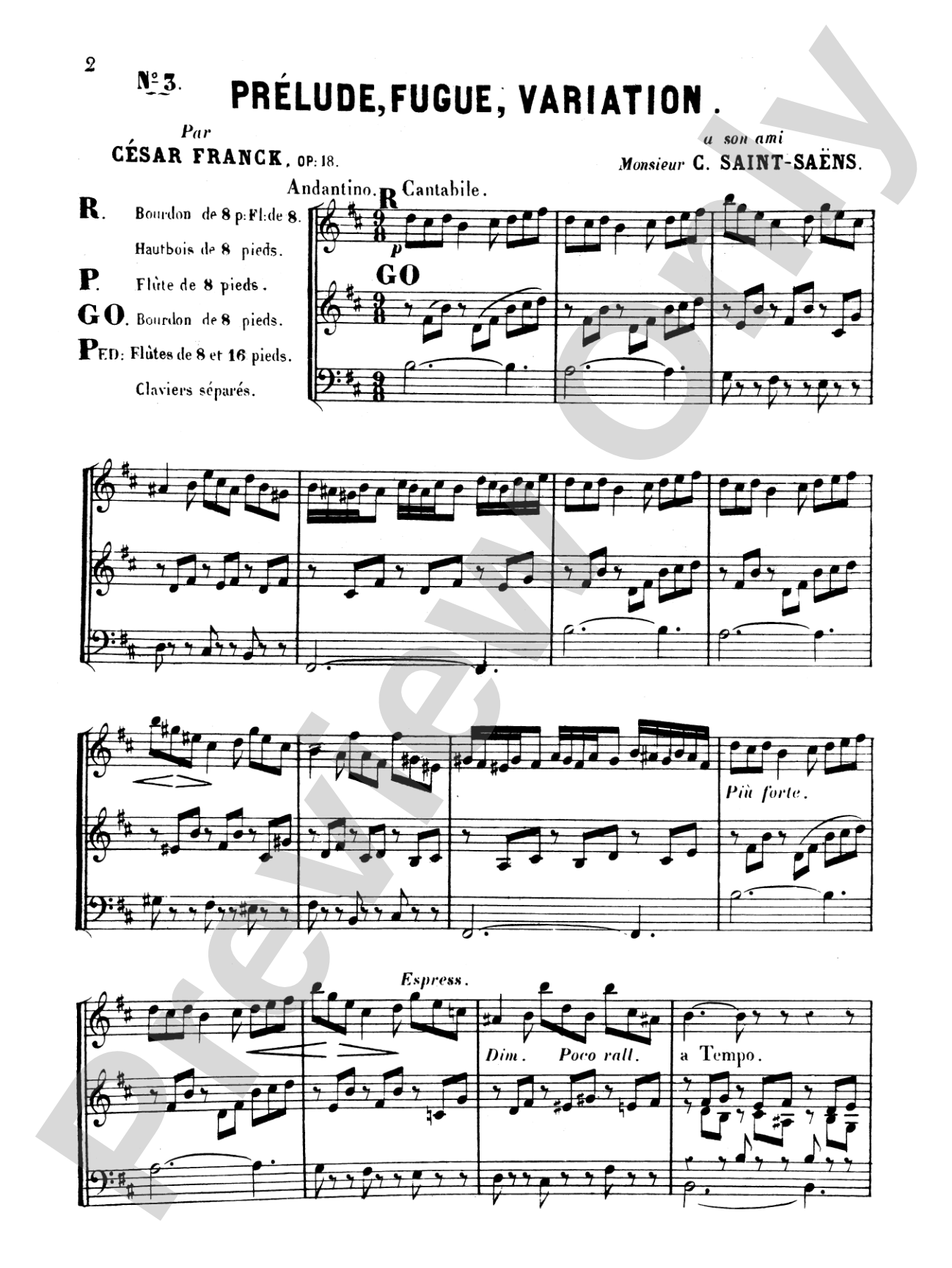
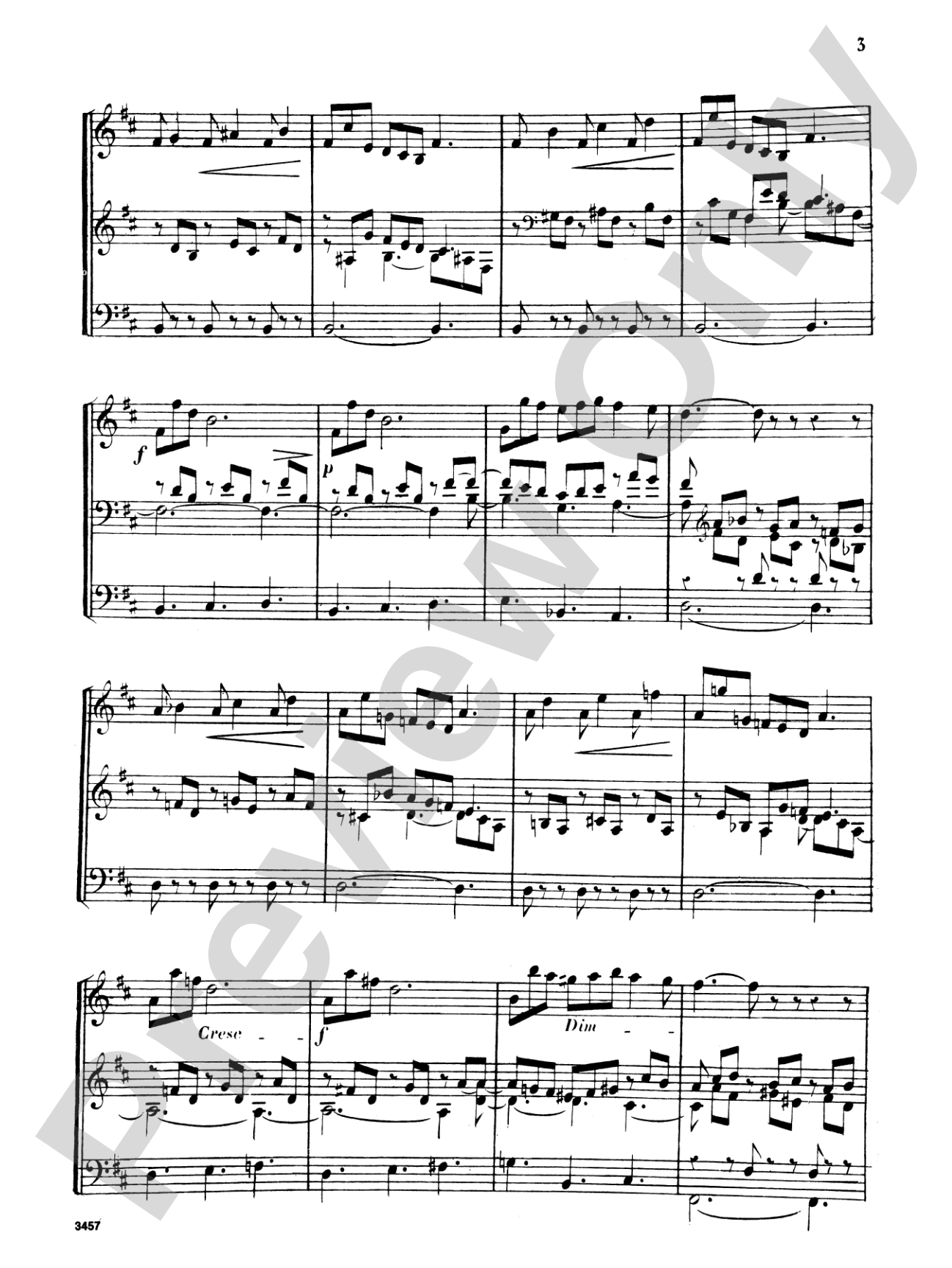
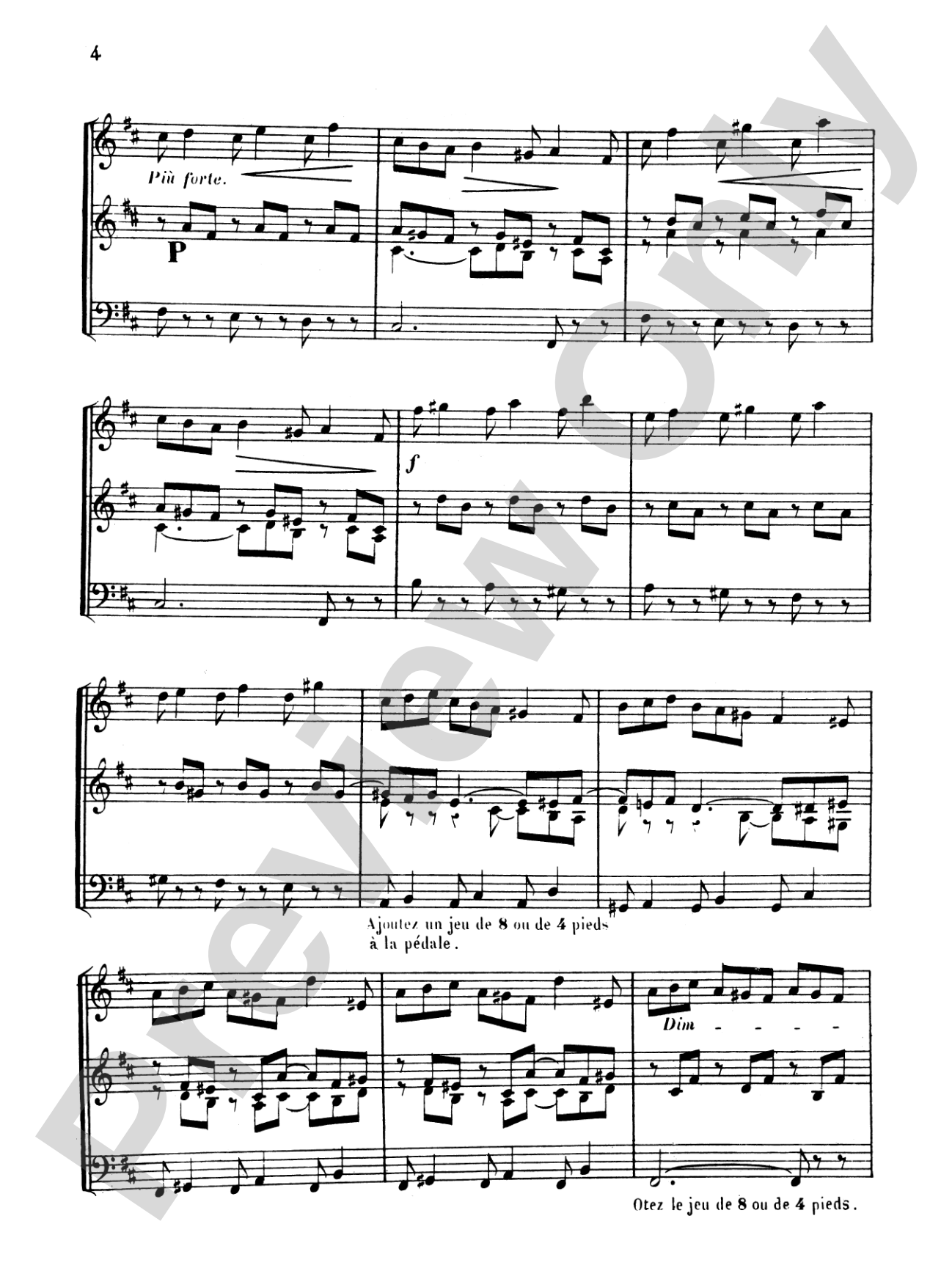
Franck: Prelude, Fugue and Variation, Op. 18 Sheet Music Preview

Franck: Prelude, Fugue and Variation, Op. 18

By César Franck

Item: 00-PC-0007244

Digital Download
$6.99
Description
An Organ solo composed by César Franck.

Don't just read it, hear it, play along with it, and watch your students grow with it. In MakeMusic Cloud, Franck: Prelude, Fugue and Variation, Op. 18 comes alive with professional accompaniment, adjustable tempo, and built-in practice tools that turn solo practice into real progress.

Sample Audio
No sample audio found.
Sample Video
Additional Details
Series: Kalmus Edition
Publisher: Alfred Music
Page Count: 16
SKU: 00-PC-0007244

More about this title

About the Composer: César Franck

César Franck (1822-1890) was a Belgian-French organist and composer whose organ works fundamentally shaped the instrument's Romantic repertoire. His appointment as organist at Sainte-Clotilde in Paris from 1858 until his death gave him decades to explore the organ's expressive capabilities, resulting in a catalog of works that remain central to concert and liturgical performance today.

Franck's compositional voice blended German symphonic structure with French organ tradition, creating works of spiritual depth and harmonic sophistication. His organ music influenced generations of composers and continues to challenge and reward organists seeking repertoire that balances technical brilliance with genuine musical substance.

Why we love this

Franck's Op. 18 sits at the intersection of strict counterpoint and Romantic lyricism, offering organists a work that demands both intellectual rigor and interpretive maturity. The three-movement design provides natural arc and contrast without descending into virtuosity for its own sake, making it a cornerstone piece that signals serious musicianship in any recital or service.

What to expect

The Prelude opens with introspective dignity, its harmonic language suggesting spiritual contemplation without sentimentality. The fugue unfolds with intellectual rigor and cumulative power, while the Variation section brings a lighter, almost pastoral quality that resolves the work's accumulated tension into quiet resolution.

Who it's for

Advanced organists preparing recital or service repertoire will find substantial musical content and pedagogical value in this work. The piece demands secure technique, harmonic understanding, and the maturity to balance formal architecture with expressive purpose; it is not suited to early intermediate players but rewards those ready for it.

How to get the most out of it

  • Treat the fugue with clarity of voice leading; the organ's color palette can obscure individual lines if registrations are too thick. Plan your manual work early so each voice reads distinctly.
  • The Prelude's harmonic movement is deliberate and spacious. Resist the urge to rush; let the modulations breathe and reveal their chromatic logic.
  • Balance registration across the three movements to create architectural coherence. The Variation's lighter character offers welcome textural relief after the fugue's density.
  • Pedal work in the fugue requires secure rhythm and independence. Isolate and drill the pedal subject separately; it carries harmonic weight even when accompanying upper voices.

How to use it

This work functions powerfully as a recital centerpiece or concluding major work on a mixed program; its architectural completeness stands alone without need for filler. It also serves well as a substantive service piece for Easter, Advent, or other liturgical contexts where organ music carries doctrinal weight.

Skills your students will build

  • Advanced voice independence and pedal-manual coordination in complex counterpoint
  • Harmonic analysis of Romantic chromatic modulation and voice-leading
  • Registration planning and tonal color manipulation across full organ range
  • Sustained interpretive control over three formally distinct sections
  • Sight-reading confidence with baroque-influenced notation and organ-specific layout

You May Also Like