Franchomme: Twelve Caprices for Two Cellos, Op. 7 (Book II Score & Parts) Sheet Music Preview

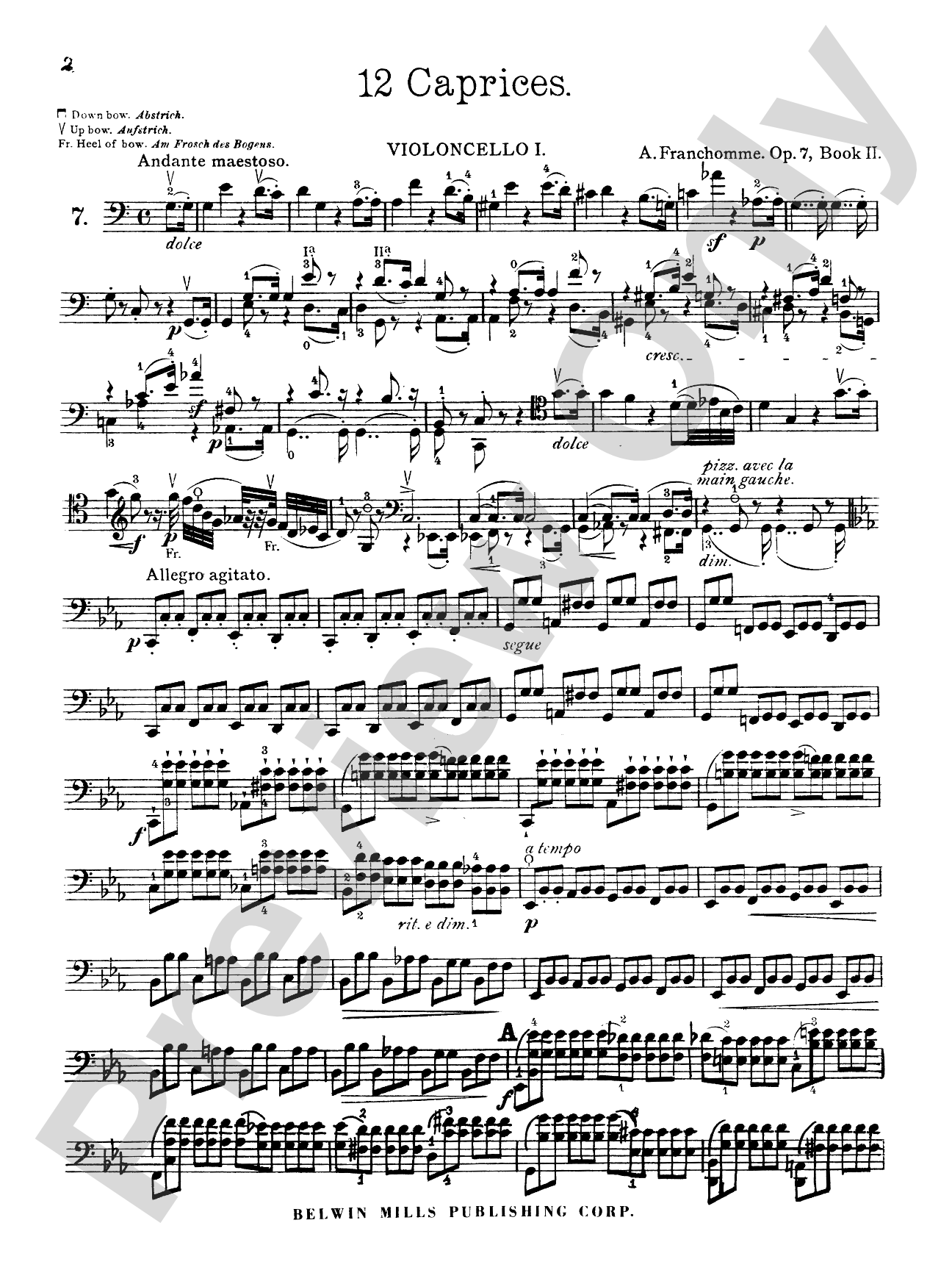
Franchomme: Twelve Caprices for Two Cellos, Op. 7 (Book II Score & Parts)

By August Joseph Franchomme

Item: 00-PC-0010961

Digital Download
$0.99
Description

Don't just read it, hear it, play along with it, and watch your students grow with it. In MakeMusic Cloud, Franchomme: Twelve Caprices for Two Cellos, Op. 7 (Book II Score & Parts) comes alive with professional accompaniment, adjustable tempo, and built-in practice tools that turn solo practice into real progress.

Sample Audio
No sample audio found.
Sample Video
Additional Details
Series: Kalmus Edition
Publisher: Alfred Music
Page Count: 32
SKU: 00-PC-0010961

More about this title

About the Composer: August Joseph Franchomme

August Joseph Franchomme (1808-1884) was a French cellist and composer who stood at the center of Parisian musical life during the Romantic era. A principal cellist at the Opéra and a founding member of the Société Chamber Music, he collaborated with leading composers of his time and built a substantial solo repertoire that showcased the cello's lyrical and virtuosic potential. His twelve caprices represent his most enduring pedagogical and artistic contribution to cello literature, combining technical demands with genuine musical substance.

Franchomme's caprices remain essential study material for cellists developing interpretive maturity and technical command. Unlike many technical studies of the period, these works demand not just accuracy but musical intelligence, requiring students to balance virtuosity with expression.

Why we love this

The caprice genre allows each cellist to shine without competition, making this collection ideal for advanced students or faculty pairs exploring chamber music at the highest pedagogical level. Franchomme's writing feels genuinely musical even within passages of considerable technical difficulty, so neither player is reduced to accompanist status. Programming these pieces signals to audiences and adjudicators that you're serious about cello literature beyond the standard concerto repertoire.

What to expect

Virtuosity infused with genuine lyricism. The technical passages breathe naturally within musical phrases rather than serving as mere display, creating a sense of disciplined elegance. The interplay between the two cellos ranges from intimate dialogue to soaring counterpoint, maintaining forward momentum throughout.

Who it's for

Intermediate-advanced cellists and teaching duos seeking substantial yet musically rewarding chamber music that develops independence and interpretive nuance. These caprices work equally well as lesson material for ambitious students and as performance pieces for faculty recitals or student chamber music concerts.

How to get the most out of it

  • Balance the independent melodic lines throughout. Even when one cello carries the principal theme, the second voice deserves careful voice leading and consistent tone quality.
  • Establish a clear rhythmic reference between both players before beginning. The harmonic foundation depends on rhythmic precision from the accompaniment role, but that role still requires active listening and musical presence.
  • Use natural vibrato selectively to shape phrases rather than sustain it continuously. Franchomme's melodic writing benefits from contrast between vibrant and transparent tone colors.
  • Pay attention to dynamic markings as structural signposts. Crescendos and diminuendos often propel the music toward cadential moments or highlight shifts between the two voices.

How to use it

Feature a single caprice or a carefully paired group of two on a recital or concert to demonstrate advanced technical facility alongside musical maturity. These pieces work particularly well sandwiched between larger Romantic concertos or alongside contemporary works, as they refresh the listener's ear with their focused chamber intimacy.

Skills your students will build

  • Sustained vibrato control and selective vibrato placement for expressive effect
  • Independent line playing within a duo texture without losing harmonic awareness
  • Facility with rapid passagework and shifting across multiple positions
  • Interpretation of Romantic-era phrasing and structural navigation
  • Chamber music listening and rhythmic alignment with an equal partner

You May Also Like