
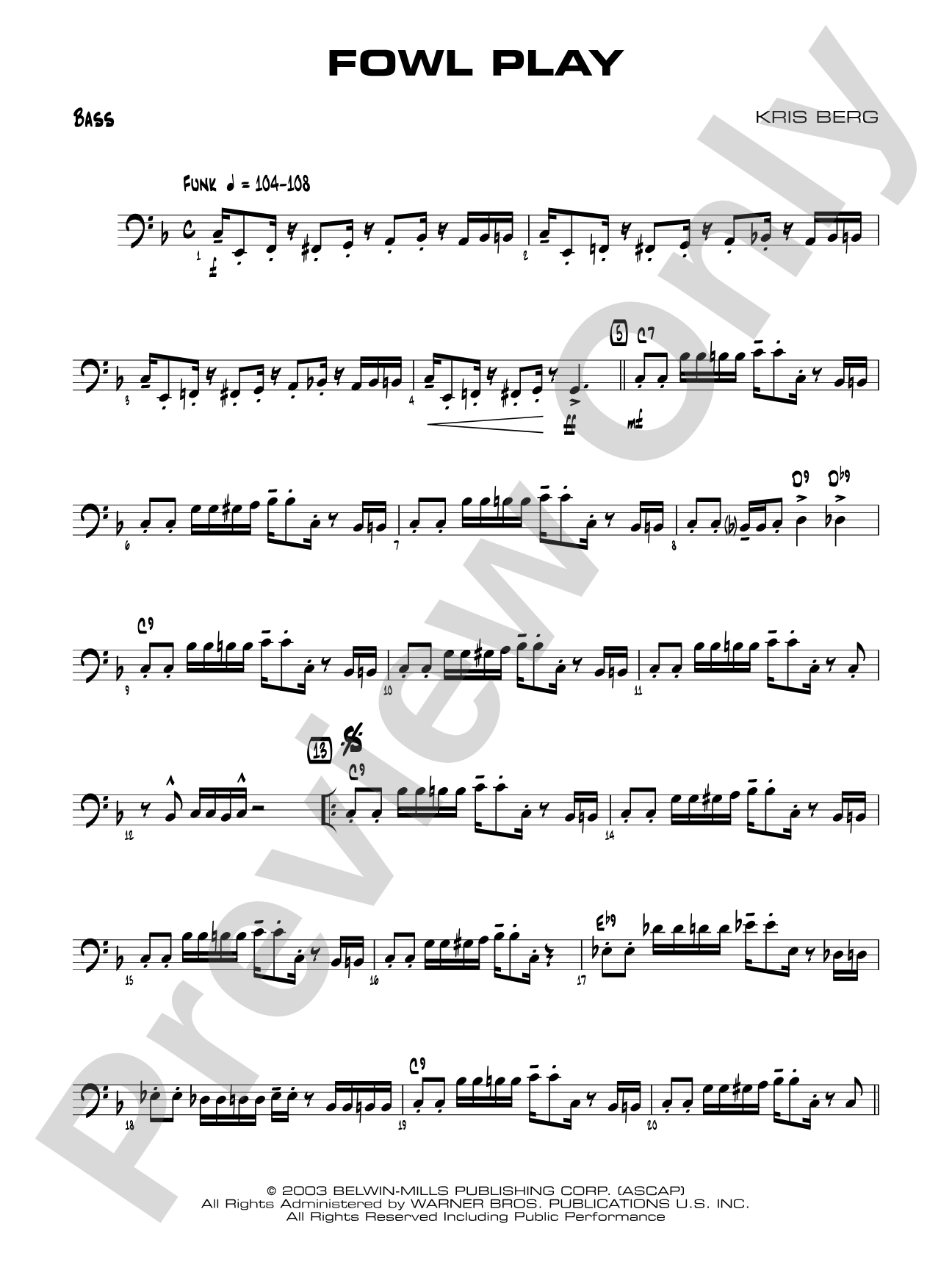

Fowl Play: String Bass
By Kris Berg
Grade: 3 (Medium)
Item: 00-PC-0015620_SB
$3.00
Pickup currently not available
Description
Mercy! If you know Kris Berg's funky music, then you know about chicken. Do you want a funky Tower of Power-style chart? Well then, this is it. The whole band will have their eyes glued to this chart as the horn players hunt and peck through this one. The rhythmic figures are searing with energy, the rhythm section will cook on high heat throughout and the tenor sax soloist will need oven mitts for protection. Lead trumpet to written high C (optional D). Once this chart is done, the band and the audience will order up again and again. Highly recommended! (4:57)


Don't just read it, hear it, play along with it, and watch your students grow with it. In MakeMusic Cloud, Fowl Play: String Bass comes alive with professional accompaniment, adjustable tempo, and built-in practice tools that turn solo practice into real progress.
Open in the Player
Jump straight in and assign it today.
Start Your Free Trial
Open this title and explore the full library in minutes.
Sample Audio
1
Audio File
--:--
0:00
0:00
Sample Video
Additional Details
Series:
Jazz Band Series
Publisher:
Alfred Music
Page Count:
94
SKU:
00-PC-0015620_SB
More about this title
About the Composer: Kris Berg
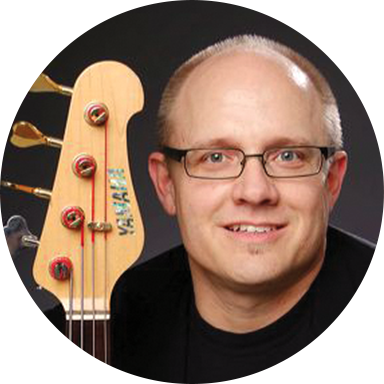
Kris Berg leads the jazz studies program at Collin County Community College in Texas, where he earned both his bachelor's and master's degrees in jazz studies from the University of North Texas. His work has shaped the region's jazz education landscape; under his leadership, Collin's ensembles have earned multiple invitations to perform at the Montreux Jazz Festival, and he founded both the Collin Jazz Fest and the Texas All-Star Jazz Camp.
As a composer and arranger for Belwin Jazz (Alfred Publishing), Berg's charts circulate in jazz programs worldwide. He is active as a clinician and artist for Yamaha Corporation of America and has performed alongside world-class musicians including Randy Brecker, Peter Erskine, Bob Mintzer, Bobby Shew, and Clark Terry. He also authored the widely used method book Bass Lines in Minutes and is endorsed by Walter Woods Amplifiers.
Why we love this
Berg writes with infectious rhythmic clarity and genuine funk sensibility. The Tower of Power influence is unmistakable but never derivative; instead, it gives ensembles at this level access to the kind of contemporary big band groove that keeps audiences engaged and players hungry for more. The part writing is smart, the solo opportunities are generous, and the energy arc guarantees both rehearsal buy-in and strong audience reaction.
What to expect
Funky, purposeful energy from the opening note. The rhythmic textures pulse with the heat of a tight horn section cooking over a rhythm section that won't let up, and the tenor sax solo invites the kind of fearless playing that reminds everyone why they chose jazz in the first place.
Who it's for
Jazz ensemble programs at the high school or college level looking for repertoire that speaks to contemporary jazz vocabulary without requiring advanced facility. Directors seeking a crowd-pleasing contest or festival piece with genuine musical substance will find strong programming material here.
How to get the most out of it
- Lock the rhythm section first. The alto and tenor saxes, trombone, and rhythm players need absolute pocket unity before the ensemble comes together; once that's solid, the horn lines will sit naturally into the groove.
- Treat the lead trumpet part as a leader, not a solo instrument. This voice carries the melodic identity throughout, so intonation and phrasing clarity from that chair will guide the entire front line.
- Give the tenor sax soloist space to cook during the featured section. This passage rewards confidence and risk-taking; encourage the soloist to play through the changes rather than around them.
- Balance the rhythmic figures in the ensemble passages carefully. These searing lines sound best when each section (saxes, trombones, trumpets) articulates together without overwhelming the rhythm section's pocket.
How to use it
Program this as a concert centerpiece or festival submission where you want to showcase ensemble cohesion and groove sensibility. It pairs well with traditional swing or bebop charts and offers a natural energy boost in the middle of a set.
Skills your students will build
- Reading and executing precise rhythmic figures in a funky jazz idiom
- Maintaining pocket and ensemble swing feel over extended ensemble passages
- Trading solos and accompanying tenor sax melody with voice independence
- Balancing dynamic control across the ensemble without sacrificing groove intensity
- Phrasing and articulation in contemporary funk-influenced big band writing