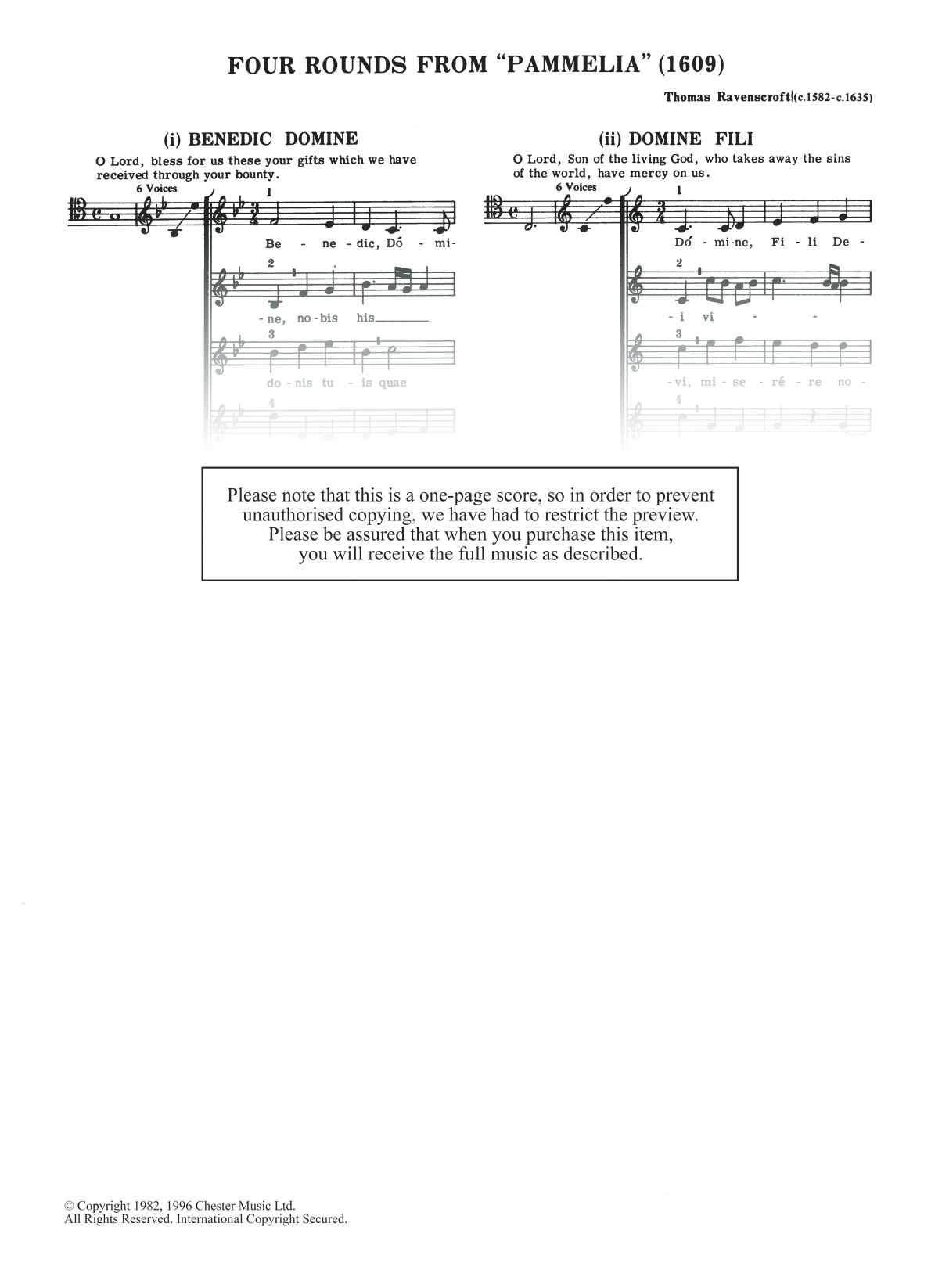
Four Rounds From "Pammelia" Sheet Music Preview

Four Rounds From "Pammelia": SATB Choral Octavo

As performed by Thomas Ravenscroft

Item: 35-DS00366853

Digital Download
$2.99
Description

Four Rounds From "Pammelia": SATB Choral Octavo isn't in MakeMusic Cloud just yet...but it could be. Let us know you'd like to see it, and you'll help shape what comes next. In the meantime, start a free trial and dive into thousands of interactive titles your students can play along with today.

Sample Audio
No sample audio found.
Sample Video
Additional Details
Publisher: Hal Leonard
Page Count: 2
SKU: 35-DS00366853

More about this title

About the Artist: Thomas Ravenscroft

Thomas Ravenscroft was an English composer and music publisher who flourished in the early 17th century, earning recognition as one of the most prolific collectors and creators of secular vocal music of his time. His published collections, particularly 'Pammelia' and 'Deuteromelia,' preserved a vital repertoire of rounds, catches, and part songs that defined English recreational music-making during the Renaissance and early Baroque periods.

Ravenscroft's rounds were designed for singers of modest ability who gathered for pleasure rather than professional performance. His gift for catchy melodies and singable part writing made complex polyphonic textures accessible to amateurs, establishing a model for community music-making that persists today.

Why we love this

Rounds offer your choir the chance to master a structured yet playful form that demands precision without pretension. These pieces teach polyphonic independence and ensemble listening in a context where singers actively enjoy what they're doing, making rehearsals feel less like work and more like the social, collaborative experience rounds were always meant to be.

What to expect

Singing these rounds evokes the convivial energy of a Renaissance tavern or manor house where amateurs gathered for entertainment and camaraderie. Each round unfolds as a gentle puzzle: your voice weaves in and out of others' lines, creating intricate textures from deceptively simple melodies that stick in your head long after rehearsal ends.

Who it's for

This collection suits choirs with basic sight-reading skills who want to explore early English vocal music without needing extensive rehearsal time. It works equally well for concert performance, informal gatherings, or choir warmups and team-building activities.

How to get the most out of it

  • Stagger your entrances deliberately during early rehearsals. Have each voice part sing through the entire round solo first, then enter in canon one measure at a time as the group becomes secure.
  • Lock in your pulse before attempting the overlapping entries. A steady, internalized beat allows singers to stay anchored when they cannot hear their own melodic phrase clearly.
  • Bring out the text with clarity rather than blending it away. The wit and charm of these rounds depends on singers articulating consonants crisply so the playful lyrics land with the audience.
  • Consider a half-tempo walkthrough when the full-speed round feels chaotic. Singers often regain control and musical awareness when they slow down temporarily to hear how each line relates to the others.

How to use it

Program these rounds as an intermission piece or concert closer to showcase your singers' rhythmic precision and versatility in a lighter mood. They pair naturally with other Renaissance vocal repertoire or stand alone as a palate cleanser between heavier choral works, giving audiences a glimpse into how music functioned as social glue centuries ago.

Skills your students will build

  • Singing in canon and managing staggered entries
  • Maintaining independent melodic lines while listening to surrounding voices
  • Text clarity and diction in English secular music
  • Ensemble balance and blend across overlapping parts
  • Internalizing steady pulse under polyphonic texture

You May Also Like