
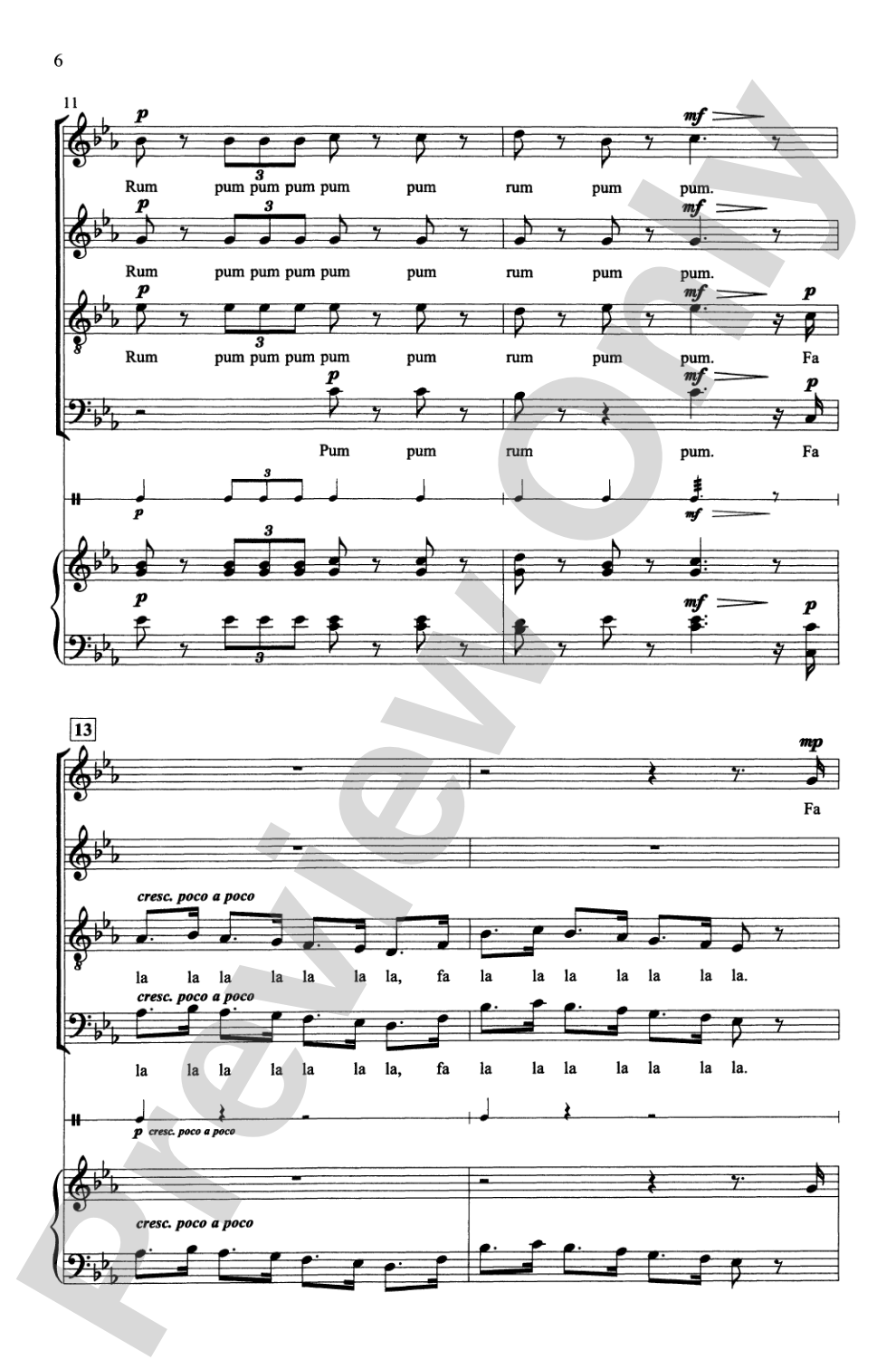
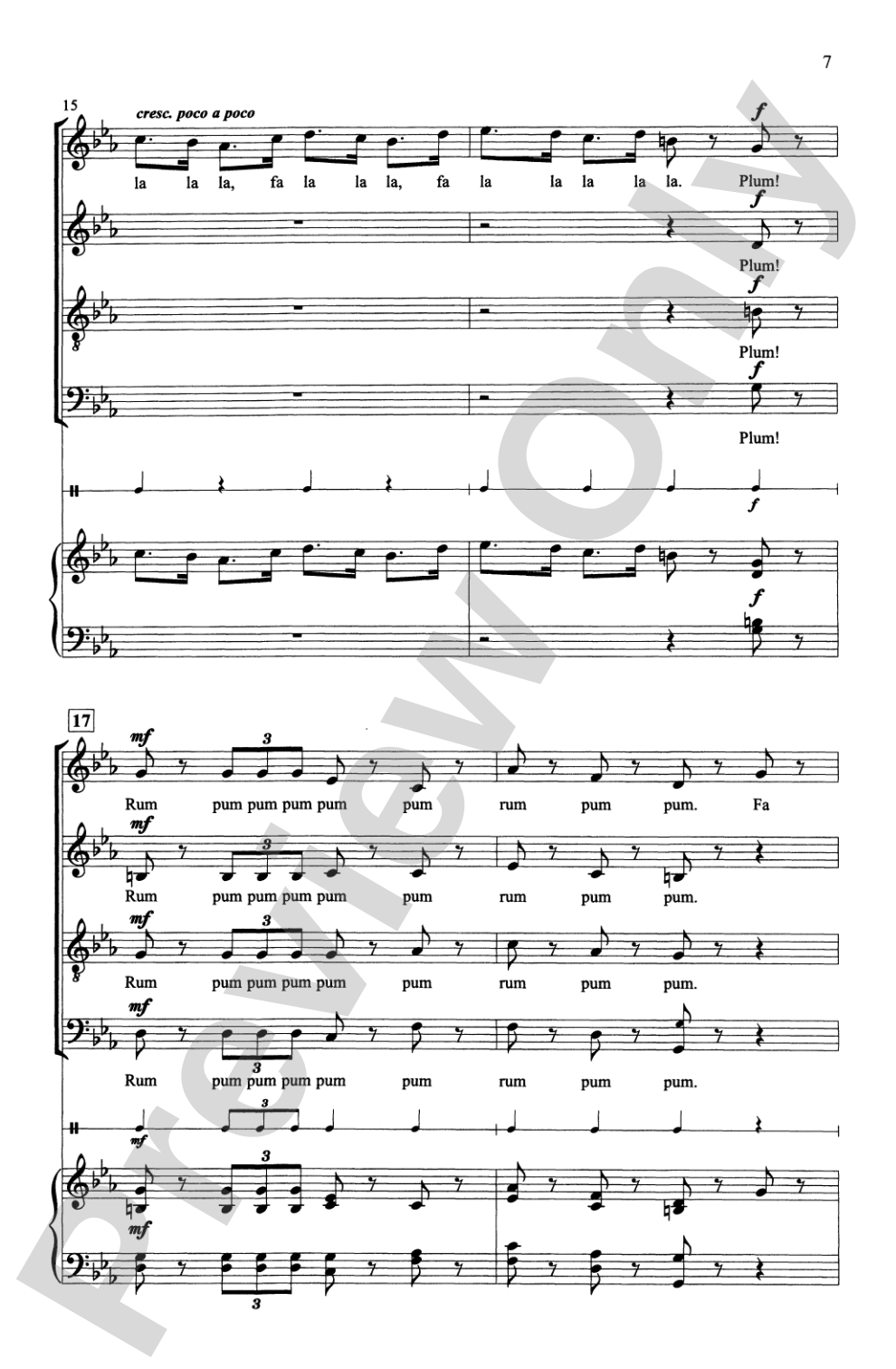
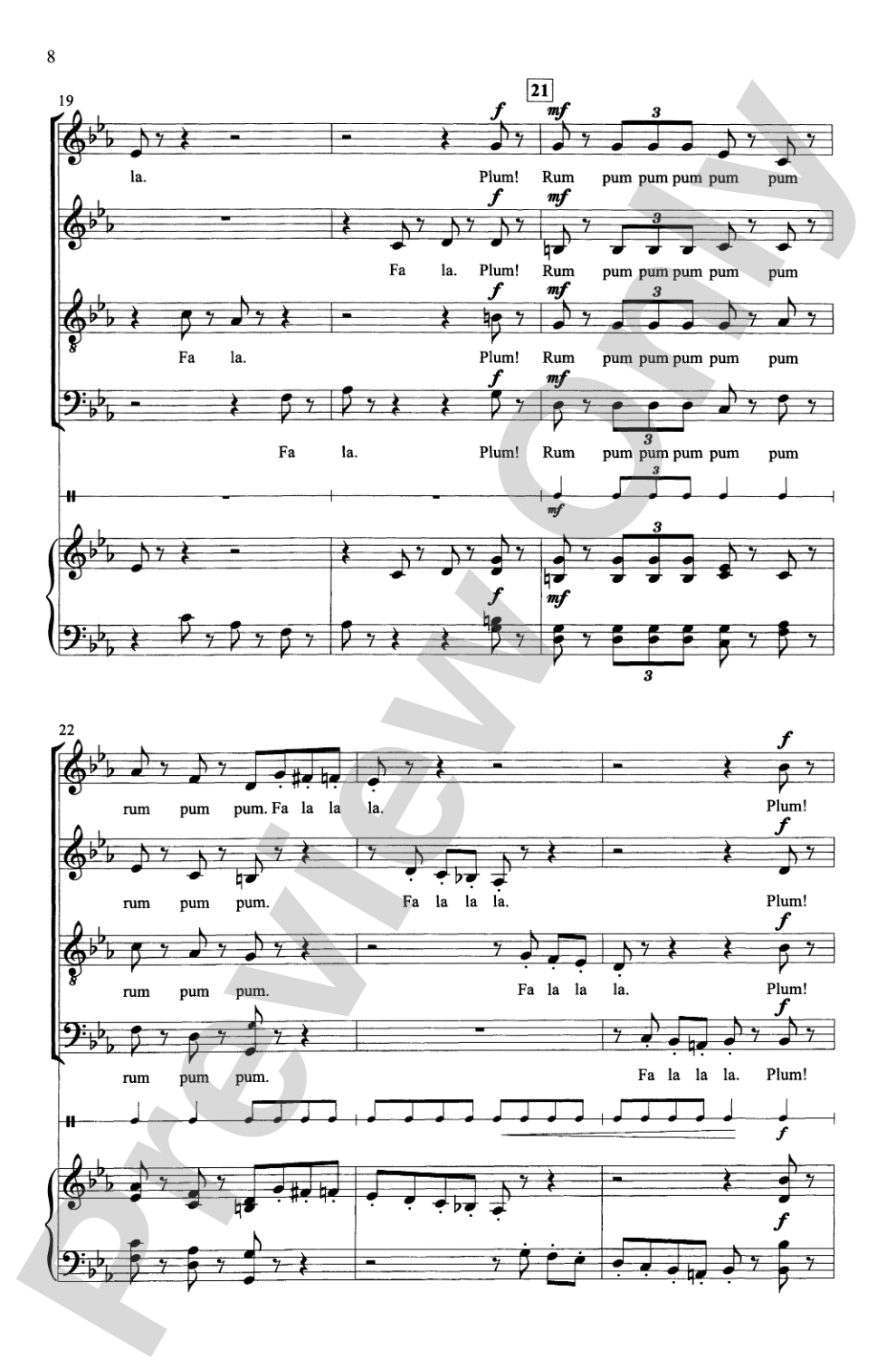
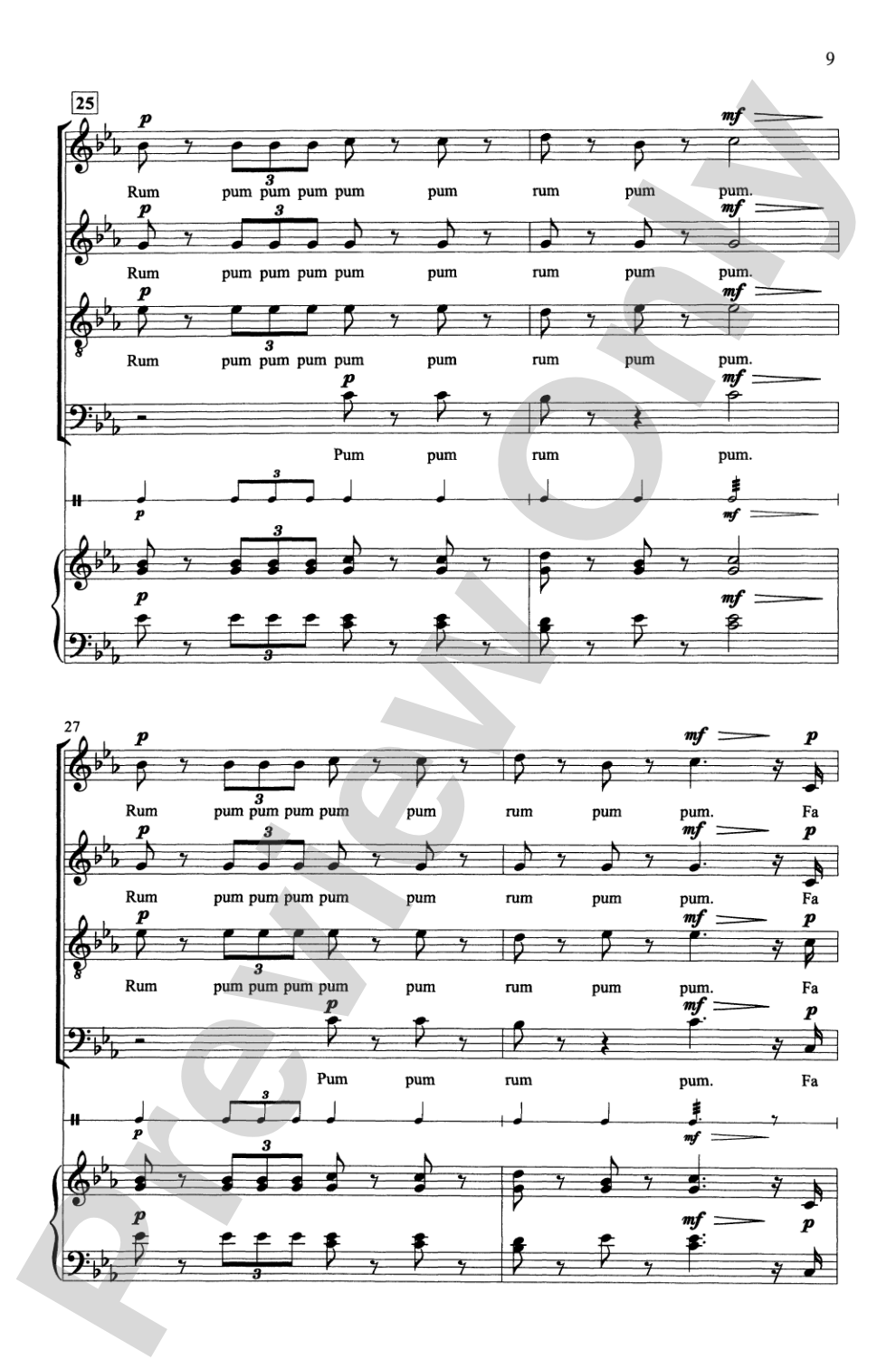

Four Nutcracker Favorites: SATB a cappella Choral Octavo
Arr. Jeff Funk
Item: 00-PO-0002923
$6.95
Minimum order quantity: 20 copies
Pickup currently not available
Related Items
Four Nutcracker Favorites: SATB a cappella Choral Octavo |
$6.95
|
View |
Description
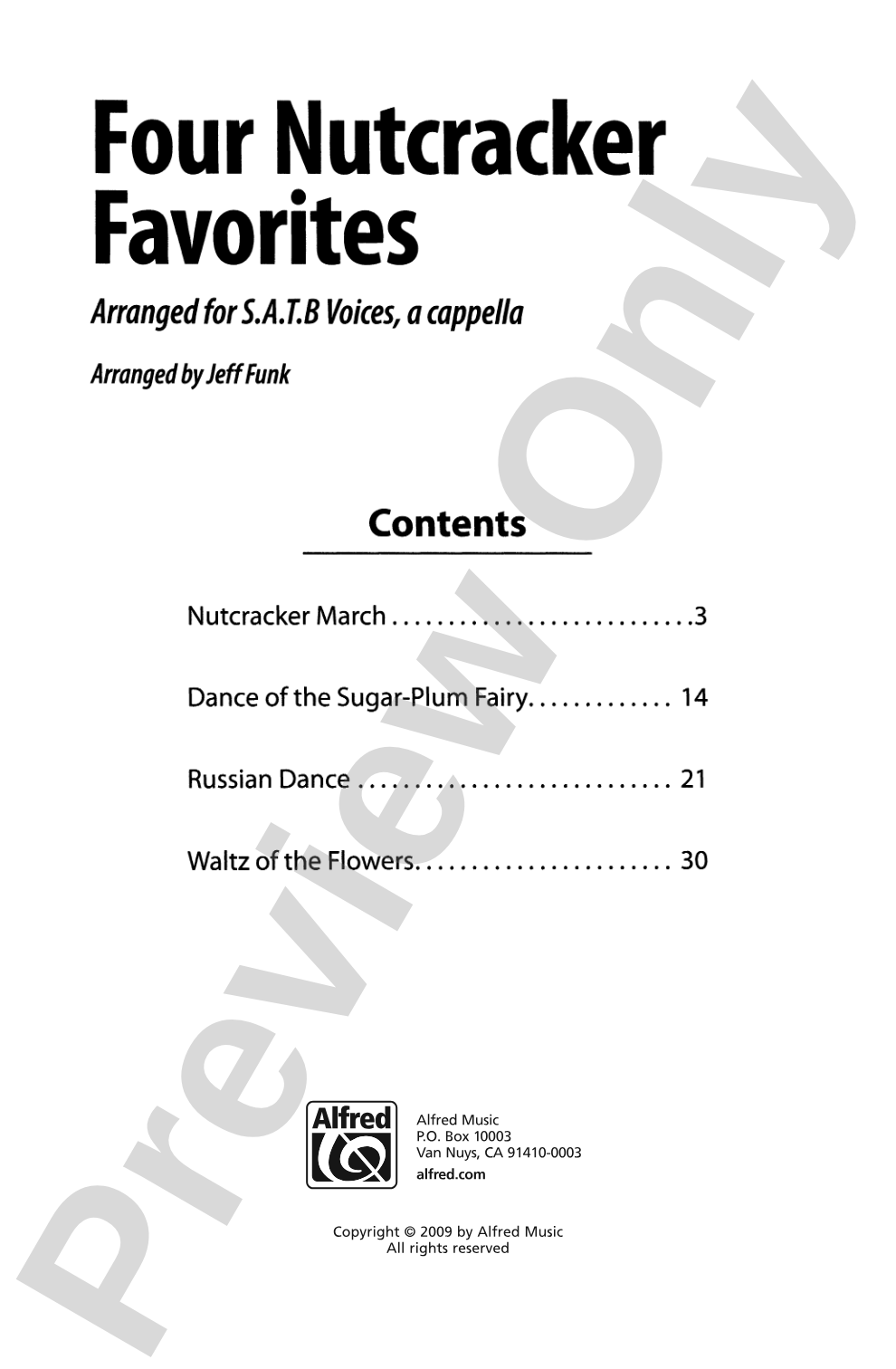
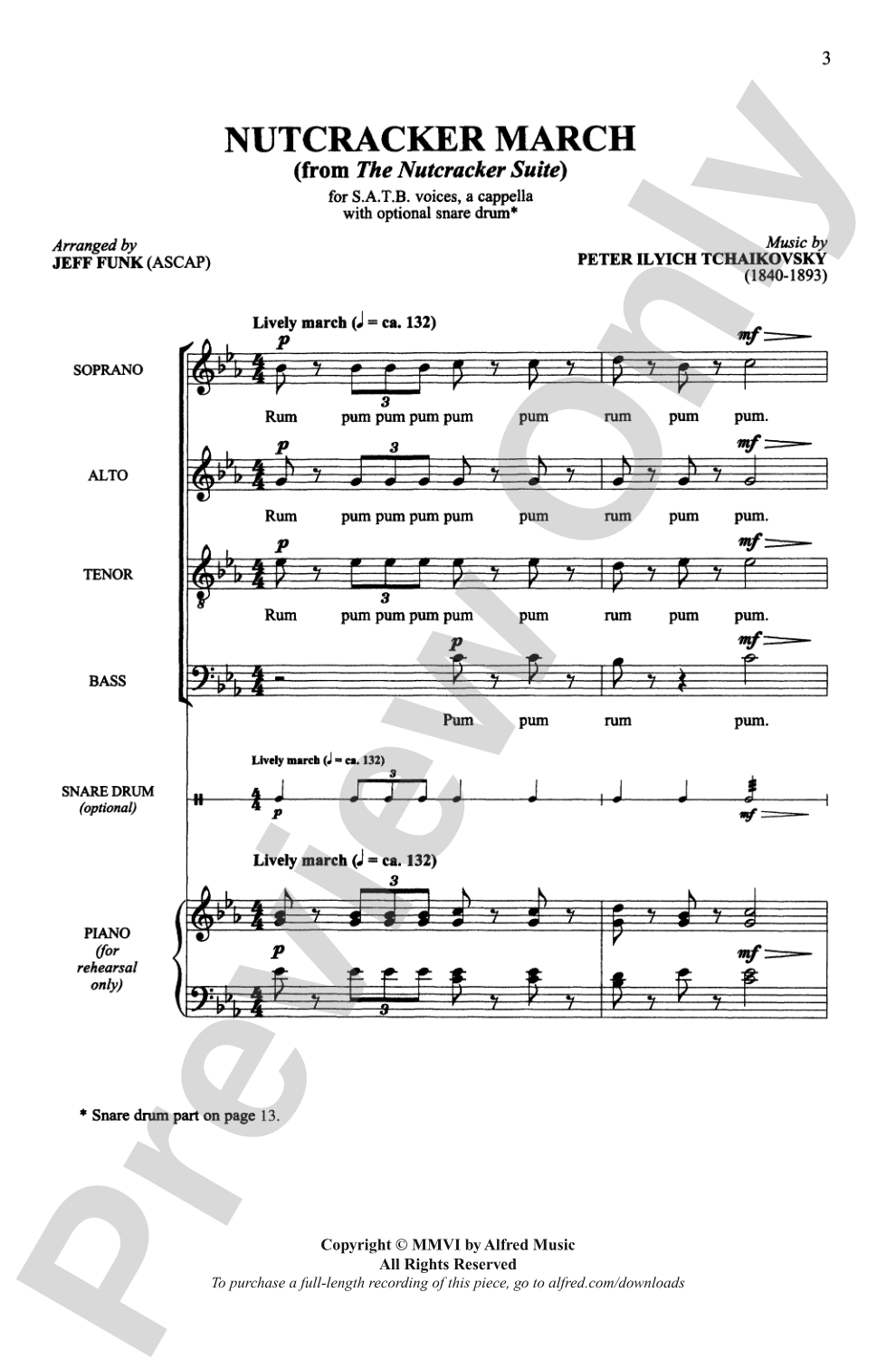
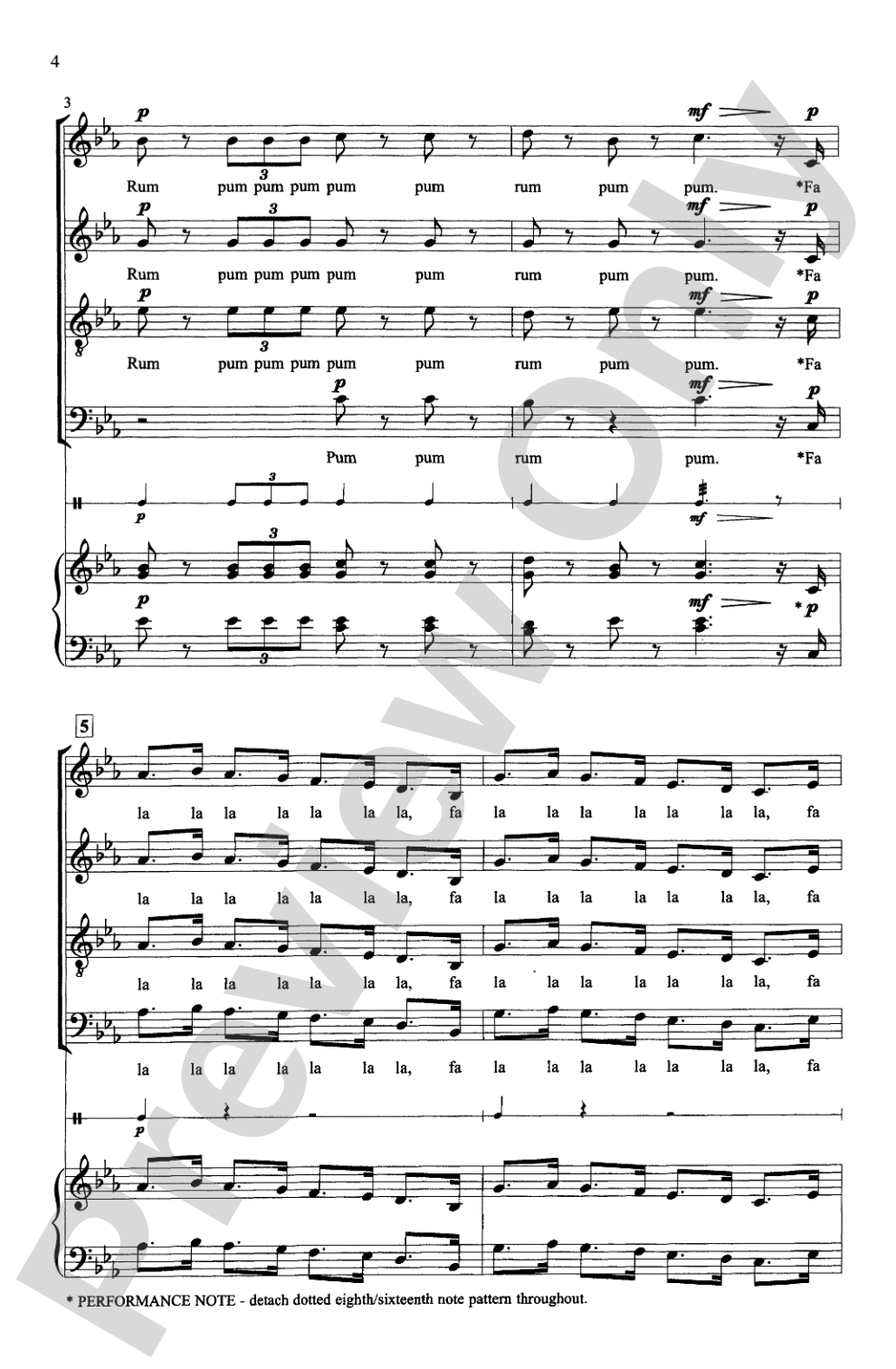
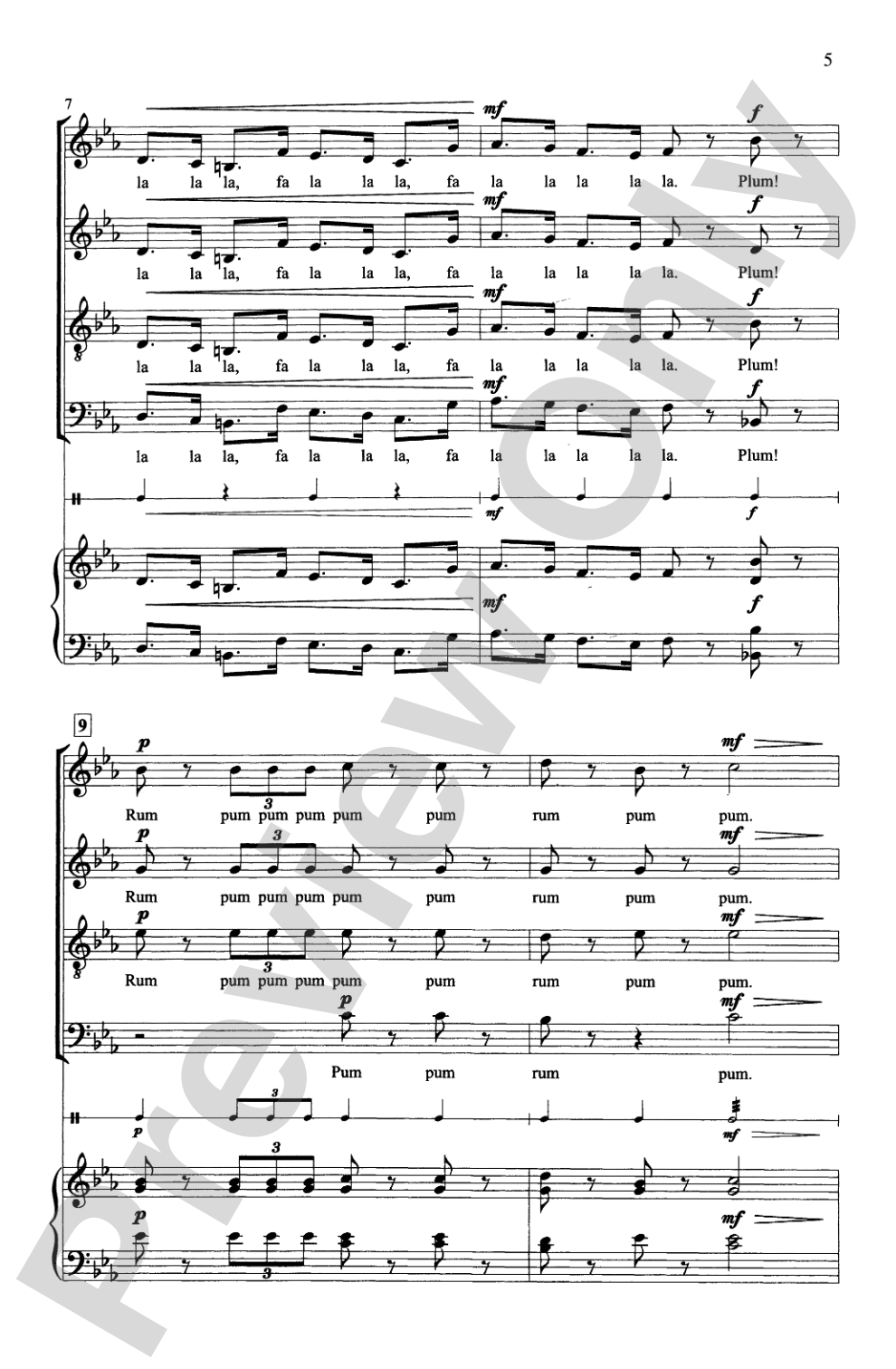
A "suite" a cappella collection! Titles: Nutcracker March * Dance of the Sugar-Plum Fairy * Russian Dance * Waltz of the Flowers.


Four Nutcracker Favorites: SATB a cappella Choral Octavo isn't in MakeMusic Cloud just yet...but it could be. Let us know you'd like to see it, and you'll help shape what comes next. In the meantime, start a free trial and dive into thousands of interactive titles your students can play along with today.
Request This Title
Tell us you want it.
Start Your Free Trial
Explore everything that's ready to play right now.
Sample Audio
No sample audio found.
Sample Video
No sample videos found.
Additional Details
Series:
Alfred Archive Edition: Alfred Pop Choral Series
Publisher:
Alfred Music
Page Count:
40
SKU:
00-PO-0002923
More about this title
About the Arranger: Jeff Funk

Jeff Funk has established himself as one of the most prolific voices in contemporary choral publishing, with over 1.7 million copies of his works in circulation worldwide. A summa cum laude graduate of Millikin University (1993), he began his publishing career at eighteen and has since created hundreds of choral arrangements and original compositions. His work gained national attention when NBC selected his song "Believe in the Music" as the opening number for the 2000 Macy's Thanksgiving Day Parade telecast.
Beyond choral music, Funk has pursued creative work across multiple disciplines, including fiction writing and film appearances, while serving as an assistant editor for Necro Publications. He resides in Auburn, Indiana.
Why we love this
Funk's gift for scoring Tchaikovsky's most iconic melodies for unaccompanied voices creates arrangements that sound effortless and singable, never forcing the music into uncomfortable ranges or chromatic tangles. These four selections span the full dramatic arc of the Nutcracker ballet, letting you build a mini-suite that takes audiences on a genuine journey from martial energy to delicate wonder. The scoring respects the distinctive character of each number while maintaining textural variety across forty pages of music that rewards both ensemble singers and listeners.
What to expect
Opulent and direct. The melodies emerge with the clarity they possess in the orchestral original, yet the close harmony creates an intimate warmth that instrumental versions cannot match. Moving between the martial snap of the march, the crystalline delicacy of the Sugar-Plum Fairy, the driving energy of the Russian Dance, and the soaring elegance of the Waltz gives singers the satisfaction of inhabiting four distinct musical worlds.
Who it's for
Directors seeking substantial a cappella literature that goes beyond novelty arrangements and speaks to intermediate-to-advanced choirs. These pieces work equally well for concert repertoire, holiday programming, or community performances where audiences know and love the ballet score.
How to get the most out of it
- Balance the march's rhythmic precision with forward momentum; treat the steady beat as a foundation, not a constraint, so the melody can breathe naturally.
- In the Sugar-Plum Fairy, lean into the gentle ornamentation by keeping inner voices transparent and allowing the soprano line to float without weight.
- The Russian Dance benefits from rhythmic vitality and clear articulation; mark your breath points beforehand so the driving sections stay cohesive.
- Shape the Waltz through dynamic arcs rather than static volume; let each phrase peak and recede to reflect the piece's natural line.
How to use it
Program these as a unified suite in your December concert or split them strategically across multiple winter events. The Nutcracker March works as a powerful opener or interlude, while the Waltz of the Flowers pairs beautifully with other seasonal choral works as a closing statement. A cappella context means you can feature them in informal settings—holiday open houses, community events, or chamber choir concerts—without accompaniment logistics.
Skills your students will build
- Sustaining long melodic lines without instrumental support
- Balancing transparency in inner voices while supporting the main melodic line
- Navigating chromatic movement and jazz-influenced harmony typical of Tchaikovsky
- Maintaining rhythmic precision in syncopated and march-like passages
- Creating character and dynamic shape across contrasting musical styles within a single program