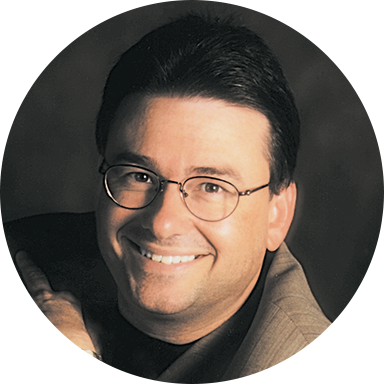
Joseph M. Martin trained as a pianist at Furman University in South Carolina before pursuing graduate studies in piano performance at the University of Texas at Austin. His early career included five years teaching piano pedagogy at UT Austin, during which he also performed as a solo recitalist and appeared with orchestras across the United States and Mexico, including a prize performance with the Guadalajara Symphony Orchestra.
Martin's compositional voice emerged from his dual commitment to concert performance and church music. His works have traveled far beyond his home base in Austin, performed at venues ranging from Carnegie Hall to regional theaters, but his true focus has become writing for worship settings and conferences of church musicians. His catalog reflects a composer who values both musical substance and the practical needs of musicians in congregational and concert contexts.
Why we love this
Martin writes sacred music that feels neither overly sentimental nor austere. This octavo respects the hymn tradition while offering genuine compositional craft, making it work equally well in concert settings or worship services without feeling like a compromise between the two. Directors appreciate how his harmonic language invites singers into something spiritually grounded without demanding virtuosity they don't have.
What to expect
Introspective and grounded. The piece invites singers and listeners into a moment of genuine reflection rather than spectacle, with harmonic language that feels both familiar and thoughtfully crafted. There's a quietness here that creates space for meaning to settle.
Who it's for
Intermediate to advanced adult choirs, church choirs seeking concert repertoire, and high school choirs wanting sacred music that respects their musical maturity. Works well for ensembles comfortable with four-part writing and looking for material suitable for both liturgical and concert programming.
How to get the most out of it
Balance the parts as an architecture rather than four independent lines; this creates the reflective quality Martin's harmonic movement invites.
Attend to the text naturally rather than superimposing artificial phrasing; faith is expressed through singers' ownership of the words, not external shaping.
Explore the dynamic range available even in a brief piece; Martin often builds meaning through subtle shifts in volume rather than dramatic contrasts.
How to use it
Pair this with other contemporary sacred works for a concert devoted to modern hymn settings, or use it as a centering piece in a mixed program where its contemplative nature provides contrast. It also serves well as a processional or recessional in worship settings without feeling ancillary to the service.
Skills your students will build
Reading sustained harmonic progressions across multiple voice parts
Balancing four-part SATB texture with clarity and blend
Interpreting text painting through understated musical means
Intonation and listening skills in close harmony
You May Also Like
Scan to Complete Your Purchase
Use your phone's camera to scan the code below
You'll log in on your phone and the order will be added to your account