
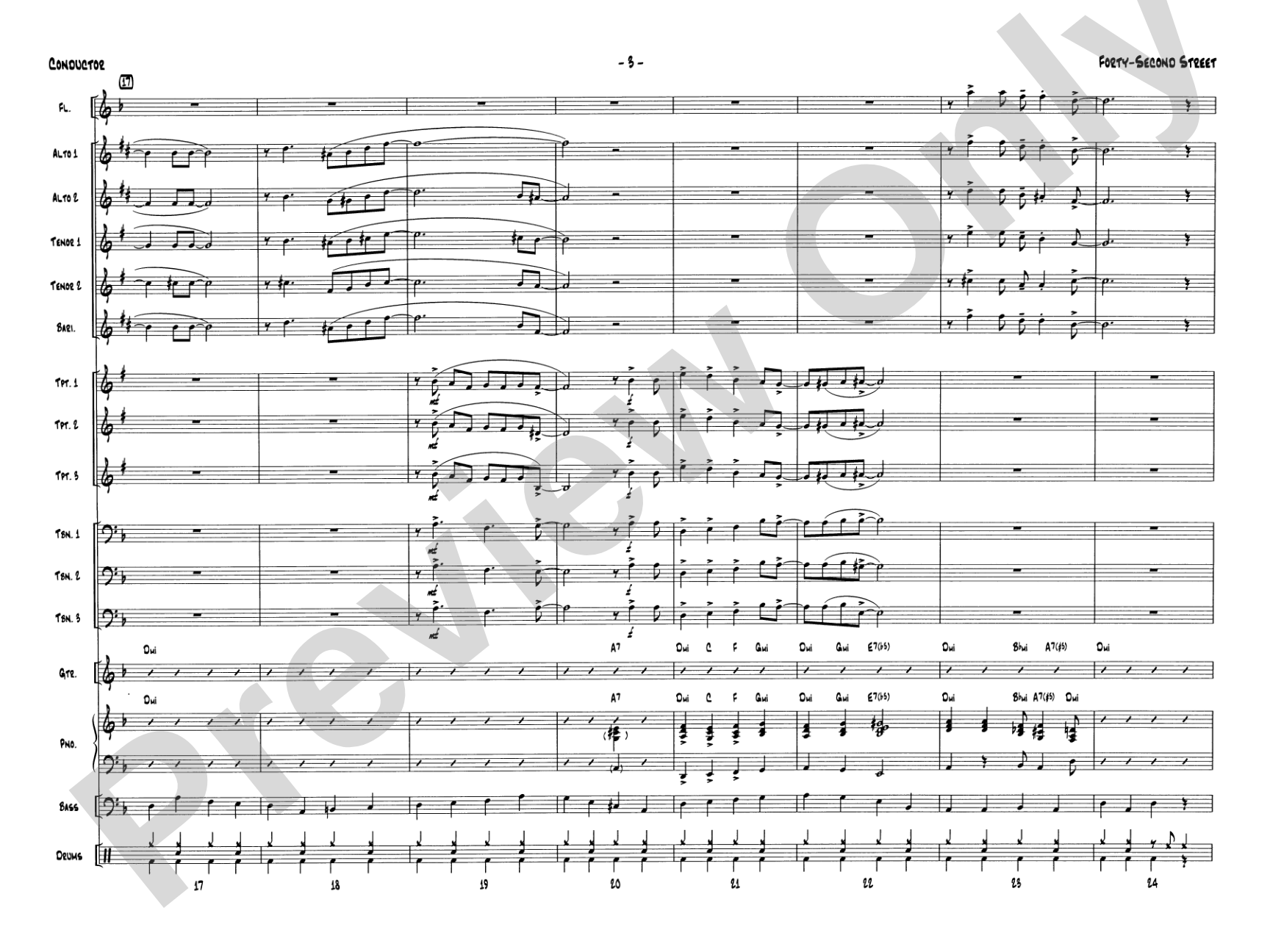
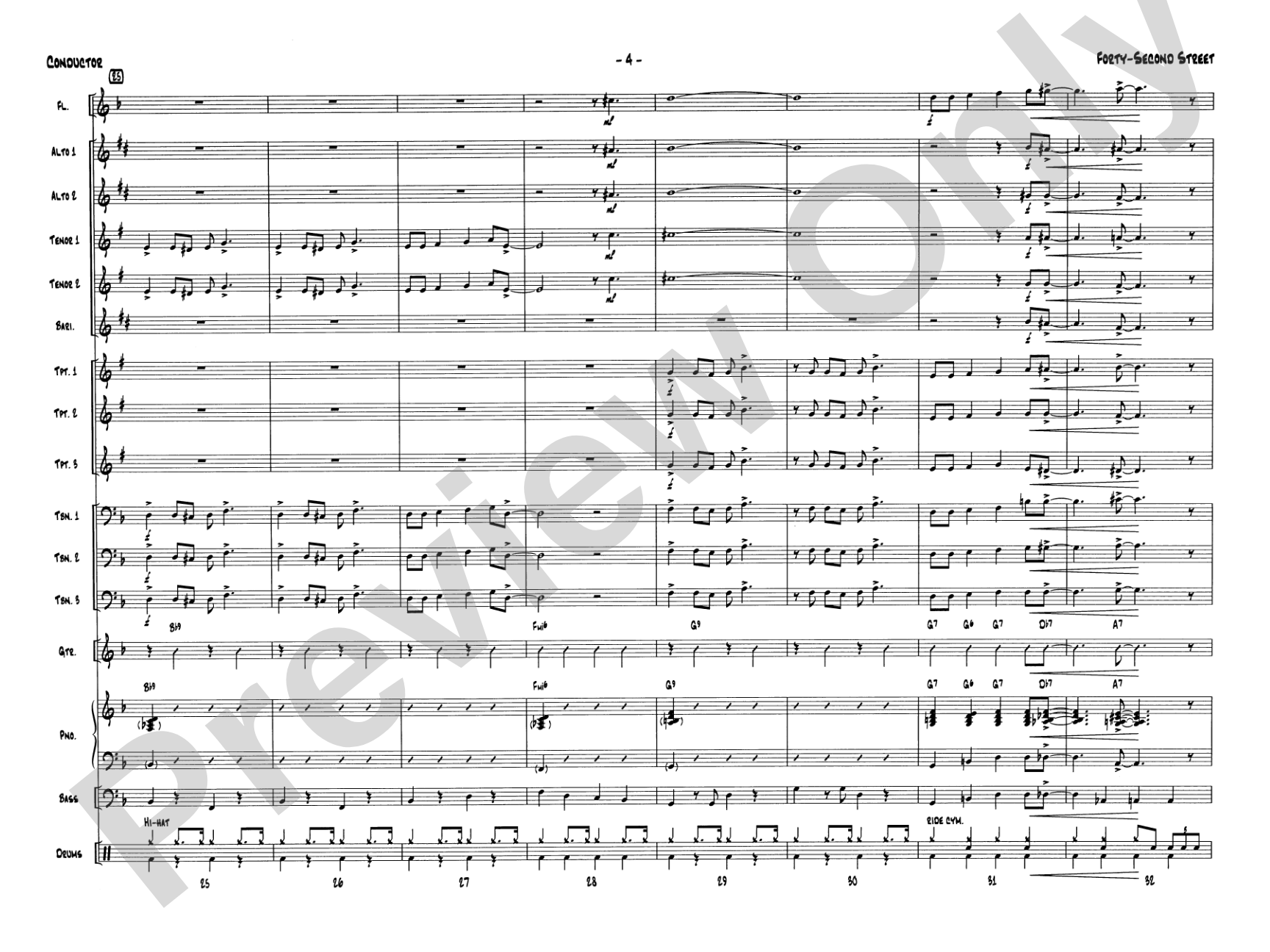
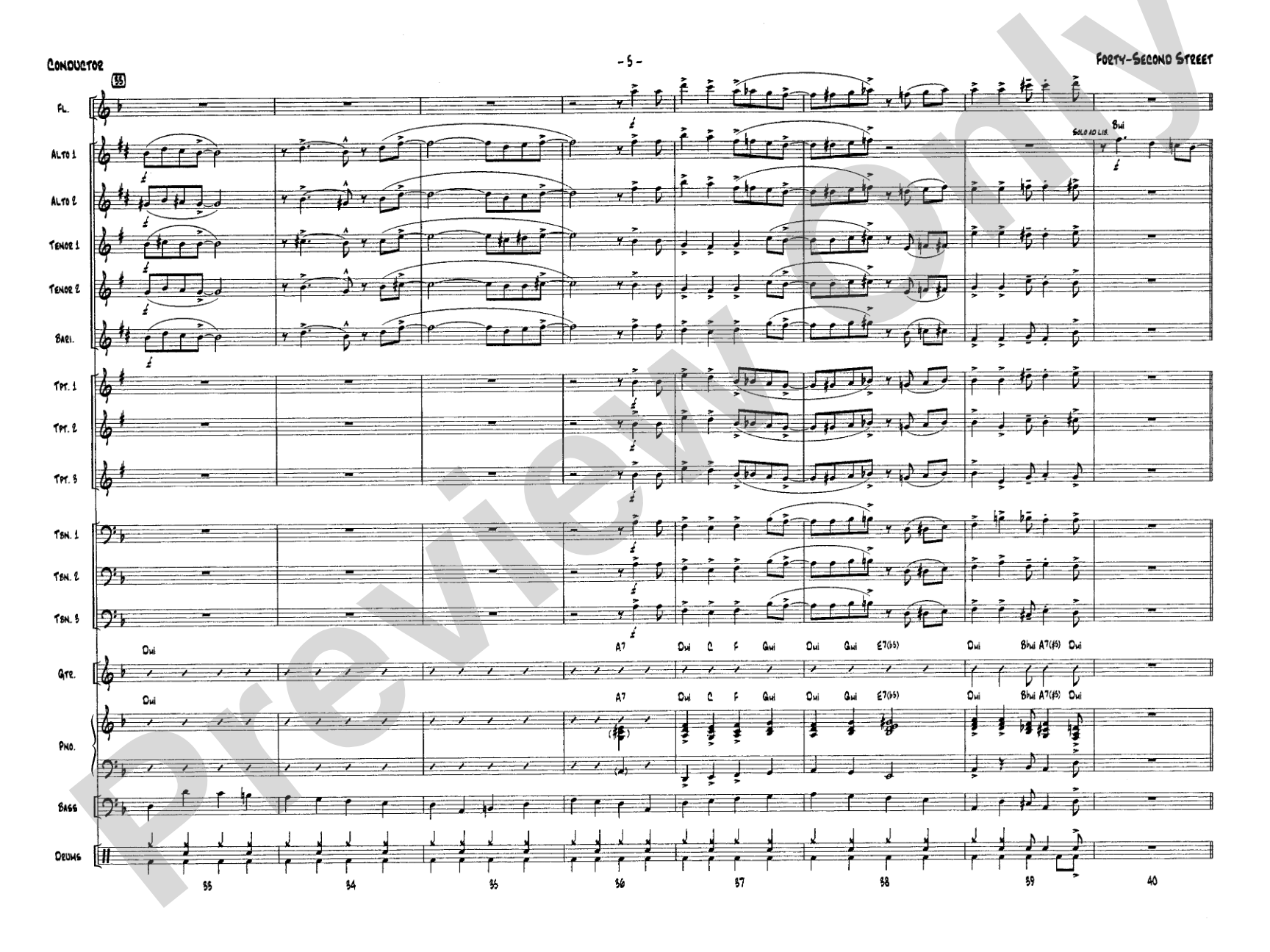
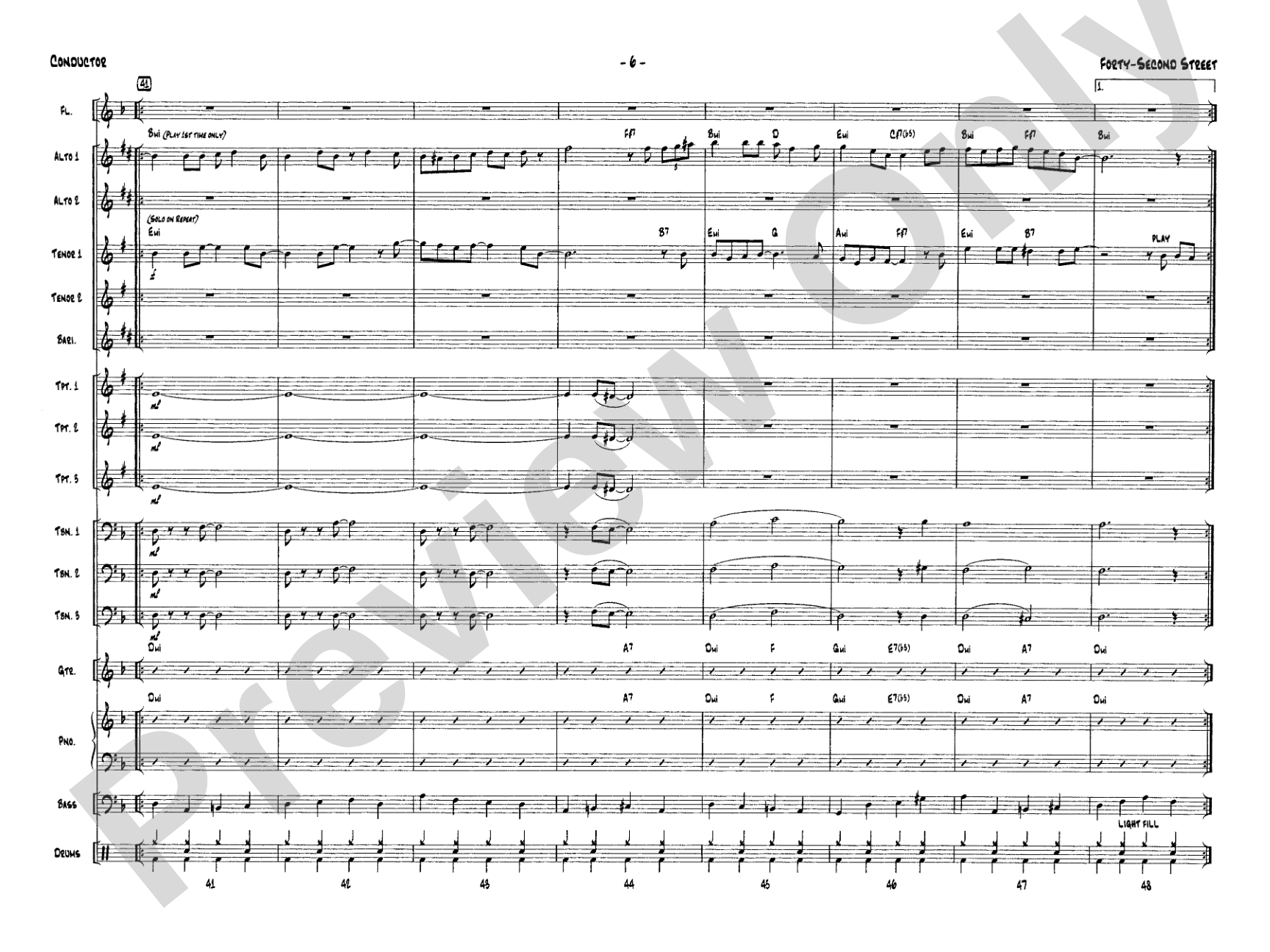
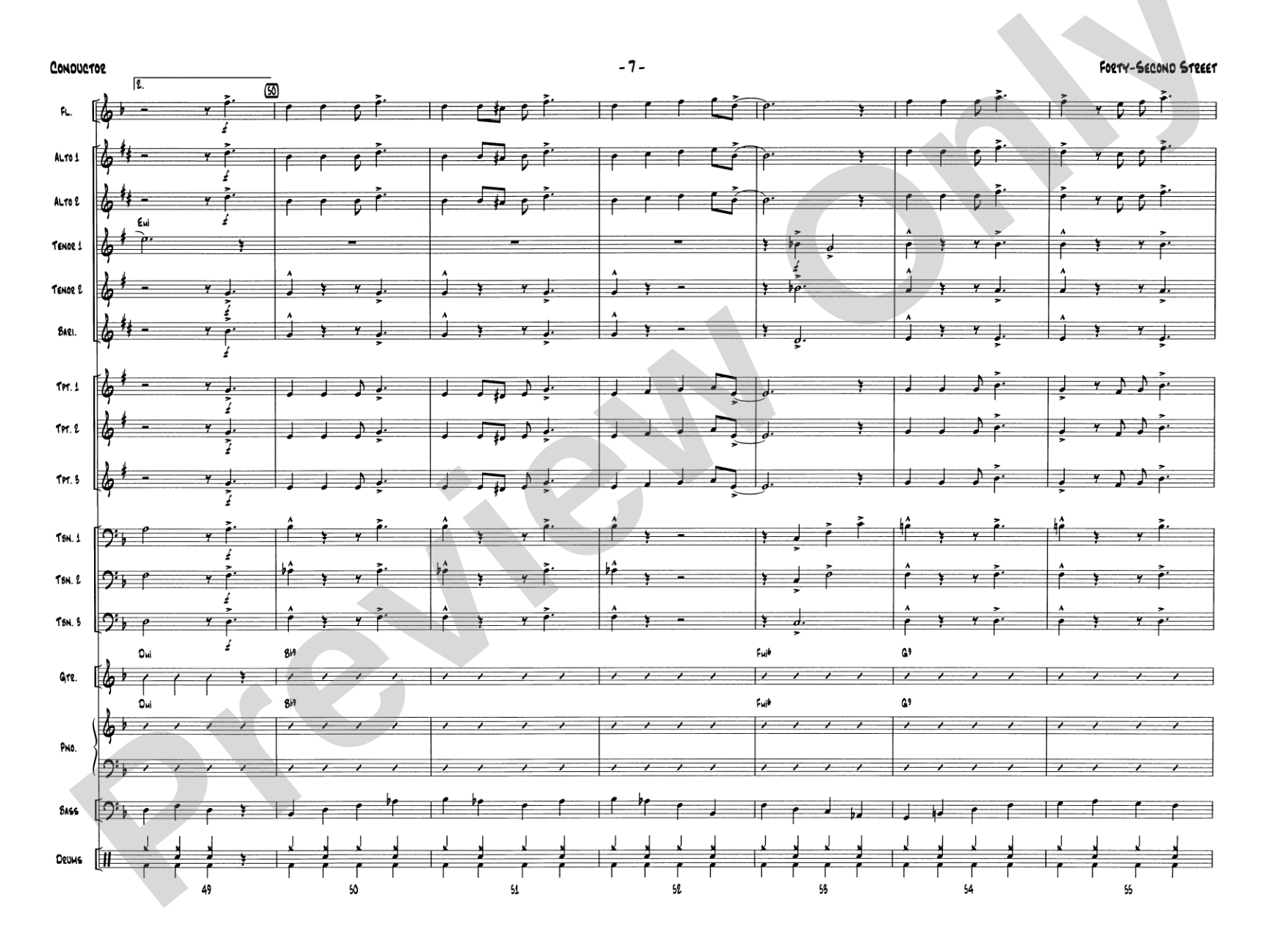
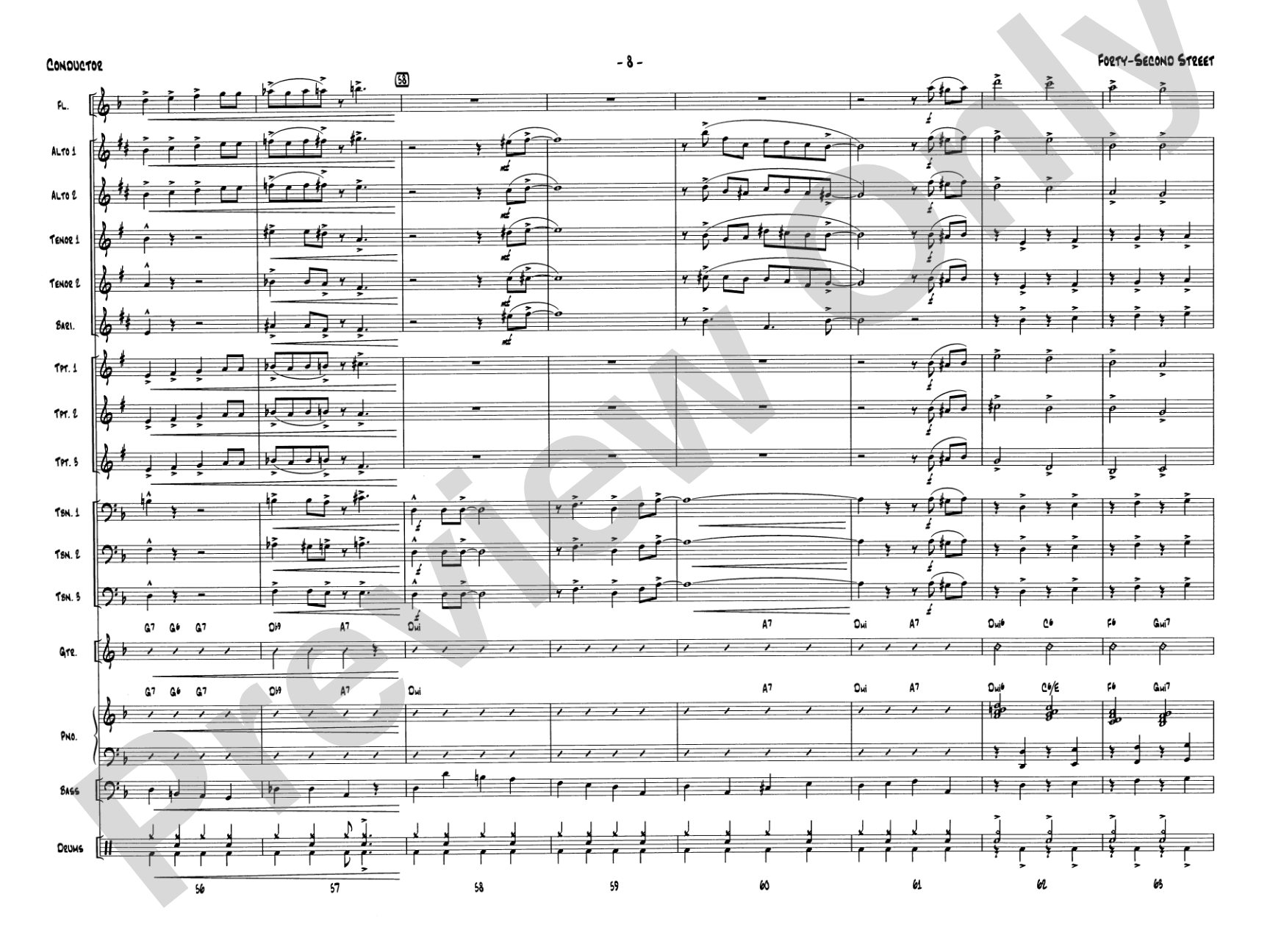
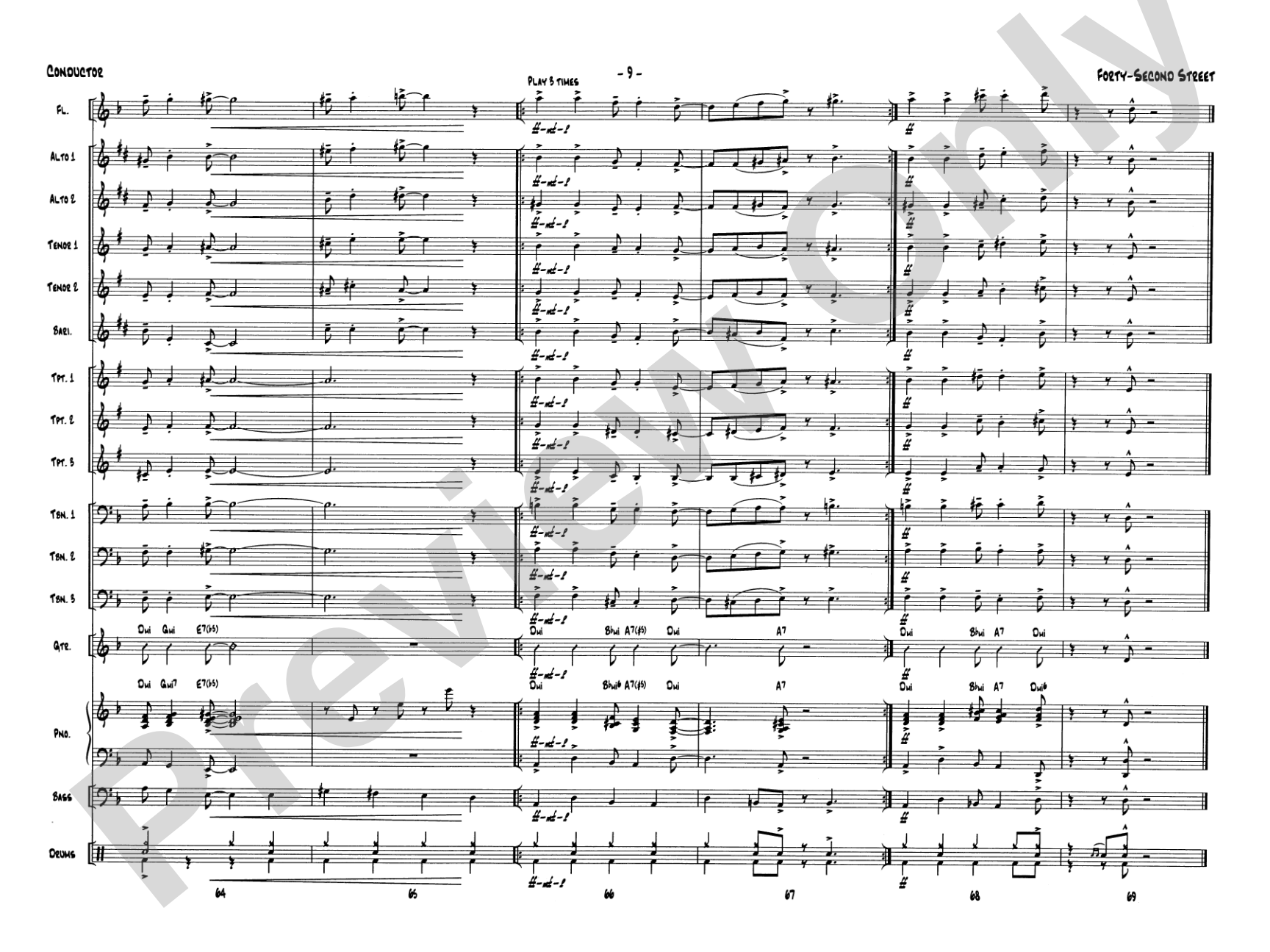


Forty-Second Street: Jazz Ensemble Conductor Score & Parts
Words by Al Dubin, music by Harry Warren / arr. Paul Cook
Grade: 1 (Easy)
Item: 00-PK-0002519

$42.00
One moment…
Description
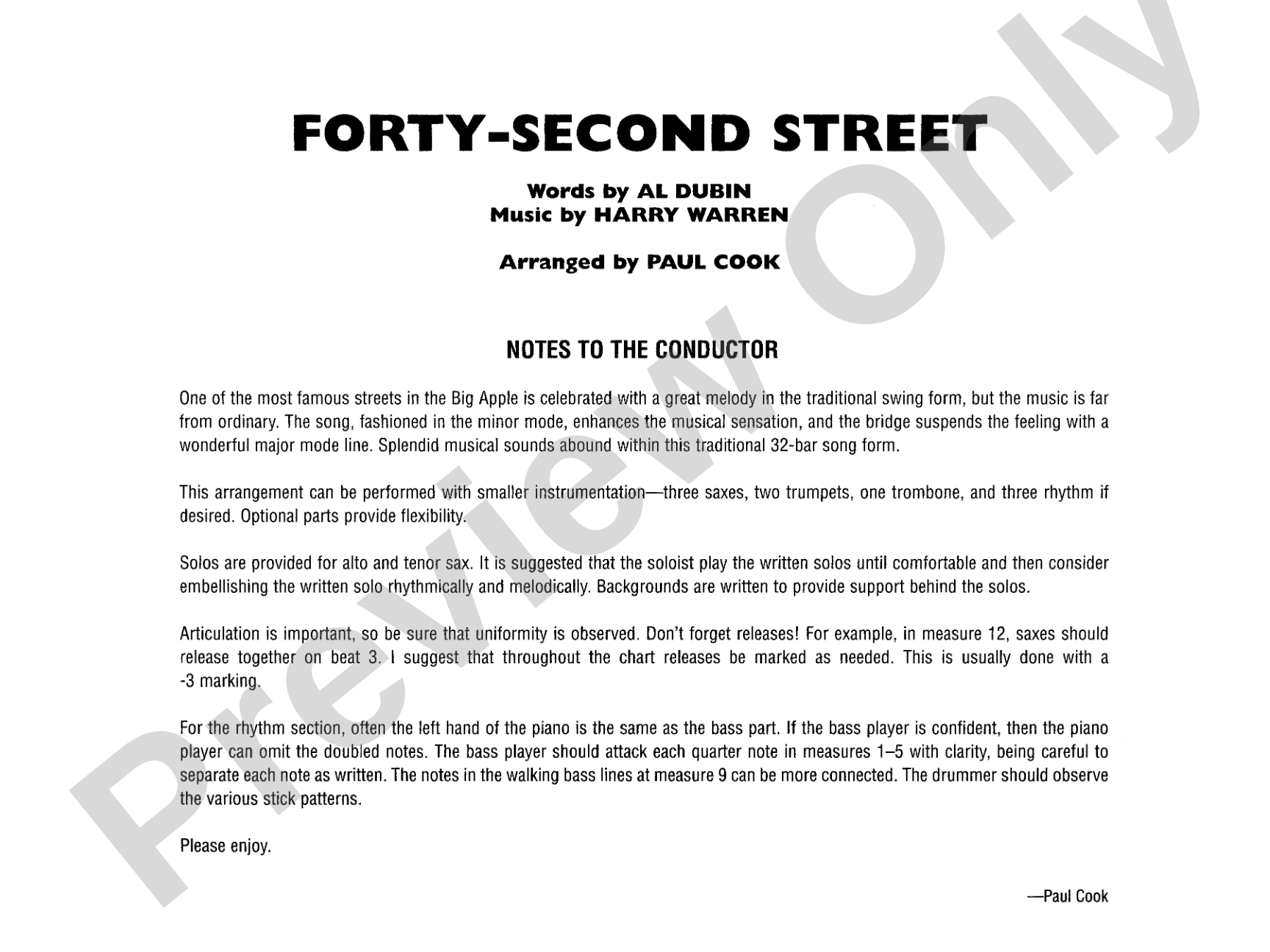
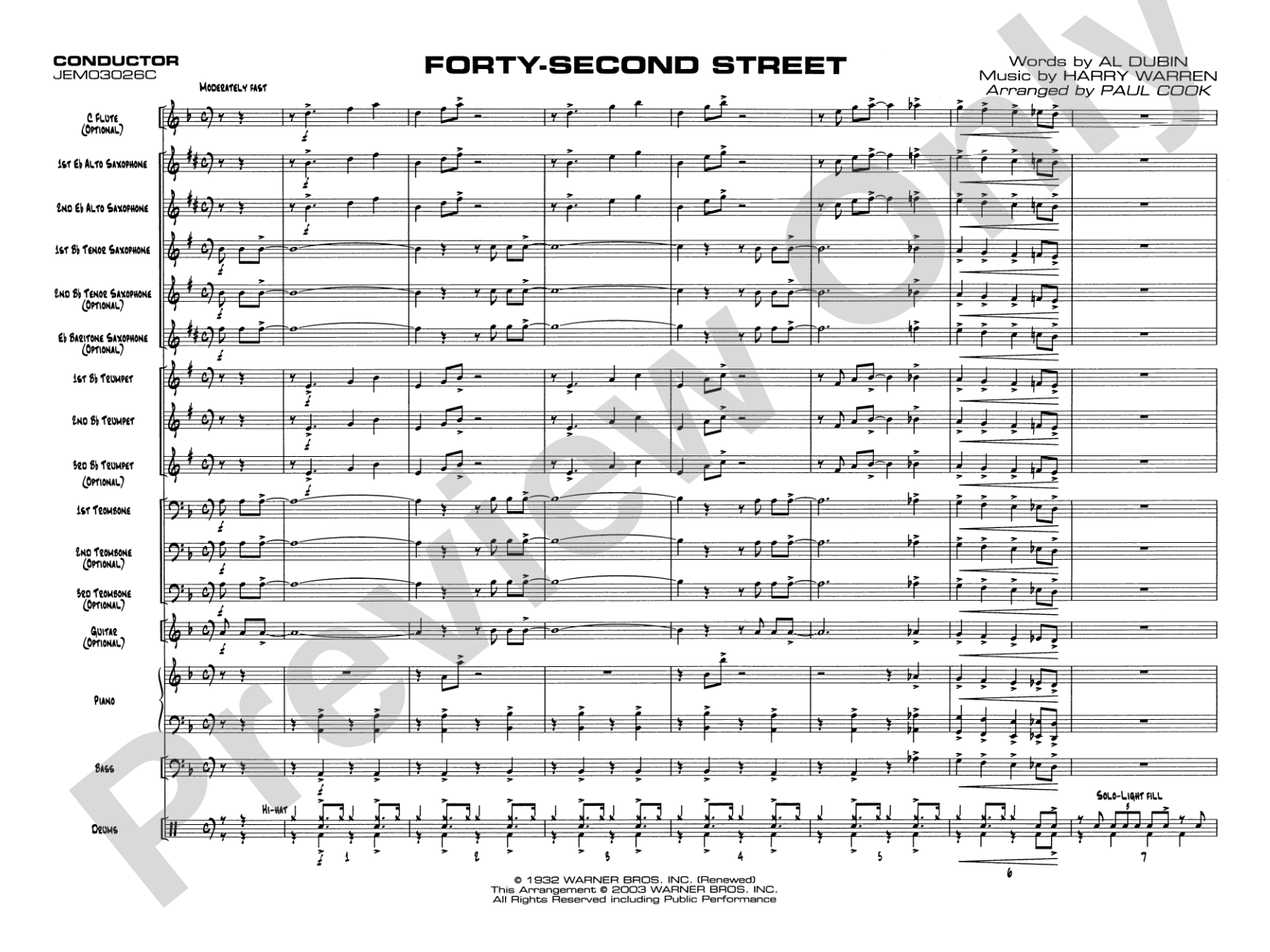
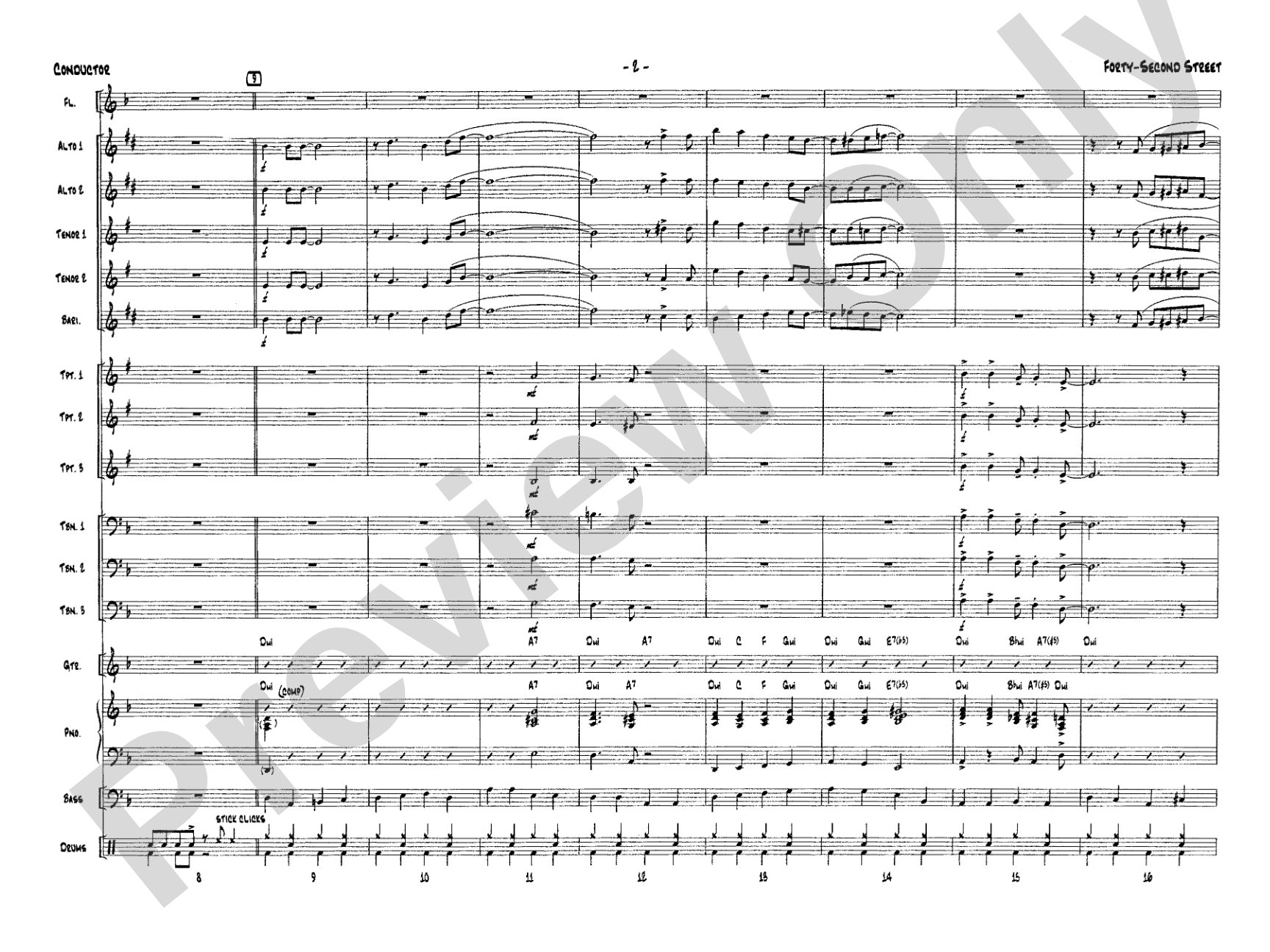
A swinging chart, direct from one of the most famous streets in New York City, Forty Second Street is a familiar melody that's accessible for the young jazz player. Scored by Paul Cook, this chart goes from a minor to major key - let the students hear it and play it! Containing written solos for alto and tenor sax, this chart sounds full with reduced instrumentation of just three saxes, two trumpets, one trombone, and three rhythm, or it works great with standard instrumentation. This one is fun!


Don't just read it, hear it, play along with it, and watch your students grow with it. In MakeMusic Cloud, Forty-Second Street: Jazz Ensemble Conductor Score & Parts comes alive with professional accompaniment, adjustable tempo, and built-in practice tools that turn solo practice into real progress.
Open in the Player
Jump straight in and assign it today.
Start Your Free Trial
Open this title and explore the full library in minutes.
Sample Audio
1
Audio File
--:--
0:00
0:00
Sample Video
No sample videos found.
Additional Details
Series:
First Year Charts for Jazz Ensemble
Publisher:
Alfred Music
Page Count:
42
SKU:
00-PK-0002519
More about this title
About the Composer: Harry Warren
Harry Warren (1893-1981) composed some of the most enduring melodies of the American songbook, with a gift for writing tunes that audiences remember after a single hearing. His work defined the sound of Broadway and film musicals during the Golden Age, and his melodies remain standards in jazz and popular music education today.
Why we love this
This chart gives young jazz ensembles a real Broadway standard without requiring years of seasoning to execute it musically. The written alto and tenor solos keep the ensemble focused while the key change from minor to major provides a genuine musical payoff that students hear and feel immediately, making the effort to learn it deeply satisfying.
What to expect
The minor opening feels introspective and moody, grounded in classic jazz blues sensibility. When the ensemble pivots to major, the piece brightens into something buoyant and theatrical, capturing the energy and swagger of its New York City setting.
Who it's for
First-year jazz ensemble students who can read comfortably in treble and bass clefs and are ready for their first swing charts. Directors seeking accessible repertoire that sounds full and professional without requiring advanced technical skills or extended soloing experience from their players.
How to get the most out of it
- Balance the written solos so they cut through the ensemble without the rhythm section pulling back; clarity matters more than volume.
- Shape the minor section with a deliberate harmonic weight, then brighten the sound noticeably when you shift to major so the key change lands as a real event.
- Lock the rhythm section into the swing feel early in rehearsals; once that pocket is solid, the soloists will settle in naturally.
- Use the full instrumentation option to build ensemble awareness, but don't hesitate to drop to reduced parts if your section sizes demand it; the chart is designed for both.
How to use it
Pair this with other First Year Charts to build a cohesive jazz concert, or program it as the opener on a mixed pops concert where you want to establish jazz credibility early. Its accessible charm and Broadway lineage make it an excellent bridge between show choir selections and pure jazz standards.
Skills your students will build
- Reading swing rhythms and jazz articulation
- Playing through a key modulation from relative minor to major
- Balancing solo voices within an ensemble texture
- Understanding jazz harmonies in a standard format
- Reading lead sheets and chord symbols