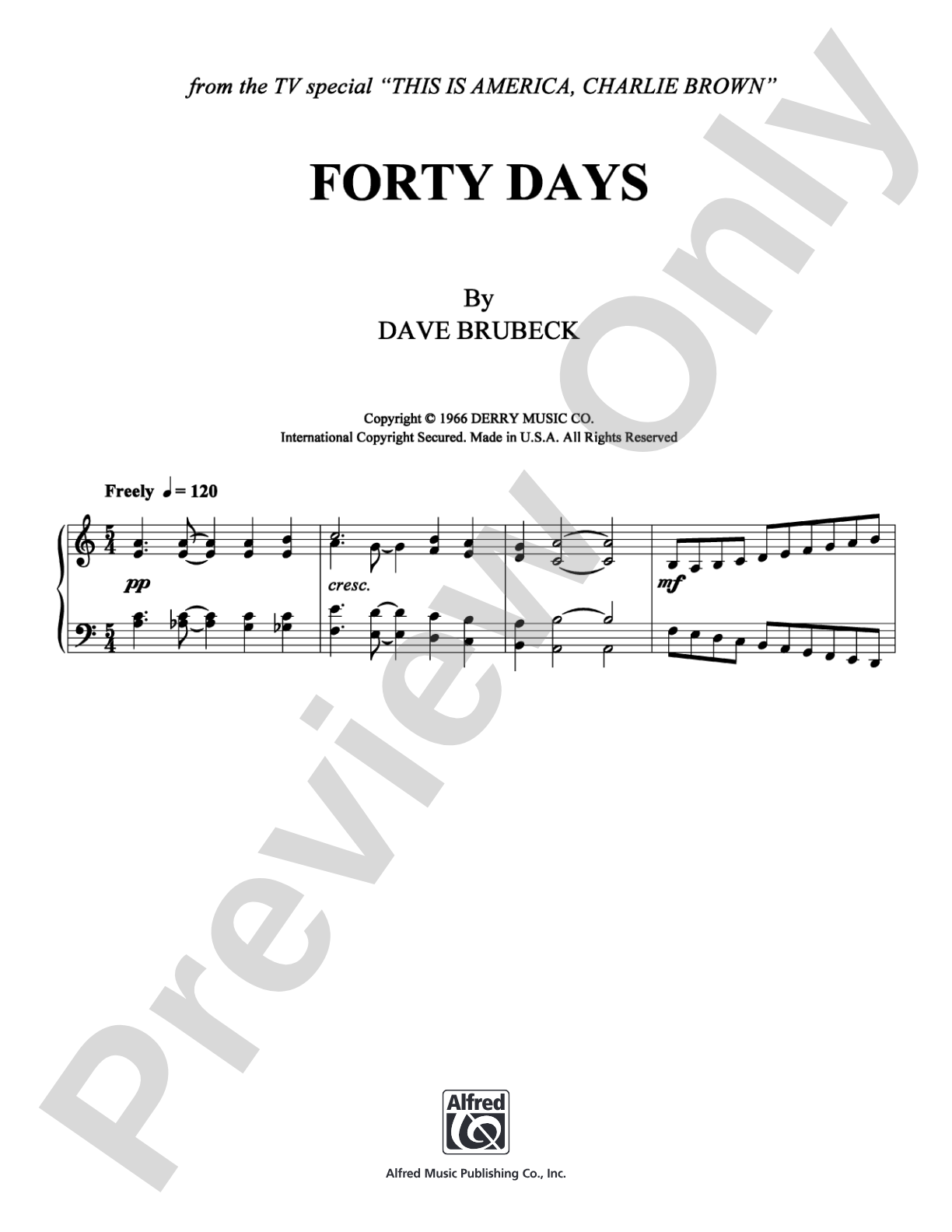
Forty Days: Piano Digital Sheet Music

Forty Days: Piano Digital Sheet Music

Dave Brubeck

Item: 00-PS-0000911

Digital Download
$3.99
Description

Forty Days: Piano Digital Sheet Music isn't in MakeMusic Cloud just yet...but it could be. Let us know you'd like to see it, and you'll help shape what comes next. In the meantime, start a free trial and dive into thousands of interactive titles your students can play along with today.

Sample Audio
No sample audio found.
Sample Video
Additional Details
SKU: 00-PS-0000911

More about this title

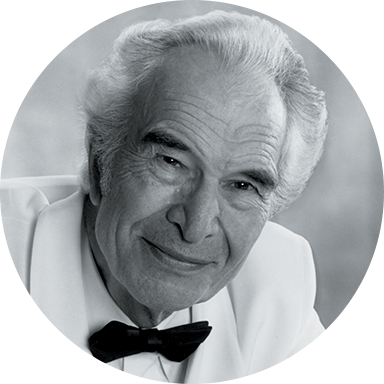
About the Artist: Dave Brubeck

Dave Brubeck

Dave Brubeck shaped modern jazz through rigorous composition and fearless improvisation. A pianist trained in both classical and jazz traditions (he studied with Darius Milhaud at Mills College after World War II), Brubeck wrote symphonies, chamber works, oratorios, and piano solos alongside his legendary jazz recordings. His album "Time Out" became the first jazz record to sell over a million copies, and his composition "Take Five" remains a standard; beyond these achievements, he used his prominence to challenge racial segregation in mid-twentieth-century concert halls and jazz venues.

Brubeck's catalog spans from intimate solo piano pieces to large orchestral works performed by the London Symphony Orchestra and beyond. His sacred music, including the mass "To Hope!" and oratorios such as "The Voice of the Holy Spirit," has reached audiences worldwide. Throughout his career, he received the Grammy Lifetime Achievement Award, the Presidential Medal of the Arts, and election to the American Classical Music Hall of Fame, recognizing both his artistic innovation and his role as a cultural bridge between jazz and classical music.

Why we love this

Brubeck's piano writing carries the sophistication of a classical composer combined with the rhythmic inventiveness of a jazz master. "Forty Days" allows pianists to inhabit this dual voice: the piece demands technical command while rewarding those who understand jazz phrasing, harmonic sophistication, and the interplay between written structure and interpretive freedom. Programming work by a composer of Brubeck's stature signals to students and audiences that jazz is serious music worthy of serious study.

What to expect

"Forty Days" unfolds with the reflective quality suggested by its title, moving through harmonic landscapes that feel both modern and timeless. The piece balances lyrical melody against sophisticated underpinnings, inviting the performer into the contemplative space between classical form and jazz language.

Who it's for

Pianists with solid technical foundation who are ready to engage with jazz composition at a professional level. This work suits recital programs, jazz portfolio pieces, and students preparing for classical/jazz crossover competitions or conservatory auditions.

How to get the most out of it

  • Treat the notated rhythm as a framework, not a constraint. Brubeck's compositions expect the performer to shape phrases with the flexibility of speech, pushing and pulling against the pulse in ways that feel natural to jazz interpretation.
  • Pay attention to harmonic color. Brubeck studied composition at a high level and wrote rich chord voicings; take time to voice the left hand so that each harmony sings rather than merely supporting the melody.
  • Listen to recordings of Brubeck's own playing to internalize his approach to touch and articulation. His technical clarity and lyrical sensitivity offer invaluable guidance for interpreting his own work.

How to use it

Feature this as a standalone recital piece that demonstrates compositional mastery and pianistic command. It pairs effectively with other Brubeck solo works or alongside chamber music that bridges classical and jazz traditions, signaling a thoughtful curatorial approach to repertoire selection.

Skills your students will build

  • Jazz articulation and phrasing within notated classical structure
  • Harmonic sophistication and voice leading in contemporary jazz composition
  • Rhythmic independence between hands and interpretation of swing feel
  • Score study of a major jazz composer's original piano writing

You May Also Like