
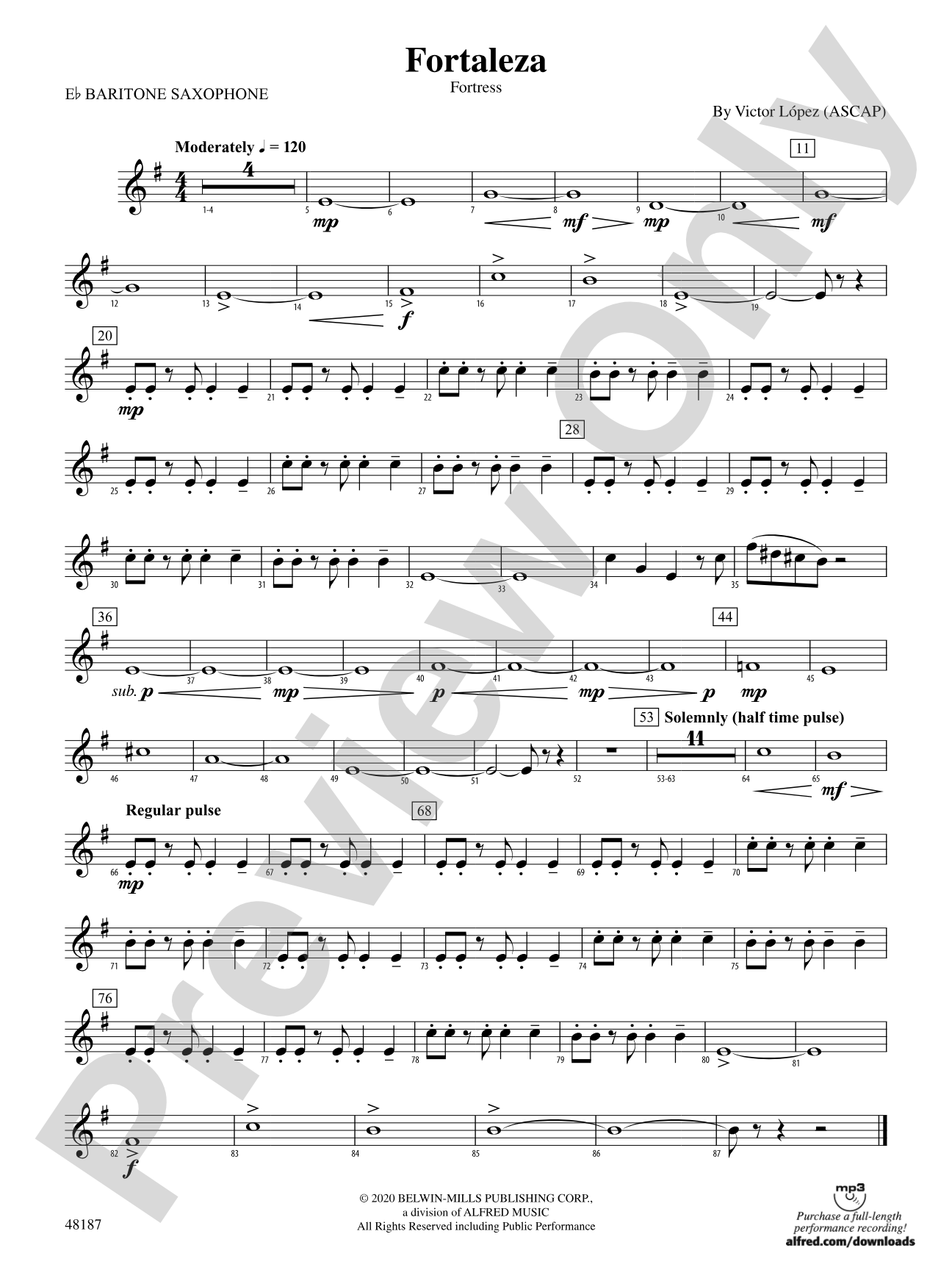

Fortaleza: E-flat Baritone Saxophone
Fortress
By Victor López
Grade: 2 (Medium Easy)
Item: 00-PC-0018556_BTX
$3.00
Pickup currently not available
Description
An original adventure that depicts the Spanish exploratory expedition and colonization of the Americas. Forceful in nature, students and audiences will certainly experience a musical Spanish journey. Both unique and current, it is certainly the perfect combination. (3:00) This title is available in MakeMusic Cloud.


Don't just read it, hear it, play along with it, and watch your students grow with it. In MakeMusic Cloud, Fortaleza: E-flat Baritone Saxophone comes alive with professional accompaniment, adjustable tempo, and built-in practice tools that turn solo practice into real progress.
Open in the Player
Jump straight in and assign it today.
Start Your Free Trial
Open this title and explore the full library in minutes.
Sample Audio
1
Audio File
--:--
0:00
0:00
Sample Video
Additional Details
Series:
Belwin Young Band
Publisher:
Alfred Music
Page Count:
170
SKU:
00-PC-0018556_BTX
More about this title
About the Composer: Victor López
Victor López is a prolific composer and arranger whose catalog spans concert band, orchestral, and chamber music. His works are performed regularly in schools and concert halls worldwide, and he has earned recognition for his ability to craft engaging, stylistically diverse pieces that balance accessibility with musical substance.
López's compositional voice is marked by strong melodic writing and orchestration that showcases the full range of band instruments. His pieces for young ensembles have become staples in band programs, valued equally by directors seeking concert repertoire and contest selections that students genuinely enjoy performing.
Why we love this
This piece demonstrates how effectively Grade 2 writing can depict a compelling historical narrative. López builds momentum and color through smart orchestration rather than technical complexity, allowing students to feel genuinely invested in the musical storytelling while staying well within their technical grasp. The result is a concert selection that engages both ensemble and audience without requiring advanced facility.
What to expect
An energetic travelogue unfolding with purposeful forward motion. The writing captures both the grandeur and tension of historical exploration through Spanish-inflected rhythms and harmonic color, creating a sound world that feels larger than the Grade 2 difficulty level might suggest. The music maintains momentum and engagement throughout, rewarding careful ensemble preparation with a performance that feels genuinely substantial.
Who it's for
Directors seeking Grade 2 concert repertoire that delivers genuine musical interest and historical context without requiring advanced technique. This title serves well for bands wanting to program something distinctive at festivals and concerts, appealing to students who engage more deeply when music tells a story.
How to get the most out of it
- Shape the ensemble's dynamics carefully during the exploratory passages; even at medium easy level, precise crescendos and diminuendos will bring the narrative arc into focus and sustain listener interest across the full three minutes.
- Balance the Spanish character elements (rhythmic figures, harmonic colors) between sections so they remain distinctive rather than muddy. This requires attentive sectional blend work, not just individual part accuracy.
- Maintain steady pulse during transitions between sections; the adventure unfolds through thematic development and orchestration changes, and rhythmic integrity will keep the journey feeling driven rather than episodic.
- Highlight principal melodic voices as they pass between instruments to reinforce the expedition narrative; students benefit from understanding who is 'leading' each section musically.
How to use it
Program this as a strong concert opener or centerpiece when you want to establish that your ensemble performs substantive, story-driven music. It pairs well with contrasting selections on the same program and works equally effectively in festival settings where distinctive programming captures judges' and audiences' attention. The three-minute duration fits flexibly into most concert formats.
Skills your students will build
- Sustained dynamic shaping across medium-length phrases
- Sectional balance and blend across contrasting instrumental timbres
- Stylistic interpretation of Spanish musical idioms
- Maintaining rhythmic precision through thematic transitions
- Understanding how orchestration and melody work together to convey narrative