
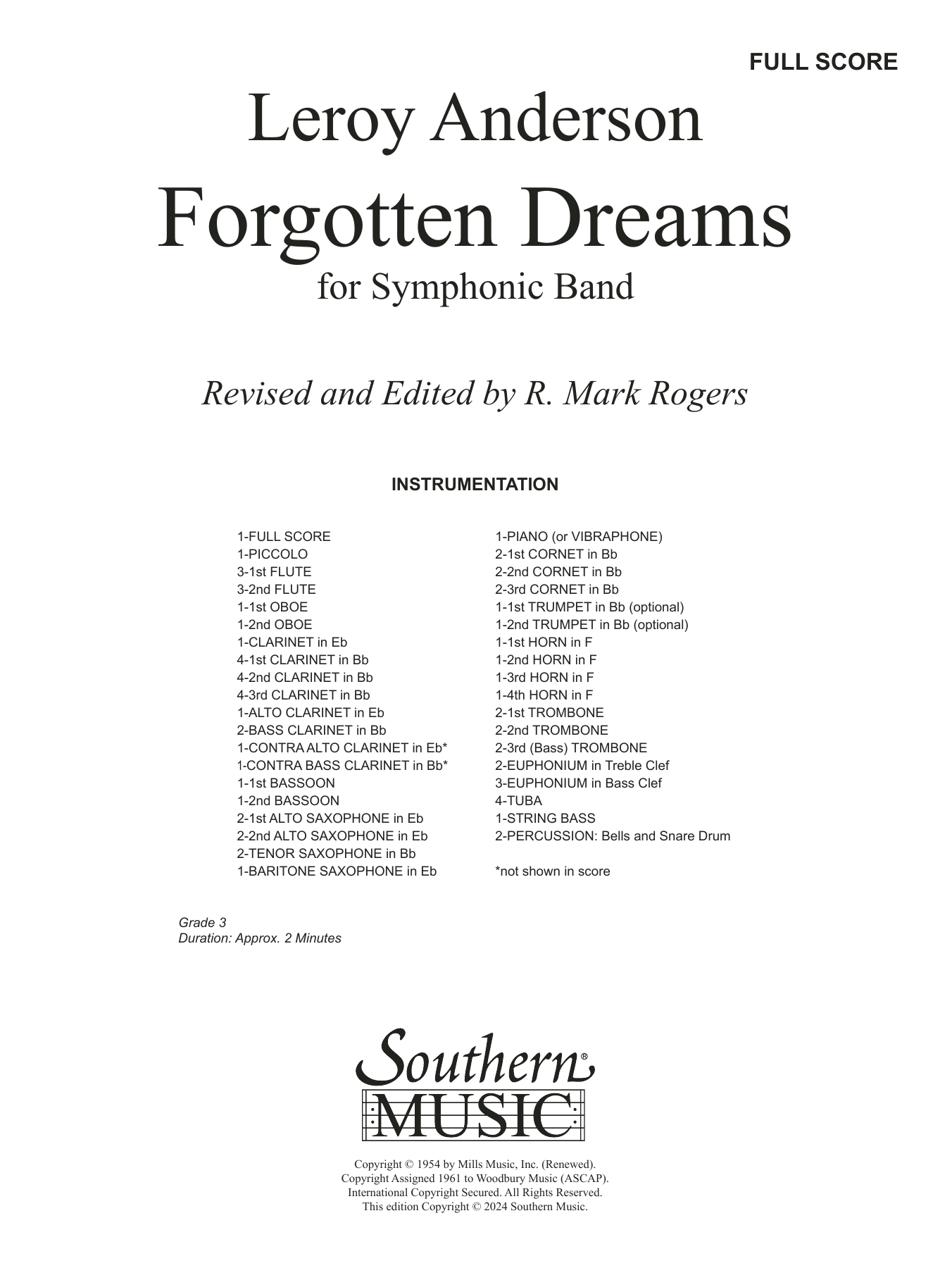

Forgotten Dreams (arr. R. Mark Rogers): Concert Band Conductor Score & Parts
By Leroy Anderson / Arranged by R. Mark Rogers
Grade: 3
Item: 35-PK01722336
$60.00
Pickup currently not available
Buy Extra Parts (Digital PDF Download)
Parts Added to Cart!
Description
FORGOTTEN DREAMS was completed on May 28, 1954. The first performance was a few days later on June 2nd during a recording session for Delta Records in New York, at which time Leroy Anderson performed the piano solo himself. Although the main theme of FORGOTTEN DREAMS was intended to be played on the piano (and with simplicity), the composer's band edition of the piece allowed for a solo flute to substitute (Play only in absence of Piano). It is also suggested the melody might be beautifully rendered on vibraphone due to the sustaining quality of that instrument. In any event, this charmingly romantic miniature will delight audiences whenever it is performed. This edition includes a full score.


Discover MakeMusic Cloud: thousands of interactive titles your students can play along with today.
Sample Audio
No sample audio found.
Sample Video
No sample videos found.
Additional Details
Publisher:
Hal Leonard
SKU:
35-PK01722336
More about this title
About the Composer: Leroy Anderson
Leroy Anderson (1908-1975) composed light orchestral music that became synonymous with American pops concerts and radio broadcasts throughout the mid-twentieth century. His gift for memorable melody and orchestral color made him one of the most recorded composers of his era, with works like "Plink, Plank, Plunk!" and "Syncopated Clock" becoming standards in the band and orchestra repertoire.
Anderson's arrangements for concert band preserve the sophistication and charm of his original compositions while remaining accessible to student musicians. His understanding of both classical form and popular appeal gives his works lasting appeal in educational settings, where they serve as excellent examples of melody-driven composition and tasteful orchestration.
Why we love this
Anderson's score demands genuine musicality from your ensemble rather than technical virtuosity, making it ideal for building phrasing and tone awareness at the Grade 3 level. The flexibility of the solo line (piano, flute, or vibraphone) gives you options based on your instrumentation and allows you to feature different students throughout the year. Most importantly, audiences respond immediately to the piece's warmth and sincerity, delivering the kind of genuine applause that reminds students why they love performing.
What to expect
A gentle, nostalgic reflection. The piece moves at an unhurried pace with warm harmonies that suggest memory and sentiment without ever becoming maudlin. There is a timeless quality to the melody that feels both familiar and personal.
Who it's for
Directors programming Grade 3 concert bands who want to include a piece that strengthens musicianship without requiring advanced technical skills. This works equally well for groups balancing classical and lighter repertoire, or for ensembles building confidence in younger musicians.
How to get the most out of it
- Balance the solo part as a conversation rather than a spotlight. The accompaniment should breathe around the melody, not support it like a foundation.
- If using the flute substitute, ensure consistent vibrato and tone quality throughout the solo line; the simplicity of the melody means every note is exposed.
- Draw out the romantic quality by resisting the urge to rush. Anderson's harmonic language rewards patience and allows the listener time to absorb each phrase.
- Rehearse the transition into and out of the solo carefully so the ensemble knows exactly when to enter and when to pull back.
How to use it
Position this as a mood piece on a concert with contrasting works, perhaps following something more energetic or preceding a substantial classical work. It pairs naturally with other Anderson compositions and works beautifully as an opener to a pops concert or as a bridge to a second half that shifts in tone.
Skills your students will build
- Sustaining long phrase lines without breaks
- Dynamic control and shape within a lyrical melody
- Sensitive accompanying parts that support without overwhelming
- Ensemble listening and balance in tutti sections
- Interpretation of romantic style conventions