
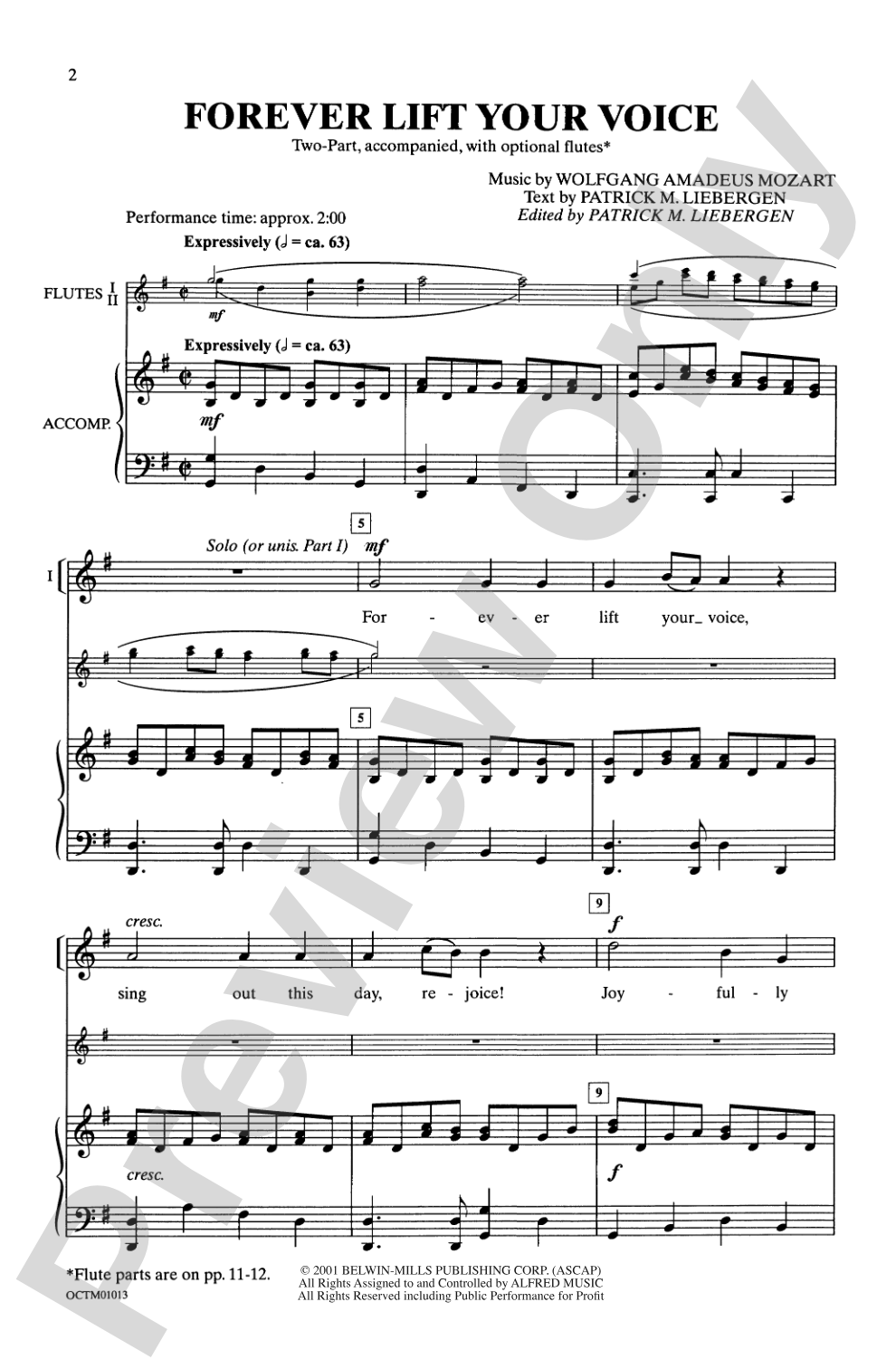
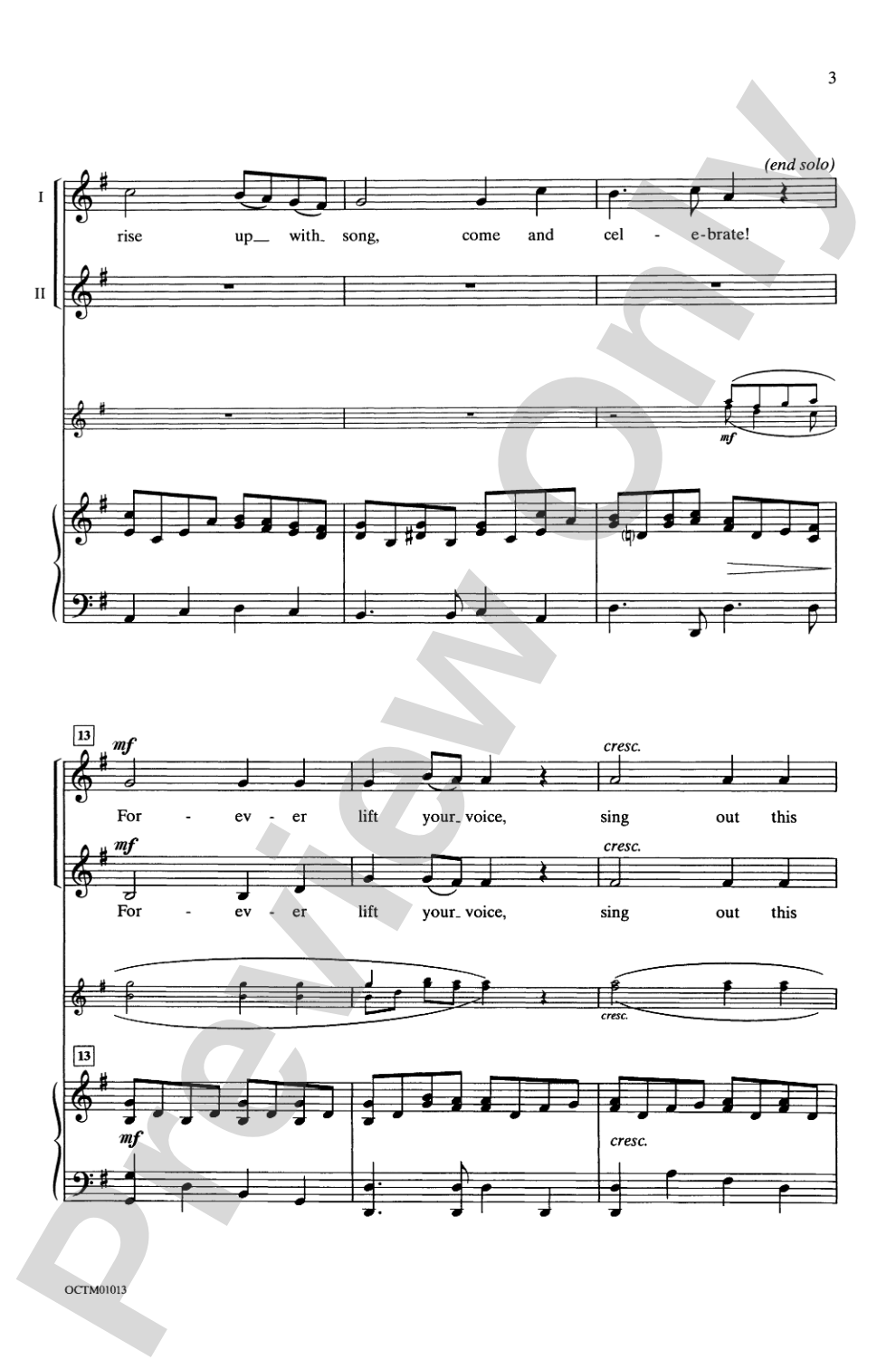
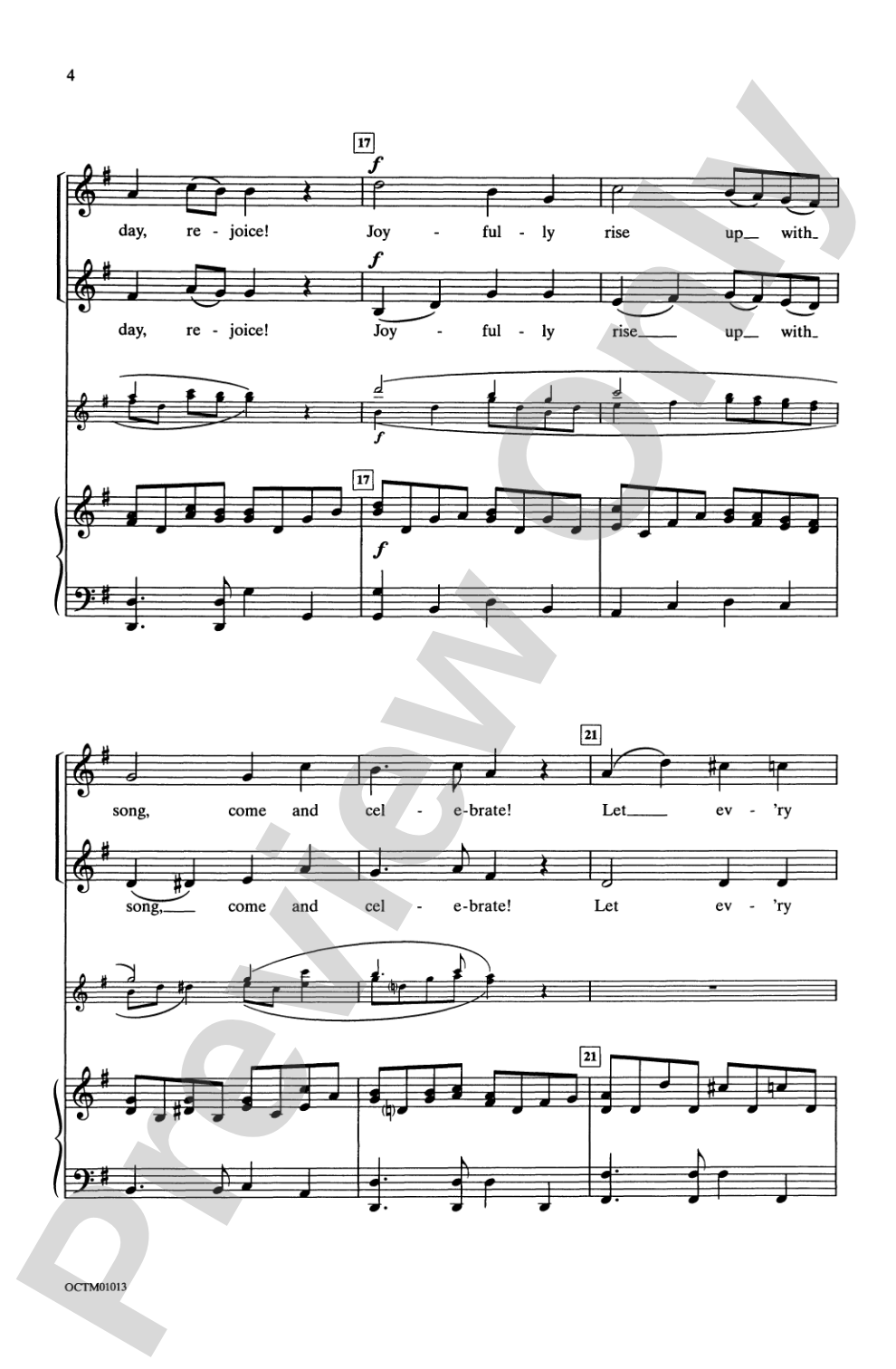

Forever Lift Your Voice: 2-Part Choral Octavo
Music by Wolfgang Amadeus Mozart, text by Patrick M. Liebergen / ed. Patrick M. Liebergen
Level: Moderate
Item: 00-PO-0003047
$2.25
Minimum order quantity: 20 copies
Pickup currently not available
Description
A musical celebration of singing created by Patrick Liebergen. Based on music by Mozart, it's easy to sing and the optional flute parts add beautifully to the overall effect.


Forever Lift Your Voice: 2-Part Choral Octavo isn't in MakeMusic Cloud just yet...but it could be. Let us know you'd like to see it, and you'll help shape what comes next. In the meantime, start a free trial and dive into thousands of interactive titles your students can play along with today.
Request This Title
Tell us you want it.
Start Your Free Trial
Explore everything that's ready to play right now.
Sample Audio
No sample audio found.
Sample Video
No sample videos found.
Additional Details
Series:
Alfred Archive Edition: Belwin Festival Series
Publisher:
Alfred Music
Page Count:
12
SKU:
00-PO-0003047
Instrumentation:
Opt. Flutes
More about this title
About the Composer: Wolfgang Amadeus Mozart
Wolfgang Amadeus Mozart (1756-1791) composed across every major genre of his era and fundamentally shaped the Classical style. Born in Salzburg, Austria, he demonstrated prodigious musicianship from childhood and spent his career writing operas, symphonies, concertos, and chamber works that combined emotional depth with crystalline formal clarity. His influence on music education remains profound; his works appear in curricula worldwide because they teach clear melody, balanced phrasing, and architectural form through music that never condescends to young singers or players.
Mozart's choral writing is particularly valuable for developing ensembles. His melodies sit naturally in the voice, his harmonic progressions are logical yet never predictable, and his textures invite both focused singing and expressive interpretation. Even in arrangements and adaptations, his essential musical intelligence comes through.
Why we love this
This arrangement captures the sophistication young singers need without the demands that would overwhelm a Grade 3 ensemble. Patrick Liebergen has drawn from Mozart's genius for singable melody while keeping part writing straightforward, so your singers can focus on musical line and expression rather than wrestling with notation. The optional flute parts transform it from a functional piece into something genuinely beautiful for a concert setting.
What to expect
A moment of genuine elegance within a young singer's reach. The piece radiates the clarity and proportion of Classical style without feeling stiff or dated; instead, it offers singers the satisfaction of making beautiful, shapely music that feels both structured and expressive. Mozart's melodic gift shines through, reminding performers why music matters.
Who it's for
Grade 3 choirs learning to balance part independence with ensemble blend, and directors seeking repertoire that satisfies both artistic and pedagogical goals. This works for mixed-grade choirs as well, since the moderate difficulty and emotional accessibility keep less experienced singers engaged without boring more advanced ones.
How to get the most out of it
- Shape the melodic line with subtle dynamic swells rather than heavy accents. Mozart's melodies breathe; let yours do the same.
- Keep the tempo steady and unhurried. This piece lives in the space between brisk and dragging; resist rushing when the singers gain confidence.
- If you include the flute parts, rehearse them separately first so the instrumental color enhances rather than obscures the choral sound.
- Work vowel consistency across both parts. The different note patterns sometimes expose shifted vowels; unify them for blend.
How to use it
Program this as a centerpiece during a concert devoted to vocal repertoire from different eras, or use it as a palate-cleansing contrast in a set that includes contemporary or folk arrangements. It also serves well for festival competition, where its clarity and moderate technical demands showcase focused singing without the risk of ambitious repertoire outpacing your ensemble's abilities.
Skills your students will build
- Singing in two independent parts while maintaining harmonic blend
- Phrasing and dynamic shaping in Classical style
- Reading music adapted from masterworks
- Coordinating with optional instrumental parts
- Sustaining vowel consistency across different melodic intervals