Forever Gone Cover Image

Forever Gone: Jazz Ensemble Conductor Score & Parts

$29.95 USD
Sale price  $29.95 USD Regular price 
Skip to product information
Forever Gone Cover Image

Forever Gone: Jazz Ensemble Conductor Score & Parts

As Recorded on the Album Strings

By Jim Snidero

Level: Advanced

Item: 01-ADV17015

$29.95
Shipped

One moment…

Description
A selection from the critically acclaimed CD album Strings by Jim Snidero, recorded in New York City under the impression of September 11, 2001, Forever Gone is an evocative ballad featuring the string section and an alto saxophone solo.

Forever Gone: Jazz Ensemble Conductor Score & Parts isn't in MakeMusic Cloud just yet...but it could be. Let us know you'd like to see it, and you'll help shape what comes next. In the meantime, start a free trial and dive into thousands of interactive titles your students can play along with today.

Sample Pages

No sample pages found.

Sample Audio
No sample audio found.
Sample Video
Additional Details
Publisher: Advance Music
UPC: 805095170153
SKU: 01-ADV17015
Instrumentation: Alto saxophone, string quintet, piano, double bass, drum set

More about this title

About the Composer: Jim Snidero
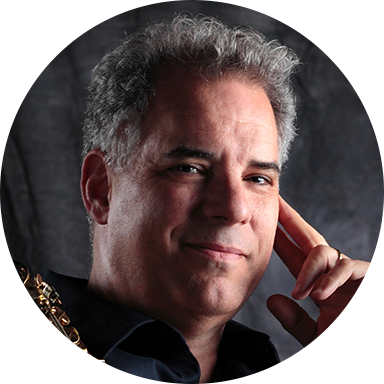
Jim Snidero

Jim Snidero stands among the most accomplished alto saxophonists and composers working in jazz today. Since establishing himself in New York in 1981, he has built a distinguished career as a bandleader, sideman with legends like the Mingus Big Band and Toshiko Akiyoshi Jazz Orchestra, and recording artist whose discography spans from Mixed Bag to Blue Afternoon, the latter cited by The Penguin Jazz Guide as one of the finest jazz records ever made.

Beyond the stage and studio, Snidero is recognized as an educator and author whose influence extends across the international jazz community. Downbeat Magazine has praised him as a "master musician" and "alto saxophone virtuoso," and his placement in the 2017 Downbeat Critic's Poll reflects his sustained artistic relevance. His roots in the University of North Texas jazz program and study under Phil Woods and Dave Liebman shaped a musician committed to both technical excellence and compositional depth.

Why we love this

This ballad captures something rare in the jazz ensemble repertoire: genuine emotional weight without sentimentality. The interplay between alto saxophone and string quintet creates an orchestral texture that challenges students to listen beyond their own part, while Snidero's solo writing sits at the exact intersection of lyricism and technical facility that keeps advanced players engaged.

What to expect

Forever Gone inhabits the space between grief and acceptance. The alto saxophone voice emerges from lush string harmonies with a sense of longing, moving through phrases that feel both introspective and searching. There's a quietness here that requires discipline to maintain, punctuated by moments where the full ensemble comes together with quiet intensity.

Who it's for

Advanced jazz ensembles with string capability will find a sophisticated, emotionally mature work that sits outside the typical big band or standard combo repertoire. This score demands strong readers across all sections and ensemble members who can balance precision with interpretive sensitivity.

How to get the most out of it

  • Balance the alto saxophone voice against the strings carefully during the opening statement; the sax should be present but never overshadow the ensemble's harmonic foundation.
  • Work the rhythm section (piano, bass, and drums) as a unit rather than allowing them to settle into autopilot. This ballad's sense of space depends on deliberate, conversational accompaniment choices.
  • Give the alto soloist room to breathe during the feature. Mark the tempo and harmonic structure clearly for all players, then trust your soloist to shape phrases naturally within that framework.
  • Attend to the dynamic arc across the entire performance. The piece draws much of its power from contrast between intimate moments and fuller ensemble textures.

How to use it

This work functions powerfully as a concert centerpiece that demonstrates your ensemble's versatility and emotional range. Pair it with contrasting material to show breadth, or program it in a thematic concert addressing jazz as a vehicle for reflection and meaning-making.

Skills your students will build

  • Balancing solo voice against ensemble accompaniment
  • Reading and executing stylistically appropriate jazz phrasing in a string-integrated setting
  • Maintaining ensemble cohesion in ballad tempos where every rhythmic choice is audible
  • Responding to implied harmonic structure through listening and rhythmic precision

You May Also Like