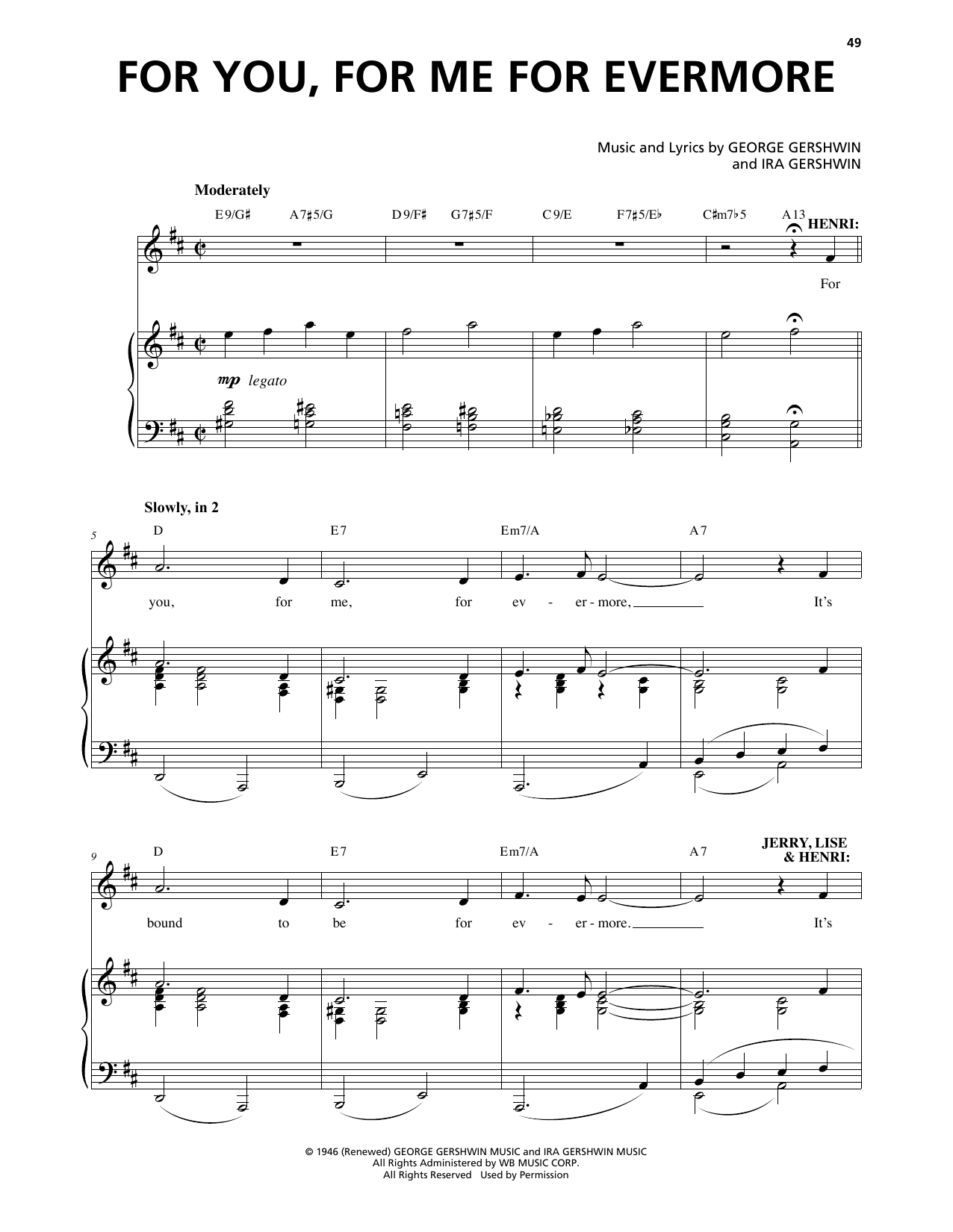
For You, For Me For Evermore (from An American In Paris) Sheet Music Preview

For You, For Me For Evermore (from An American In Paris): Piano Vocal

Item: 35-DS00458591

Digital Download
$5.99

One moment…

Description

For You, For Me For Evermore (from An American In Paris): Piano Vocal isn't in MakeMusic Cloud just yet...but it could be. Let us know you'd like to see it, and you'll help shape what comes next. In the meantime, start a free trial and dive into thousands of interactive titles your students can play along with today.

Sample Audio
No sample audio found.
Sample Video
Additional Details
Publisher: Hal Leonard
Page Count: 3
SKU: 35-DS00458591

More about this title

About the Creator

George Gershwin composed "An American in Paris" in 1928, a symphonic poem that captured the energy and romance of 1920s Paris through a distinctly American jazz lens. His gift for melody and harmonic sophistication made him one of the few composers equally at home in concert halls and on Broadway stages.

Ira Gershwin's lyrics for this song transformed a purely orchestral work into a vehicle for intimate vocal storytelling. His wit and emotional directness elevated standard romantic sentiment into something genuinely felt, making this number a cornerstone of the American songbook.

Why we love this

This arrangement preserves the lush harmonic language of Gershwin's original while remaining singable and accompanist-friendly. The three-page format is ideal for teaching jazz standards without overwhelming students, and the melody sits naturally for singers with modest classical training who want to explore Broadway repertoire.

What to expect

Romantic without sentimentality, urbane without pretense. The song carries the bittersweet quality of someone reflecting on a transformative moment in a foreign city, grounded by Gershwin's sophisticated harmonic palette and lifted by the inherent joy of the melody.

Who it's for

Singers developing facility with jazz harmony and swing rhythms will find this a musically rich but manageable entry point. Pianists seeking to expand beyond classical accompaniment will gain practical experience with jazz voicings and comping styles.

How to get the most out of it

  • Shape the vocal line through the harmonic movement rather than focusing solely on lyrical phrasing. Gershwin's chords often shift beneath held notes, creating subtle emotional turns.
  • Let the piano part breathe during vocal passages. These aren't "fill" moments but genuine musical contributions that the voice should acknowledge through pacing and dynamics.
  • Approach the rhythmic notation with flexibility. Jazz phrasing means notes don't always sit precisely on the beat, particularly in pickup phrases and phrase endings.

How to use it

This works beautifully in a jazz or American music concert, paired with other Gershwin standards or works exploring the classical-popular divide. It's also an excellent recital choice for singers building a diverse program that spans classical art song and contemporary musical theater.

Skills your students will build

  • Reading and performing jazz rhythms and swing feel
  • Interpreting slash chords and seventh-based harmonies in context
  • Balancing vocal line with an active piano accompaniment
  • Singing through harmonic movement in a jazz idiom

You May Also Like