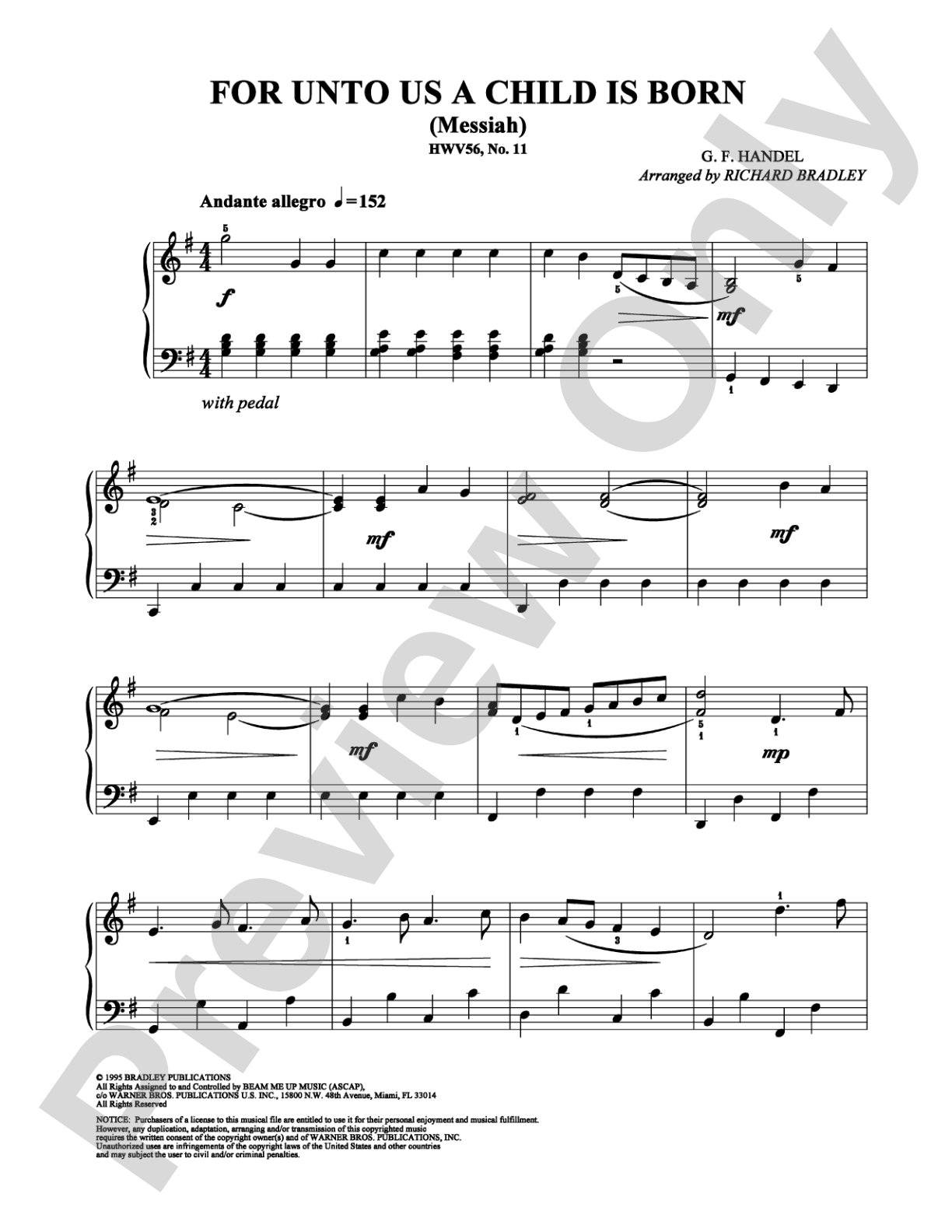
For Unto Us a Child is Born (Messiah): Piano Digital Sheet Music

For Unto Us a Child is Born (Messiah): Piano Digital Sheet Music

George Frideric Handel

Item: 00-PS-0007597

Digital Download
$3.99
Description

For Unto Us a Child is Born (Messiah): Piano Digital Sheet Music isn't in MakeMusic Cloud just yet...but it could be. Let us know you'd like to see it, and you'll help shape what comes next. In the meantime, start a free trial and dive into thousands of interactive titles your students can play along with today.

Sample Audio
No sample audio found.
Sample Video
Additional Details
SKU: 00-PS-0007597

More about this title

About the Composer: George Frideric Handel

George Frideric Handel (1685-1759) was a German-born composer who spent most of his creative life in England, where he became a dominant figure in Baroque music. His mastery of vocal writing and orchestral color made him one of the most performed composers of his era, and his influence extended well beyond his lifetime into the concert halls and churches of subsequent centuries.

Why we love this

This iconic aria sits at the emotional heart of Messiah, and the piano reduction captures the grandeur of Handel's original orchestration while remaining accessible for solo performance. Pianists encounter one of the most rewarding pieces in the keyboard repertoire: a chance to voice the rich harmonic language of the Baroque while delivering a solo that audiences recognize instantly.

What to expect

The music unfolds with serene confidence, anchored by steady harmonic progressions that feel both inevitable and richly comforting. There's a ceremonial quality to the piece, at once intimate and grand, with Handel's elegant ornamentation suggesting both restraint and abundance.

Who it's for

Pianists preparing solo repertoire or seeking to expand their holiday performance offerings will find a substantial, dignified piece that works equally well in a concert setting or a seasonal church service. Intermediate to advanced players looking for a Baroque vocal transcription that showcases harmonic sophistication and emotional depth will connect with this arrangement.

How to get the most out of it

  • Shape the opening phrase with a clear sense of arrival on the first downbeat; Handel's harmonic progression rewards patient, connected phrasing rather than rushing the text declamation.
  • Support the lyrical vocal melody (even though you're playing it on piano) by singing the line internally, which will guide your rubato and dynamic shaping naturally.
  • Balance the left hand accompaniment so it supports without overwhelming; the broken chord patterns should breathe and anchor the harmony without obscuring the ornamental figures in the right hand.
  • Allow space around the rests and held notes to let the harmonic changes register clearly with your audience.

How to use it

Place this as a standalone interlude during a holiday concert to offer listeners a moment of musical reflection, or pair it with other Baroque keyboard works to build a thematic program. It also serves well as a prelude or postlude for Christmas services where instrumental music carries the liturgical moment.

Skills your students will build

  • Baroque harmonic vocabulary and voice leading
  • Maintaining rhythmic integrity while shaping vocal melody lines on keyboard
  • Balancing multiple contrapuntal layers in the left hand
  • Interpreting ornamentation and articulation in period style
  • Dynamic control and phrasing across longer phrases without modern instrumental flexibility

You May Also Like