For the Sake of Old Times ("Auld Lang Syne"): Oboe Sheet Music Preview

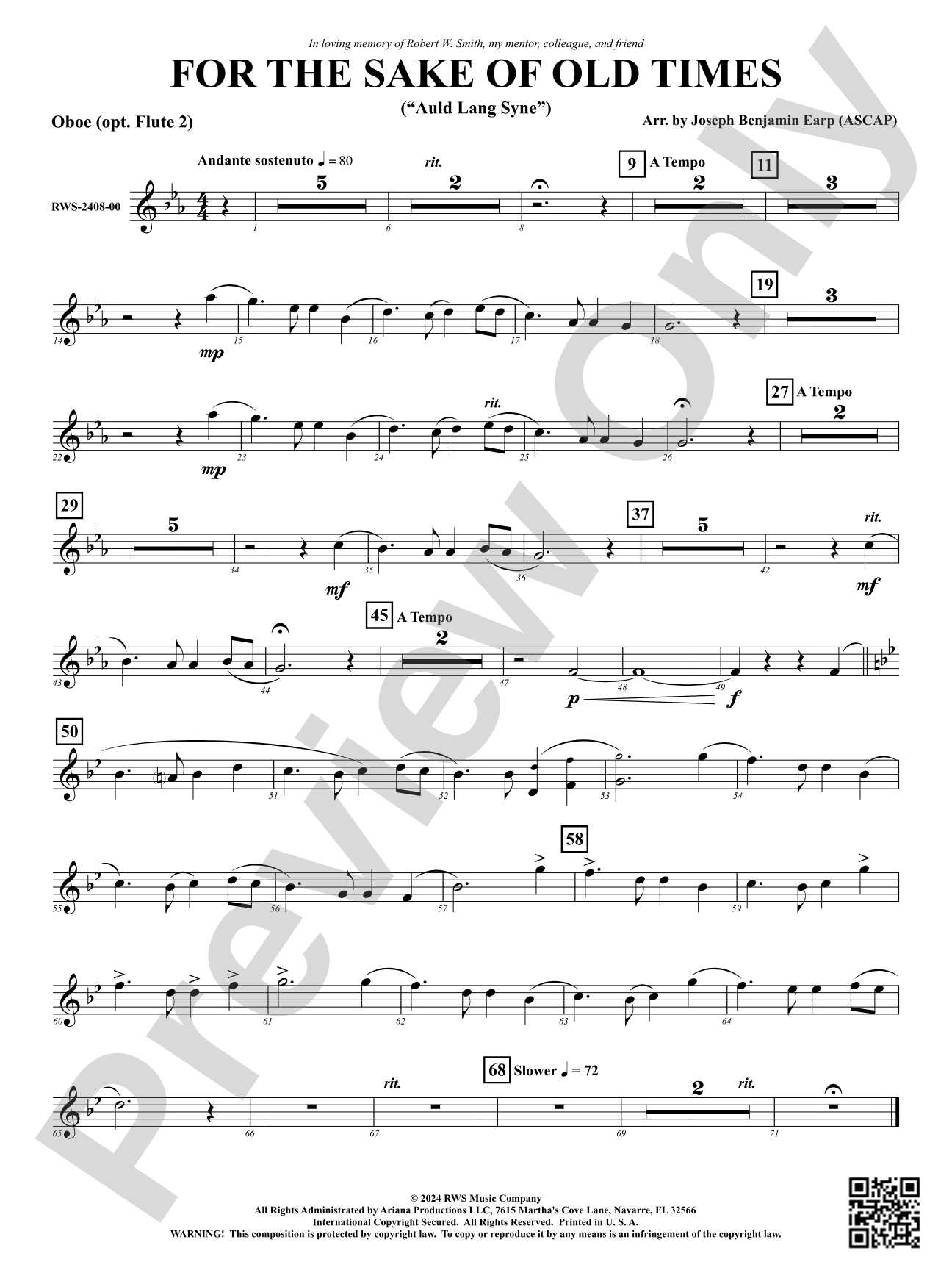
For the Sake of Old Times ("Auld Lang Syne"): Oboe

("Auld Lang Syne")

Arr. Joseph Benjamin Earp

Grade: 3.5

Item: 98-PC-RWS2408_O1

Digital Download
$3.99
Description
For the Sake of Old Times is a fresh take on the timeless classic "Auld Lang Syne." Known as a song to celebrate the New Year, Joseph Benjamin Earp's arrangement could be used at any point during the year to celebrate special occasions and memorialize important people in our lives. (3:55)

For the Sake of Old Times ("Auld Lang Syne"): Oboe isn't in MakeMusic Cloud just yet...but it could be. Let us know you'd like to see it, and you'll help shape what comes next. In the meantime, start a free trial and dive into thousands of interactive titles your students can play along with today.

Sample Audio
0:00
0:00
Sample Video
Additional Details
Series: RWS - Concert Band
Publisher: RWS Music Company
SKU: 98-PC-RWS2408_O1

More about this title

Why we love this

Earp's arrangement honors the melody we all know while giving it genuine musical substance. At Grade 3.5, the writing sits in a sweet spot where the band can sound polished and intentional without fighting through technical barriers. This is the kind of piece that lets your ensemble play something meaningful on a winter concert or special occasion without overshadowing your heavier repertoire.

What to expect

Warm and reflective, grounded in something the audience immediately recognizes. The arrangement honors the song's nostalgic weight while allowing room for genuine musical expression rather than just playing the tune straight.

Who it's for

Concert bands at the Grade 3 to 4 level can access this successfully. Directors seeking repertoire for winter programs, holiday galas, New Year celebrations, or memorial events will find this more thoughtfully arranged than typical "Auld Lang Syne" fare.

How to get the most out of it

  • Shape the melody with long phrase lines rather than treating each section as isolated statements. The familiarity of the tune can tempt rushed pacing; commit to deliberate tempo and let your principal players breathe through the phrases.
  • Balance transparency across the sections. With a song this recognizable, bare spots in the orchestration can feel empty. Make sure inner voices support the harmonic foundation without drowning out the lead.
  • Consider your dynamic arc across the full 3:55 duration. One familiar tune held at the same volume quickly becomes static. Plan where intensity builds and where it softens to keep the ensemble and audience engaged.

How to use it

This works beautifully as a connecting piece on a concert program, especially between more demanding works where you want to shift the emotional temperature. Reserve it for moments when reflection or celebration serves the concert's larger arc. The 3:55 length gives you flexibility in pacing a full evening.

Skills your students will build

  • Balancing melody and accompaniment in a familiar harmonic context
  • Sustaining tone quality and intonation across longer phrases
  • Dynamic shaping and ensemble listening in an arrangement with transparent scoring
  • Understanding how arrangement choices serve emotional intent

You May Also Like