

For the Love of Music: SATB Choral Octavo
Music by Russell Robinson
Item: 00-PO-0007748
$1.65
Minimum order quantity: 20 copies
Pickup currently not available
Related Items
For the Love of Music: Choral SoundPax |
$30.00
|
View | |
For the Love of Music: SATB Choral Octavo |
$1.65
|
View | |
For the Love of Music: SAB Choral Octavo |
$1.65
|
View | |
For the Love of Music: 2-Part Choral Octavo |
$1.65
|
View | |
For the Love of Music: Choral Octavo SoundTrax CD |
$22.95
|
View | |
For the Love of Music: Choral SoundPax |
$30.00
|
View |
Description
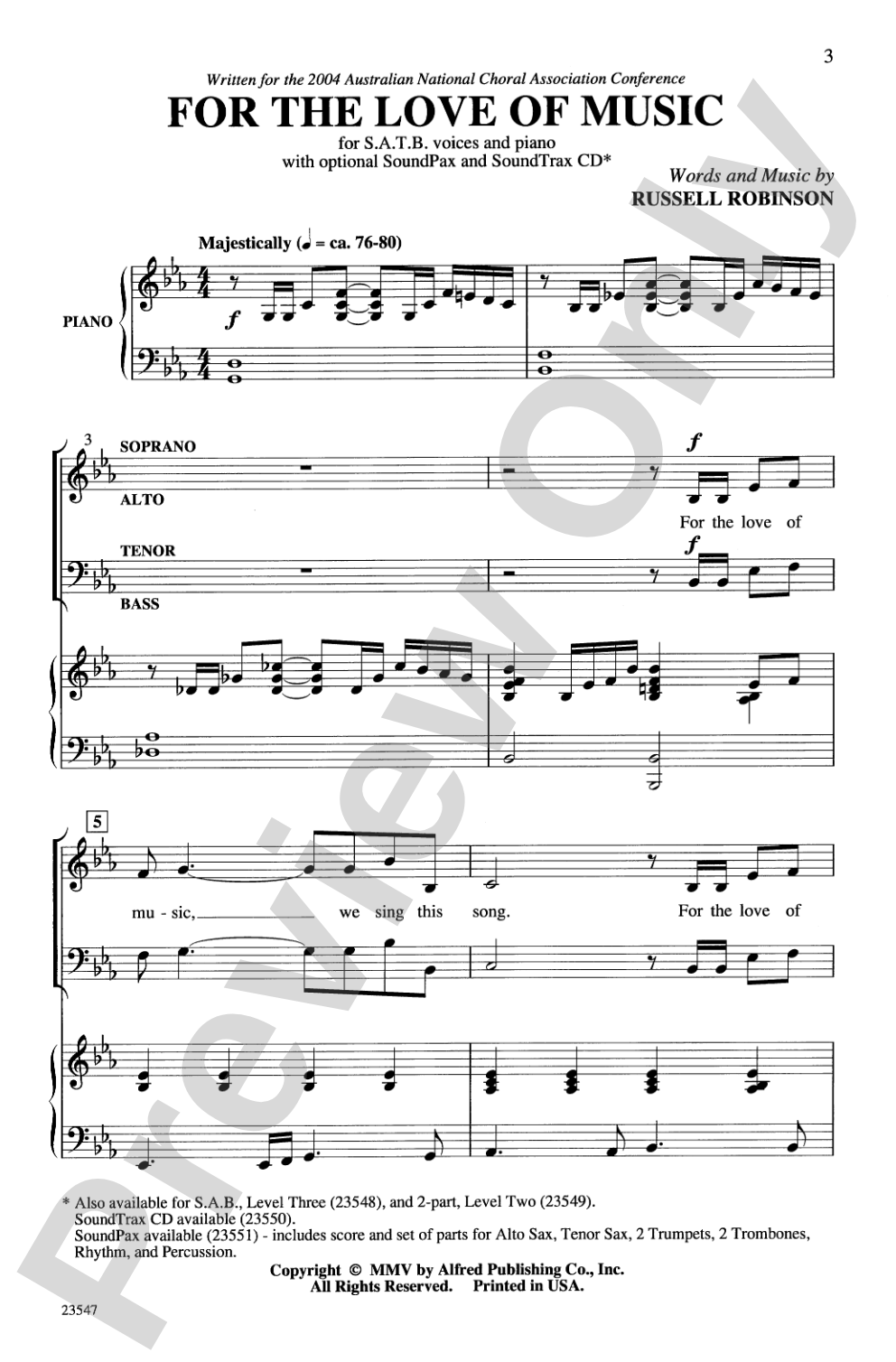
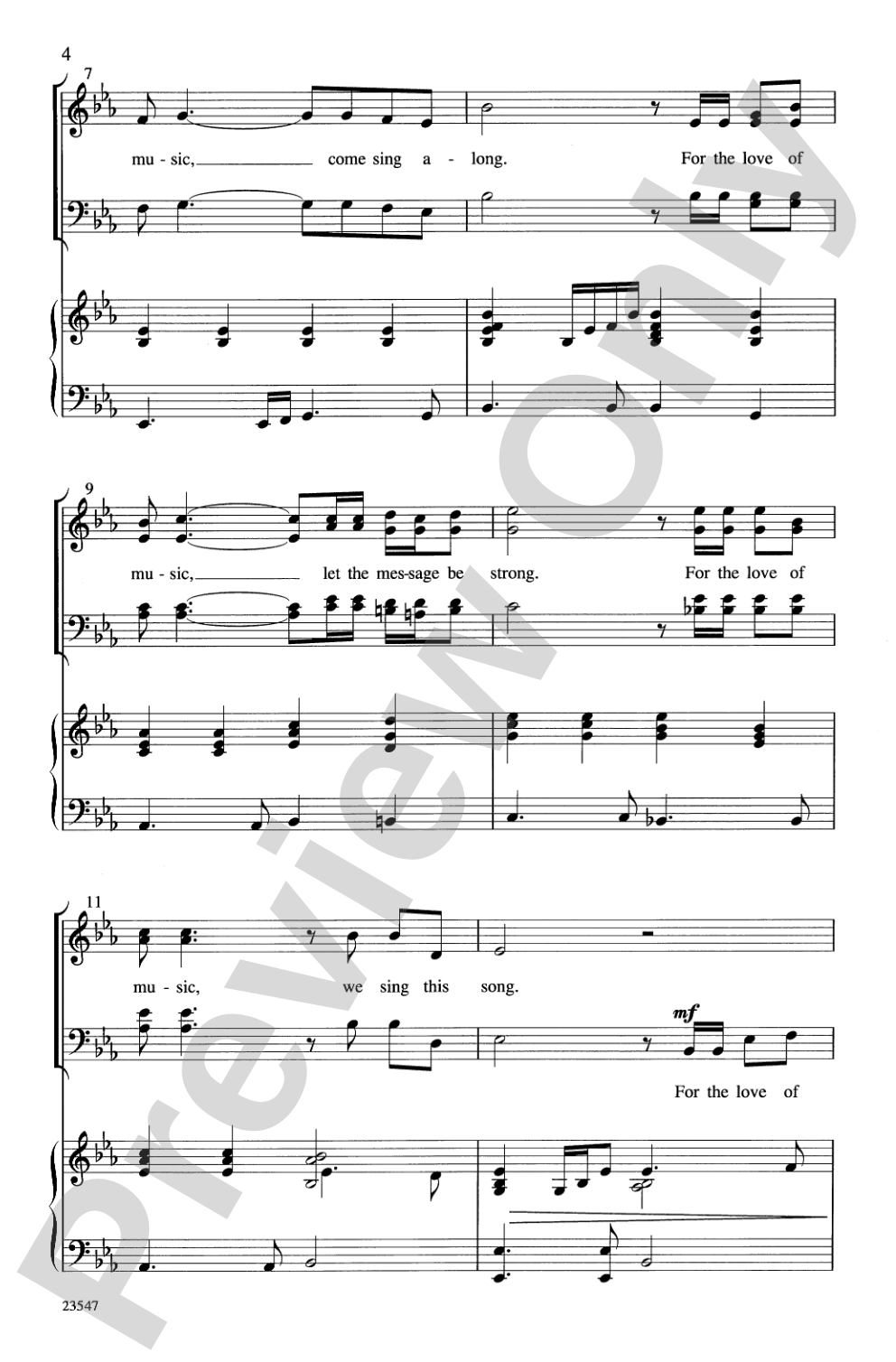
A powerful theme song for your next concert! Open and close with this one, programming other "music is a universal language" songs in between. A majestic fanfare introduces the stirring balladic melody with riveting harmonies that students will love to sing. Starts strong and stays strong with a treble trio soaring above the final refrain. Perform with live SoundPax instrumentation or use the professionally recorded SoundTrax CD. SoundPax includes parts for a. sax., t. sax., 2 tpt., 2 tbn., rhy., perc.


For the Love of Music: SATB Choral Octavo isn't in MakeMusic Cloud just yet...but it could be. Let us know you'd like to see it, and you'll help shape what comes next. In the meantime, start a free trial and dive into thousands of interactive titles your students can play along with today.
Request This Title
Tell us you want it.
Start Your Free Trial
Explore everything that's ready to play right now.
Sample Audio
1
Audio File
--:--
0:00
0:00
Sample Video
No sample videos found.
Additional Details
Series:
Alfred Choral Designs
Publisher:
Alfred Music
Page Count:
12
SKU:
00-PO-0007748
More about this title
About the Composer: Russell Robinson
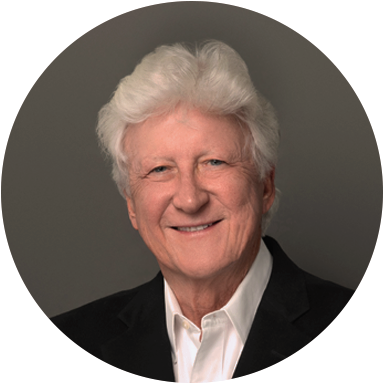
Russell Robinson has shaped choral music education across six continents, conducting ensembles at Carnegie Hall, Lincoln Center, the Kennedy Center, and the White House. His work as Emeritus Professor of Music Education at the University of Florida and his leadership roles within NAfME and the Florida Music Educators Association reflect a career devoted to advancing the art form at every level.
With over 500 published works in print, Robinson has established himself as a prolific composer and arranger whose pieces serve the practical needs of school and community choirs. His recognition as a 2016 inductee into the Florida Music Educators Association Hall of Fame acknowledges decades of influence on choral repertoire and choral pedagogy.
Why we love this
Robinson's gift for theatrical vocal writing shines here: the majestic fanfare immediately establishes gravitas, and the balladic melody that follows invites genuine emotional investment from singers. The treble trio moment adds a distinctive textural layer that gives sopranos something to treasure, while the piece's structural clarity makes it work equally well as a concert opener or closer without feeling formulaic.
What to expect
The piece opens with unmistakable grandeur, its fanfare cutting through silence like a proclamation. As the melody unfolds, it settles into something stirring but accessible, building toward that soaring treble moment that reminds everyone why ensemble singing matters.
Who it's for
This octavo suits choirs with solid reading skills and the ability to sustain legit singing through a balladic arc. It works for high school, community, and collegiate ensembles looking for a statement piece that lands with both performers and audiences.
How to get the most out of it
- Balance the fanfare introduction so the brass or SoundTrax instrumentation doesn't overwhelm the voices; this is a choral showcase with instrumental support, not the reverse.
- Shape the balladic melody with long phrasing and dynamic support from the harmony parts; singers often rush ballad material, so establish a steady internal pulse early.
- Bring the treble trio to the foreground in the final refrain by adjusting lower voice dynamics slightly and ensuring soprano diction is crystal clear above the richer texture.
- If using the live SoundPax parts, rehearse with a recorded guide track first to lock entrances and harmonic relationships before adding live instruments.
How to use it
Program this as your concert frame: open with it to command attention, fill the middle with thematically related repertoire about music's power and universality, then close with it again to send the audience home with those harmonies still resonating. The 12-page length and clear structure make it manageable even in a packed season.
Skills your students will build
- Sustaining legit tone through a balladic melody without dropping into chest voice
- Balancing individual lines within four-part harmony while maintaining textural clarity
- Blend and intonation in close harmonic writing, particularly during the treble trio
- Entrances and ensemble control against instrumental accompaniment (SoundTrax or live SoundPax parts)