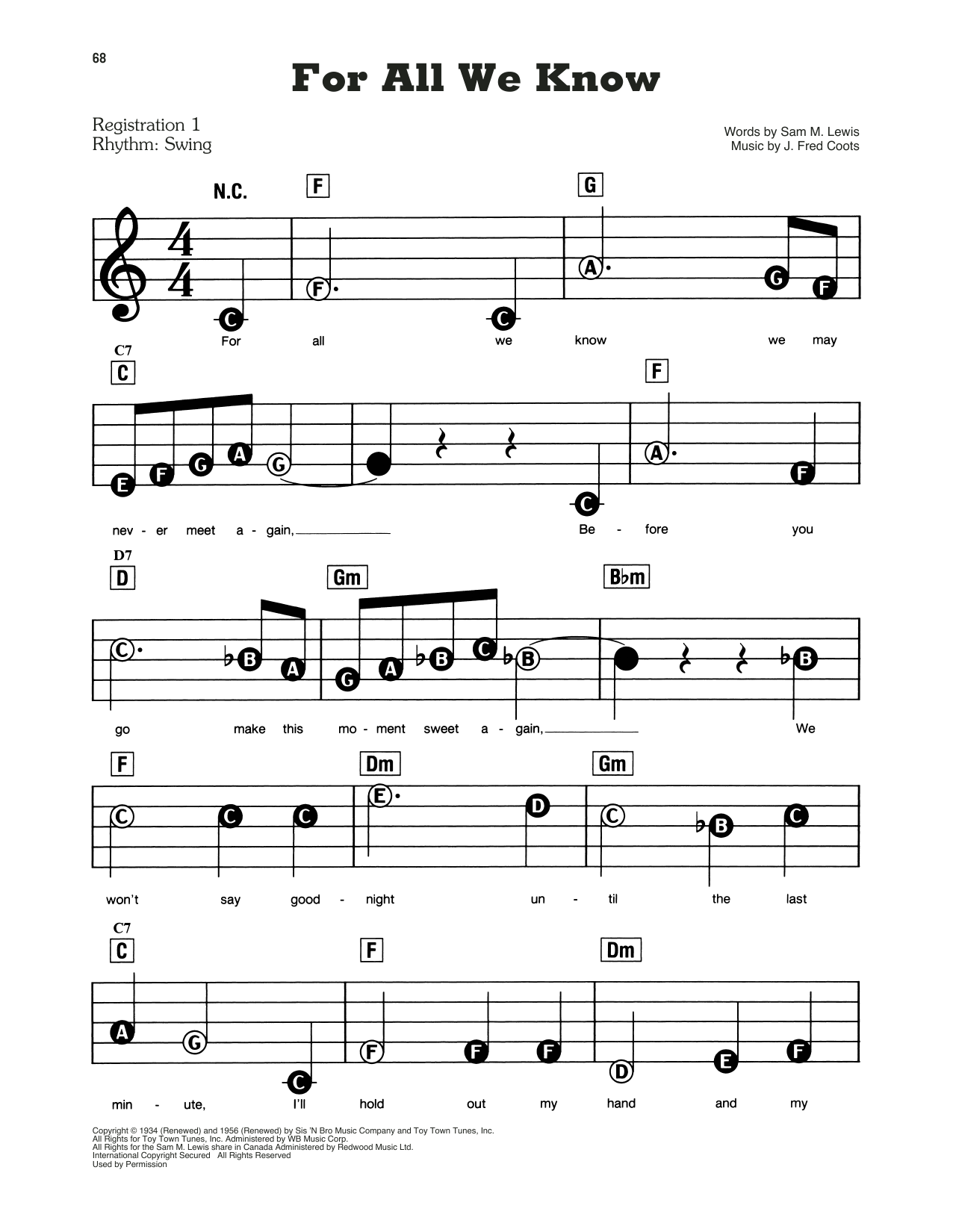
For All We Know Sheet Music Preview

For All We Know: E-Z Play Today

As performed by Rod Stewart

Item: 35-DS00449769

Digital Download
$4.99
Description

For All We Know: E-Z Play Today isn't in MakeMusic Cloud just yet...but it could be. Let us know you'd like to see it, and you'll help shape what comes next. In the meantime, start a free trial and dive into thousands of interactive titles your students can play along with today.

Sample Audio
No sample audio found.
Sample Video
Additional Details
Publisher: Hal Leonard
Page Count: 2
SKU: 35-DS00449769

More about this title

About the Artist: Rod Stewart

Rod Stewart brought his distinctive raspy voice and interpretive gifts to the Great American Songbook, making himself a bridge between rock sensibility and jazz standards. His recordings of classic material demonstrated that rock artists could engage deeply with the craft of American popular song, treating standards with both respect and personal flair.

Why we love this

Stewart's version of this 1934 standard sits comfortably between jazz and pop sensibilities, making it accessible for pianists who want to explore the songbook without overwhelming harmonic complexity. The arrangement captures the song's inherent warmth while staying true to how a vocalist shapes the melody, giving pianists insight into interpretive phrasing beyond the notes.

What to expect

Intimate and reflective. The piece carries the nostalgic warmth of a mid-century ballad while Stewart's sensibility adds a touch of contemporary ease to the phrasing. You'll find yourself drawn to subtle dynamic shifts and the way melody sits against gentle harmonic movement.

Who it's for

Pianists working through jazz standards who appreciate a vocalist's interpretation of a classic tune. Early intermediate to intermediate players building fluency with swing rhythms and jazz harmony will find this length and style manageable for both learning and performance.

How to get the most out of it

  • Shape the melody with dynamic subtlety; this song thrives on understatement rather than dramatic gestures, especially in the opening phrases.
  • Let the harmony breathe at cadence points, resisting the urge to rush into the next section.
  • Balance the left hand accompaniment so it supports without overwhelming the vocal line written in the right hand.

How to use it

Pair this with other standards in a concert celebrating the American songbook, or use it as a solo feature that showcases a pianist's ability to honor a vocalist's interpretation. It also works as an elegant interlude in a program mixing classical and popular repertoire.

Skills your students will build

  • Interpreting written vocal phrasing on piano
  • Comping with restraint and sensitivity
  • Understanding jazz chord voicings in a song context
  • Shaping melody across phrase boundaries

You May Also Like