For All We Know Sheet Music Preview

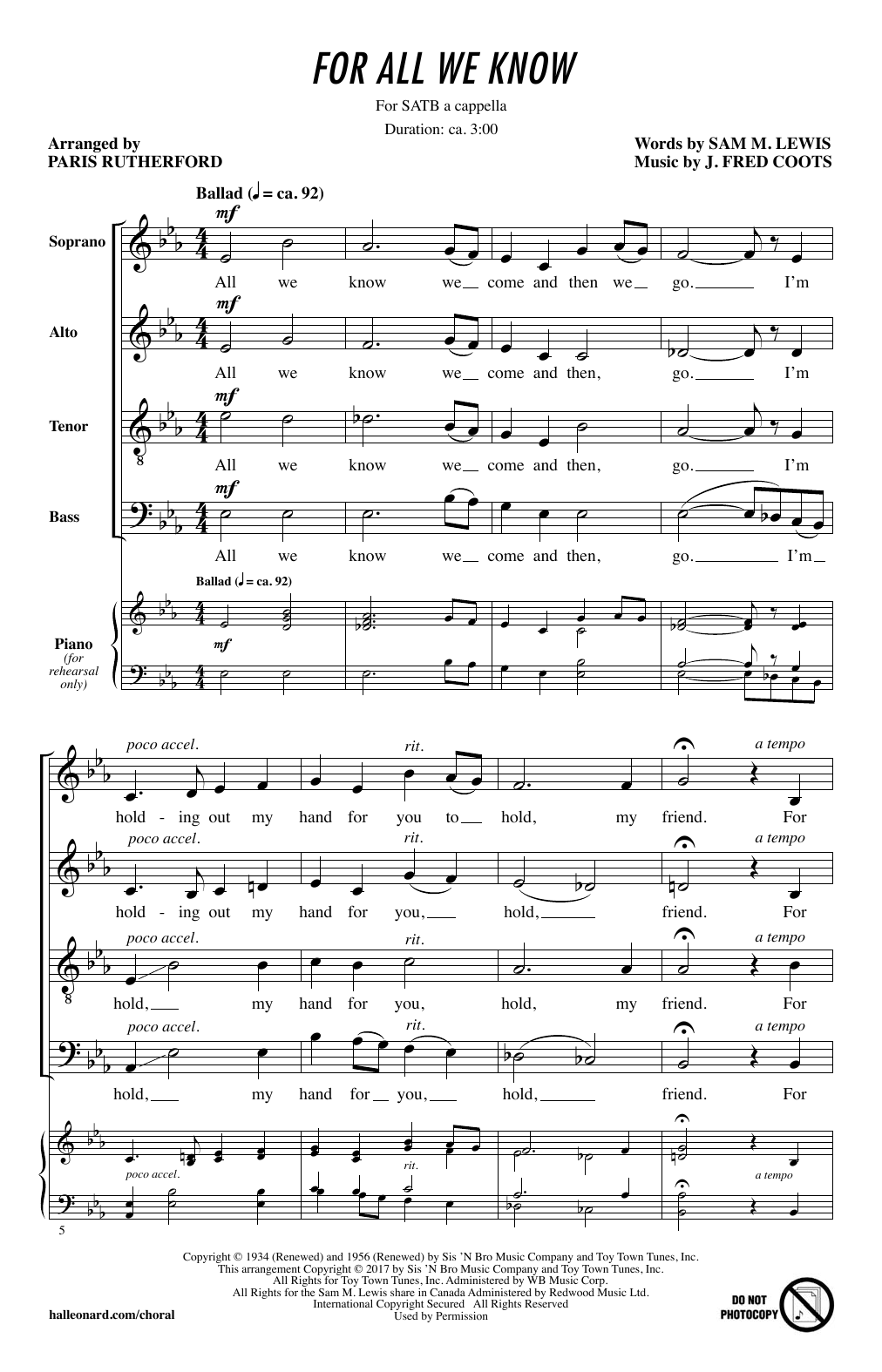
For All We Know: SATB Choral Octavo

As performed by Sam M. Lewis / As performed by J. Fred Coots / Arranged by Paris Rutherford

Item: 35-DS00385594

Digital Download
$2.99
Description

For All We Know: SATB Choral Octavo isn't in MakeMusic Cloud just yet...but it could be. Let us know you'd like to see it, and you'll help shape what comes next. In the meantime, start a free trial and dive into thousands of interactive titles your students can play along with today.

Sample Audio
No sample audio found.
Sample Video
Additional Details
Publisher: Hal Leonard
Page Count: 9
SKU: 35-DS00385594

More about this title

About the Artist: Sam M. Lewis

Sam M. Lewis was a prolific lyricist and songwriter who shaped popular music throughout the early 20th century. Working alongside composers like J. Fred Coots, Lewis crafted standards that became fixtures of the American songbook, blending accessible melody with thoughtful lyricism. His work remains central to the concert repertoire because it balances sophistication with immediate appeal.

Why we love this

Paris Rutherford's arrangement brings warmth and accessibility to this enduring standard without sacrificing musical substance. The SATB voicing sits comfortably across ranges while creating opportunities for genuine four-part interplay, making it rewarding for singers at different levels of experience.

What to expect

Reflective and intimate, this piece carries a quiet confidence. The melody unfolds with the ease of something often remembered, while the harmonies create moments of genuine tenderness and subtle complexity that reward careful listening.

Who it's for

This arrangement works for choirs seeking accessible concert repertoire with real musical depth. It suits programs where you want a piece that audiences recognize and singers genuinely enjoy performing.

How to get the most out of it

  • Shape the phrases by lifting slightly at the end of each line; this tune relies on breath and phrasing to feel conversational rather than formal.
  • Balance the parts so the melody comes through clearly, but let the inner voices breathe as independent lines rather than background accompaniment.
  • Listen for places where the harmonic rhythm shifts; subtle tempo flexibility there can enhance the emotional arc without sounding self-conscious.

How to use it

Pair this with other standards from the American songbook for a concert celebrating classic popular song, or feature it as a moment of lyrical beauty in a mixed secular program. It works particularly well in the first half of a concert when you want to establish warmth and connection with your audience.

Skills your students will build

  • Singing four-part harmony with independence within the chord texture
  • Shaping longer phrases with natural breathing
  • Balancing blend while maintaining individual voice line clarity
  • Interpreting text with musical intention in a standards context

You May Also Like