
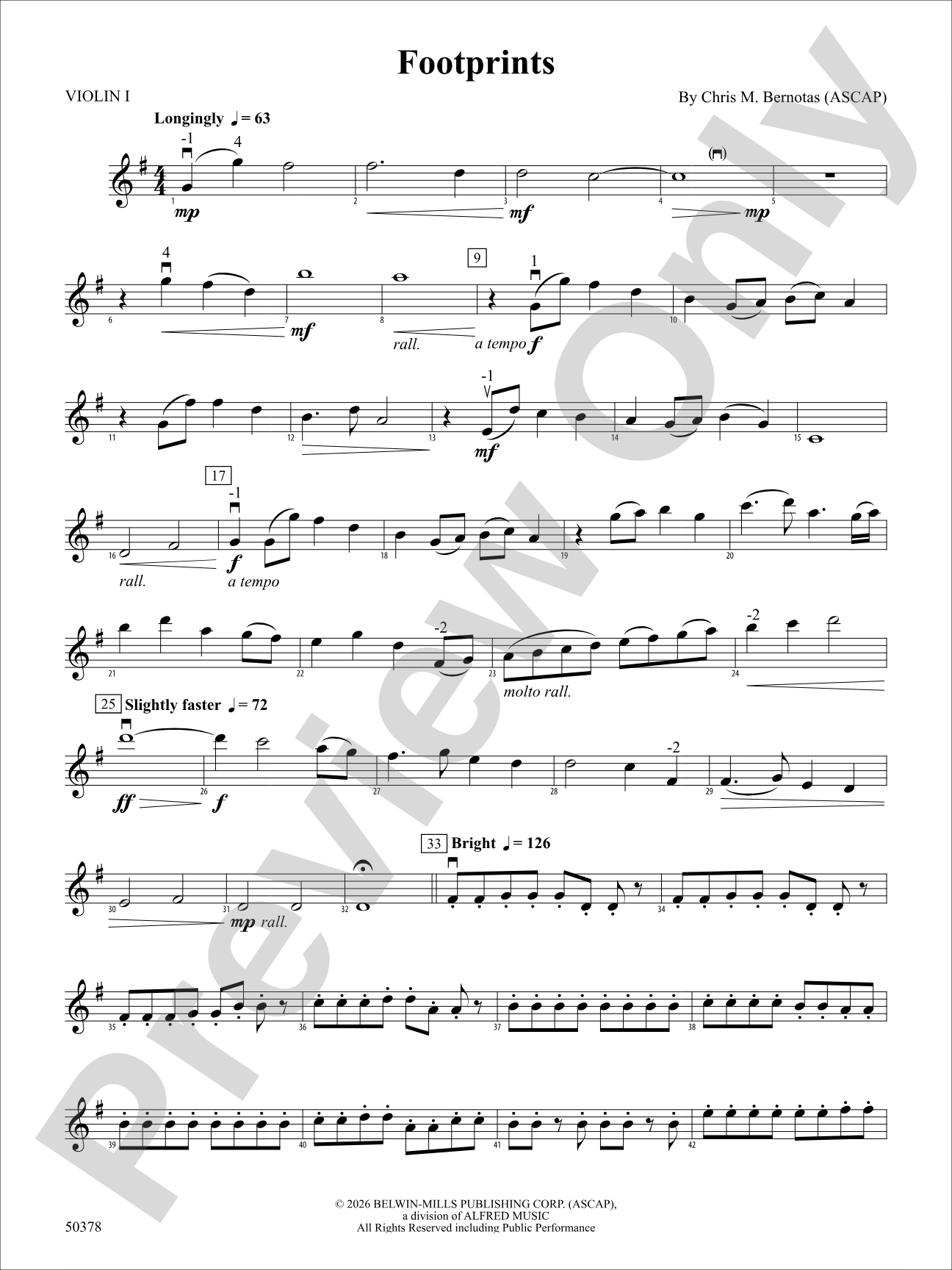

Footprints: 1st Violin
By Chris M. Bernotas
Grade: 3
Item: 00-PC-0019837_VN1
$3.00
Pickup currently not available
Description
Inspired by the comforting poem "Footprints in the Sand," this piece explores the universal theme of support during struggle. It beautifully encapsulates the sorrow of loss and the joy of reflection, moving from initial sadness and strength through a lighter, fun-filled development. With sweeping lyrical lines, texture changes, and a peaceful violin solo, Footprints, by Chris M. Bernotas, offers rich opportunities for expression, dynamics, and rhythmic interplay.


Don't just read it, hear it, play along with it, and watch your students grow with it. In MakeMusic Cloud, Footprints: 1st Violin comes alive with professional accompaniment, adjustable tempo, and built-in practice tools that turn solo practice into real progress.
Open in the Player
Jump straight in and assign it today.
Start Your Free Trial
Open this title and explore the full library in minutes.
Sample Audio
1
Audio File
--:--
0:00
0:00
Sample Video
Additional Details
Series:
Highland String Orchestra
Publisher:
Alfred Music
SKU:
00-PC-0019837_VN1
More about this title
About the Composer: Chris M. Bernotas

Chris M. Bernotas brings over 25 years of experience as a composer, conductor, and music educator to his work. As Director of Instrumental Publications at Alfred Music, he has shaped the landscape of band and orchestra repertoire, creating pieces that balance accessibility with genuine musical depth. His compositions are performed regularly by ensembles worldwide, spanning from beginning groups to advanced orchestras seeking repertoire with both pedagogical integrity and artistic substance.
Bernotas's foundation in classroom teaching informs every score he writes. He understands the real pressures directors face—the need for music that engages students while developing their musicianship. His guest conducting and clinician work with honor groups and regional workshops has deepened his insight into how young musicians learn and grow. Through his leadership at Alfred, he continues to develop and curate resources that support music educators in their mission to build thriving programs.
Why we love this
Bernotas crafts an emotional arc that feels earned and never manipulative. The piece moves through genuine contrasts—from initial sorrow and inner strength to lighter, playful passages—giving your ensemble real dramatic territory to explore. At Grade 3, the orchestration respects young players' technical limitations while offering enough textural variety and dynamic opportunity that even experienced ensembles will find satisfying interpretive choices.
What to expect
Footprints unfolds like a personal reflection. Sweeping violin lines carry weight and vulnerability in the opening; the texture feels intimate even in full ensemble. As the piece develops, a quieter joy emerges—not triumph, but something gentler: the warmth of companionship and memory. A solo voice rises above the orchestra briefly, tender and contemplative, before the ensemble gathers again with renewed calm.
Who it's for
String orchestras at the Grade 3 level seeking repertoire with emotional sophistication and genuine dramatic arc. Directors programming concert or festival performances will find a piece that challenges students musically while remaining accessible to intermediate-level musicians.
How to get the most out of it
- Shape the opening with restraint. Let the initial sadness breathe through long, connected phrases rather than emphasizing the minor tonality. Students often rush emotion; space and breath serve the narrative better.
- Distinguish texture changes as structural signposts. When the piece shifts toward the lighter development, adjust articulation and vibrato to reflect the mood change, not just the tempo.
- Feature the violin solo passage as a moment of genuine repose. Encourage the soloist to play with simplicity and warmth; the accompaniment should recede, creating real space around that melody.
- Bring rhythmic clarity to the playful sections without losing the lyrical character established earlier. This piece asks for both precision and singing tone simultaneously.
How to use it
Program this as a concert centerpiece between more energetic works, letting its emotional depth provide ballast and perspective to your set. It pairs well with other character pieces at this level and works equally effectively in contest/festival settings where adjudicators value interpretive maturity and ensemble balance.
Skills your students will build
- Dynamic control and shaping across sustained melodic lines
- Responding to textural changes and understanding orchestration as a compositional tool
- Balancing accompaniment roles with lyrical playing
- Ensemble listening and blend in legato passage work
- Interpretation of program music and emotional narrative in instrumental writing