
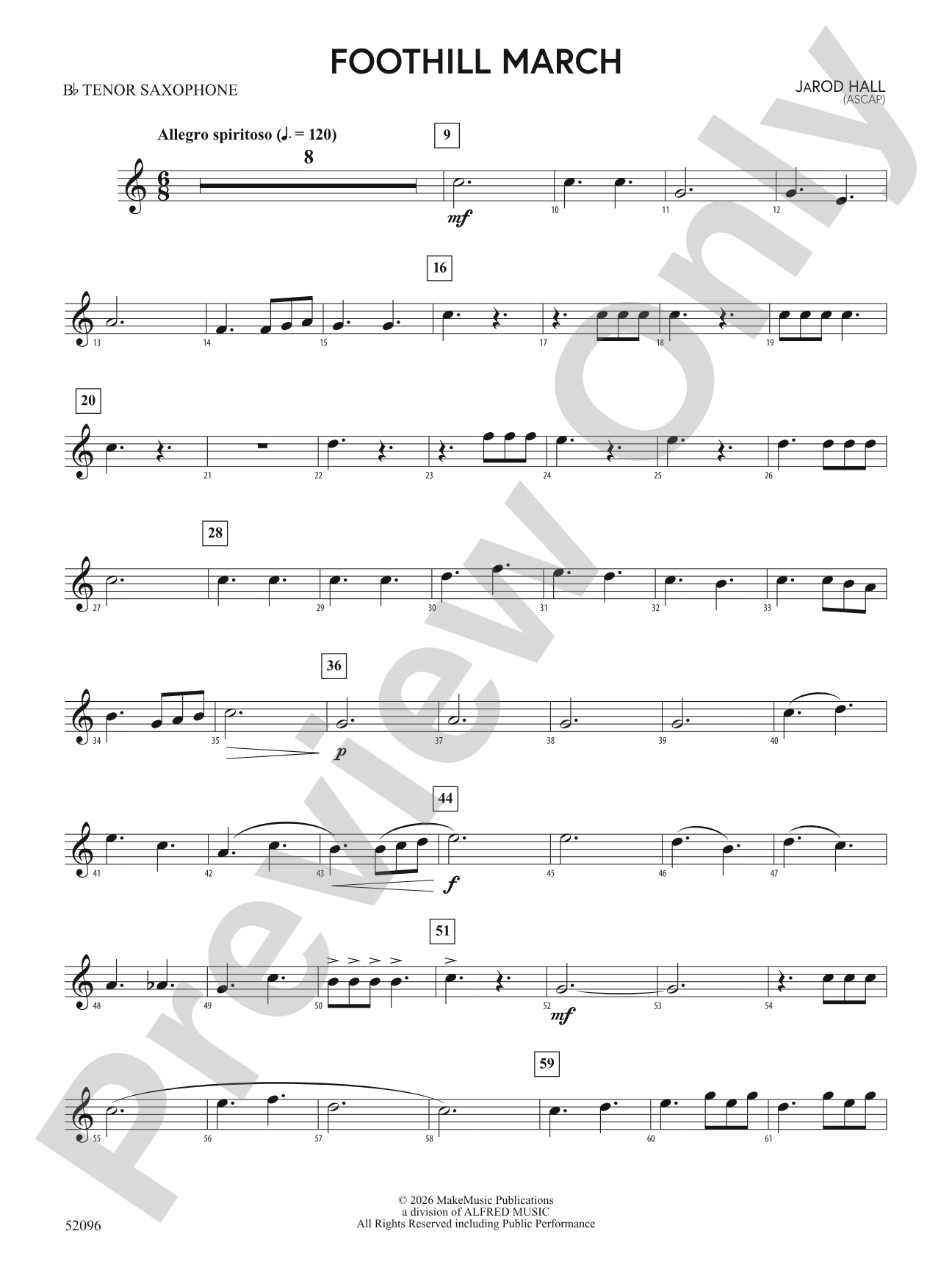

Foothill March: B-flat Tenor Saxophone
By JaRod Hall
Grade: 2.5
Item: 00-PC-0019728_TX1
$5.99
Pickup currently not available
Description
Inspired by the rolling fields at the base of the Appalachian mountains, Foothill March is a tuneful work in 6/8 and is a highly approachable introduction to compound meter. As the work develops, JaRod Hall takes the listener through a variety of textures, styles, and ever-changing harmonies. Highly engaging and outside the box! (2:15)


Don't just read it, hear it, play along with it, and watch your students grow with it. In MakeMusic Cloud, Foothill March: B-flat Tenor Saxophone comes alive with professional accompaniment, adjustable tempo, and built-in practice tools that turn solo practice into real progress.
Open in the Player
Jump straight in and assign it today.
Start Your Free Trial
Open this title and explore the full library in minutes.
Sample Audio
1
Audio File
--:--
0:00
0:00
Sample Video
Additional Details
Series:
MakeMusic Young Band
Publisher:
MakeMusic Publications
SKU:
00-PC-0019728_TX1
More about this title
About the Composer: JaRod Hall

JaRod Hall is a Texas-based composer and educator who earned degrees in music education from the University of North Texas and a master's degree from Texas State University, studying composition with Dr. Michael Ippolito and Dr. Jack Wilds. As a band director for eight years, he has built a track record of consistent festival success, including leading the first middle school band in Frisco ISD to earn the Citation of Excellence in 2018.
Hall is an accomplished performer on tuba and trombone who has served as principal tuba with the Texas State Wind Symphony and was recognized as a four-time Texas All-State Band member. His compositions have been featured on the Texas Prescribed Music List, the J.W. Pepper Editor's Choice list, and Bandworld's Top 100 list. His original work "Through the Storm" won the 2021 Barbara Buehlman Prize for middle school band.
Why we love this
Hall's approach to introducing compound meter feels genuinely musical rather than academic. Instead of drilling 6/8 in isolation, he creates a piece with real character and harmonic interest that keeps students engaged while they develop this essential rhythmic skill. The variety in texture and the unpredictable harmonic movement give your students something fresh to discover at every rehearsal.
What to expect
Inspired by the rolling Appalachian foothills, this piece has an unhurried, almost wandering quality that suits 6/8's lilting character. The harmonies shift beneath a tuneful melody in ways that feel surprising and fresh, giving the whole work a sense of gentle discovery rather than marching drill.
Who it's for
This march is ideal for Grade 2 and early Grade 3 bands working with compound meter for the first time or reinforcing it with material that actually sounds like a march. It works equally well for a band looking to break away from standard fare while staying within accessible technique.
How to get the most out of it
- Shape the principal melodic line with a gentle rise and fall rather than playing it flat. Compound meter often sits better when you think of 6/8 as two groups of three pulses, not six isolated beats.
- Balance the changing harmonies carefully in the inner voices. Hall writes colorful chords that won't feel out of place at this level if the ensemble listens to the fuller harmonic picture rather than just their own part.
- Mark the textural shifts in your score and plan transitions thoughtfully. The variety that makes this piece engaging musically also requires clear direction about when colors change.
- Confirm that all sections are secure with the 6/8 feel before adding expressiveness. Rhythmic clarity is the foundation here, especially in the accompaniment figures that support the melody.
How to use it
Place this on a concert celebrating meter and style variety, or use it as your entry point for teaching compound meter to a young ensemble. At 2:15, it fits naturally into a contest or festival program and makes a strong impression without taxing the ensemble's stamina.
Skills your students will build
- Reading and performing compound meter (6/8)
- Identifying and maintaining two pulses within a 6/8 measure
- Responding to harmonic color changes and following evolving chord structures
- Balancing melody and accompaniment across changing textures
- Understanding march form and structure at an accessible level