Fools Rush In: Piano/Vocal/Chords Digital Sheet Music

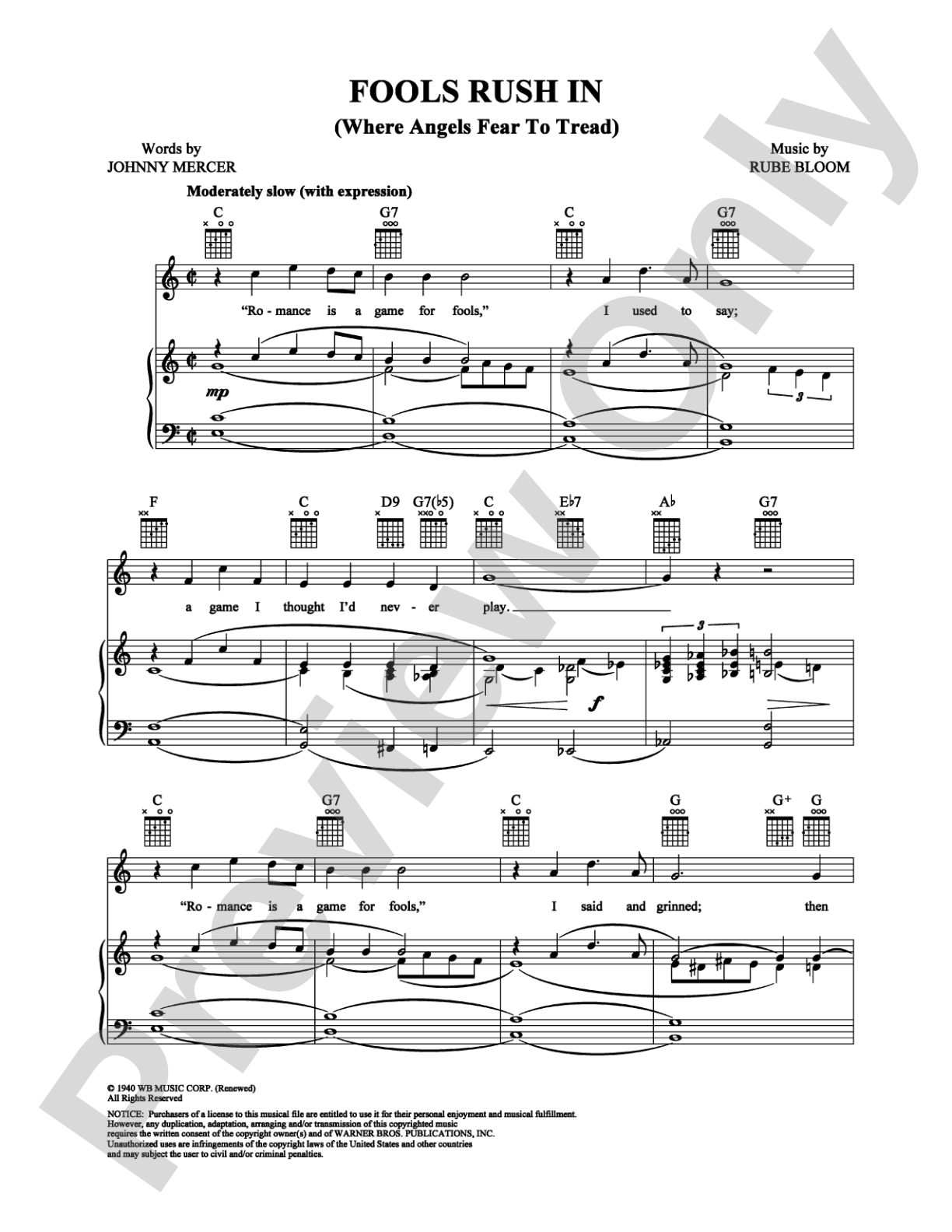
Fools Rush In: Piano/Vocal/Chords Digital Sheet Music

Frank Sinatra, Rube Bloom

Item: 00-PS-0000436

Digital Download
$3.99
Description

Fools Rush In: Piano/Vocal/Chords Digital Sheet Music isn't in MakeMusic Cloud just yet...but it could be. Let us know you'd like to see it, and you'll help shape what comes next. In the meantime, start a free trial and dive into thousands of interactive titles your students can play along with today.

Sample Audio
No sample audio found.
Sample Video
Additional Details
SKU: 00-PS-0000436

More about this title

About the Artist: Frank Sinatra

Frank Sinatra (1915–1998) shaped American popular song through his interpretive artistry and technical command of phrasing. His influence on vocal performance extends far beyond his recording career; his approach to lyrical storytelling, dynamic control, and rhythmic flexibility has become foundational to how singers approach the American songbook.

For music educators, Sinatra's catalog represents essential repertoire for understanding vocal jazz and popular music of the mid-twentieth century. His recordings demonstrate how a singer can shape a melody through breath control, rubato, and emotional commitment, making his interpretations valuable models for students learning to move beyond the written note.

Why we love this

Sinatra's signature tune remains one of the most taught and performed standards in any voice studio or jazz program. The melody sits comfortably in the vocal range, the chord changes are straightforward enough for early jazz students yet sophisticated enough to sustain professional interpretation, and the text works beautifully whether sung intimately or with energy. This is the kind of standard that connects students directly to recorded vocal artistry they already recognize.

What to expect

Sincere and slightly vulnerable, with just enough optimism to keep from sounding defeated. The opening feels almost conversational; there's an ease to it that masks the emotional honesty underneath. By the bridge, the music builds enough momentum to suggest that this rush of feeling might actually lead somewhere real, even if logic says it shouldn't.

Who it's for

Voice students exploring the American songbook, jazz singers building a standards repertoire, and piano players accompanying vocalists in studio or performance settings. This is equally valuable for music theater singers developing their legit vocal skills and for adult amateur musicians returning to singing or playing after years away.

How to get the most out of it

  • Shape the opening phrases with legit breath support; Sinatra's phrasing depended on controlled air flow that allowed him to extend lines without scooping or losing pitch center.
  • Experiment with the rhythm of the lyric. The melody is written straight, but Sinatra's recordings show how small delays and anticipations of the beat create warmth and personality without sacrificing clarity.
  • Balance the piano accompaniment so that it supports rather than competes with the vocal line. The chords are the foundation; let them breathe underneath the melody.
  • Pay attention to the lyrical subtext. This is a song about hope overcoming good judgment, and the music should reflect that tension between optimism and self-awareness.

How to use it

Include this in a standards showcase or jazz vocalist recital, where it can anchor a set of Sinatra-era material. It also works beautifully in a voice studio recital as a bridge piece between art song and musical theater, since it demands legit vocal technique but rewards dramatic interpretation. Consider pairing it with other songs that explore similar emotional terrain to build a thematic program around romantic hope or naiveté.

Skills your students will build

  • Sustaining legit tone across a medium range while maintaining dynamic flexibility
  • Interpreting written rhythm with expressive timing and rubato
  • Collaborating with a pianist to balance vocal and instrumental voices
  • Singing through chord changes with harmonic awareness
  • Connecting lyrical meaning to musical phrasing and emotional delivery

You May Also Like