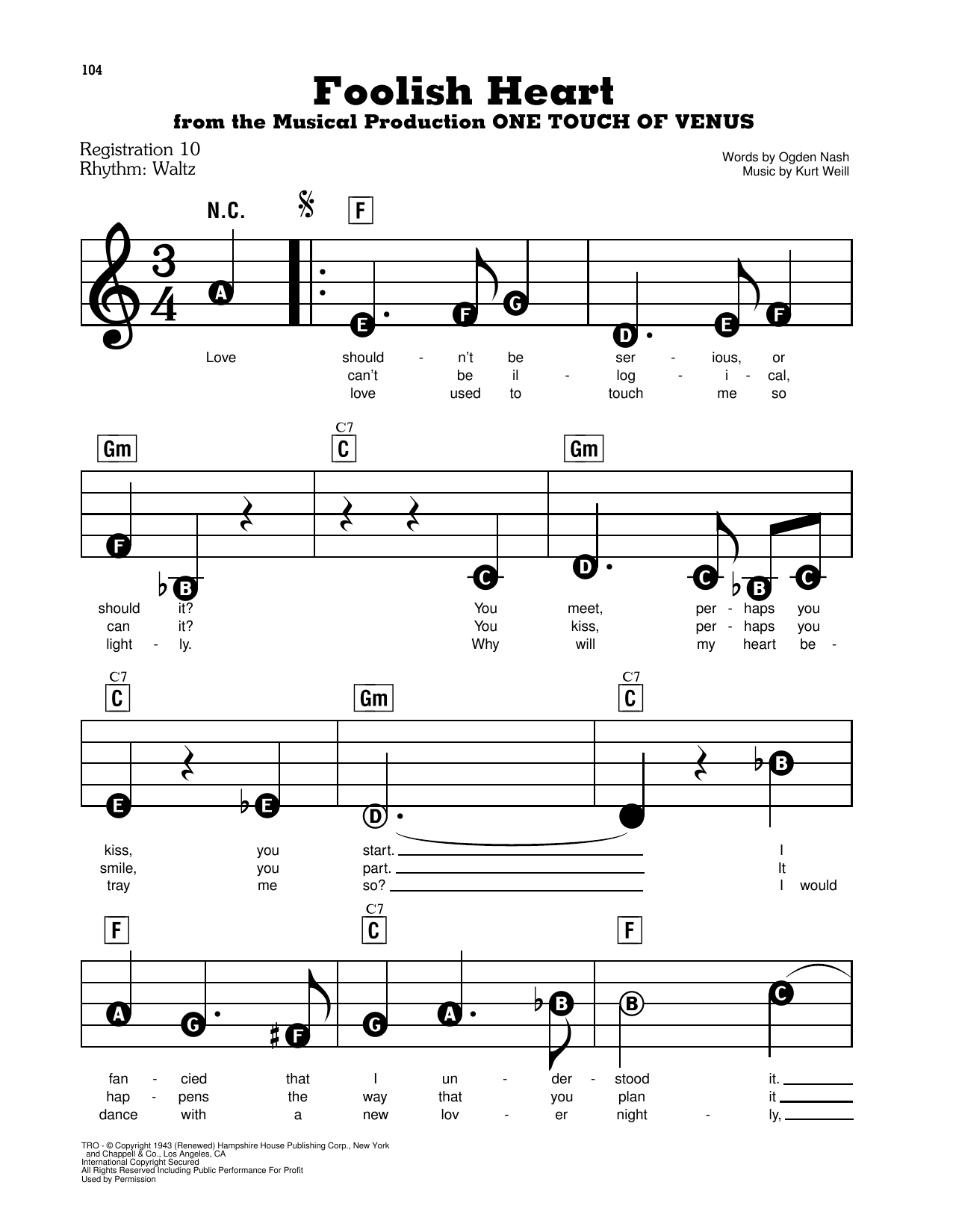
Foolish Heart (from the musical One Touch Of Venus) Sheet Music Preview

Foolish Heart (from the musical One Touch Of Venus): E-Z Play Today

Item: 35-DS00460073

Digital Download
$4.99
Description

Foolish Heart (from the musical One Touch Of Venus): E-Z Play Today isn't in MakeMusic Cloud just yet...but it could be. Let us know you'd like to see it, and you'll help shape what comes next. In the meantime, start a free trial and dive into thousands of interactive titles your students can play along with today.

Sample Audio
No sample audio found.
Sample Video
Additional Details
Publisher: Hal Leonard
Page Count: 3
SKU: 35-DS00460073

More about this title

About the Creator: Kurt Weill

Kurt Weill (1900-1950) was a German-American composer who fundamentally changed what musical theater could be. His sharp harmonic language, rhythmic sophistication, and willingness to blend high art with popular idiom created a new template for Broadway that still influences writers today.

Weill's 1943 musical One Touch of Venus showcased his gift for writing songs that work equally well in the theater and the jazz club. "Foolish Heart" exemplifies his approach: a melody that feels both singable and harmonically advanced, wrapped in the vernacular style of American popular song.

Why we love this

E-Z Play Today's lead-sheet format strips away the arrangement complexity while preserving every harmonic move that makes this song interesting. Jazz pianists love Weill because his changes reward listening; students get genuine jazz vocabulary without getting lost in dense voicings.

What to expect

Tender but never naive. The song has the introspective quality of a late-night confession, with sophisticated chords that keep you from settling into pure sentimentality. There's wit in the harmony that matches the intelligent lyrics.

Who it's for

Pianists seeking standards with real harmonic teeth, particularly jazz students building their lead-sheet reading skills. This also works well for musical theater pianists who want to understand how Weill's theater writing actually functions as jazz repertoire.

How to get the most out of it

  • Lean into the syncopation without rushing. The jazz feel lives in your touch, not in pushing the tempo.
  • Voice the chord extensions in your left hand when the melody sits high. Weill's harmony deserves to be heard, not buried beneath melody.
  • Let rubato breathe in the bridge. The song can afford to stretch here, giving the lyrical moment its due.
  • Dig into any recorded versions featuring jazz pianists. Hearing how different players interpret the harmonic space will deepen your own choices.

How to use it

Pair this with other American standards from the same era to show how Broadway composers were absorbing and elevating jazz language. It's a superb encore option for a jazz recital or a bridge piece in a program that moves between classical and popular idioms.

Skills your students will build

  • Reading lead sheet chord symbols in a jazz context
  • Voice leading with seventh and extended chords
  • Balancing melodic sensitivity with harmonic sophistication
  • Interpreting syncopated rhythms with appropriate jazz inflection
  • Understanding harmonic function in twentieth-century popular song

You May Also Like