
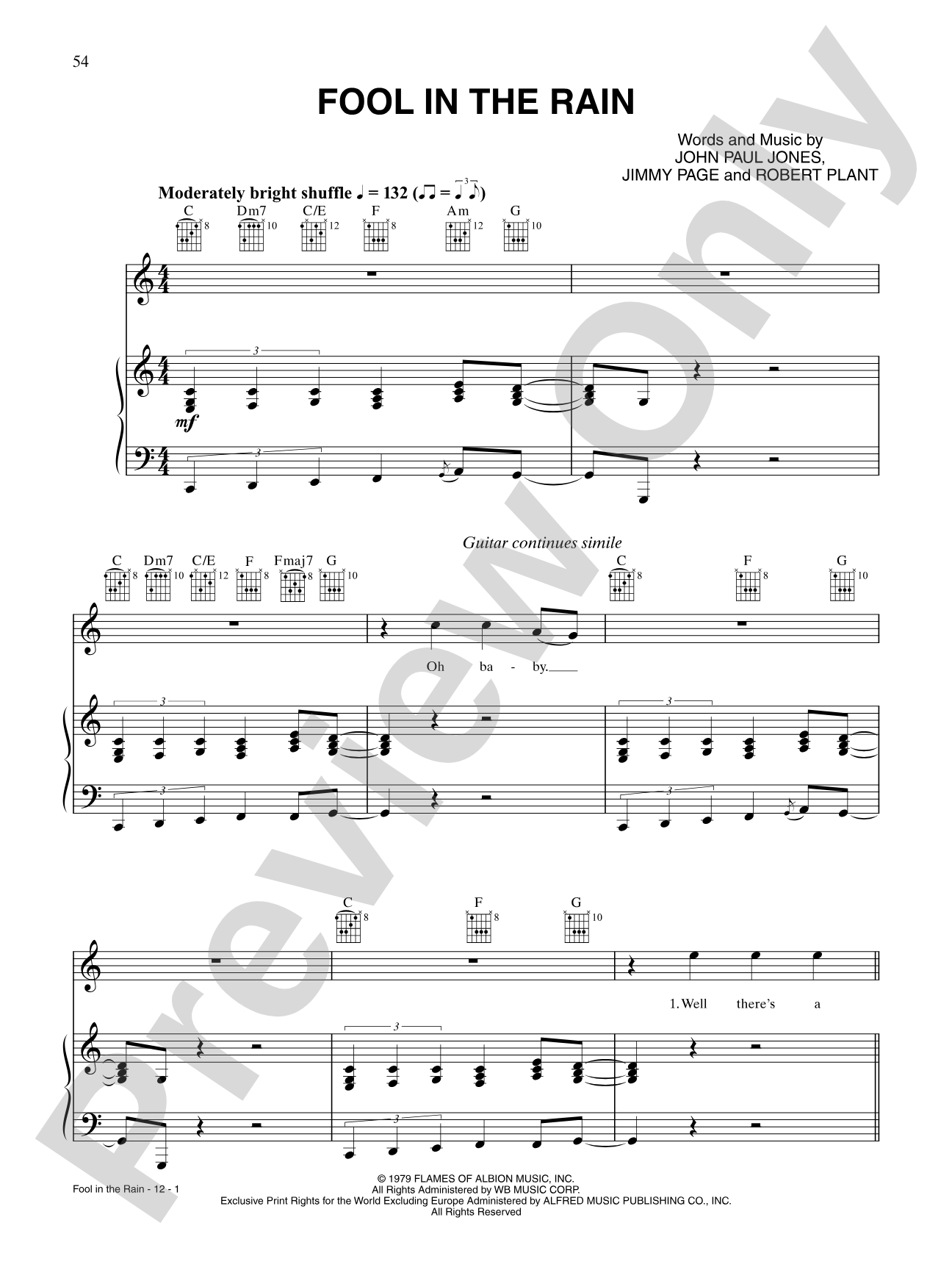
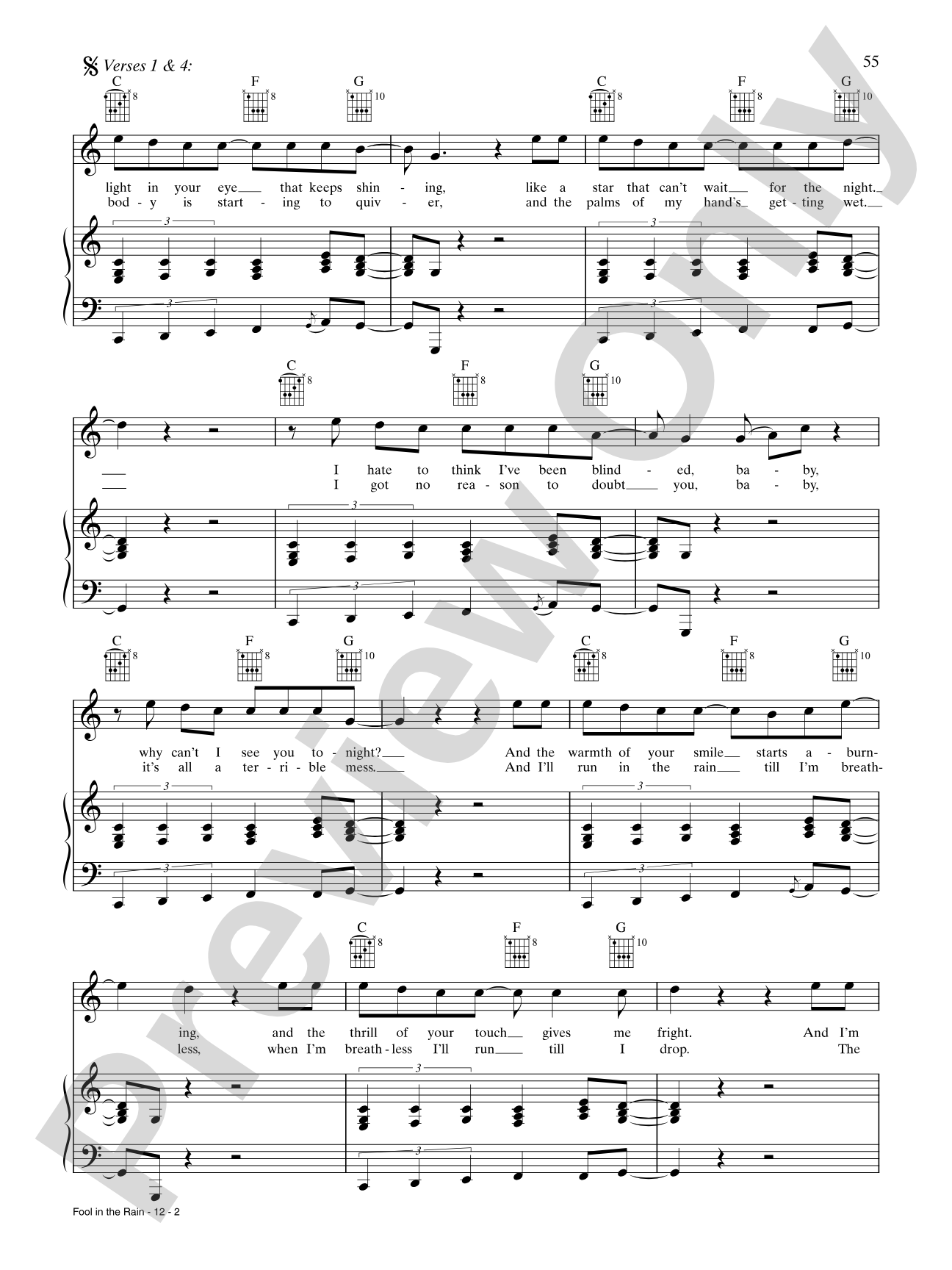
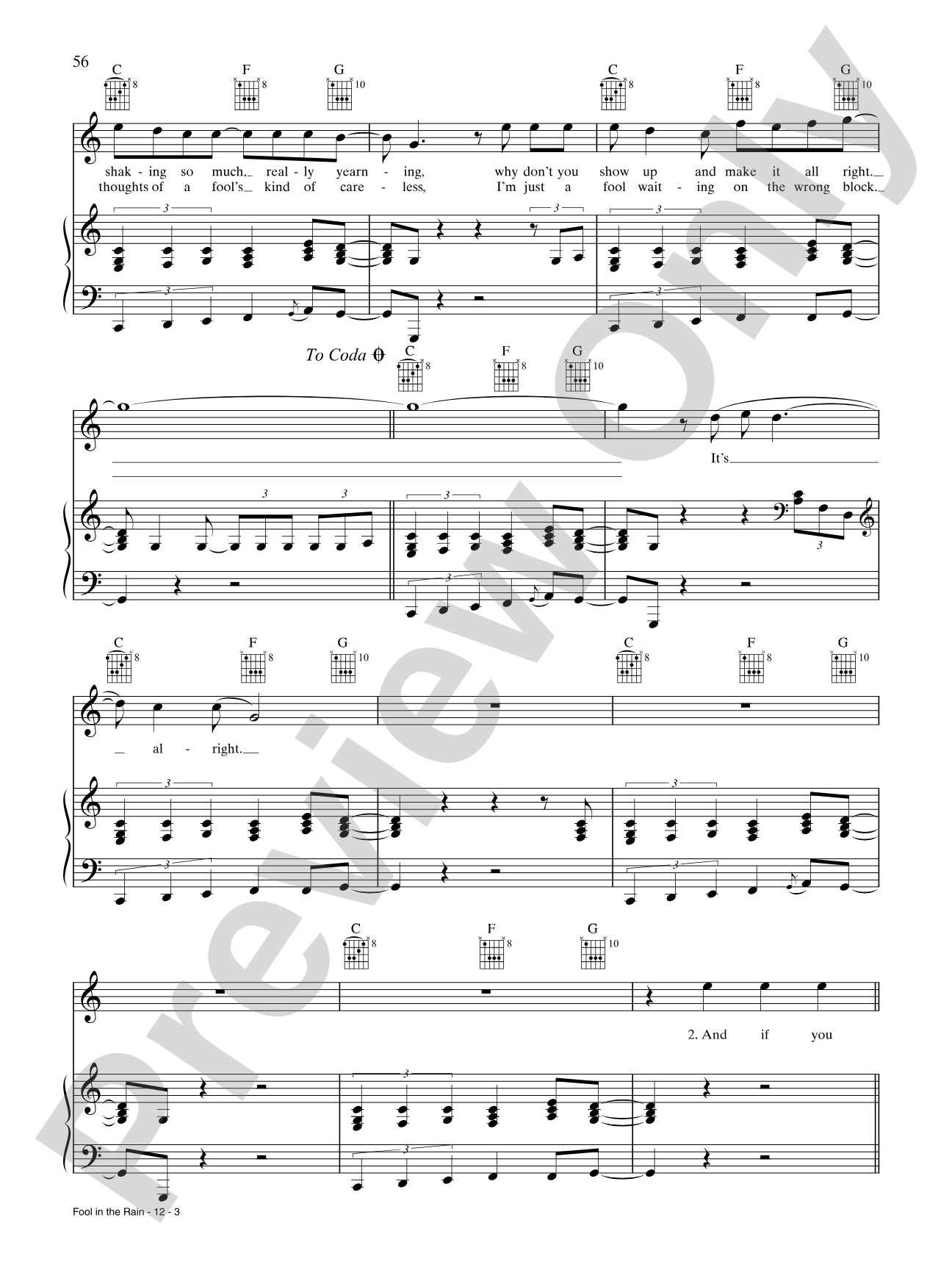

Fool in the Rain: Piano/Vocal/Chords
Led Zeppelin
Item: 00-PS-0015512
$9.99
Pickup currently not available
Related Items
Heartbreaker: Piano/Vocal/Chords |
$5.99
|
View | |
No Quarter: Piano/Vocal/Chords |
$5.99
|
View | |
The Ocean: Piano/Vocal/Chords |
$4.99
|
View | |
The Rain Song: Piano/Vocal/Chords |
$9.99
|
View | |
Since I've Been Loving You: Piano/Vocal/Chords |
$5.99
|
View | |
Thank You: Piano/Vocal/Chords |
$5.99
|
View | |
All My Love: Piano/Vocal/Chords |
$5.99
|
View | |
Carouselambra: Piano/Vocal/Chords |
$9.99
|
View | |
Trampled Under Foot: Piano/Vocal/Chords |
$5.99
|
View | |
Led Zeppelin: Piano Sheet Music Anthology: Piano/Vocal/Guitar Book |
$29.99
|
View |
Description
Led Zeppelin fans who play the piano know that certain songs by the legendary band are particularly well-suited to be played on keyboard instruments. Some of these are "All My Love," "No Quarter," "Stairway to Heaven," "Your Time Is Gonna Come," and more---and they're all here in this collectible sheet music anthology. Also included are a variety of the band's most popular songs from seven of their albums. This collection of 20 arrangements is the ultimate vehicle for pianists to explore the music of the greatest rock band of all time! Titles: All My Love * The Battle of Evermore * Black Dog * Carouselambra * The Crunge * Fool in the Rain * Going to California * Good Times Bad Times * Heartbreaker * Kashmir * No Quarter * The Ocean * The Rain Song * Rock and Roll * Since I've Been Loving You * Stairway to Heaven * Thank You * Trampled Under Foot * You Shook Me * Your Time Is Gonna Come.


Fool in the Rain: Piano/Vocal/Chords isn't in MakeMusic Cloud just yet...but it could be. Let us know you'd like to see it, and you'll help shape what comes next. In the meantime, start a free trial and dive into thousands of interactive titles your students can play along with today.
Request This Title
Tell us you want it.
Start Your Free Trial
Explore everything that's ready to play right now.
Sample Audio
No sample audio found.
Sample Video
No sample videos found.
Additional Details
Series:
Sheet Music Anthology
Publisher:
Alfred Music
Page Count:
164
SKU:
00-PS-0015512
More about this title
About the Composer: John Paul Jones
John Paul Jones served as Led Zeppelin's bassist, keyboardist, and primary arranger, bringing orchestral sophistication and harmonic depth to some of rock's most enduring compositions. His work on the band's keyboard parts and arrangements shaped the sonic architecture of albums from Led Zeppelin IV through In Through the Out Door, demonstrating how classical training and rock instrumentation could merge into something entirely new.
Why we love this
This collection captures Led Zeppelin's catalog through a pianist's lens, offering 20 arrangements that range from the introspective ("No Quarter," "The Rain Song") to the propulsive ("Black Dog," "Rock and Roll"). Pianists get legitimate access to some of the band's most keyboard-driven material, and the variety across arrangements means there's something for multiple skill levels and musical moods within a single book.
What to expect
These arrangements balance rock energy with the harmonic and textural richness that made Led Zeppelin stand apart from their contemporaries. Whether you're navigating the bluesy swagger of "You Shook Me" or the mystical minor key beauty of "Black Dog," the piano settings honor the original orchestration while giving you direct access to the band's melodic and harmonic core.
Who it's for
Pianists and keyboardists drawn to classic rock who want to play Led Zeppelin material at an intermediate level or beyond. This book also serves accompanying musicians and singers preparing vocal arrangements of the band's catalog, offering both harmonic reference and performance-ready voicings.
How to get the most out of it
- Study the original recordings alongside the sheet music. Led Zeppelin's arrangements often rely on specific rhythmic feels and dynamic subtleties that notation alone cannot fully capture; listening guides your interpretation.
- Pay close attention to the chord voicings and inversions, which carry much of the song's character. These arrangements preserve the harmonic language that made Led Zeppelin's keyboard work distinctive.
- Adjust dynamics and tempo flexibility to match the emotional arc of each piece. Songs like "Going to California" demand restraint and breathing room, while "Trampled Under Foot" needs locked-in pocket and energy.
How to use it
Feature individual songs as concert openers or closers that connect with audiences familiar with classic rock. Alternatively, build a recital around a thematic selection (blues-based pieces, acoustic-leaning ballads, rhythm section showcases) that demonstrates the range within the Led Zeppelin catalog and showcases your pianists' versatility.
Skills your students will build
- Voicing and inverting chords to match rock and blues harmonic conventions
- Reading and executing syncopated rhythmic figures typical of 1970s rock
- Balancing melody and comping textures within a single staff
- Interpreting musical notation in service of a known recorded reference
- Playing with swing and feel rather than strict metronomic precision