
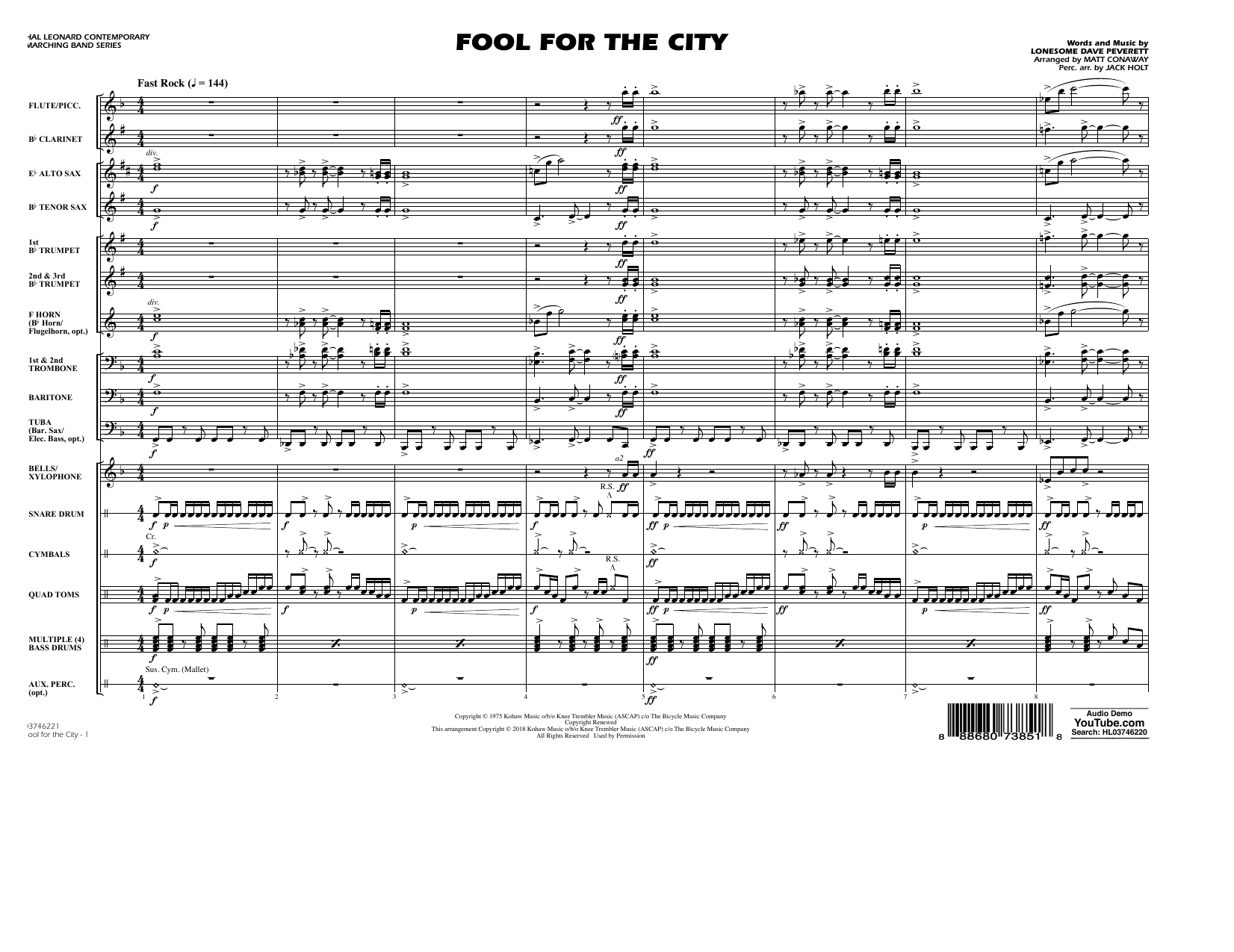

Fool For The City: Marching Band Conductor Score & Parts
As performed by Foghat / As performed by Lonesome Dave Peverett / As performed by Jack Holt / Arranged by Matt Conaway
Grade: 3-4
Item: 35-PK00411078
$60.00
Pickup currently not available
Buy Extra Parts (Digital PDF Download)
Parts Added to Cart!
Related Items
Fool For The City: Marching Band Conductor Score |
$6.00
|
View |
Description
Showing us what was best about rock music in the '70s, here's a hard-hitting arrangement of this familiar hit by the group Foghat. Featuring an active dru, score and pulsating riffs, this makes a powerful statement for the stands or field.


Discover MakeMusic Cloud: thousands of interactive titles your students can play along with today.
Sample Audio
No sample audio found.
Sample Video
Additional Details
Publisher:
Hal Leonard
SKU:
35-PK00411078
More about this title
About the Artist: Foghat
Foghat emerged from the British blues rock scene in the early 1970s, becoming known for their no-nonsense approach to heavy, groove-oriented rock and roll. The band's signature sound, anchored by Lonesome Dave Peverett's raspy vocals and the instrumental firepower of Jack Holt and company, earned them a devoted following and chart success with tracks that emphasized rhythmic drive and raw energy over technical complexity.
For music education, Foghat represents a crucial moment when rock music matured into something worth studying in ensemble settings. Their work demonstrates how blues vocabulary, straightforward song construction, and commitment to the groove could create arrangements worthy of serious musicians and audiences alike.
Why we love this
Matt Conaway captures the essence of what made this song a radio staple: a propulsive rhythm section, memorable hooks, and the kind of swagger that makes audiences sit up and pay attention. The arrangement respects the original while giving your band genuine rock credentials on the field or in the stands, something that resonates with both student musicians and listeners who grew up with this era.
What to expect
Relentless and driving, with a groove that sits deep in the pocket. The arrangement channels classic '70s rock muscle without becoming cartoonish, allowing your musicians to feel what it means to commit fully to a rhythm and ride it with purpose.
Who it's for
Bands at the Grade 3 to 4 level who want to program something contemporary that doesn't sacrifice musicianship. This works equally well for groups seeking a high-energy stand alone selection or a concert closer that leaves the audience energized.
How to get the most out of it
- Lock the kick drum and bass line into absolute synchronization during the opening riff; even slight separation will deflate the forward momentum that defines this piece.
- Let the brass sustain their notes with confidence during the pulsating passages. This isn't delicate work; the sound should fill the space completely.
- Shape the dynamics across sections to prevent fatigue. Push hard on the riffs, back off slightly for transitions, then rebuild. The active drumming will naturally propel things forward if you don't fight it.
- Balance the guitar-like riffs in the brass with transparent articulation. These melodies need clarity to cut through the percussion texture without losing the rock vernacular.
How to use it
Place this in the second half of a mixed concert program where it can serve as a turning point from more traditional fare, or save it as a field show opener that immediately establishes attitude and energy. The familiarity of the tune also makes it accessible for community concerts where audience recognition heightens engagement.
Skills your students will build
- Locking rhythmic precision between drums and low brass in repeated rock grooves
- Sustaining full tone and projection through extended passages without wavering
- Interpreting stylistic articulation and phrasing within a contemporary rock idiom
- Balancing transparency and presence in texture-heavy arrangements
- Understanding the role of repetition and groove as structural and emotional devices