Follow the Rainbow: 1st Violin Sheet Music Preview

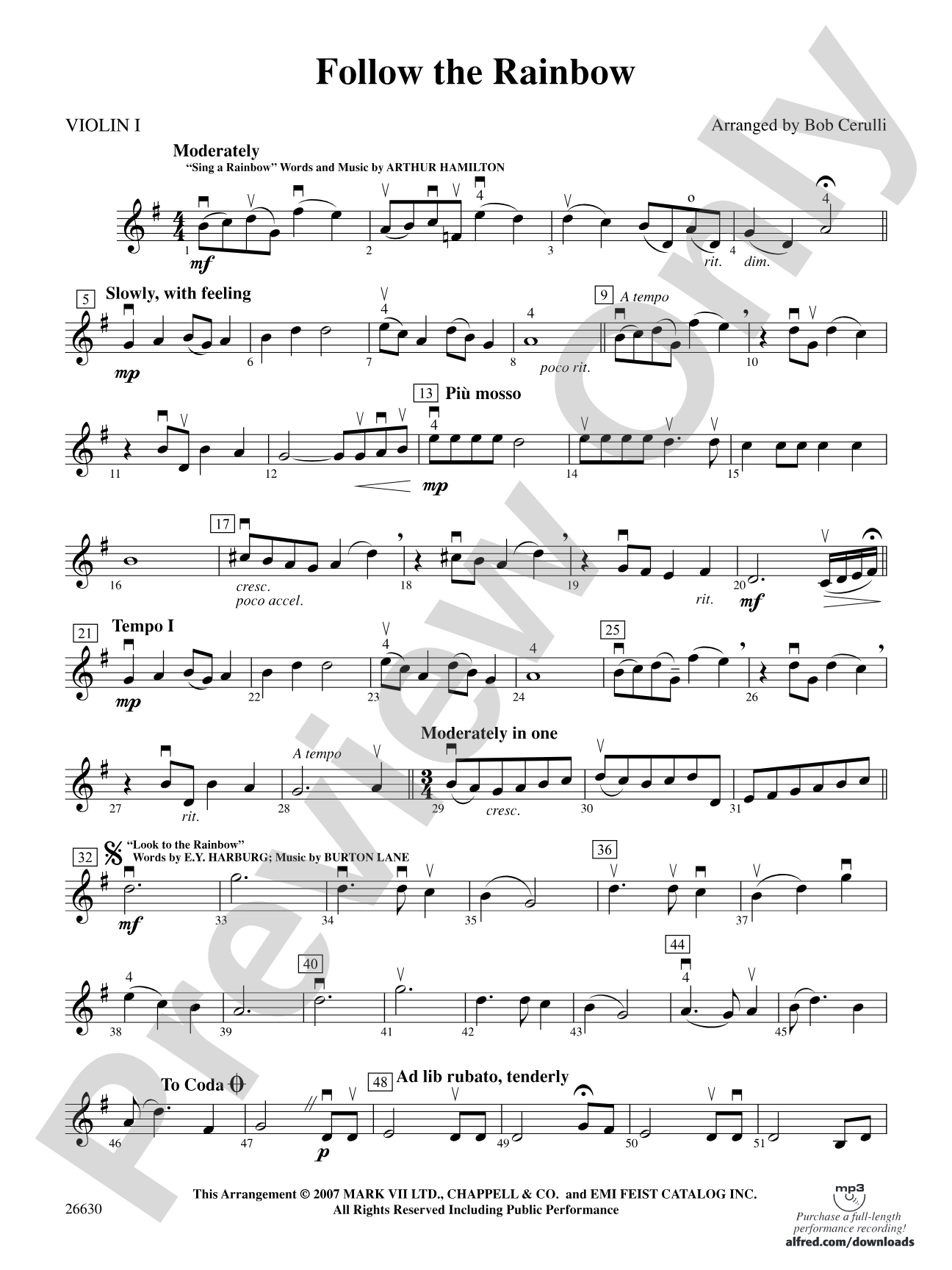
Follow the Rainbow: 1st Violin

Featuring: Sing a Rainbow / Over the Rainbow / Look to the Rainbow

By Arthur Hamilton, E. Y. Harburg, and Harold Arlen / arr. Bob Cerulli

Grade: 2

Item: 00-PC-0015666_VN1

Digital Download
$5.99
Description
A great opportunity to perform varied rhythmic patterns and at changing tempos! Here's a fun way to explore these skills while enjoying the wonderfully melodic songs about rainbows.

Don't just read it, hear it, play along with it, and watch your students grow with it. In MakeMusic Cloud, Follow the Rainbow: 1st Violin comes alive with professional accompaniment, adjustable tempo, and built-in practice tools that turn solo practice into real progress.

Sample Audio
0:00
0:00
Sample Video
Additional Details
Series: Pop Beginning String Orchestra
Publisher: Alfred Music
Page Count: 72
SKU: 00-PC-0015666_VN1

More about this title

About the Composer: Arthur Hamilton

Arthur Hamilton was an American composer and songwriter known for his work in popular music and entertainment during the mid-20th century. His contributions to film and theatrical music demonstrated a gift for memorable melodies and accessible arrangements that appealed to both performers and audiences.

Why we love this

Bob Cerulli's arrangement captures the infectious quality of these beloved songs while keeping the technical demands reasonable for Grade 2 players. The piece succeeds because it prioritizes musicality and ensemble cohesion over complexity, letting young string players focus on intonation, blend, and the joy of playing together.

What to expect

Bright, uplifting, and conversational. The melodies are clear and singable, inviting players to shape phrases naturally. The varied rhythms and tempo changes keep the energy moving and prevent the piece from settling into predictable patterns.

Who it's for

Grade 2 string orchestras looking for repertoire that develops rhythmic reading and tempo flexibility without overwhelming younger players. This works well for ensembles ready to explore musical variety within an accessible technical framework.

How to get the most out of it

  • Establish a steady pulse during the tempo changes so transitions feel intentional rather than abrupt. Bring the tempo shifts to sectional rehearsals before full orchestra run-throughs.
  • Balance the rhythmic variety by isolating passages where rhythm patterns shift. Mark beat subdivisions in parts where the pattern changes to build confidence.
  • Listen for unison passages and prioritize matching vibrato speed and width across sections to create a unified sound across the ensemble.
  • Use the key relationships between sections as natural reset points for tuning checks, especially if moving between keys shifts the intonation tendencies of your players.

How to use it

Include this in a spring concert celebrating lighter repertoire, or pair it with one more substantial piece to create a concert that balances playful material with growing technical sophistication. The pop style makes it an accessible bridge between beginning arrangements and more traditional concert fare.

Skills your students will build

  • Reading and executing varied rhythmic patterns
  • Maintaining ensemble coherence during tempo changes
  • Phrasing melodic lines with intentionality
  • Listening for blend and intonation in unison passages
  • Adapting to key relationships and modulations

You May Also Like