
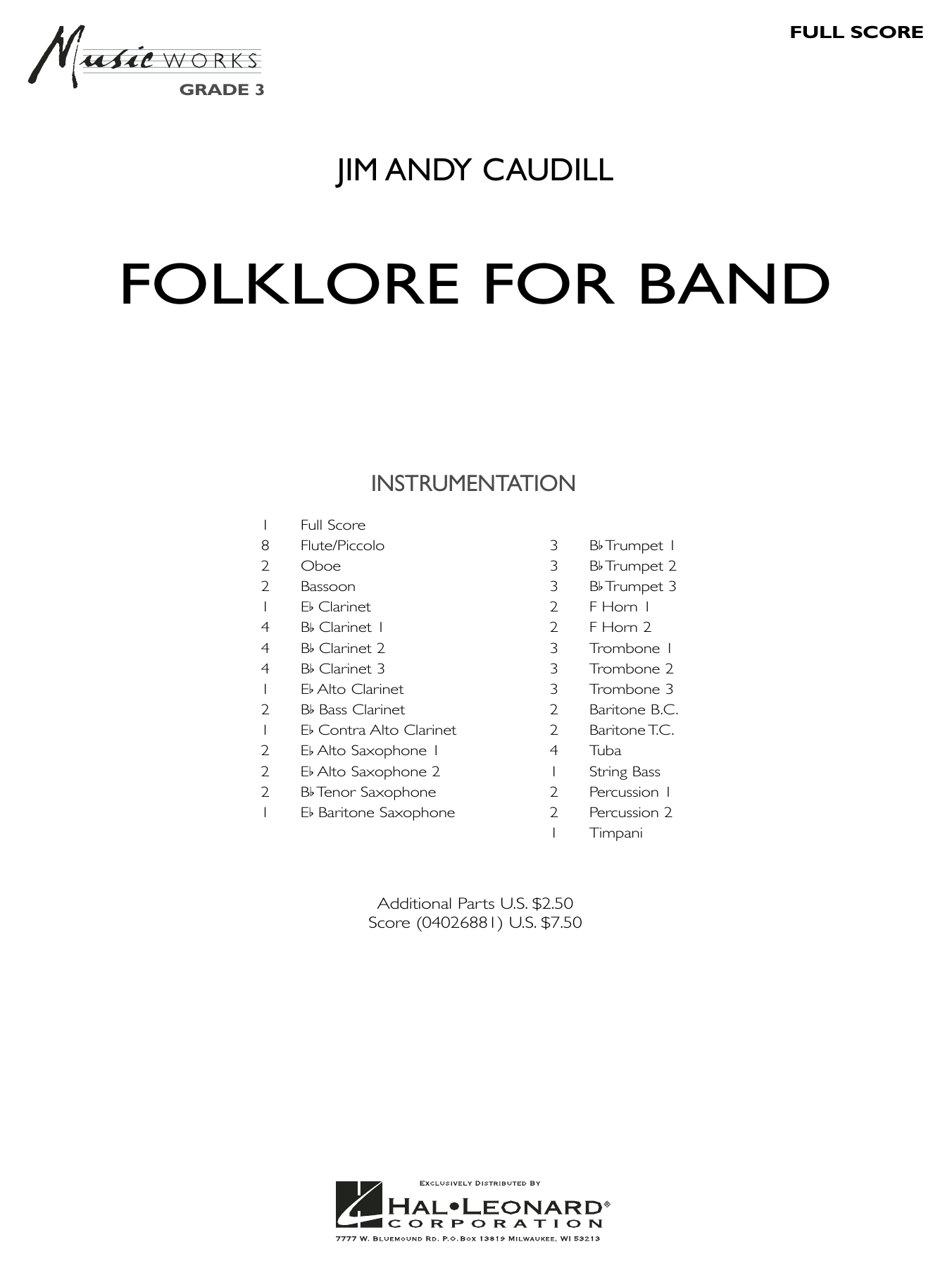

Folklore for Band: Concert Band Conductor Score & Parts
By Jim Andy Caudill
Grade: 3
Item: 35-PK01622163
$75.00
Pickup currently not available
Buy Extra Parts (Digital PDF Download)
Parts Added to Cart!
Description
First published in 1964, this dynamic work endures as a classic for young concert bands. Heavily influenced by the modal folk idiom found in early Welch and British band works, this new edition features a full score and is dedicated by the composer to the memory of Dr. Frederick Fennell.


Discover MakeMusic Cloud: thousands of interactive titles your students can play along with today.
Sample Audio
No sample audio found.
Sample Video
No sample videos found.
Additional Details
Publisher:
Hal Leonard
SKU:
35-PK01622163
More about this title
About the Composer: Jim Andy Caudill
Jim Andy Caudill composed Folklore for Band in 1964, establishing himself as a writer attuned to the pedagogical needs of developing ensembles. His work draws from the rich tradition of British and Welsh band composition, channeling modal folk idioms into accessible yet musically substantive concert works.
Caudill dedicated this piece to Dr. Frederick Fennell, the legendary conductor whose advocacy for quality band literature shaped generations of young musicians. The dedication reflects Caudill's commitment to creating works that honor both the craft of conducting and the growth of student performers.
Why we love this
This is the kind of work that holds up in rehearsal. The modal folk language feels fresh enough to engage students without requiring harmonic sophistication beyond Grade 3 reach, and the writing respects what young players can actually accomplish. Nearly 60 years after its premiere, it remains a natural choice for bands ready to program something with character and substance.
What to expect
Folklore carries the quiet dignity of traditional music, unrushed and grounded. Modal harmonies give it an ancient quality while the concert band orchestration keeps it immediately accessible, creating a piece that feels both timeless and alive.
Who it's for
Young concert bands with solid fundamentals and readiness for repertoire with genuine artistic intent. This work suits ensembles prepared to move beyond strictly pedagogical exercises into pieces that offer both student development and audience engagement.
How to get the most out of it
- Let the modal melodies breathe. These folk idioms thrive when phrases have room to settle; resist pushing through at a relentless clip.
- Balance the melody clearly when it passes between sections. British band writing often layers the tune across multiple voices, and clarity here prevents muddiness.
- Shape dynamic changes gradually rather than with hard accents. The folk aesthetic favors gentle swells and natural phrasing over dramatic contrasts.
- Attend to intonation in the lower voices, especially in open modal harmonies. Tuning issues become obvious when harmonic density is spare.
How to use it
Program this early in your season to establish identity and set a tone of musical seriousness for younger audiences. It pairs well alongside other folk-inspired works or as a centerpiece for a concert celebrating British and Welsh band traditions.
Skills your students will build
- Reading and performing in modal contexts (major and minor tonality alternatives)
- Balancing melody against harmonic accompaniment across multiple sections
- Shaping phrase lines with gradual dynamic nuance rather than sudden changes
- Tuning in sparse harmonic textures where intonation discrepancies stand out clearly
- Responding to folk idioms and understanding their influence on concert band composition