
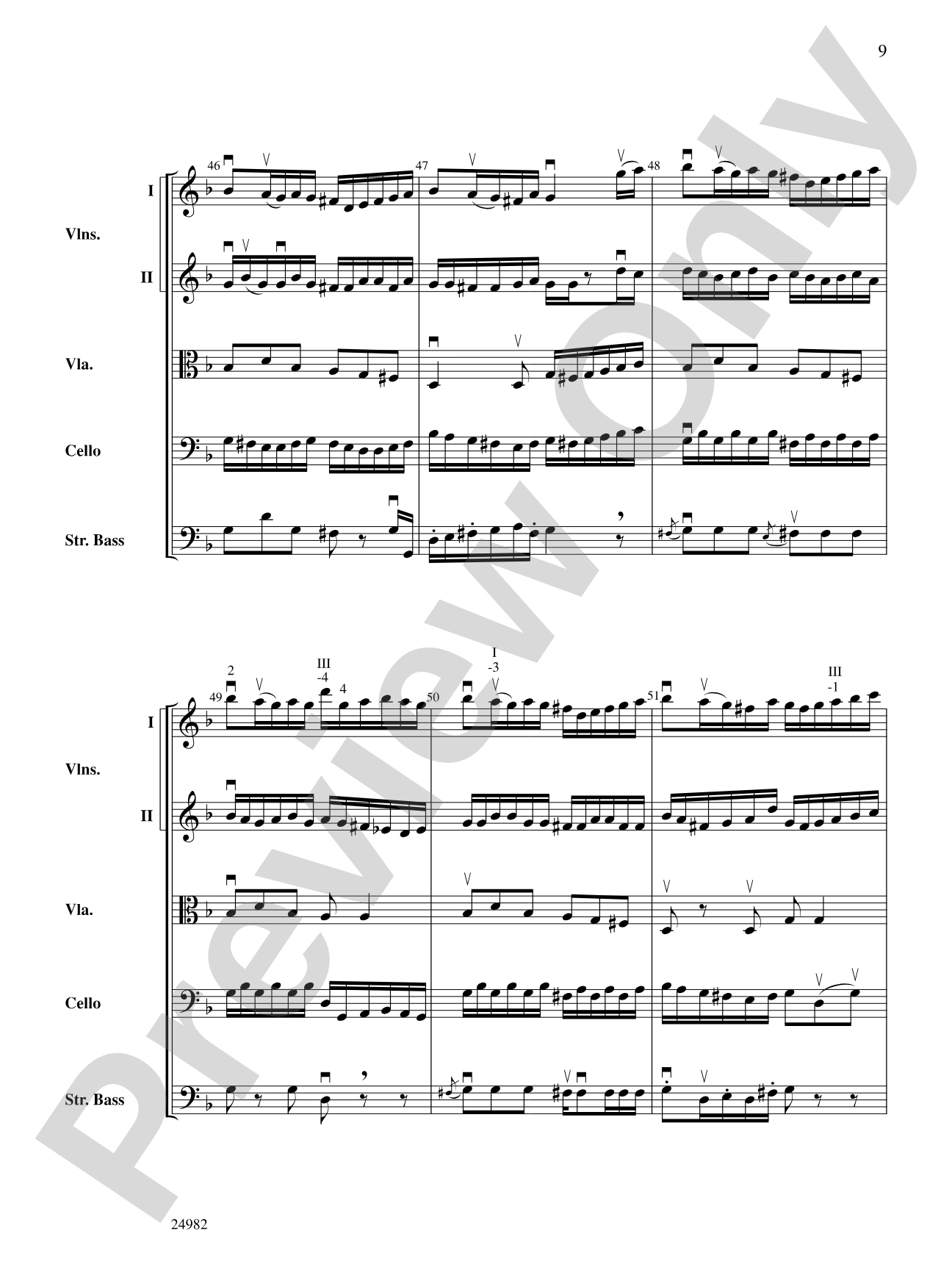
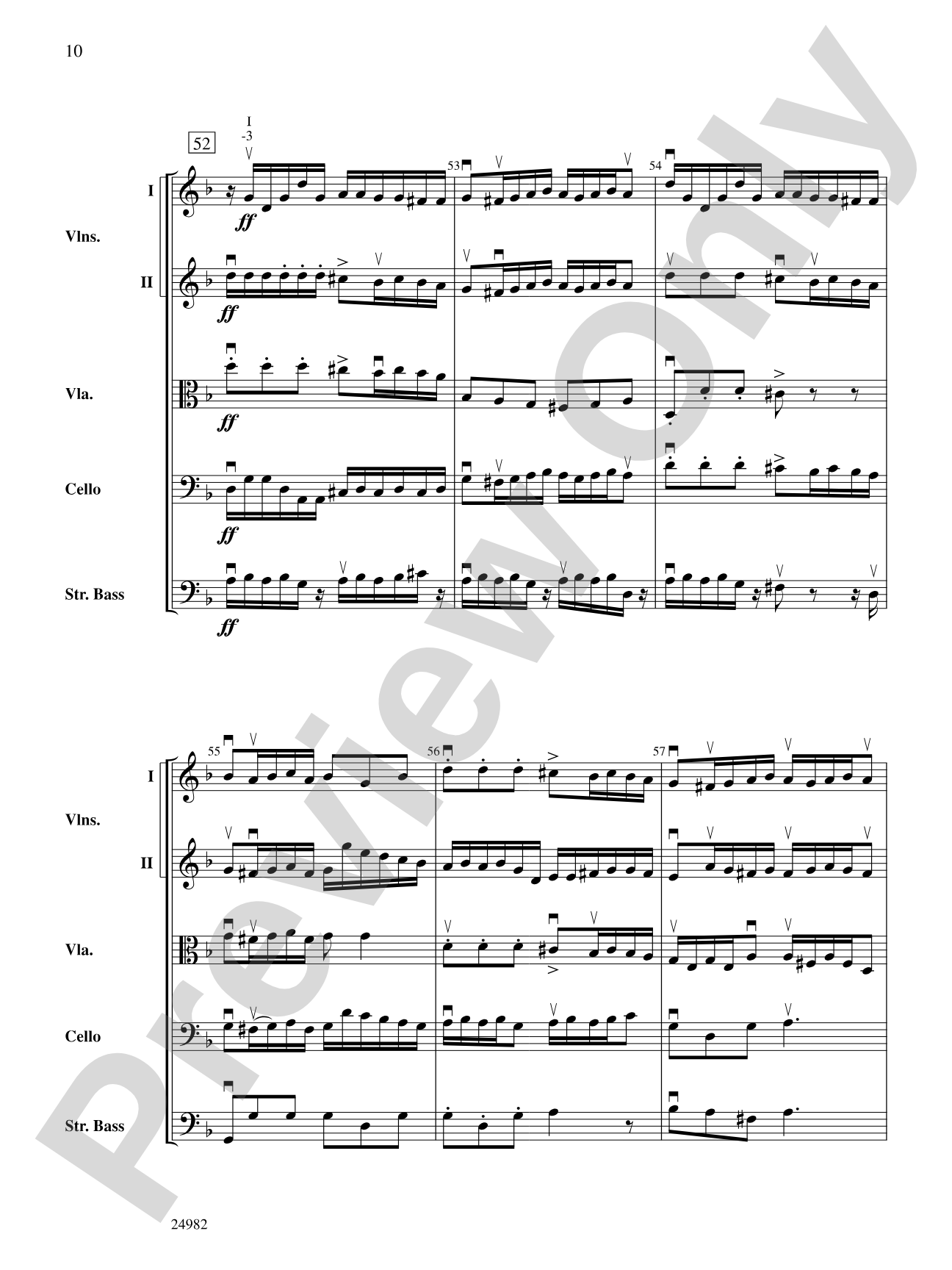
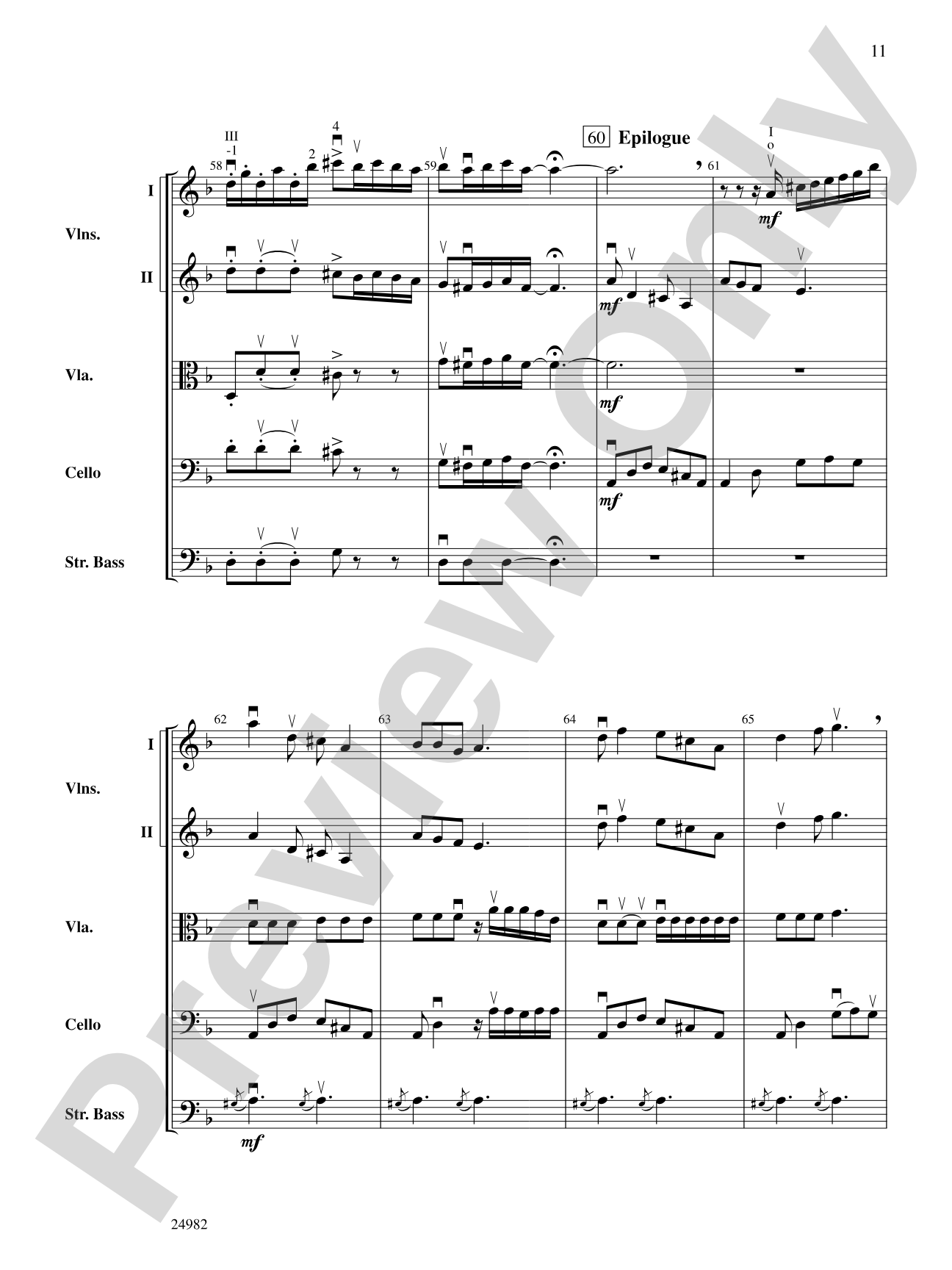
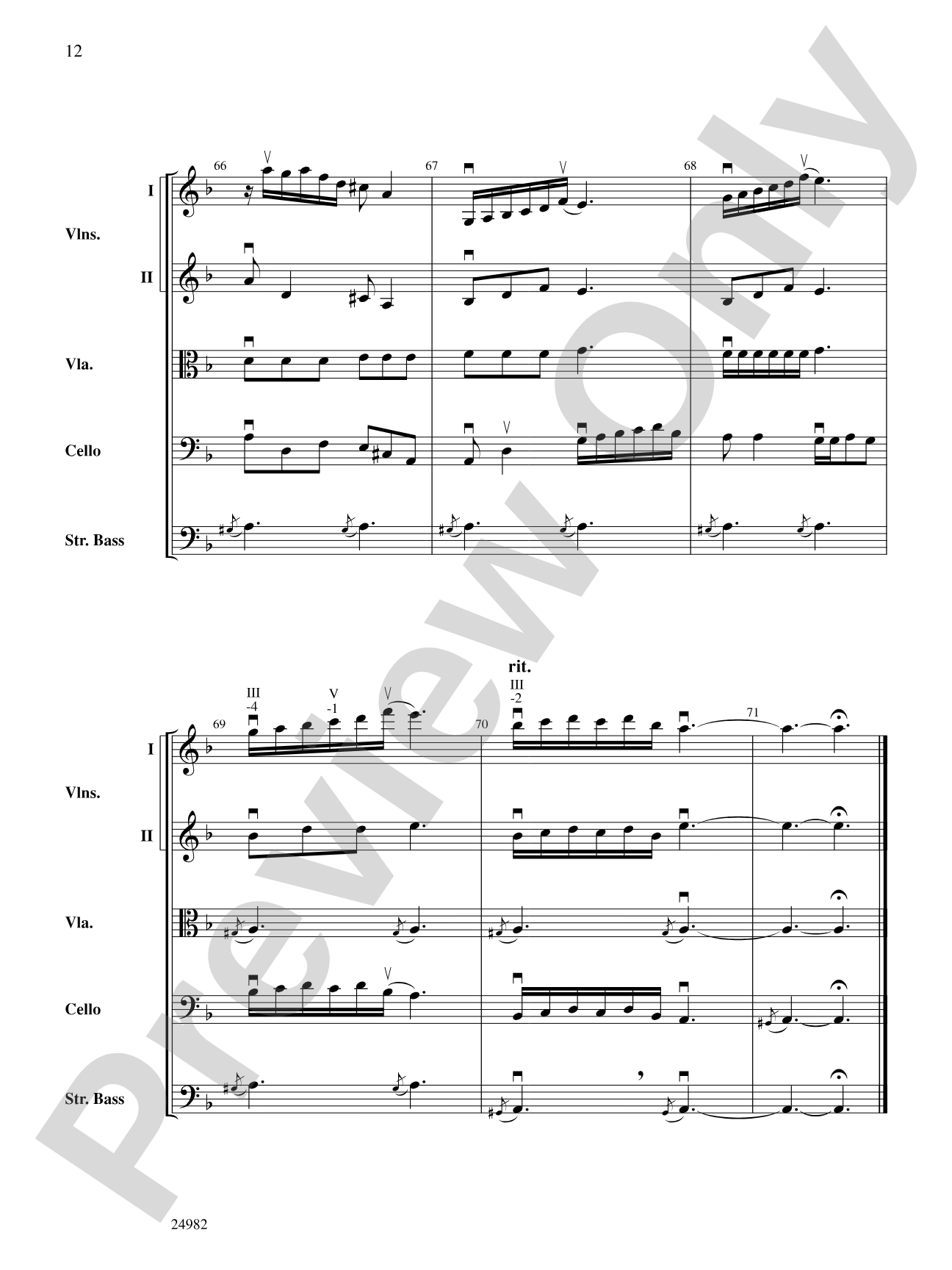

Folk Dance from Provence: String Orchestra Conductor Score & Parts
Traditional / setting by Julie Lyonn Lieberman
Grade: 3.5
Item: 00-PK-0000973

$47.00
Pickup currently not available
Buy Extra Parts (Digital PDF Download)
| Product | Price | Quantity |
|---|---|---|
| Folk Dance from Provence: Score | $7.00 | |
| Folk Dance from Provence: 1st Violin | $5.99 | |
| Folk Dance from Provence: 2nd Violin | $5.99 | |
| Folk Dance from Provence: Viola | $5.99 | |
| Folk Dance from Provence: Cello | $5.99 | |
| Folk Dance from Provence: String Bass | $5.99 |
Parts Added to Cart!
Related Items
Folk Dance from Provence: String Orchestra Conductor Score & Parts |
$47.00
|
View |
Description
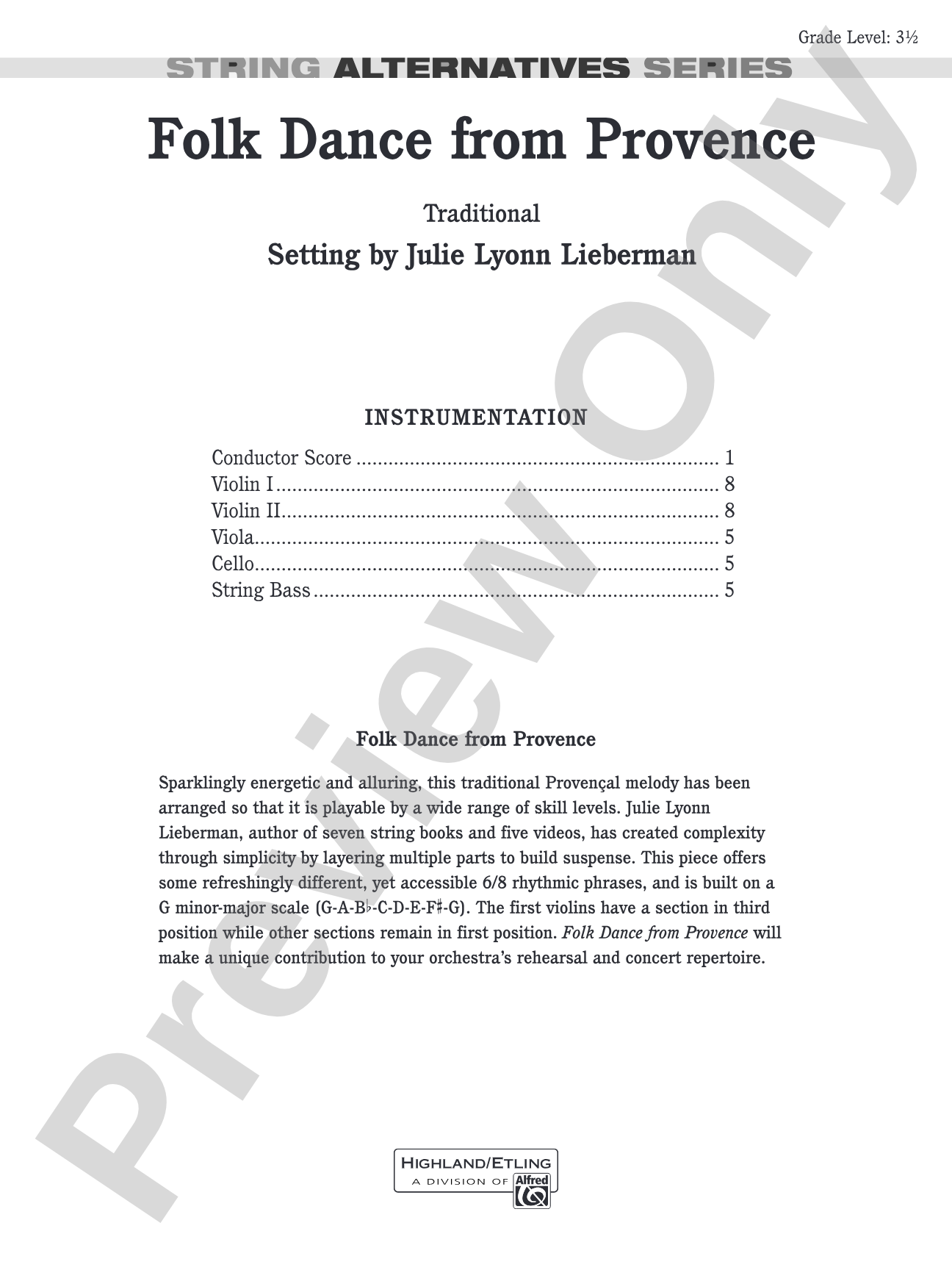
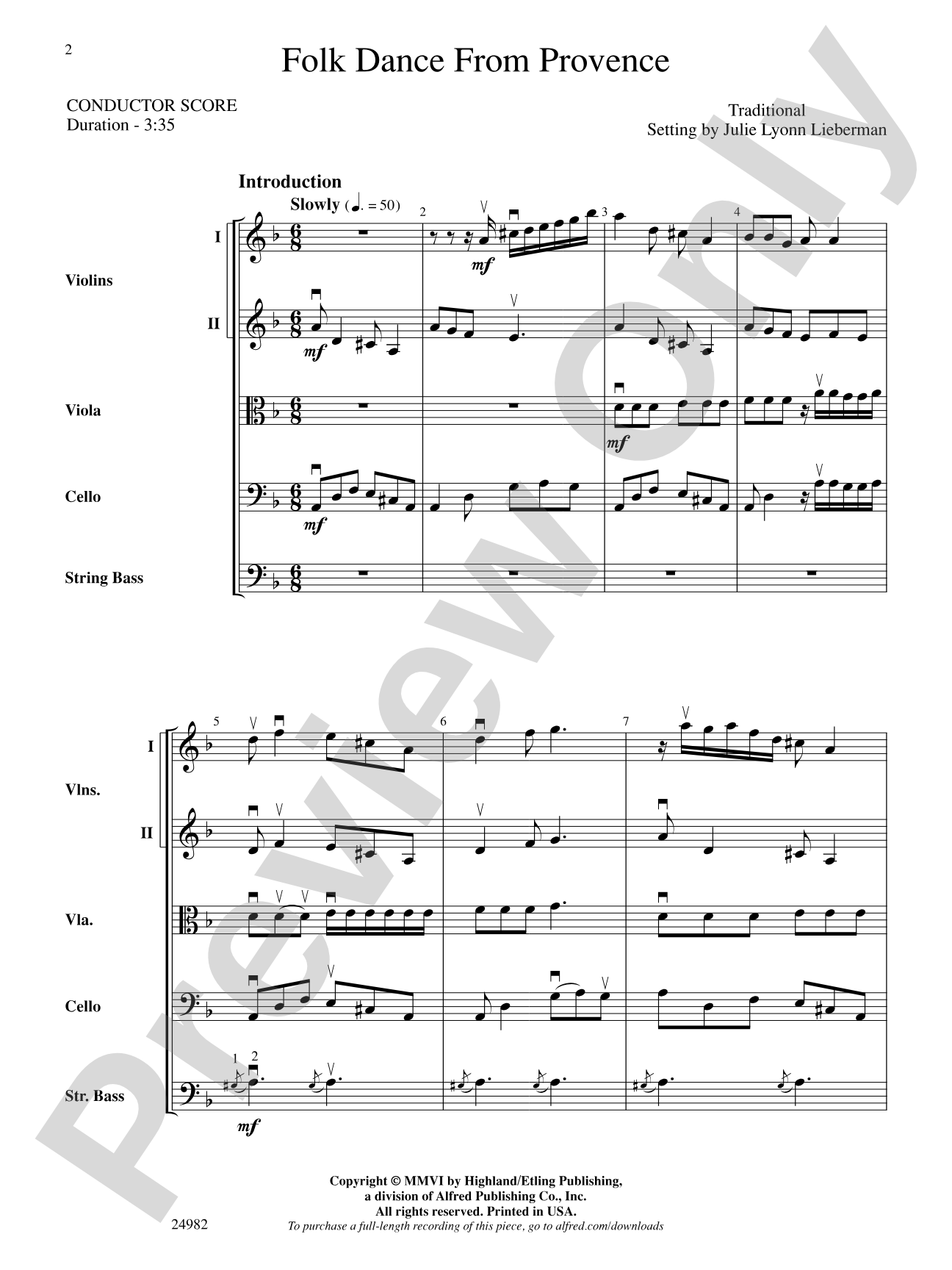
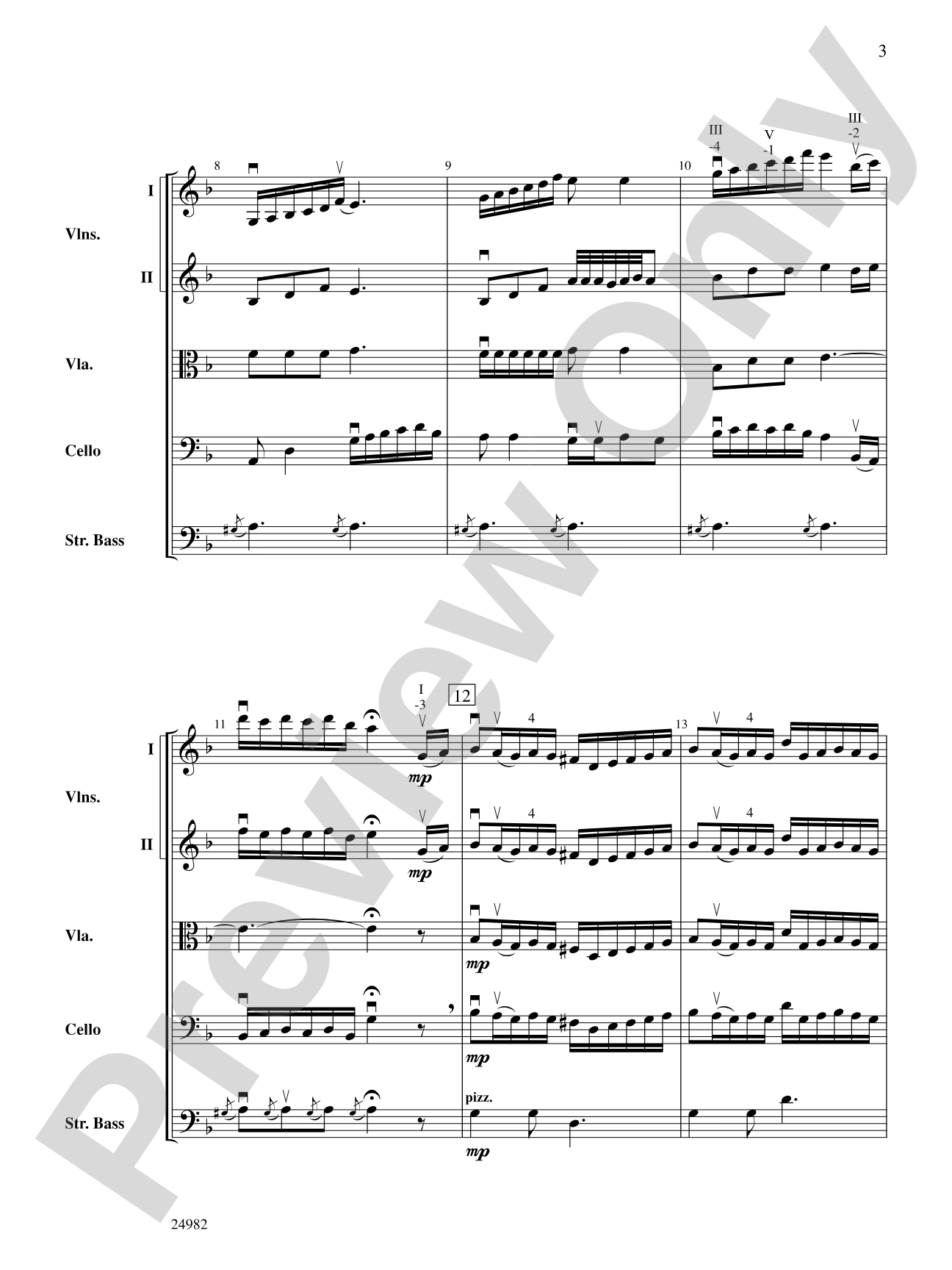
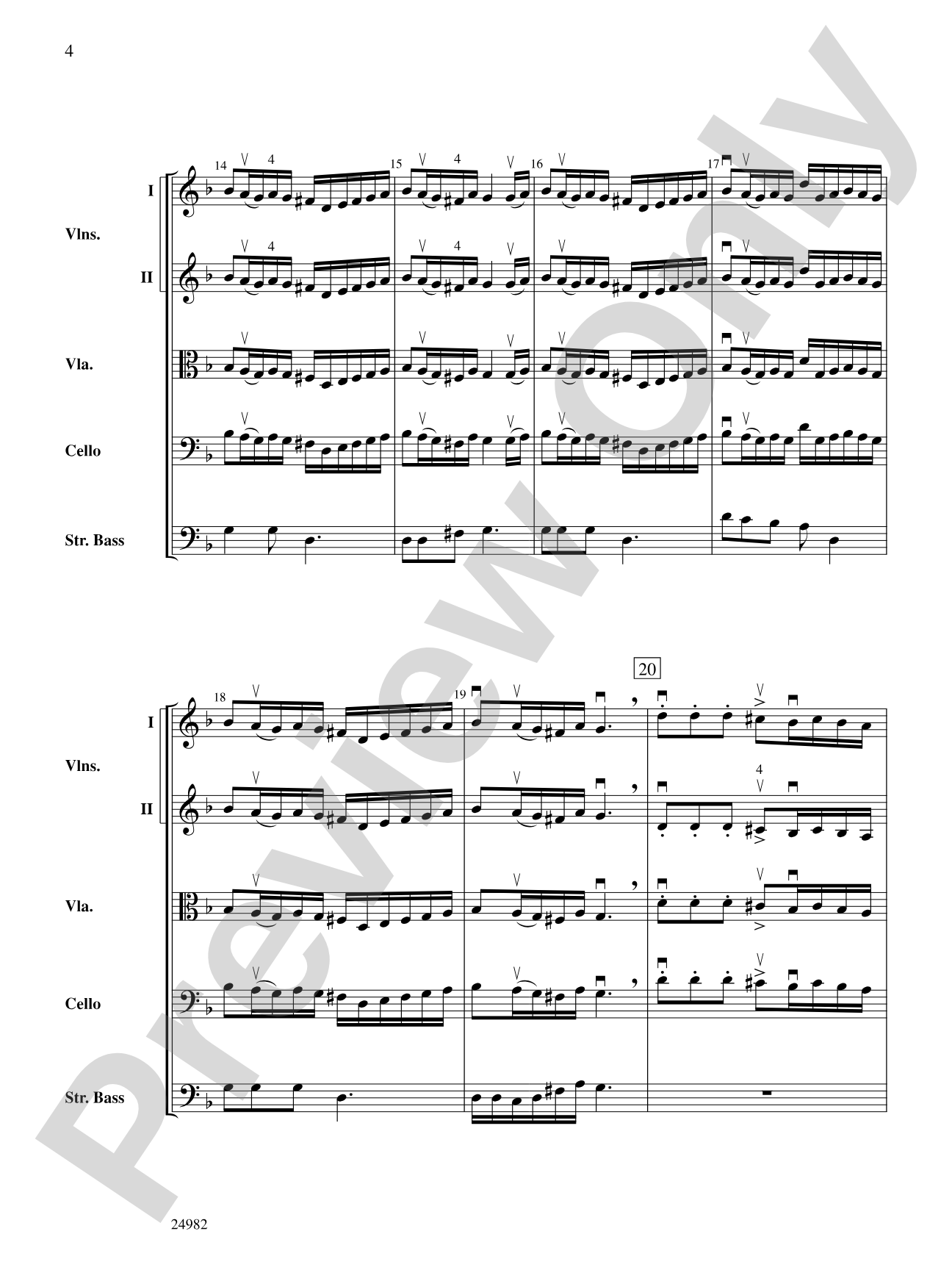
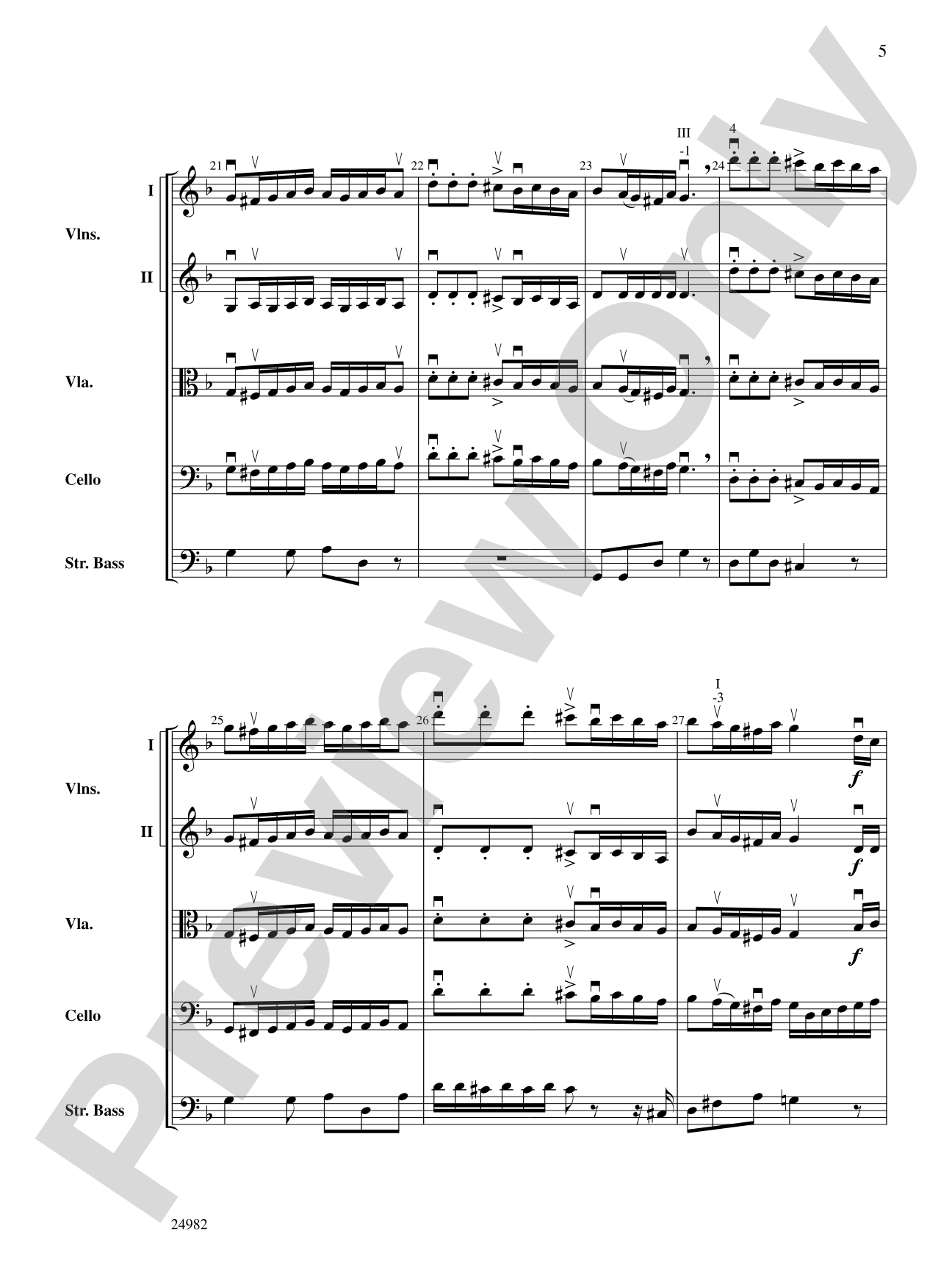
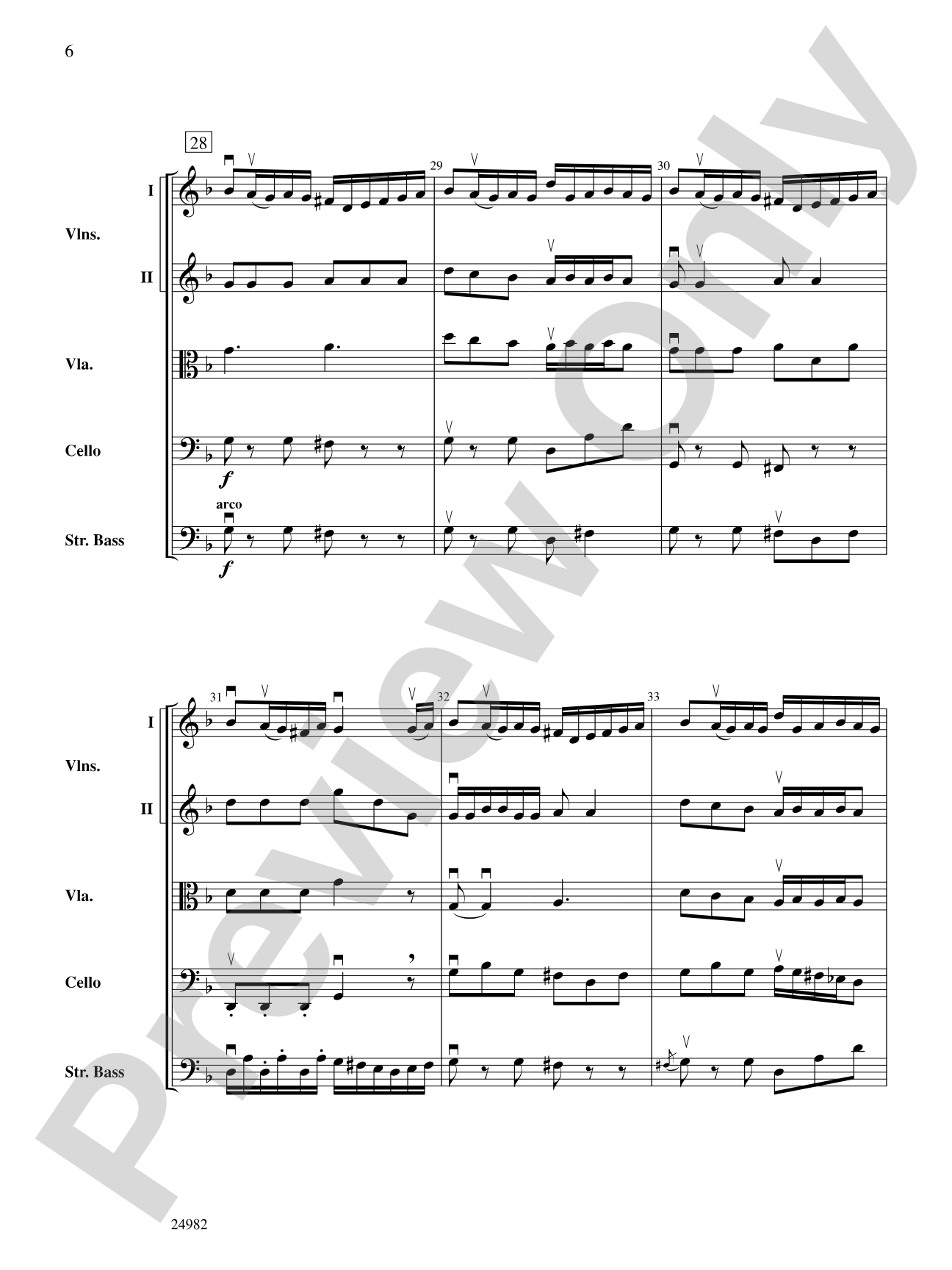
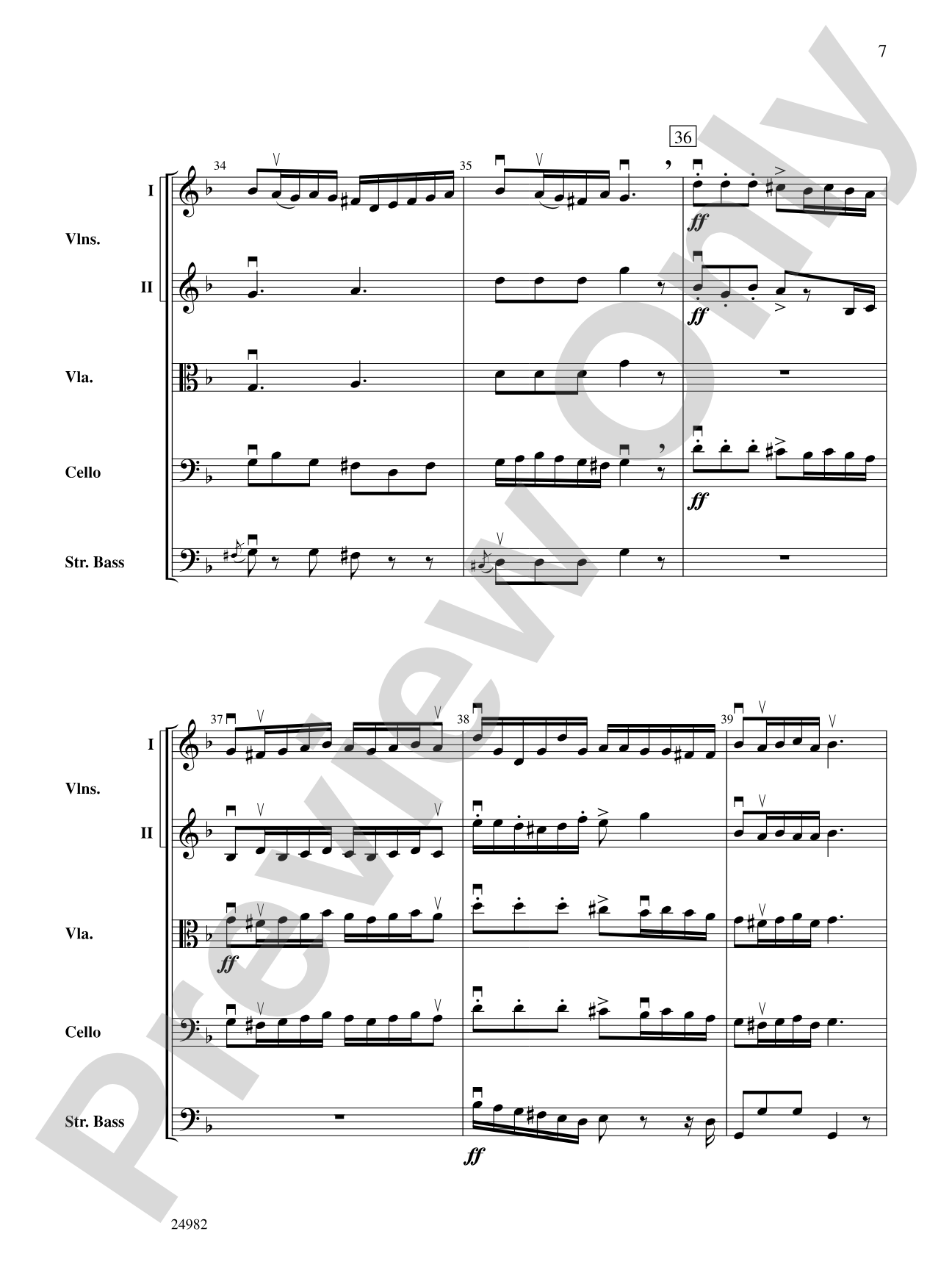
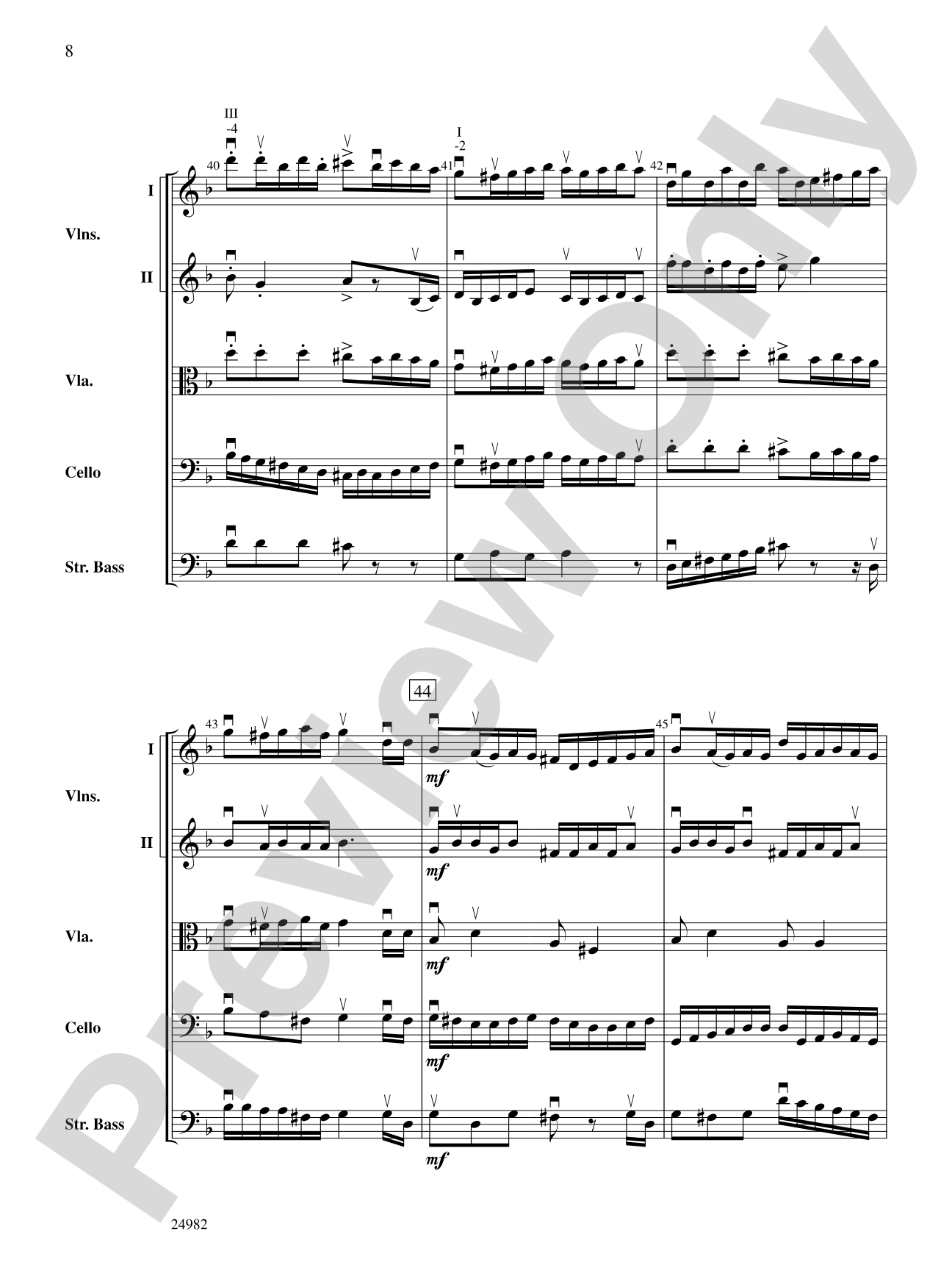
Sparklingly energetic, this alluring traditional Provencal melody has been arranged so that it is accessible to a wide range of levels. Julie Lyonn Lieberman, author of seven string books and five videos, has created complexity through simplicity by multi-layering the parts to build suspense. This piece offers some refreshingly different, yet accessible rhythmic phrases in 6/8, and is built on a G minor major scale (G, A, B-flat, C, D, E, F-sharp, G). It will make a unique contribution to your orchestra's rehearsal and concert repertoire. The first violins have a section in third position while the other sections remain in first position.


Don't just read it, hear it, play along with it, and watch your students grow with it. In MakeMusic Cloud, Folk Dance from Provence: String Orchestra Conductor Score & Parts comes alive with professional accompaniment, adjustable tempo, and built-in practice tools that turn solo practice into real progress.
Open in the Player
Jump straight in and assign it today.
Start Your Free Trial
Open this title and explore the full library in minutes.
Sample Audio
1
Audio File
--:--
0:00
0:00
Sample Video
No sample videos found.
Additional Details
Series:
Highland/Etling String Alternatives
Publisher:
Alfred Music
Page Count:
130
SKU:
00-PK-0000973
More about this title
About the Arranger: Julie Lyonn Lieberman
Julie Lyonn Lieberman has spent decades developing accessible string repertoire that meets ensembles where they are. Her work bridges the gap between authentic musical expression and genuine playability, a philosophy evident across her seven string education books and five instructional videos.
Lieberman's approach to arrangement prioritizes musical growth through layered complexity rather than technical barriers. Her publications have become staples in school orchestras seeking repertoire that challenges without overwhelming.
Why we love this
Lieberman solves the persistent problem of finding energetic folk material that works for intermediate orchestras without sacrificing authentic character. The deliberate use of the G minor-major scale and 6/8 rhythmic phrases expose students to genuine compositional color while remaining within reach for Grade 3.5 ensembles. The multi-layered orchestration means every section stays engaged and feels integral to the whole.
What to expect
Sparkling and propulsive, this Provencal melody dances with infectious rhythmic energy. The G minor-major color palette gives it a slightly mysterious character that keeps the character from feeling too straightforward, while the 6/8 meter creates forward momentum that feels naturally buoyant rather than forced.
Who it's for
This arrangement works for intermediate string orchestras ready to move beyond unison melodies but still developing confidence in ensemble blend. Directors seeking Provencal or multicultural repertoire without sacrificing rhythmic interest will find a refreshing alternative to standard folk transcriptions. The piece fits well in school orchestras at the 3.5 grade level where some students read comfortably in higher positions while others need accessible voicing.
How to get the most out of it
- Highlight the rhythmic momentum in 6/8 by conducting in two rather than six; this clarifies the dance quality and prevents the ensemble from dragging subdivisions.
- Balance the first violin section in third position against the foundation of lower voices in first position. The melodic rise gains impact when the accompanying parts stay rooted and full.
- Lean into the major seventh (F-sharp against G) that colors this G minor-major scale. It's what makes the piece sparkle rather than sound conventionally minor.
- Use the multi-layered arrangement to build dynamic shape incrementally. Add voices one section at a time during rehearsal buildups so the suspenseful construction actually registers with the ensemble.
How to use it
Program this in a concert celebrating global folk traditions or as a vibrant contrasting piece opposite a lyrical Baroque arrangement. It serves equally well as a rehearsal staple that builds rhythmic security and ensemble cohesion without feeling like drill material. The piece fits well mid-season when orchestras have foundational skills in place and are ready for rhythmic variety.
Skills your students will build
- Reading 6/8 meter and establishing rhythmic security in a non-standard time signature
- Playing in third position on first violins while maintaining ensemble unity across multiple positions
- Blending multi-layered string voicing and understanding how parts interact to build suspended tension
- Responding to authentic folk melody and non-traditional harmonic color (G minor-major scale with raised seventh)