
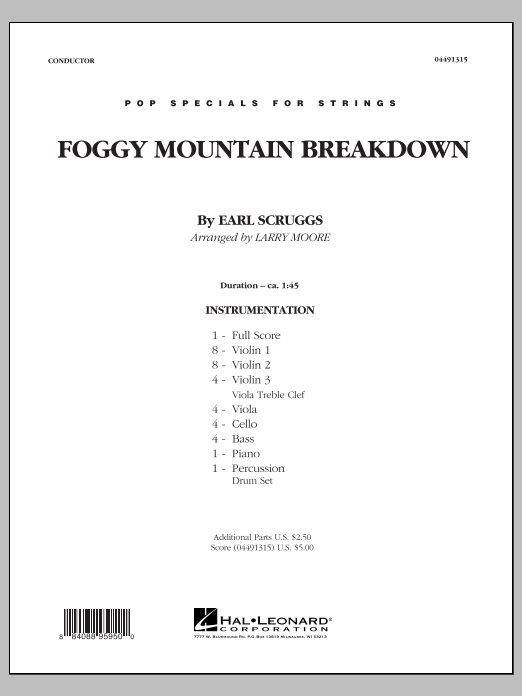

Foggy Mountain Breakdown: String Orchestra Conductor Score & Parts
As performed by Lester Flatt Earl Scruggs / Arranged by Larry Moore
Grade: 3-4
Item: 35-PK00289140
$50.00
Pickup currently not available
Buy Extra Parts (Digital PDF Download)
Parts Added to Cart!
Description
Here's the iconic song from the dean of American bluegrass, Earl Scruggs. His banjo style set the musical path for all who followed him. Larry Moore has captured the infectious and driving rhythm that is sure to please any audience. Dur: 1:45


Foggy Mountain Breakdown: String Orchestra Conductor Score & Parts isn't in MakeMusic Cloud just yet...but it could be. Let us know you'd like to see it, and you'll help shape what comes next. In the meantime, start a free trial and dive into thousands of interactive titles your students can play along with today.
Request This Title
Tell us you want it.
Start Your Free Trial
Explore everything that's ready to play right now.
Sample Audio
No sample audio found.
Sample Video
No sample videos found.
Additional Details
Publisher:
Hal Leonard
SKU:
35-PK00289140
More about this title
About the Artist: Lester Flatt Earl Scruggs
Lester Flatt and Earl Scruggs formed one of bluegrass music's most influential partnerships, defining the sound of the genre from the 1940s onward. Their tight harmonies and instrumental precision, particularly Scruggs' revolutionary three-finger banjo technique, created a blueprint that generations of musicians have followed. Flatt's steady guitar work and vocal leadership paired with Scruggs' explosive picking made them architects of a sound that transcended bluegrass and shaped American popular music across multiple genres.
Their recordings and live performances established bluegrass as more than regional music; they elevated it to a national art form. The Foggy Mountain Breakdown, one of their signature pieces, remains a touchstone for string players and an entry point into understanding how traditional American music translates across ensembles and styles.
Why we love this
Larry Moore's arrangement captures the relentless forward motion of the original without sacrificing the character that makes this tune immediately recognizable. String orchestras rarely get repertoire this fun to play and perform; the driving rhythm and straightforward harmonic structure let your ensemble focus on ensemble cohesion and infectious energy rather than navigating complex textures. At grades 3 to 4, this sits in the sweet spot where students feel like they're playing real music that audiences actually know.
What to expect
The piece crackles with rollicking good humor and relentless forward momentum. There's joy in the straightforward melody and driving accompaniment, a sense of people making music together without pretense or complication. It captures the spirit of a bluegrass picking party, where technical skill serves the music's infectious groove rather than overshadowing it.
Who it's for
Directors looking for concert or assembly repertoire that delights non-musician audiences while keeping student engagement high. String orchestras at the intermediate level who are ready for material rooted in American vernacular music. Ensembles exploring how traditional music translates across instrumental settings.
How to get the most out of it
- Keep the rhythm section locked and driving. The momentum of this piece depends on consistent, unwavering pulse; any rhythmic hesitation flattens the energy entirely.
- Balance the melody line so it cuts through the accompaniment without the violas and cellos pulling back. The bluegrass tradition thrives on clarity, not blending.
- Resist the urge to slow down on repeated sections. The 'infectious' quality comes from maintaining the original tempo and letting the familiarity of the tune do the work.
- Shape phrases in 2 and 4-bar units, matching the phrasing of traditional bluegrass performance. This respects the source material and keeps the arrangement grounded.
How to use it
Include this on a pops or family concert where you want to shift the audience's energy and show what your string orchestra can do beyond classical repertoire. Pair it with other folk or American music arrangements to build a thematic set that showcases vernacular traditions. The 1:45 duration makes it ideal for filling a program spot or opening a second half with immediate, audience-friendly momentum.
Skills your students will build
- maintaining steady pulse in driving rhythmic contexts
- articulation techniques that serve rhythmic clarity over legato connection
- playing with rhythmic independence between sections (melody versus accompaniment)
- understanding how traditional music translates across instrumental families
- intonation control in repetitive, rhythmically active passages