
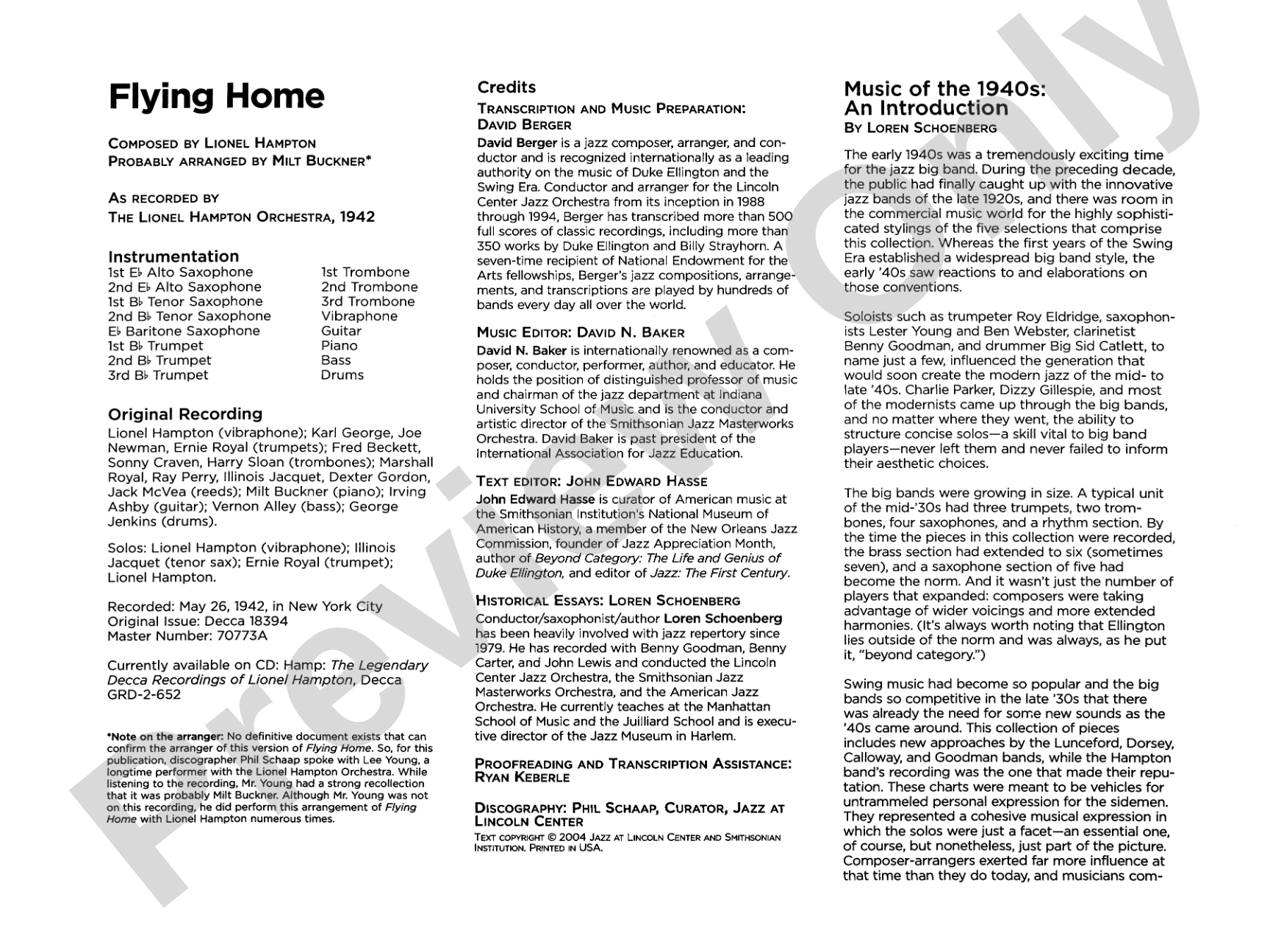
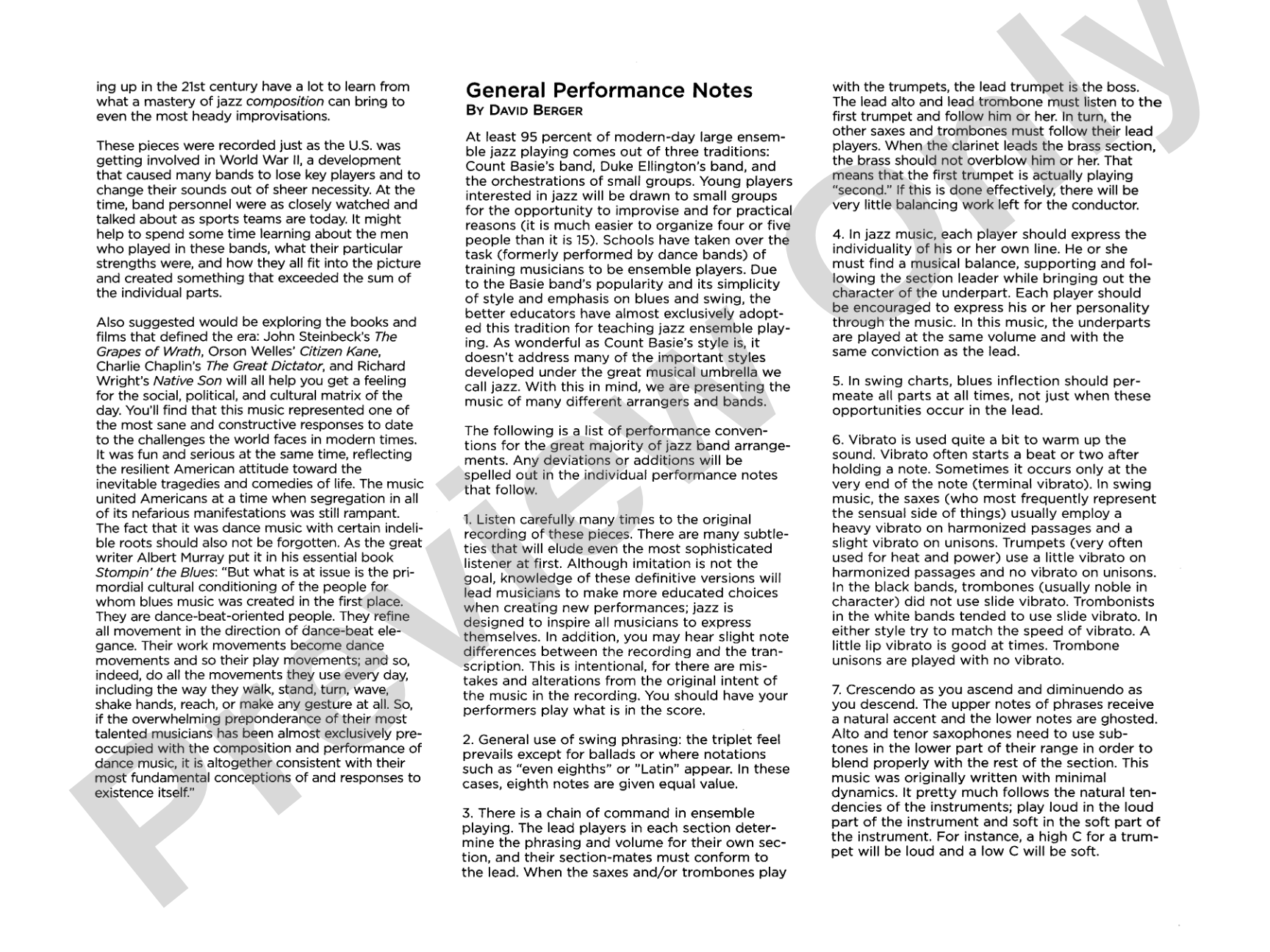
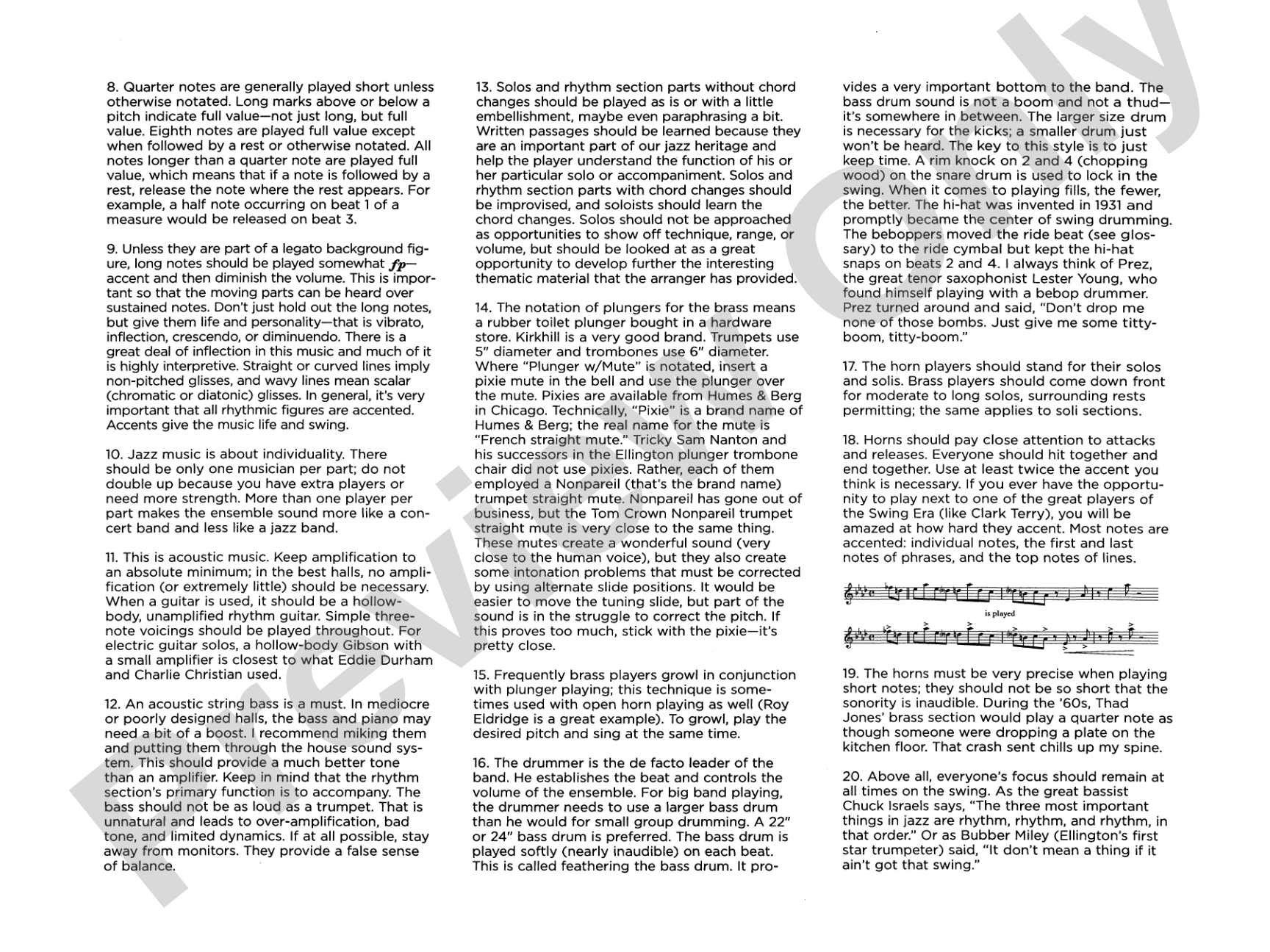
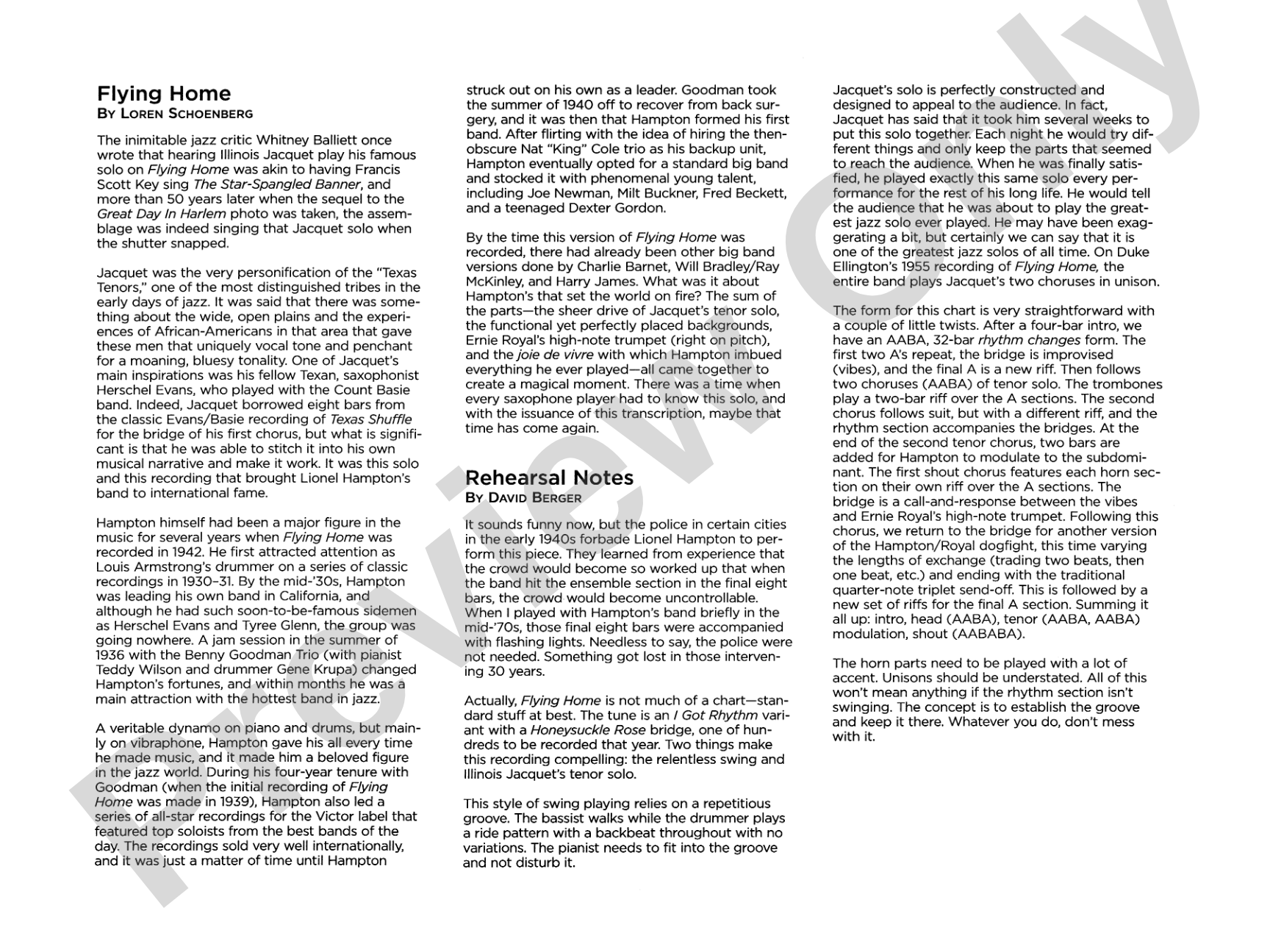
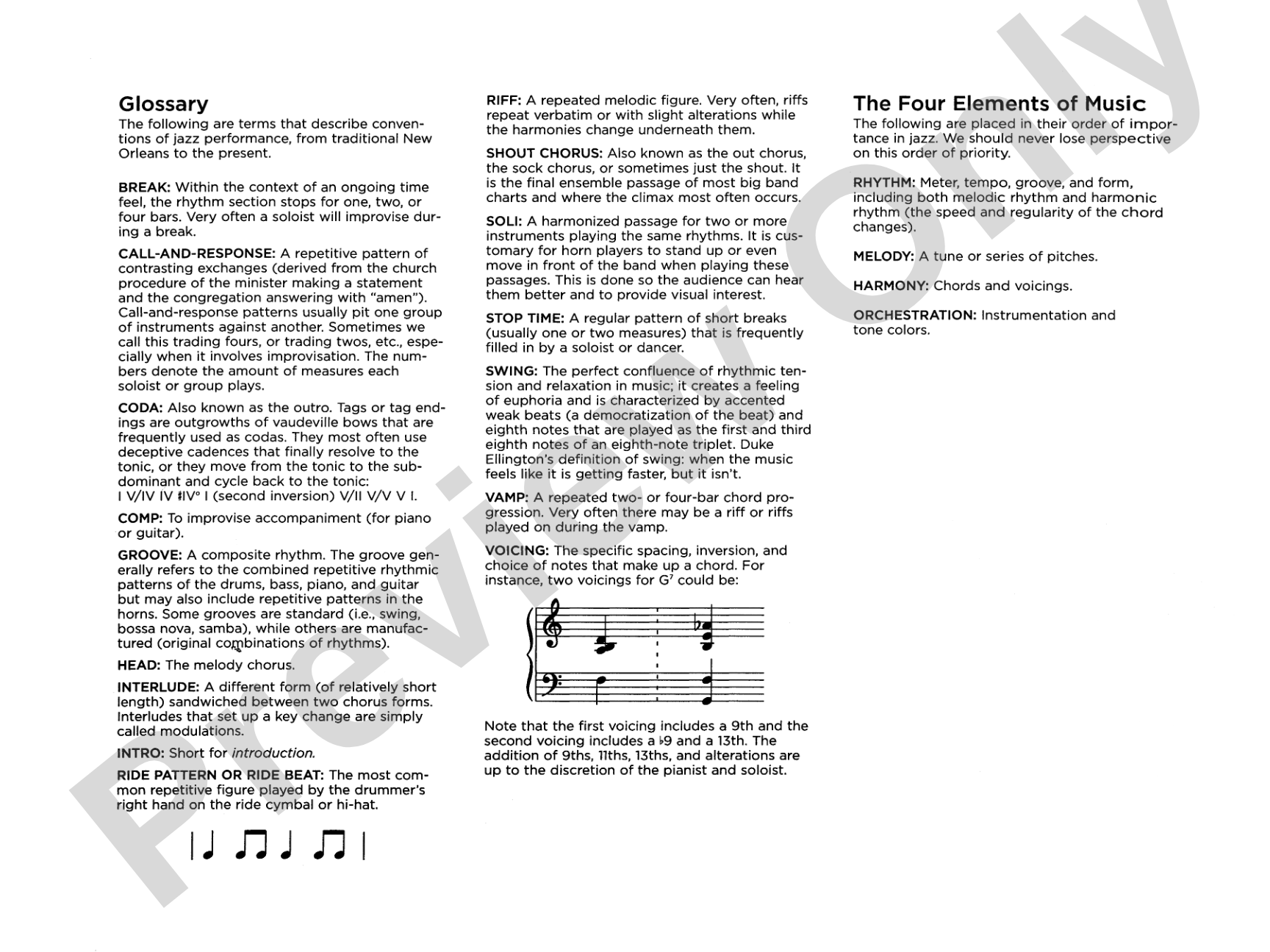
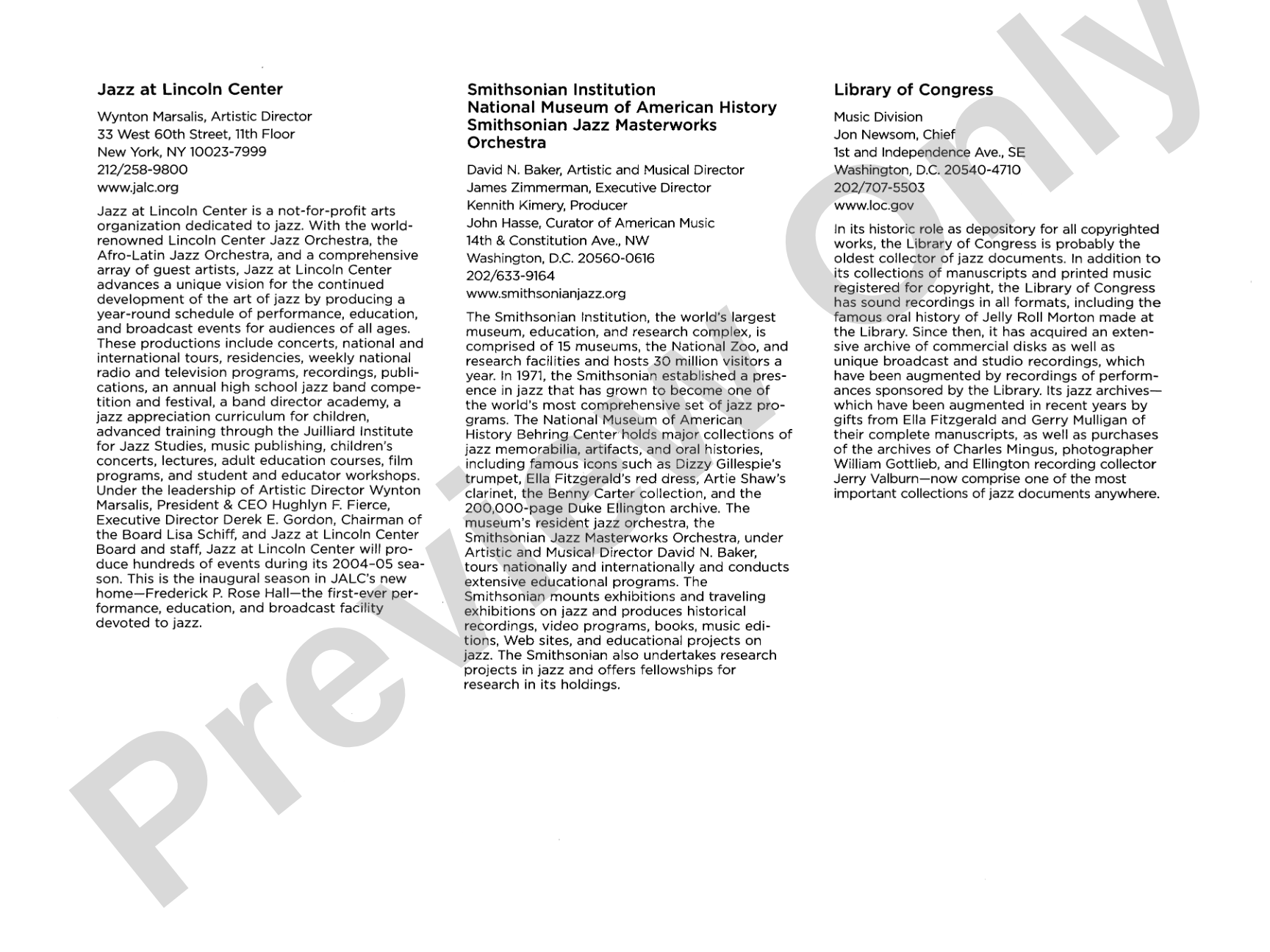
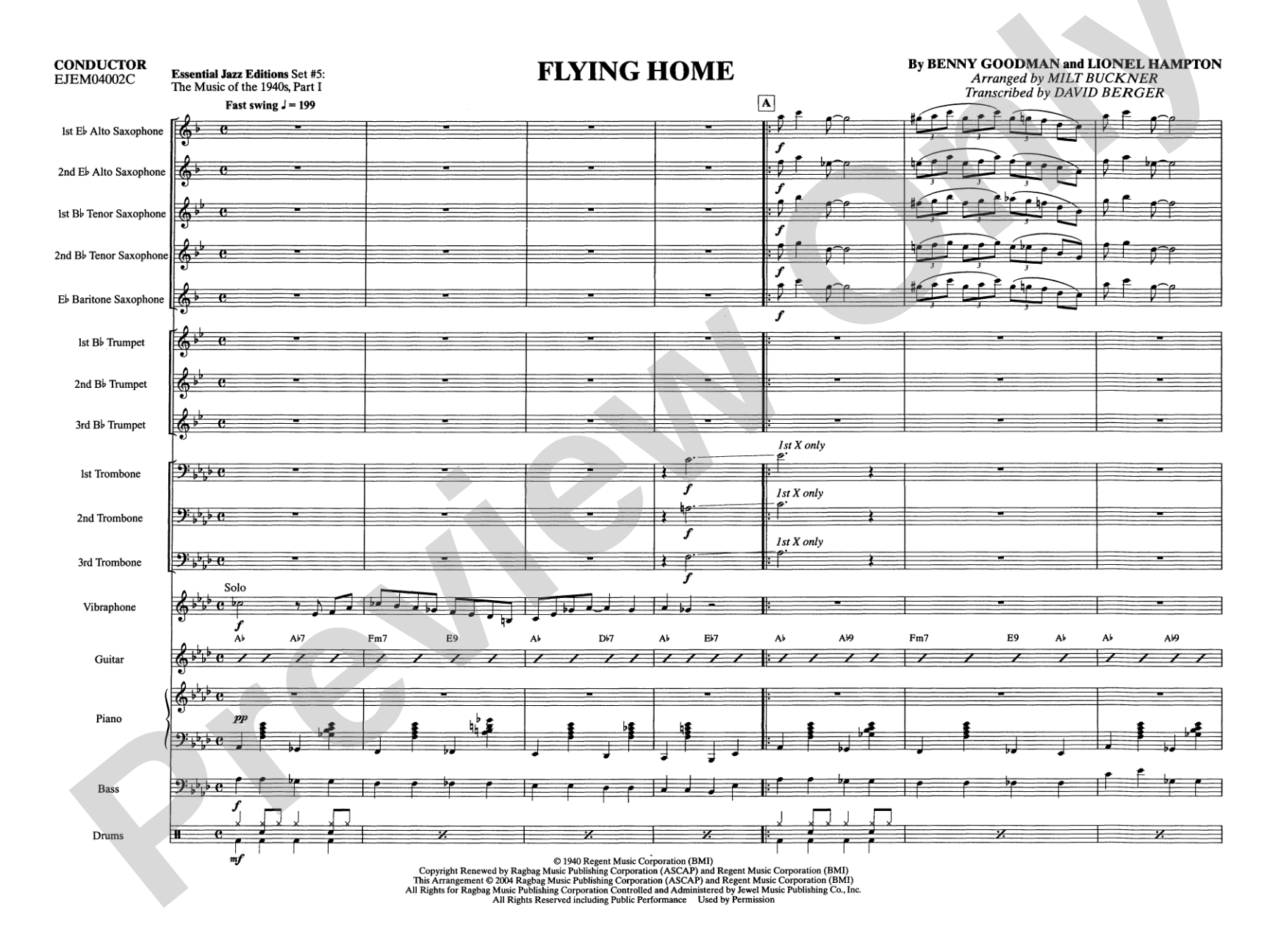
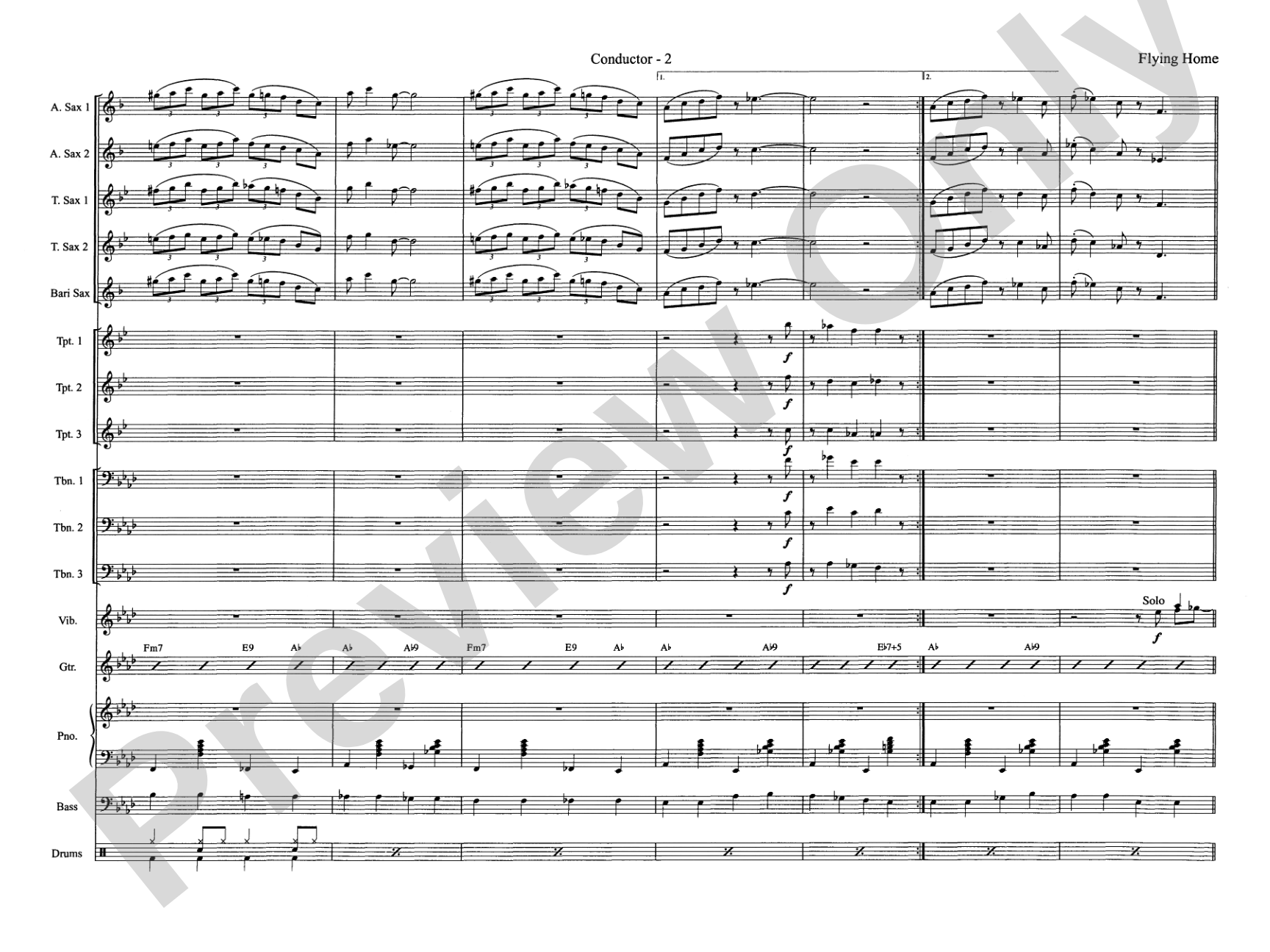
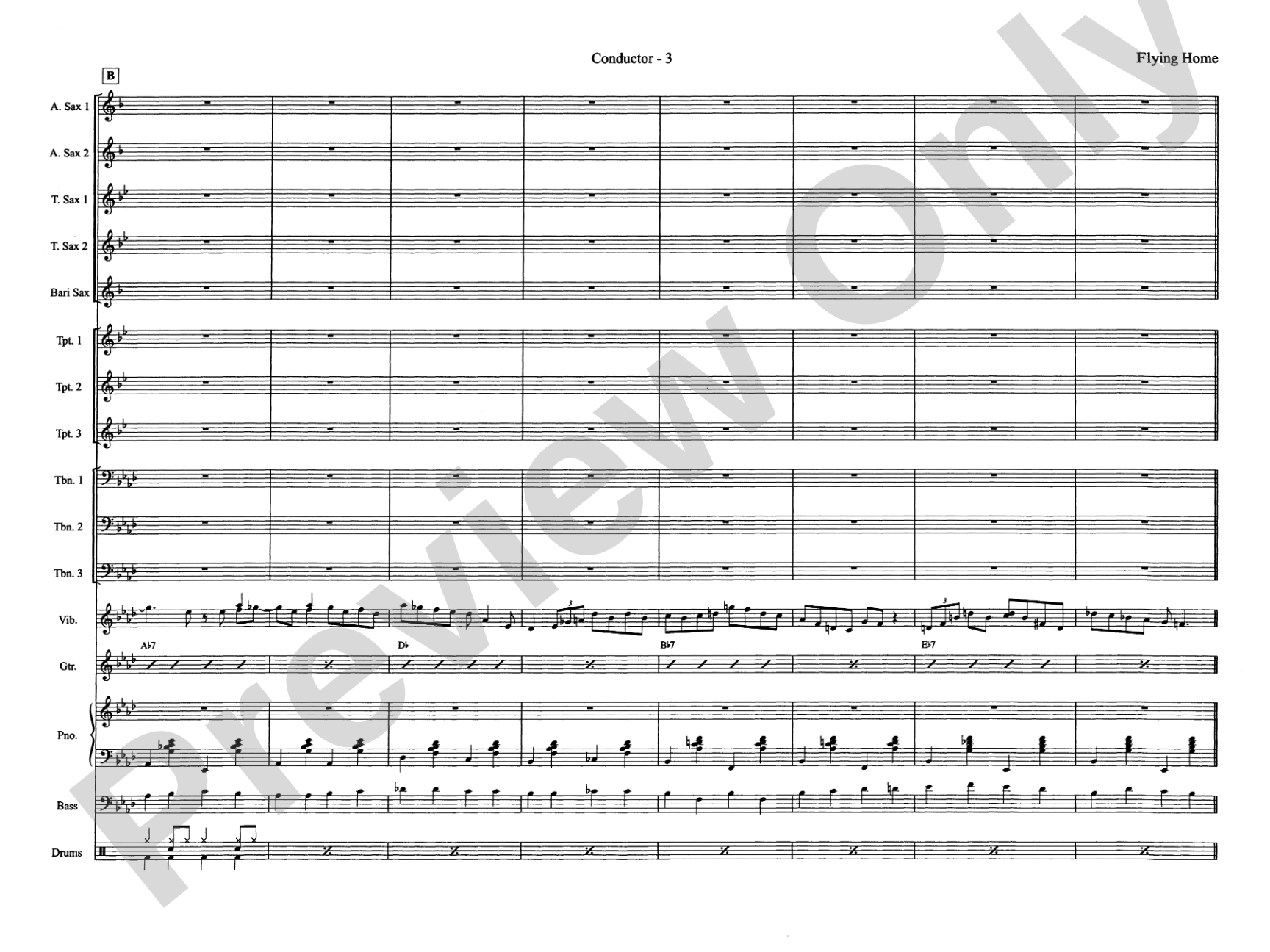
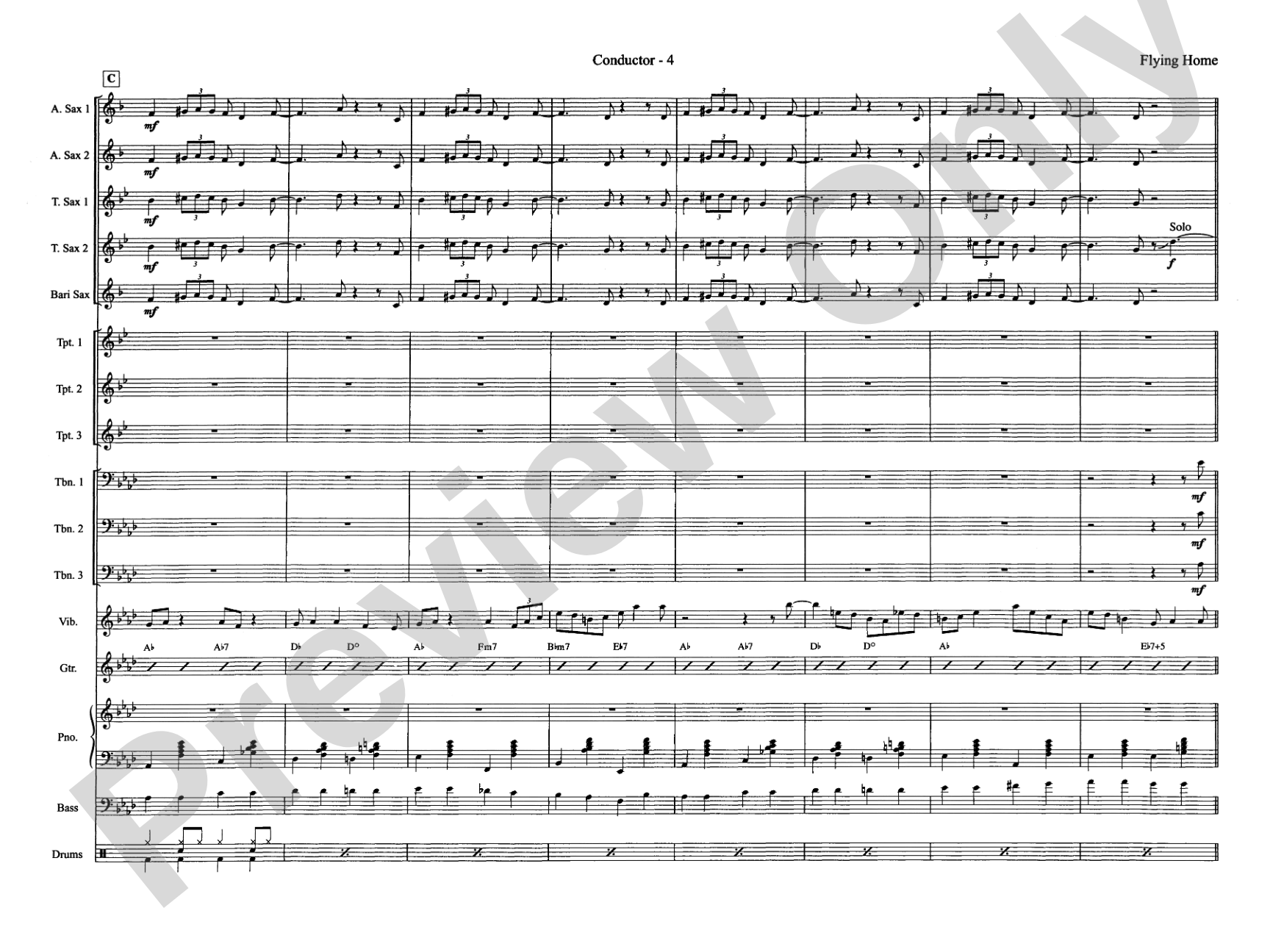
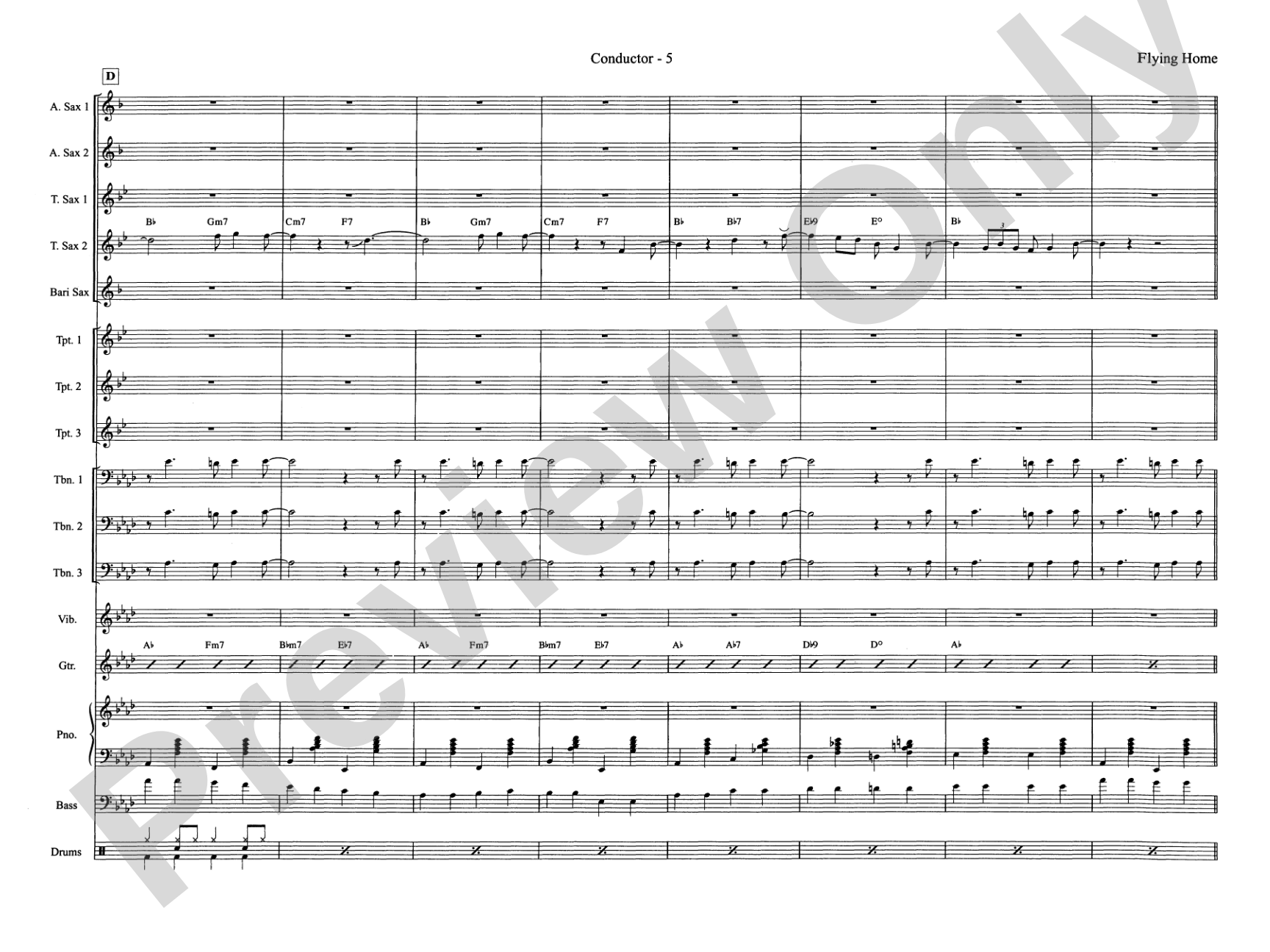
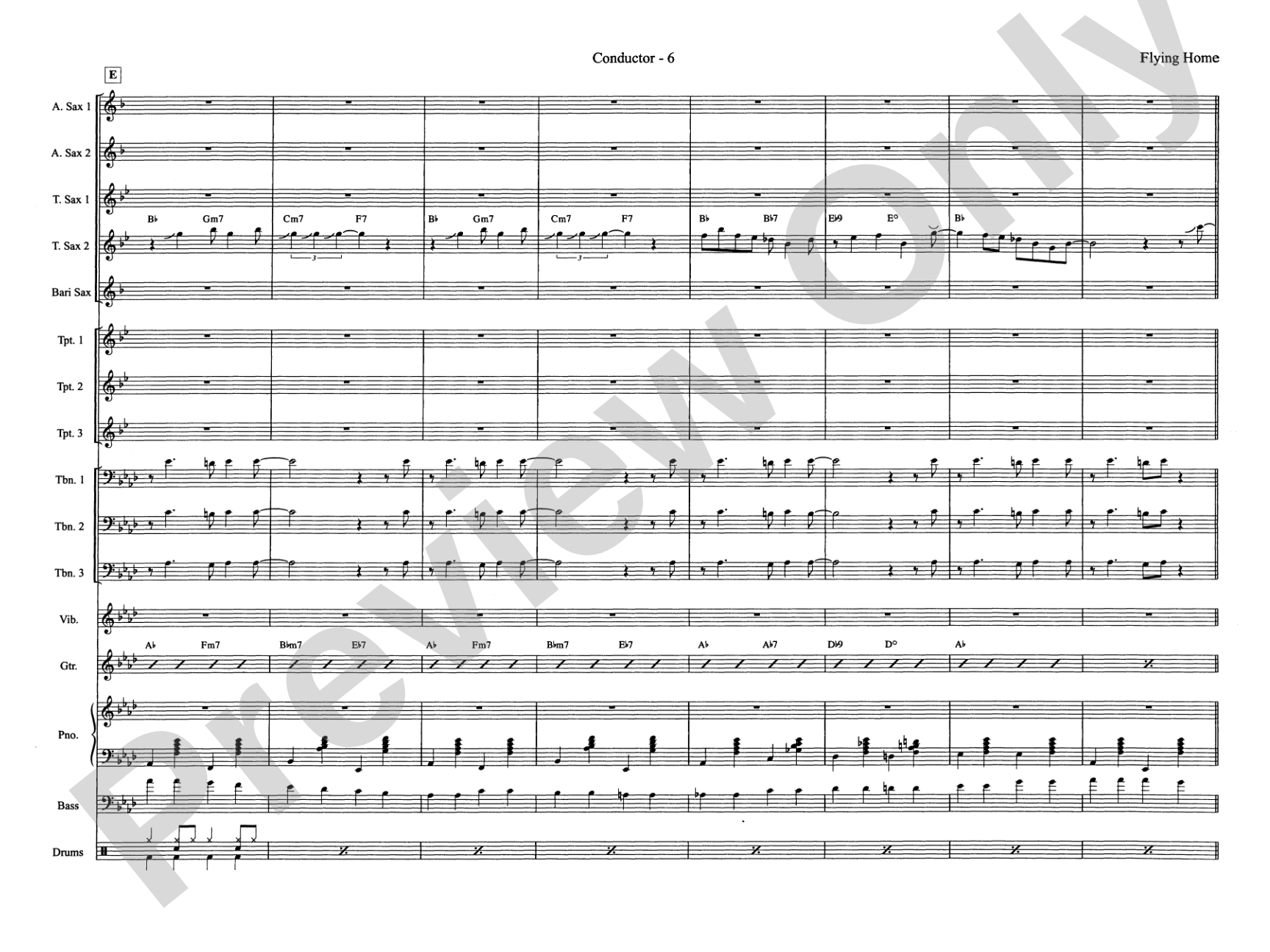
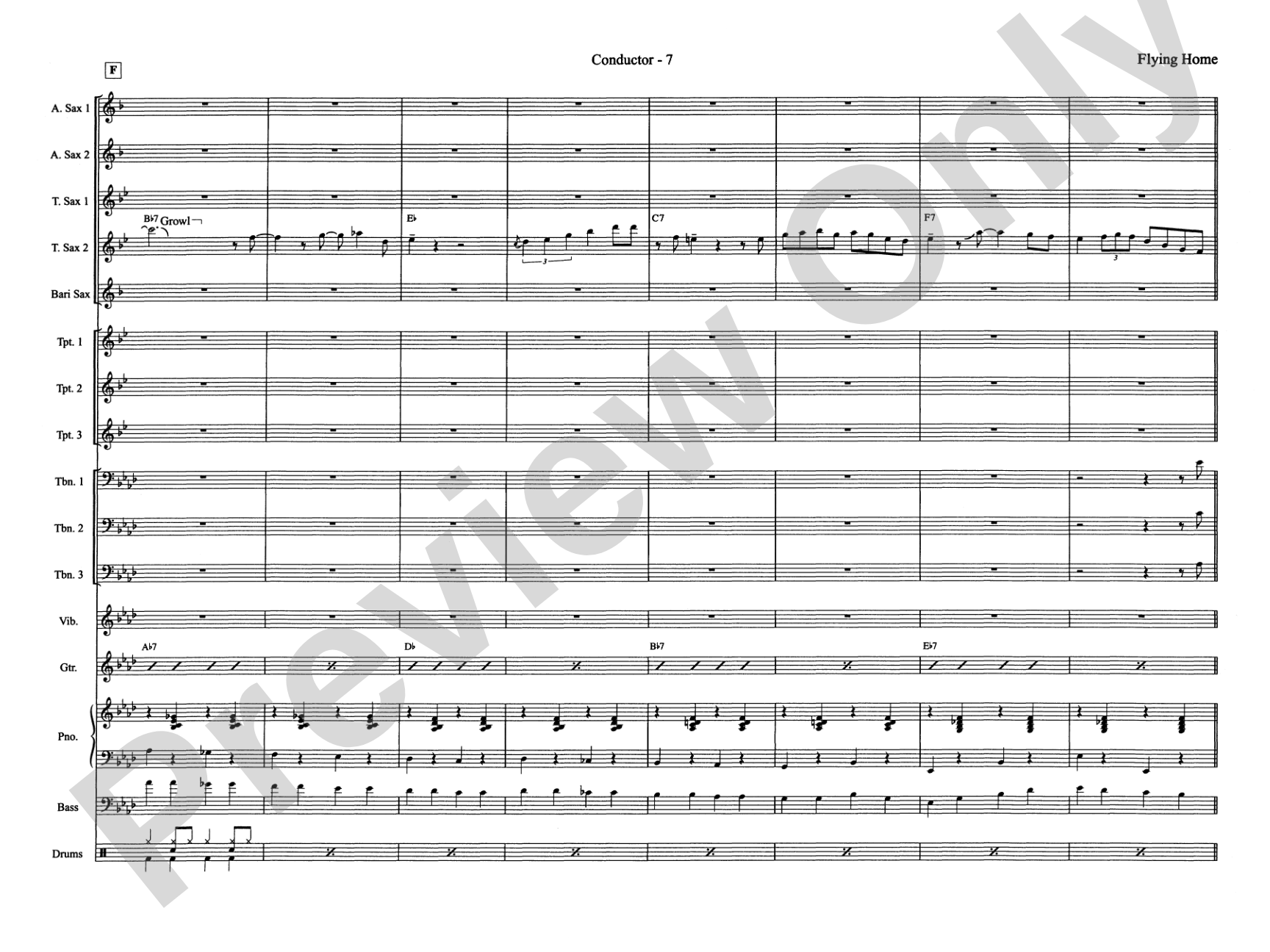
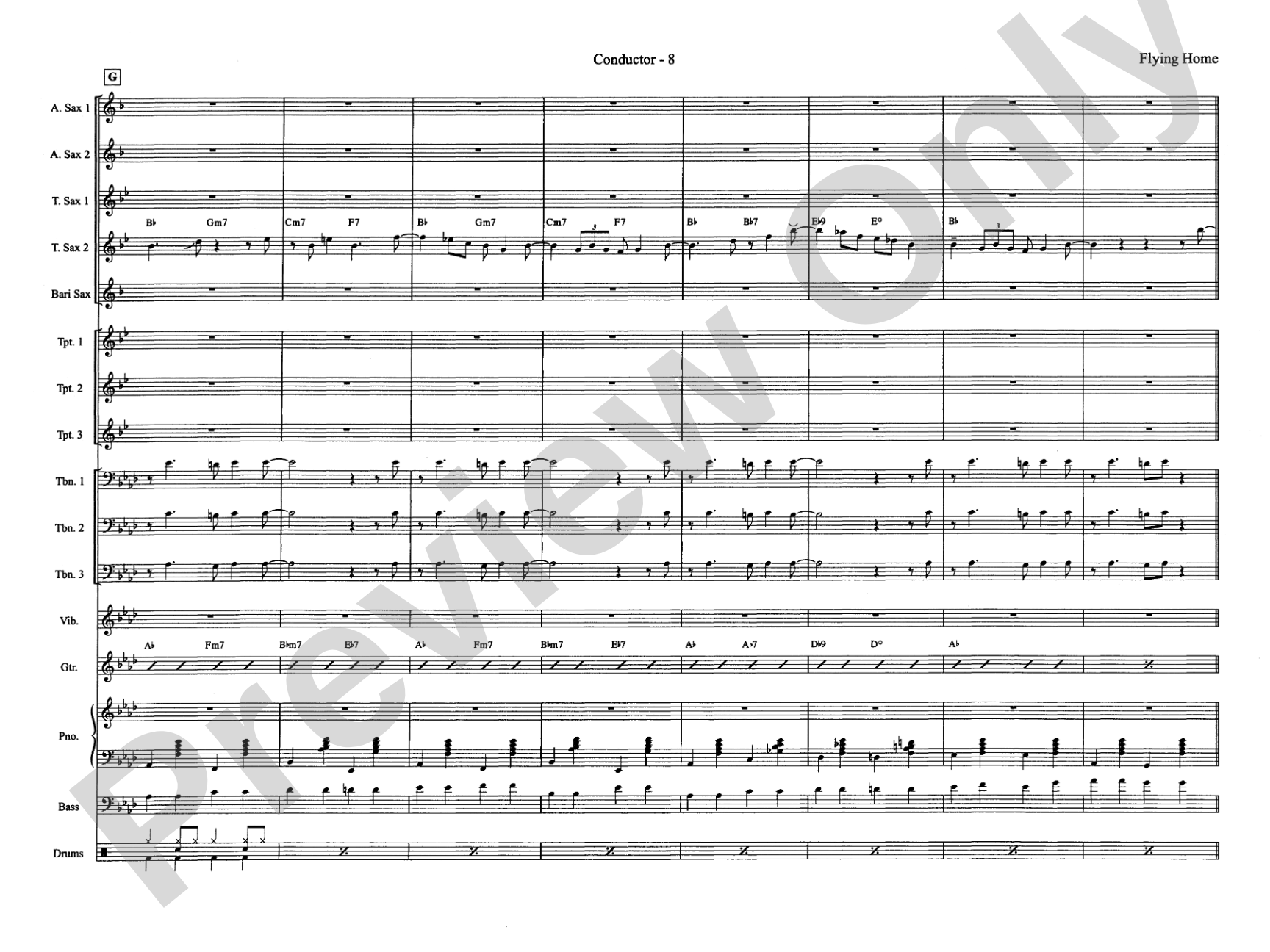
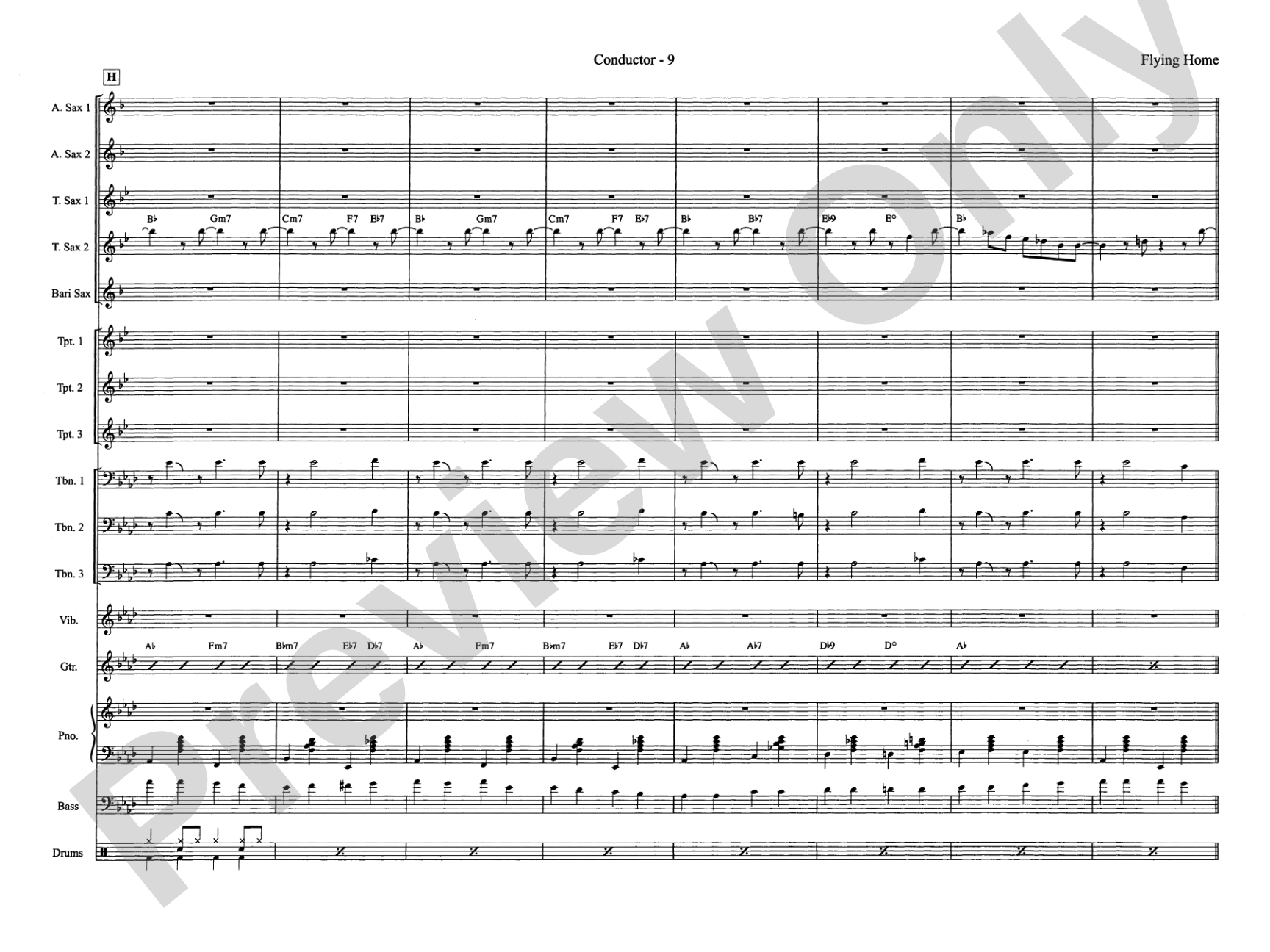
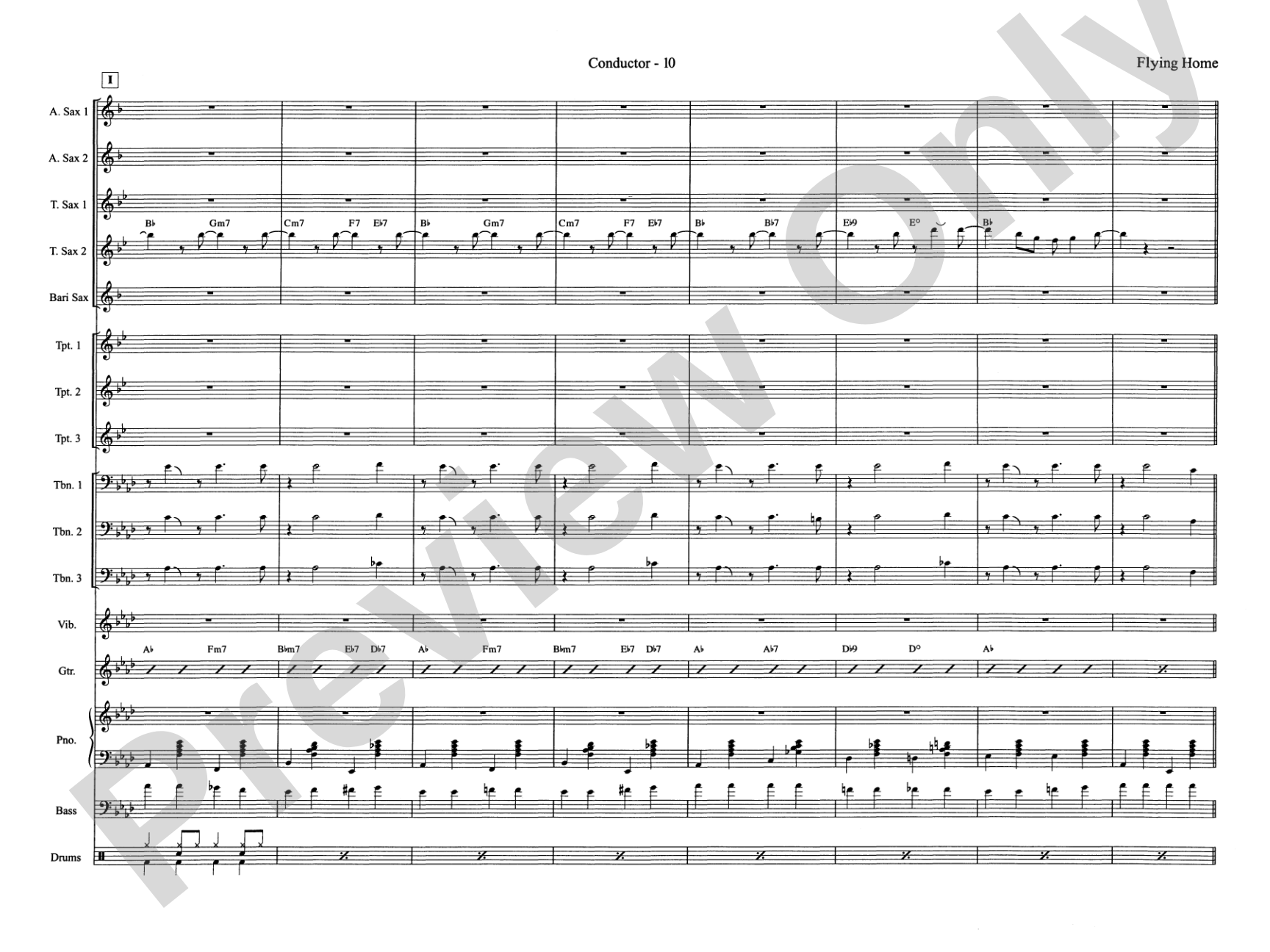
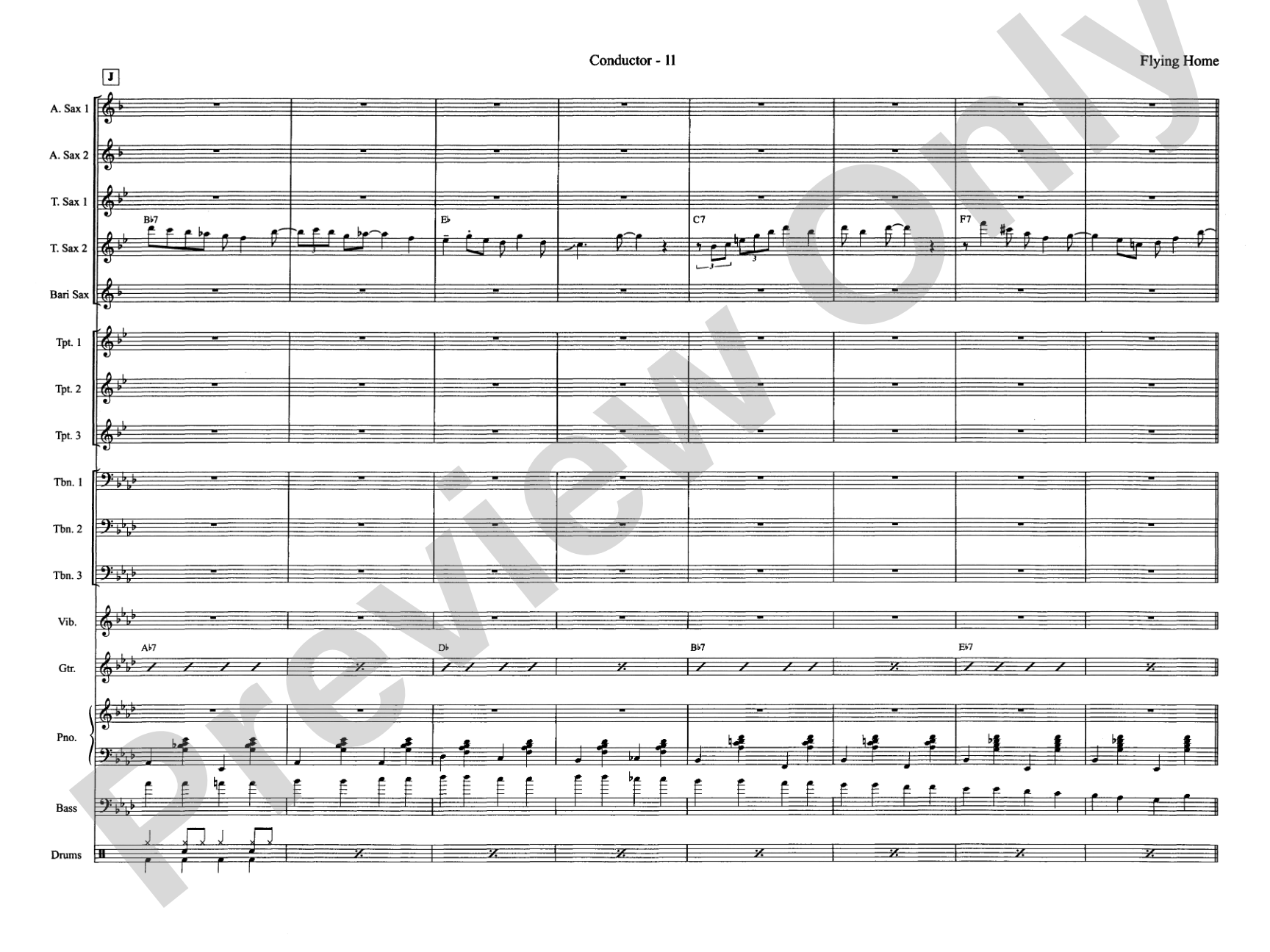
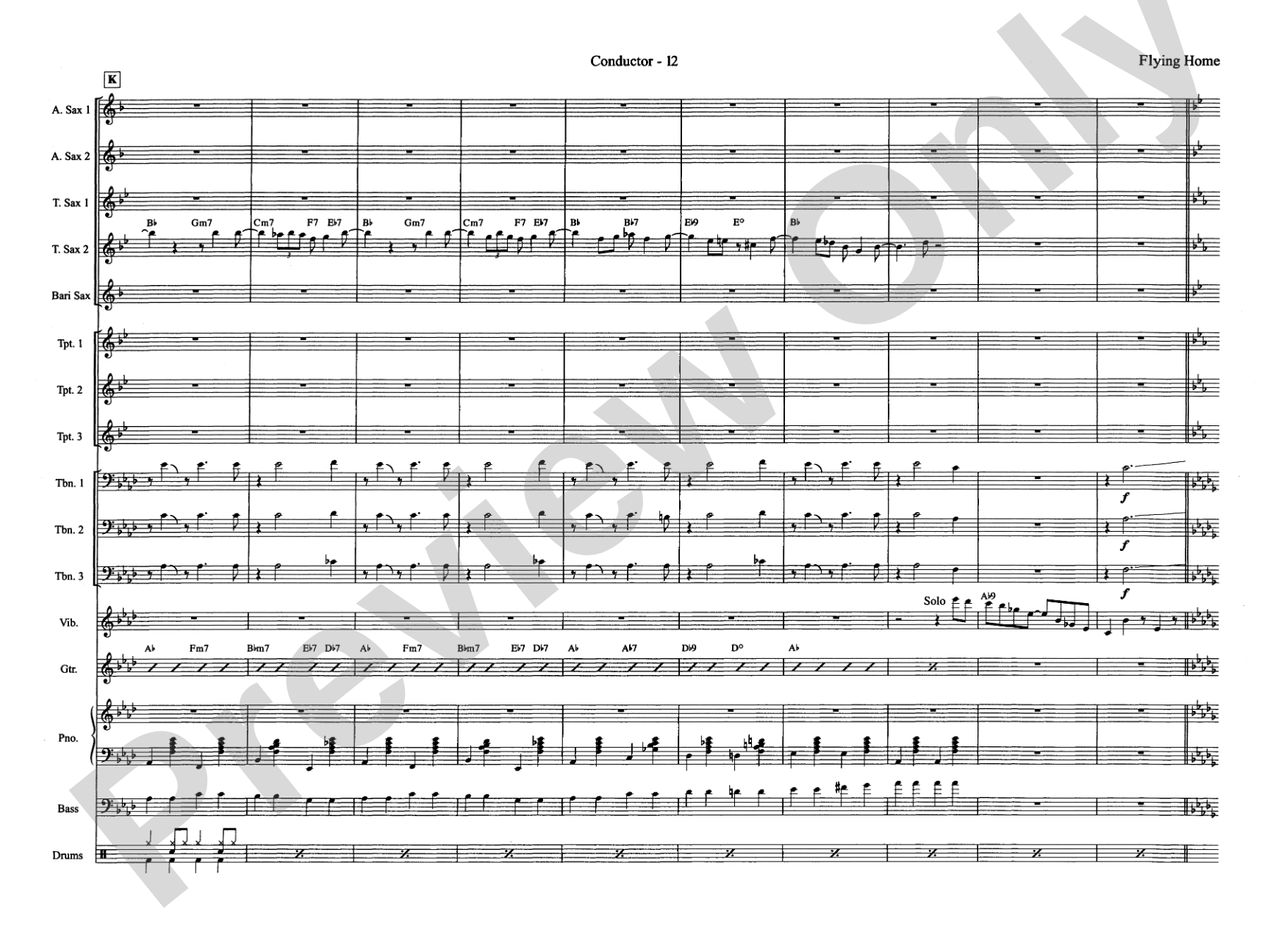
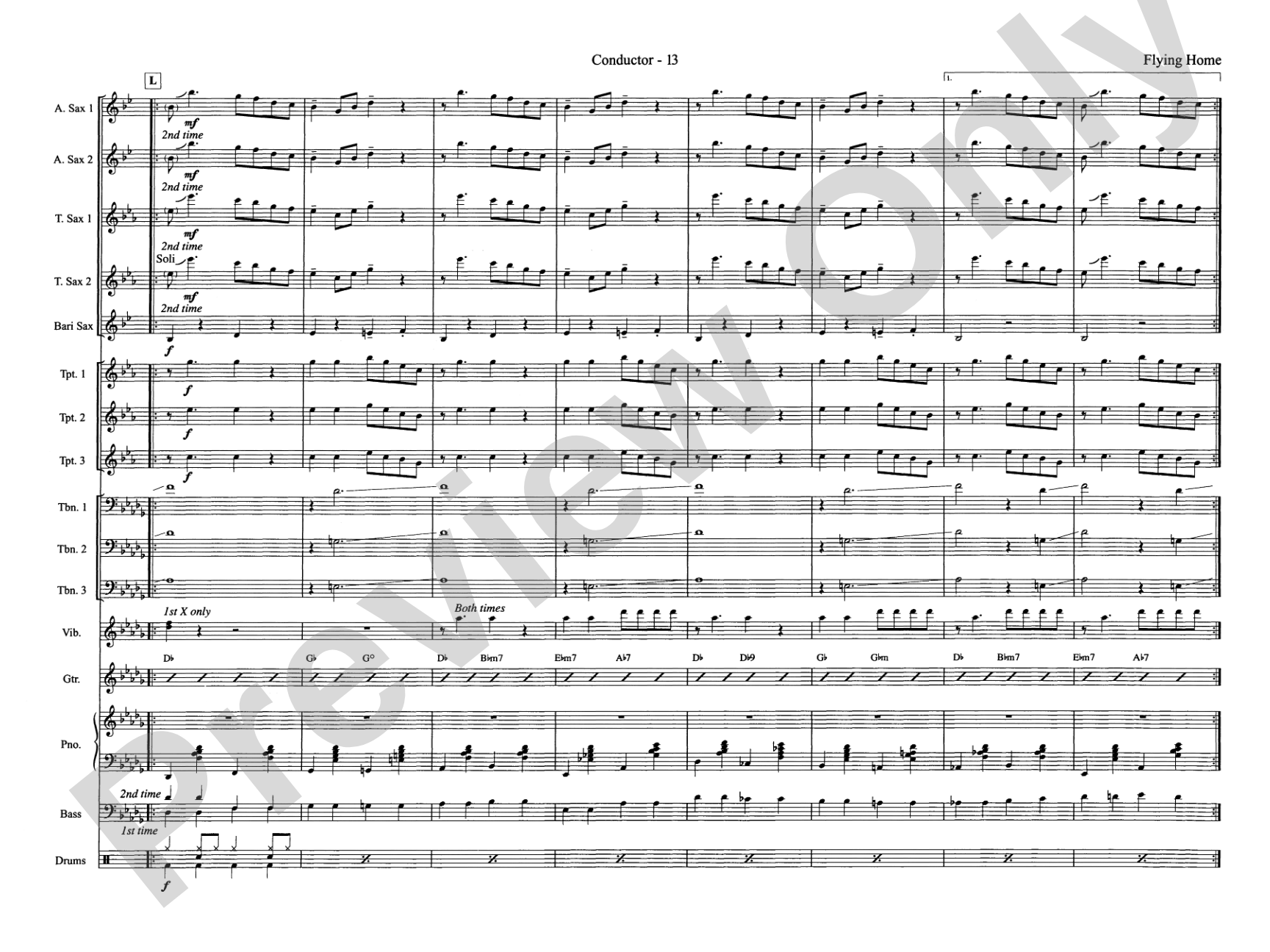
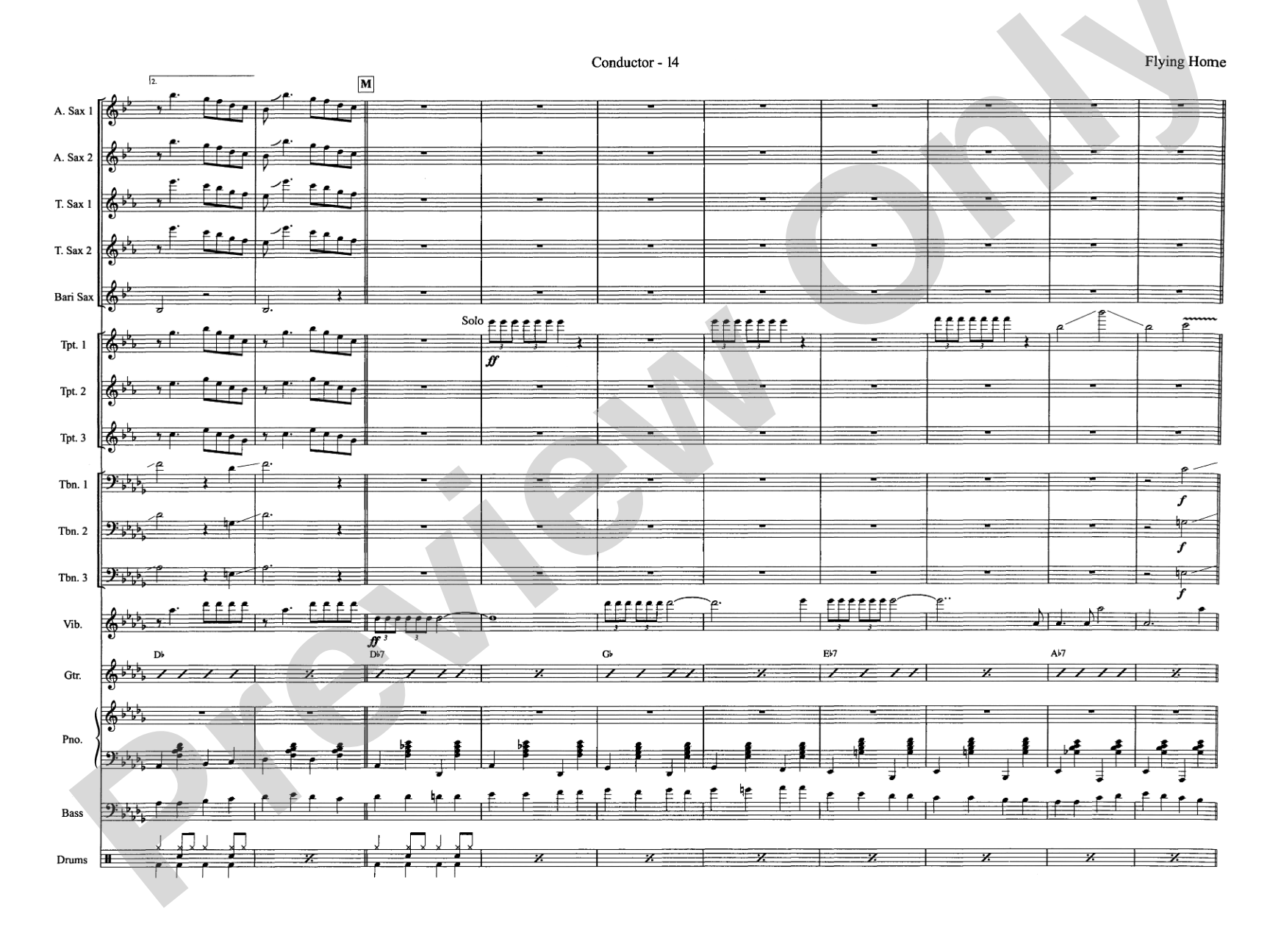
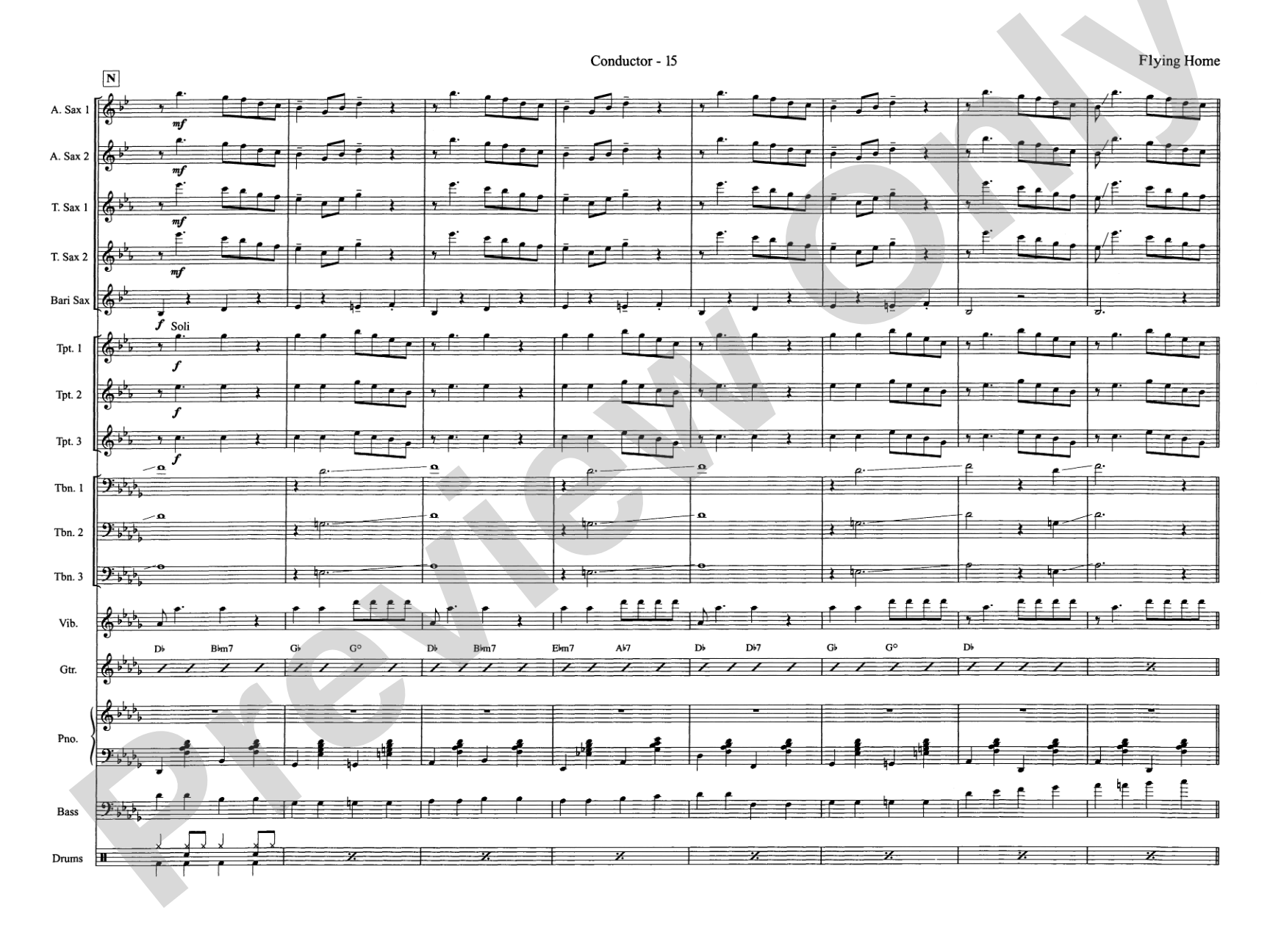
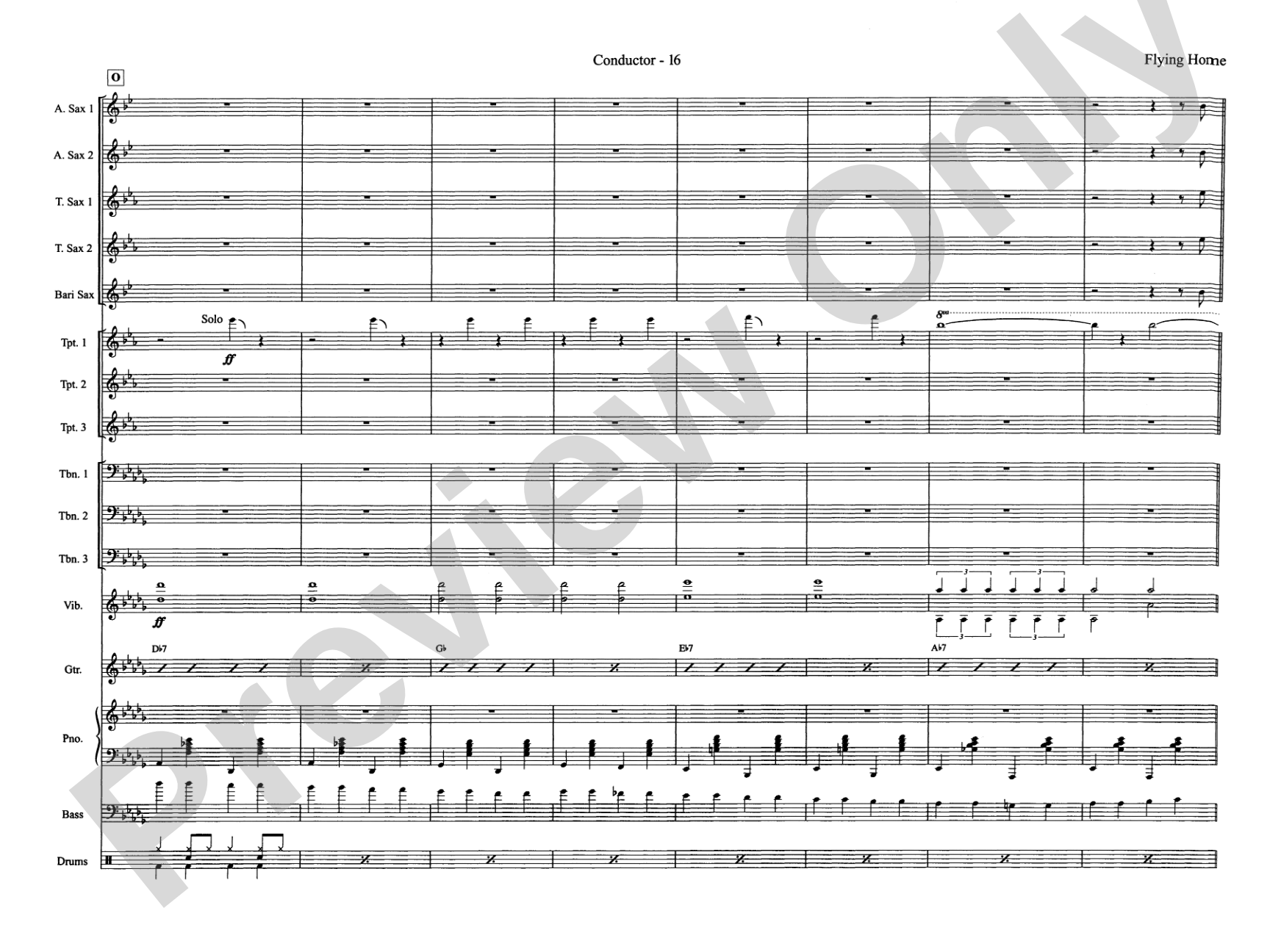
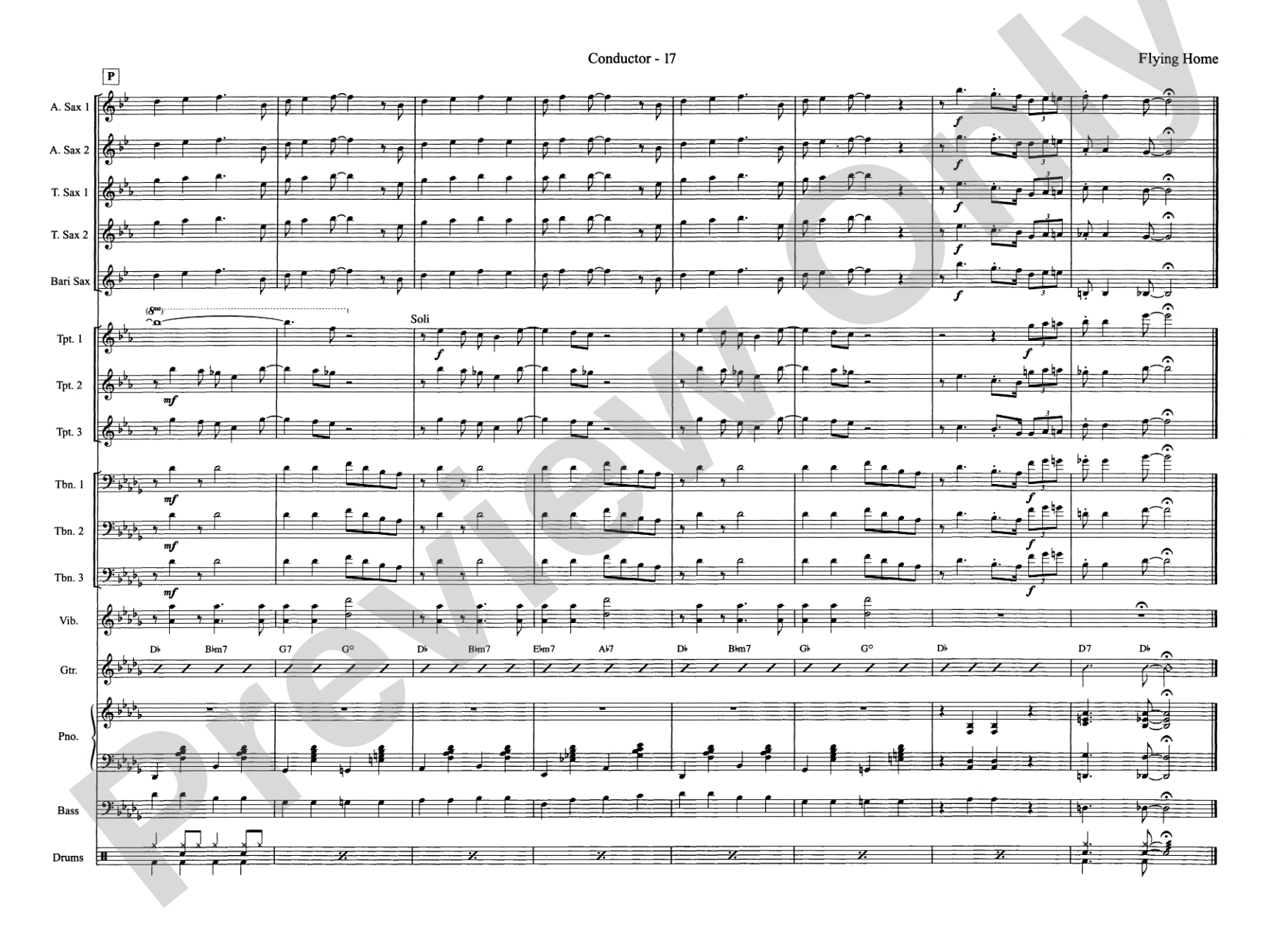



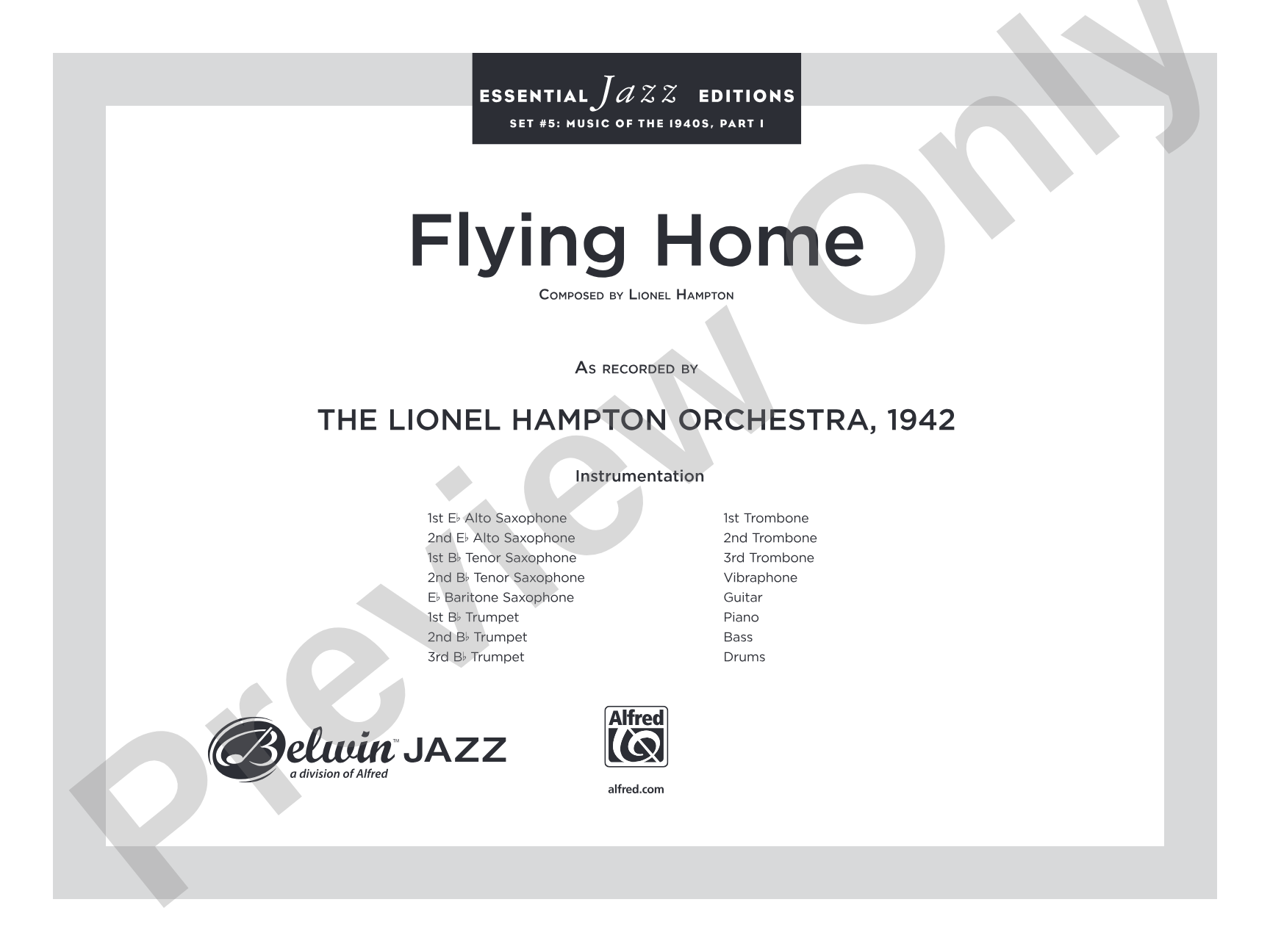

Flying Home: Score
Composed by Lionel Hampton
Item: 00-PR-0005288
$9.00
Pickup currently not available
Description
From Essential Jazz Editions, Set #5: Music of the 1940s, Part I.


Don't just read it, hear it, play along with it, and watch your students grow with it. In MakeMusic Cloud, Flying Home: Score comes alive with professional accompaniment, adjustable tempo, and built-in practice tools that turn solo practice into real progress.
Open in the Player
Jump straight in and assign it today.
Start Your Free Trial
Open this title and explore the full library in minutes.
Sample Audio
No sample audio found.
Sample Video
No sample videos found.
Additional Details
Series:
Essential Jazz Editions (Jazz at Lincoln Center)
Publisher:
Alfred Music
Page Count:
52
SKU:
00-PR-0005288
More about this title
About the Composer: Lionel Hampton
Lionel Hampton (1908-2002) was a vibraphonist, bandleader, and composer who became one of jazz's most influential figures. His energetic approach to the vibraphone and his gift for writing swinging big band charts helped define the sound of 1940s jazz. Hampton's compositions and arrangements remain standard repertoire in jazz education, prized for their infectious groove and accessible yet sophisticated harmonies.
Why we love this
Flying Home has an irresistible forward momentum that keeps ensembles engaged from downbeat to cutoff. The writing balances straightforward sectional work with moments that reward individual musicianship, making it rewarding at multiple skill levels. This is the kind of chart that reminds students why they fell in love with jazz in the first place.
What to expect
Propulsive and joyful, with a bluesy backbone and bright horn sections that leap off the page. The piece radiates the optimism and energy of wartime swing, moving with the kind of natural momentum that makes both players and listeners feel like flying.
Who it's for
Jazz ensemble directors working with intermediate to advanced ensembles who want repertoire that swings hard and teaches jazz history. Student musicians who are ready to dig into 1940s big band style and understand how groove and section precision support individual improvisation.
How to get the most out of it
- Establish the groove early in rehearsal and lock it in before tackling the harmonic details; the rhythmic pocket is what drives this piece.
- Pay close attention to the articulation markings in the rhythm section, as they shape the overall feel and clarity of the ensemble sound.
- Encourage soloists to listen to historical recordings to internalize the phrasing and swing conventions of the era.
- Balance the dynamic between section hits and solo space so that both the ensemble and featured players feel equally important.
How to use it
This is an excellent opener for a jazz-focused concert or a standout selection in a mixed jazz and classical program. It pairs well with other Essential Jazz Editions charts from the same era and works especially well when you want to showcase ensemble cohesion before featuring individual soloists.
Skills your students will build
- Swing rhythm and articulation in a big band context
- Reading and executing jazz section punch and dynamics
- Listening to and supporting improvising soloists
- Understanding 1940s jazz style and phrasing conventions
- Balancing ensemble blend with individual voice clarity