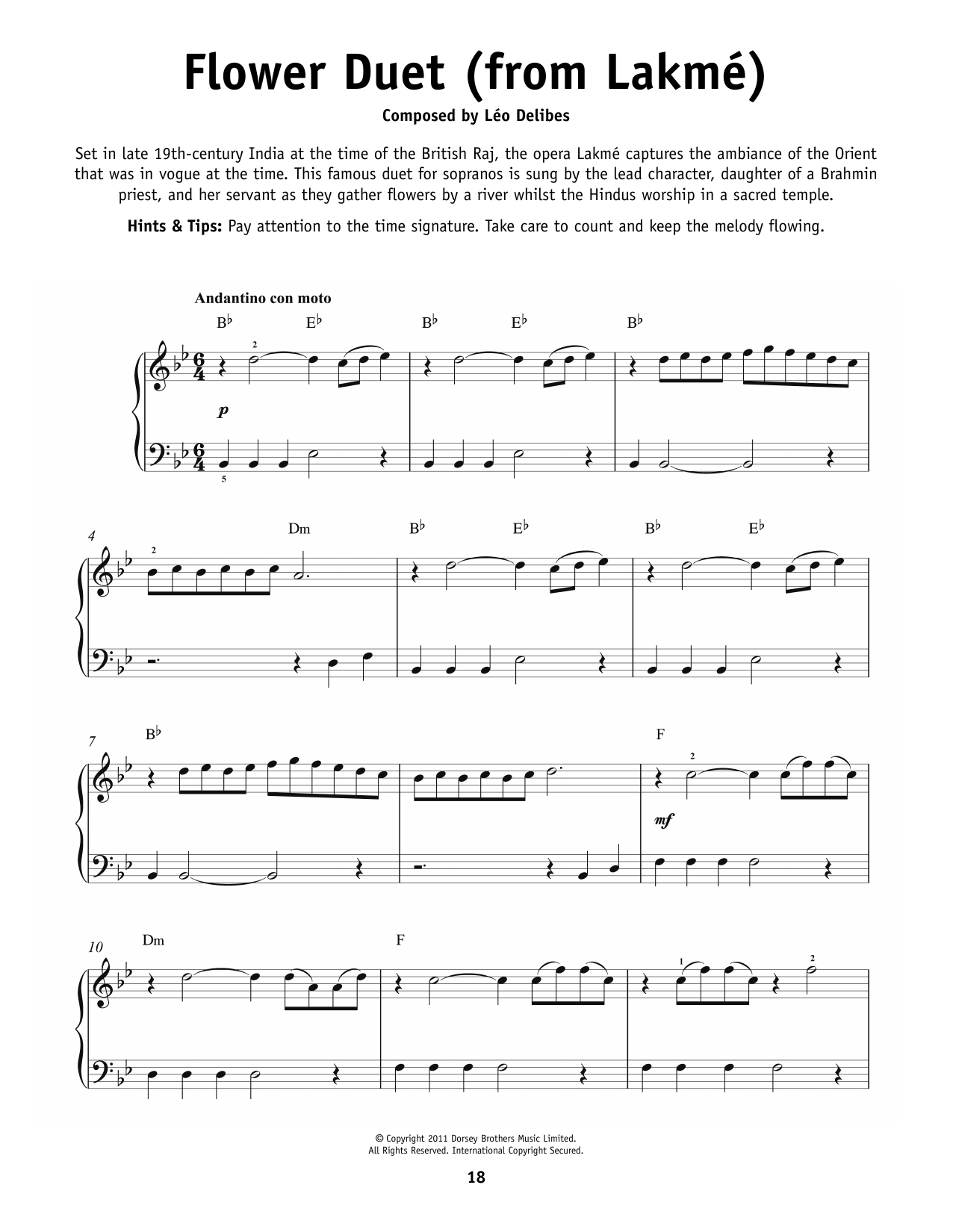
Leo Delibes (1836–1891) composed operas and ballets that became cornerstones of the lyric stage. His gift for melody and orchestration made him one of the most performed composers of the nineteenth century, and his works remain central to opera and ballet curricula worldwide. Delibes understood how to write for the human voice with elegance and clarity, crafting moments that singers and audiences remember long after the final curtain.
Why we love this
The Flower Duet sits at the intersection of accessibility and sophistication. Two singers can deliver genuine musical storytelling and harmonic richness without requiring virtuosic technical demands, making it ideal for building ensemble confidence while programming something audiences recognize and cherish.
What to expect
Lush and intimate, the Flower Duet unfolds like a private conversation between friends in a garden. The vocal lines intertwine over harmonies that feel both romantic and restrained, creating a moment of genuine tenderness that never tips into melodrama.
Who it's for
This duet works beautifully for intermediate and advanced soprano/mezzo-soprano pairs in choir, opera workshop, or recital settings. It's also valuable for music theater programs seeking shorter operatic repertoire that doesn't demand the stamina of a full opera.
How to get the most out of it
Balance the vocal lines so both singers are heard equally. The conversation between the two voices matters more than dramatic projection.
Shape the melodic phrases with careful attention to breath placement and natural text declination. Delibes writes singable lines that reward musical phrasing over excessive ornamentation.
Let the harmonic color breathe. The rich chromatic language works best when singers don't rush the transitions between chords.
Consider the dramatic context: these are two women sharing an intimate moment. Warmth and connection should drive the interpretation.
How to use it
Pair this with other short operatic gems on a recital or concert that explores duet literature across styles and periods. It also serves as an excellent palate cleanser on larger choral programs, offering singers and listeners a moment of vocal intimacy and beauty.
Skills your students will build
Balancing two vocal lines of equal importance
Singing in French with appropriate language clarity
Interpreting nineteenth century lyric opera style
Shaping longer phrases through harmonic changes
Collaborative ensemble listening between duet partners
You May Also Like
Scan to Complete Your Purchase
Use your phone's camera to scan the code below
You'll log in on your phone and the order will be added to your account